
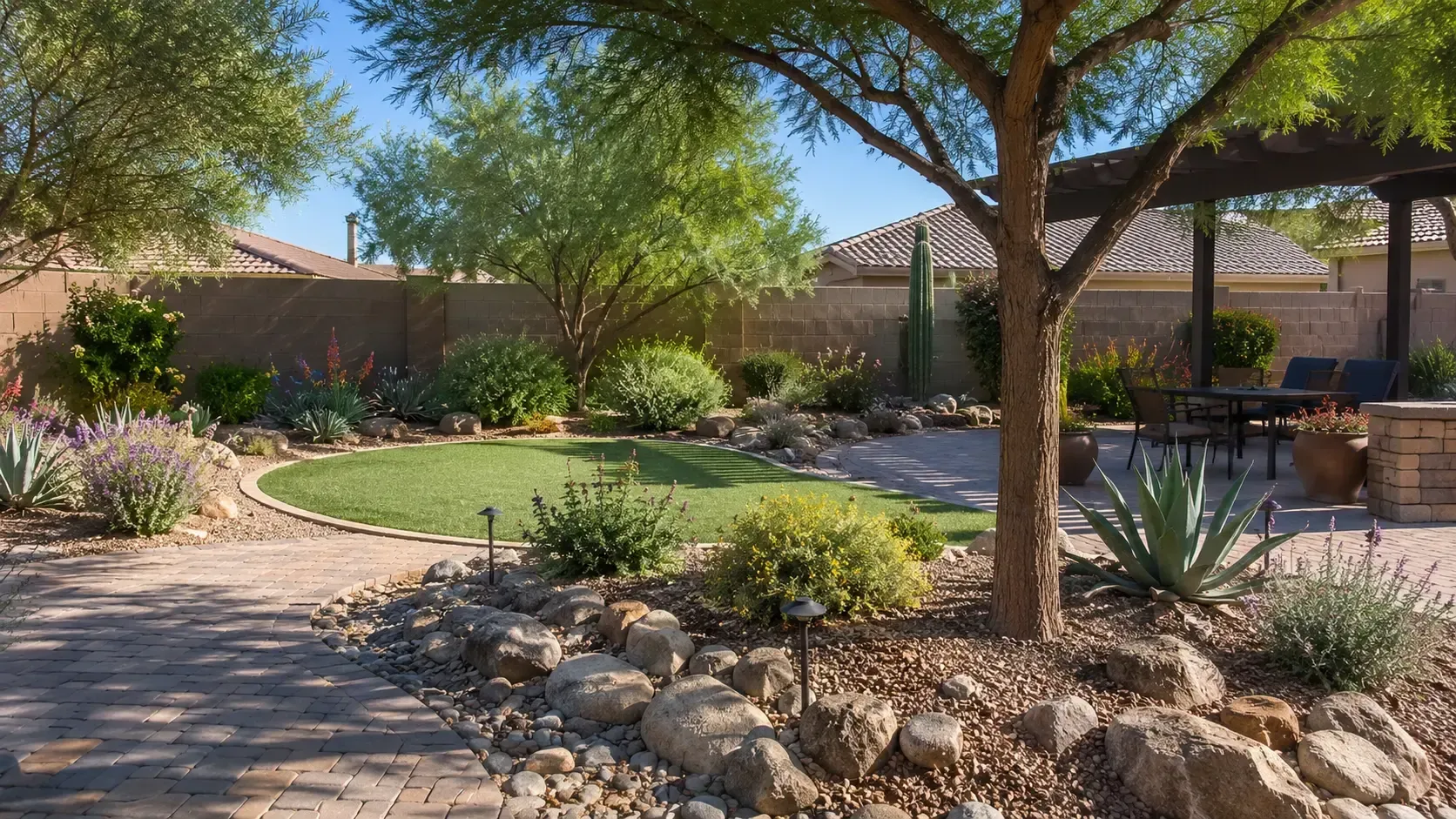
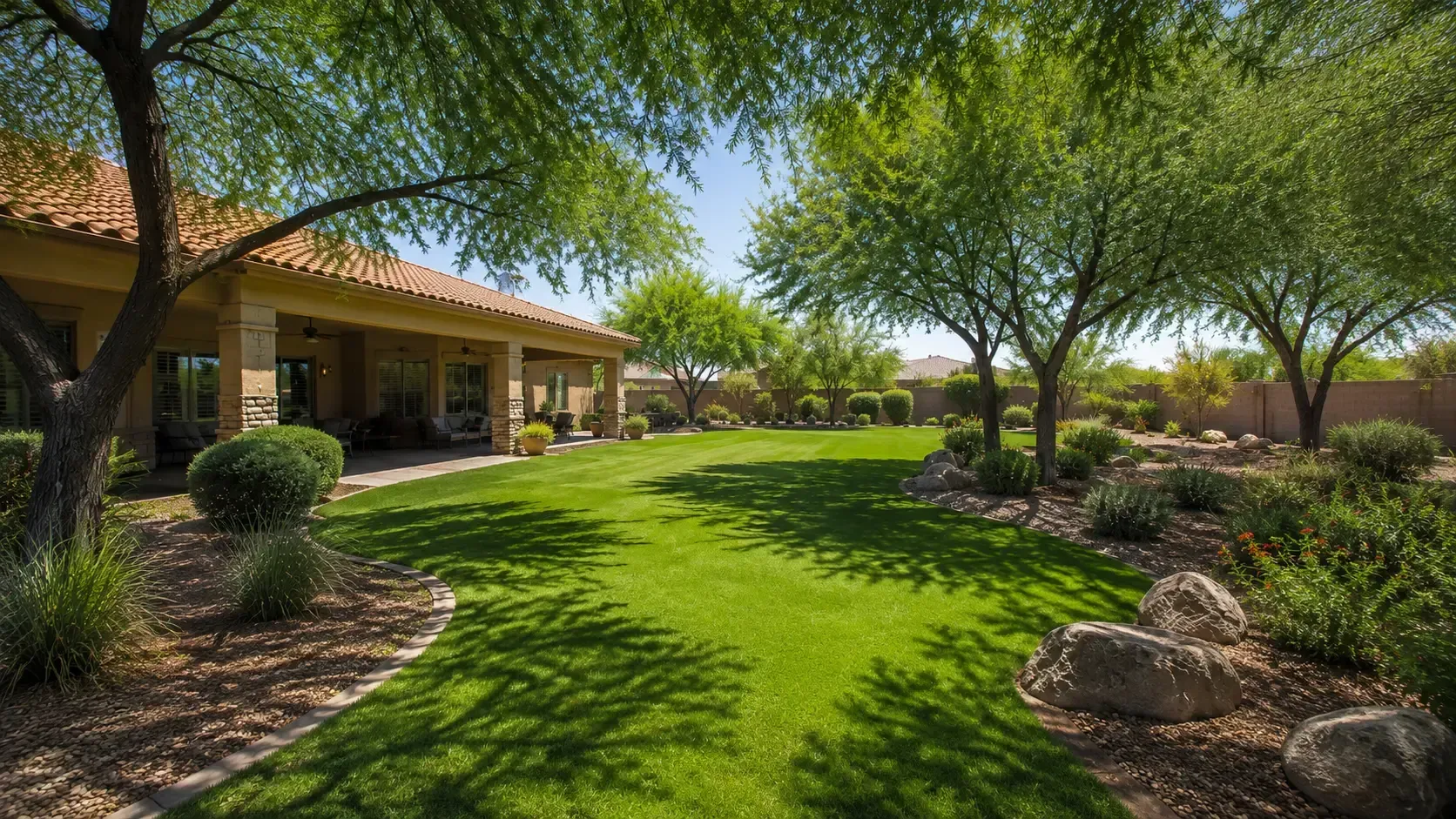

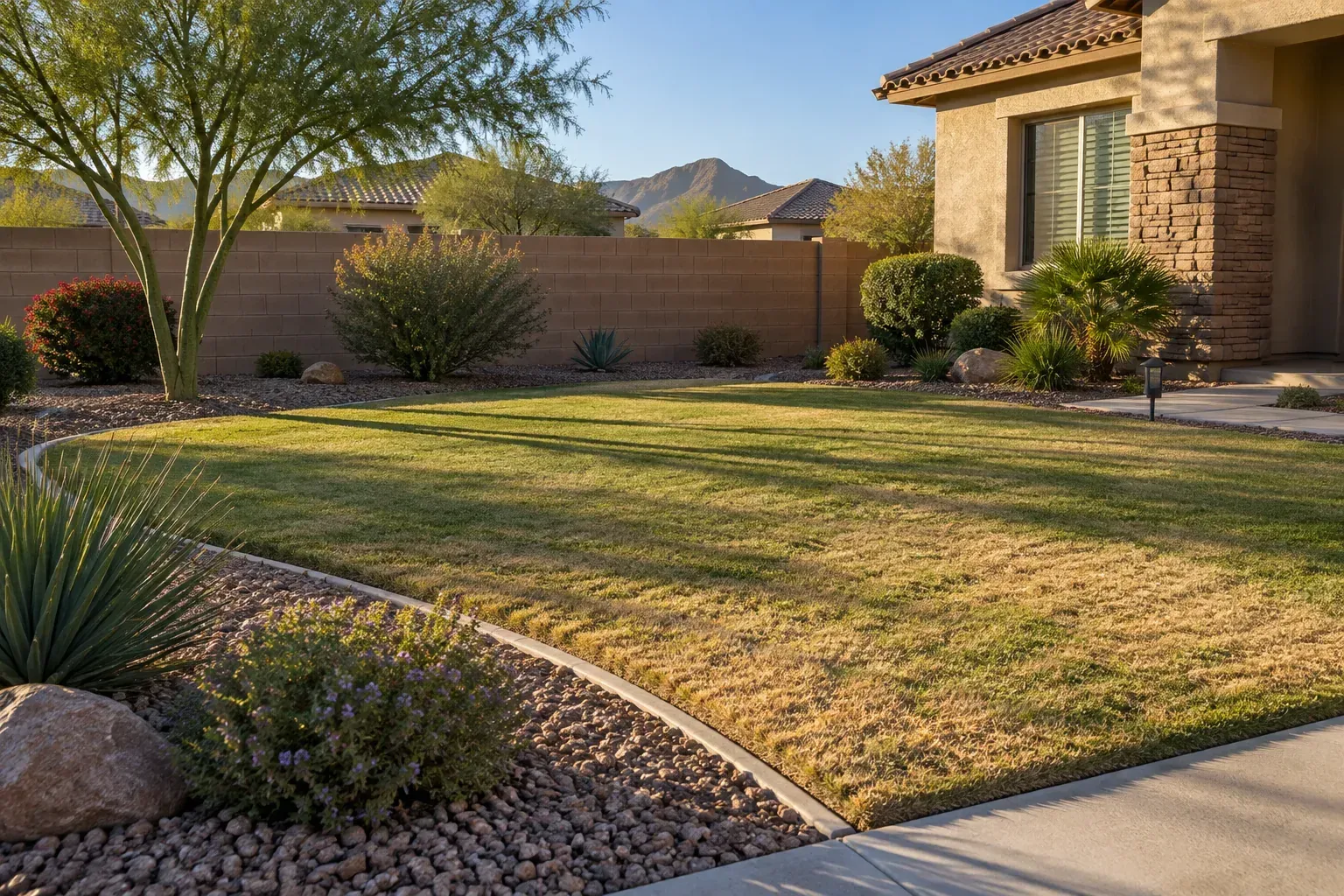
Tree Selection & Shade Planning in Arizona: How to Choose the Right Trees Before Summer Heat Arrives
May 5, 2026
A white background with a few lines on it

Arizona homeowners often choose trees based on appearance first.


That is usually the mistake.


Because in desert climates, tree selection is not just landscaping — it is:


● Heat management

● Water efficiency

● Property protection

● Shade engineering

● Long-term maintenance planning


The wrong tree can create:


● Excessive debris

● Root damage

● High irrigation demand

● Weak summer survival

● Expensive removals later


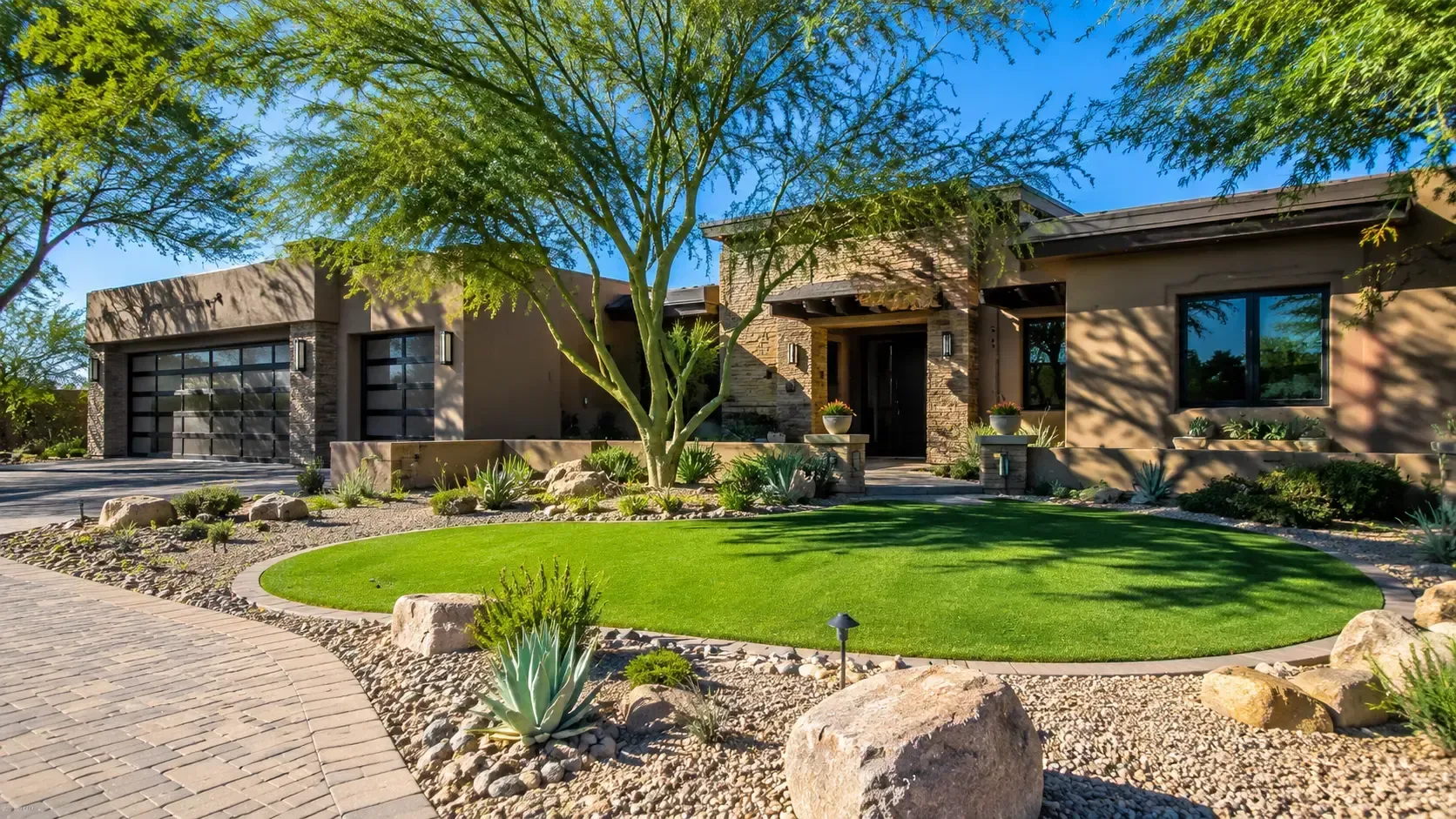
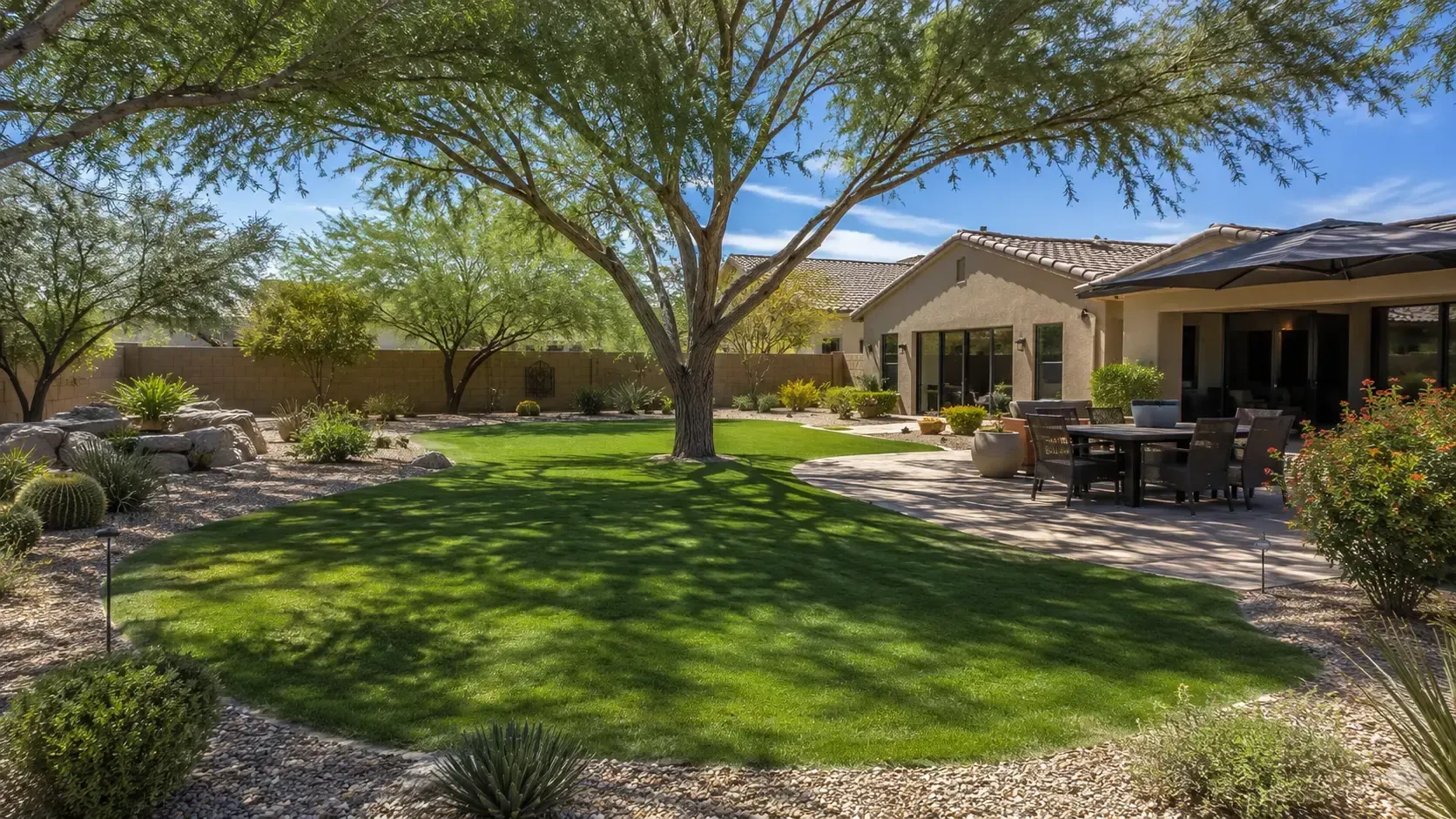
The right tree can reduce heat stress across your entire property while improving curb appeal and lowering landscape maintenance pressure.

Why Tree Planning Matters More in Arizona Than Most States

Arizona’s climate creates a uniquely aggressive environment for trees.


Landscapes face:


● Extreme UV exposure

● High soil temperatures

● Long drought periods

● Rapid evaporation

● Wind stress during monsoon season


This means tree selection should always prioritize:


● Heat tolerance

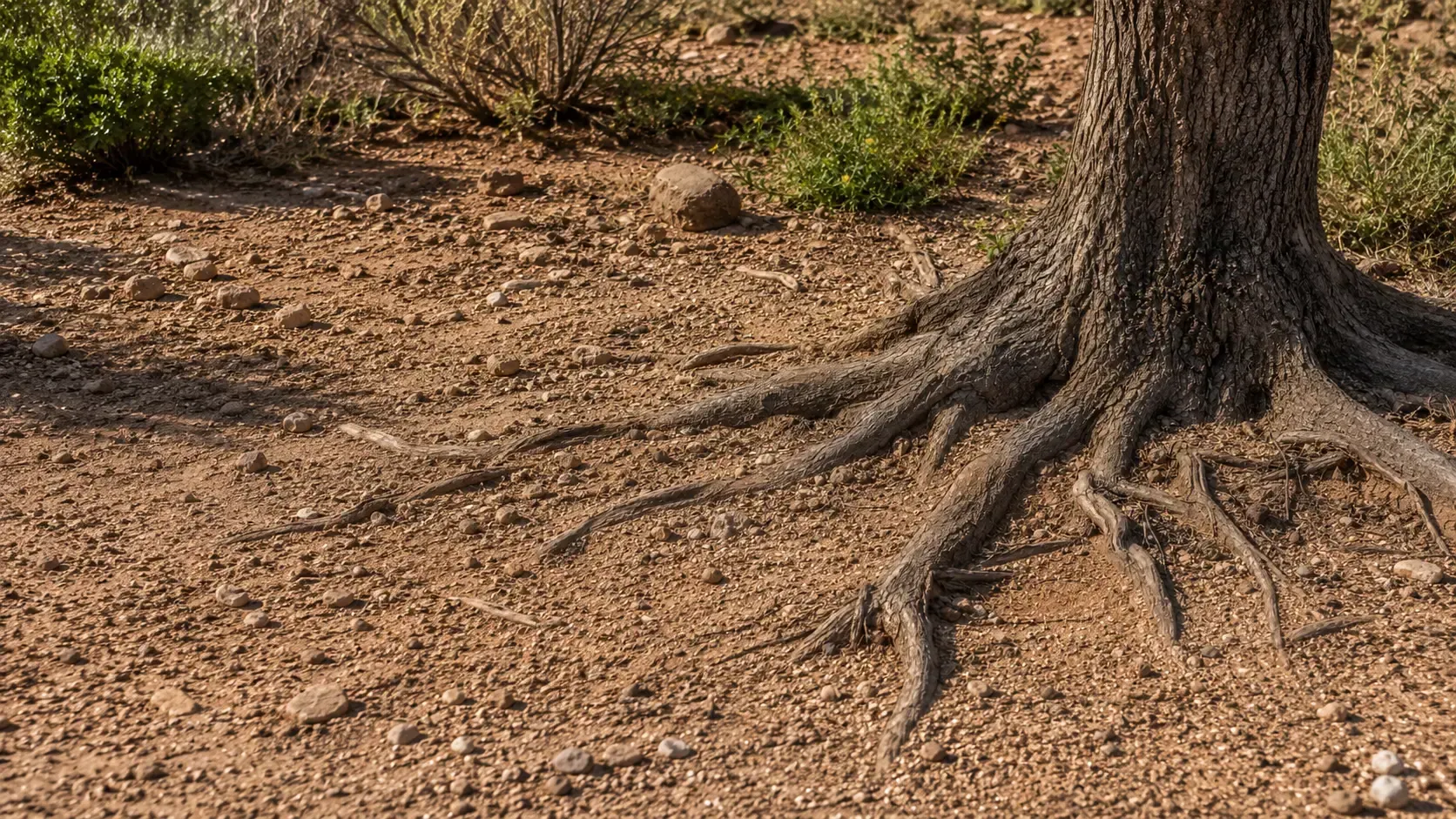
● Root stability

● Water efficiency

● Shade spread

● Seasonal survivability


If your landscape is still recovering from winter stress, start with proper seasonal recovery planning explained here (Blog 21).


The Biggest Mistake Homeowners Make When Choosing Trees

Most homeowners select trees based on:


● Fast growth

● Cheap installation cost

● Dense greenery

● Nursery appearance


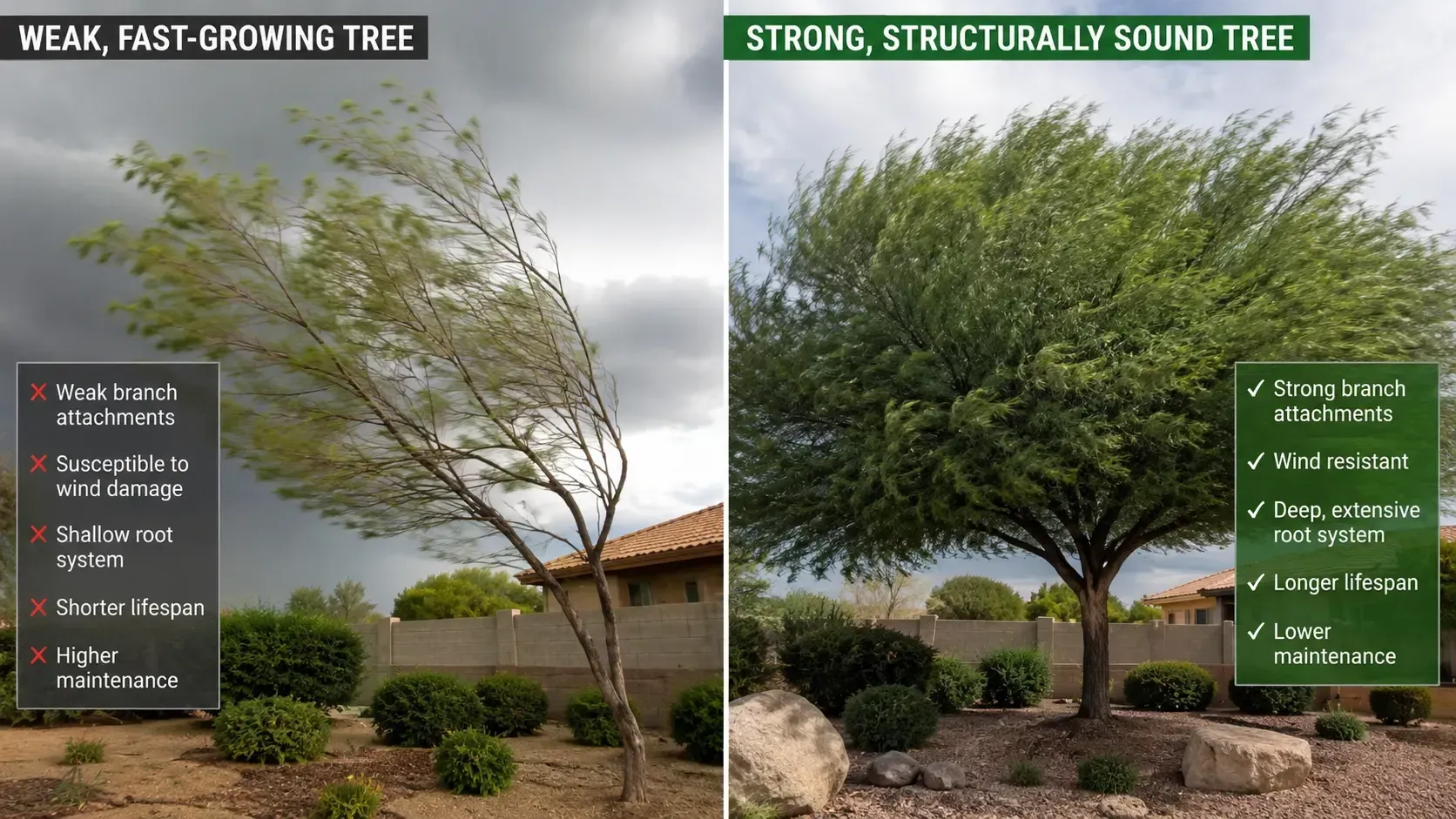
But many fast-growing trees fail in Arizona because they:


● Require excessive irrigation

● Develop weak branch structures

● Struggle in compact desert soils

● Become unstable during storms


Tree planning must account for the environment the tree will face 5–10 years from now — not how it looks at purchase.

What Makes a Tree “Good” for Arizona Landscapes?

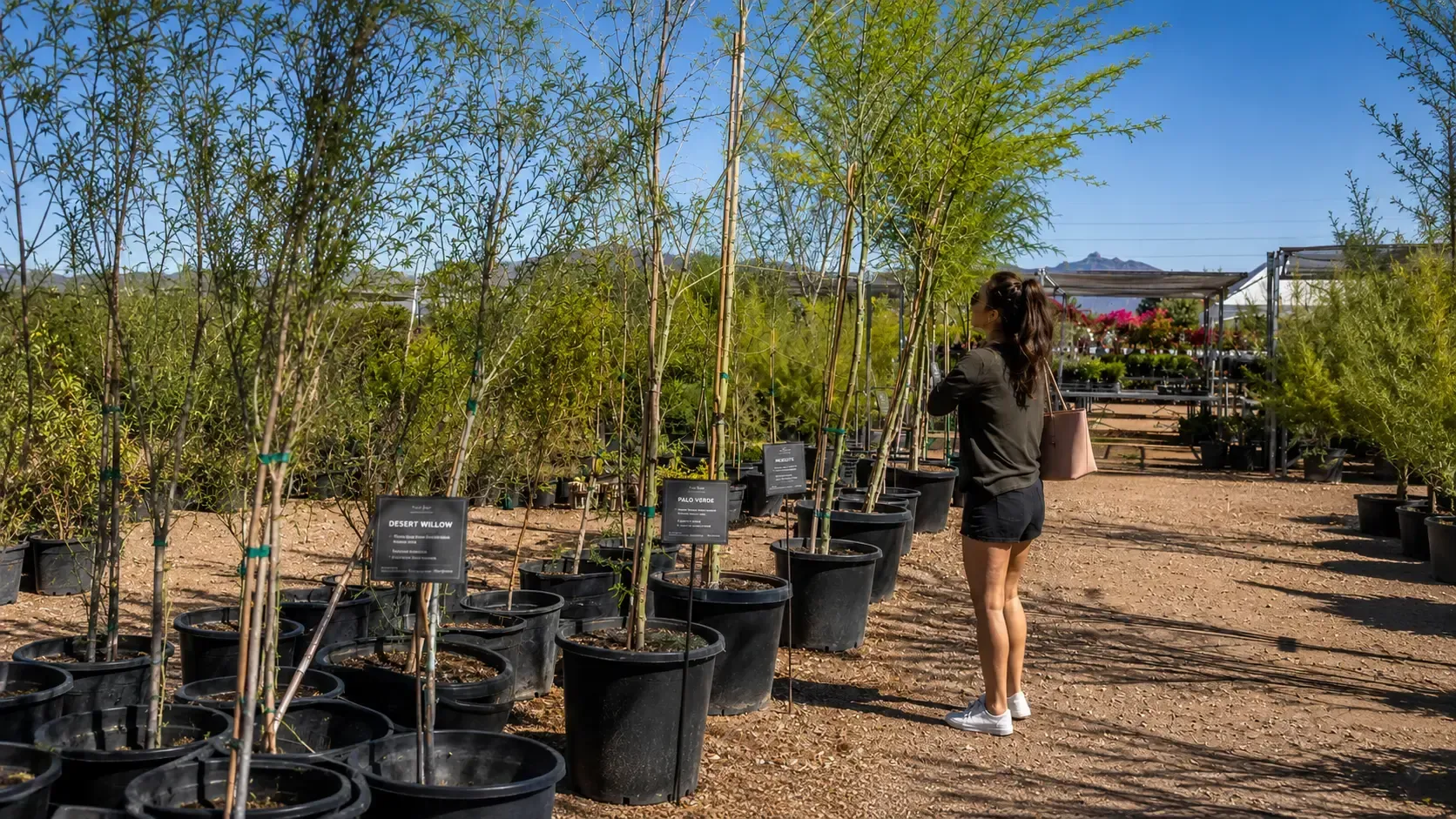
The best Arizona trees typically share several traits:


● Deep root adaptability

● Strong drought resistance

● Heat-tolerant canopy structure

● Moderate water demand

● Wind resilience


Healthy desert-adapted trees also improve surrounding lawn conditions by reducing direct soil heat exposure. For deeper insight into desert soil performance and preparation, review Arizona soil health fundamentals (Blog 19).

Understanding Shade Planning for Desert Properties

Shade is not just comfort.


It directly affects:


● Lawn survivability

● Soil moisture retention

● Surface temperatures

● Irrigation efficiency

● Outdoor usability


Proper shade positioning can significantly reduce turf stress during peak summer heat.


Poor positioning can instead create:


● Uneven lawn growth

● Excessive root competition

● Water imbalance

● Dead turf zones

Fast-Growing Trees vs Long-Term Stability

Fast-growing trees are attractive because they provide quicker shade.


However, many develop:


● Brittle branch systems

● Poor drought tolerance

● Higher maintenance requirements


Slower, structurally stronger trees often outperform aggressive growers long term in Arizona conditions.

This becomes especially important before monsoon season arrives. If you are preparing landscapes for summer heat waves and storm stress, review early heat preparation strategies (Blog 26).

Tree Placement Mistakes That Cause Future Problems

Incorrect placement creates expensive long-term issues.


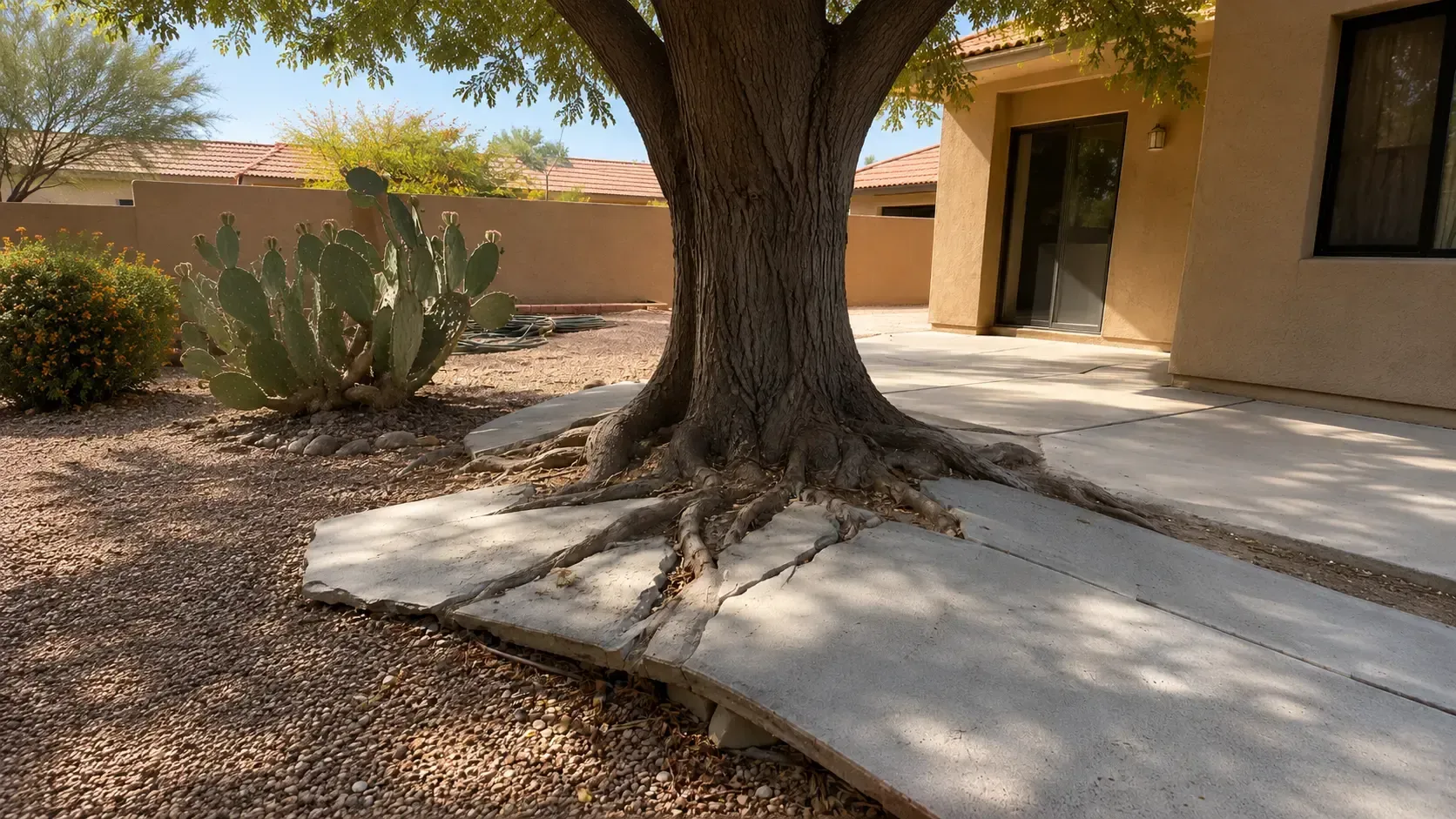
Common mistakes include planting trees:


● Too close to foundations

● Too close to irrigation lines

● Directly against turf-heavy zones

● Without canopy spread calculations


As trees mature, root systems compete aggressively for water in desert environments.


Planning spacing correctly prevents:


● Lawn thinning

● Cracked hardscaping

● Root lifting

● Irrigation inefficiency

Choosing Trees Based on Water Efficiency

Water planning should influence every tree decision in Arizona.


High-water-demand trees may survive initially but become difficult to sustain during extreme summer conditions.


Water-efficient trees help:


● Reduce irrigation dependency

● Improve landscape sustainability

● Lower long-term maintenance costs


This becomes even more important when balancing lawn irrigation systems with tree watering schedules.


For proper irrigation balancing techniques, review smart watering strategies for Arizona lawns (Blog 6).

Best Shade Planning Practices for Arizona Landscapes

Effective shade planning usually includes:


● West-facing shade coverage

● Strategic patio shading

● Turf cooling zones

● Layered canopy spacing

● Airflow preservation between trees


The goal is not maximum shade everywhere.


The goal is controlled cooling without damaging lawn performance.

Why Tree Selection Should Be Done Before Peak Summer

Late tree installation creates additional stress because:


● Root establishment becomes harder

● Soil temperatures rise rapidly

● Water demand increases dramatically


Spring is the optimal planning window because trees have time to establish before extreme summer heat arrives.


If your lawn and trees are still transitioning from winter recovery, review spring lawn and tree recovery fundamentals (Blog 21).

Long-Term Benefits of Proper Tree Planning

Well-planned Arizona trees can:


● Lower surrounding ground temperatures

● Improve lawn durability

● Increase property value

● Reduce irrigation stress

● Improve outdoor comfort


Poor tree planning creates recurring maintenance costs for years.


The difference is usually determined during the initial planning phase.

FAQ: Arizona Tree Selection & Shade Planning

  • What trees grow best in Arizona heat?

    Desert-adapted and drought-tolerant species generally perform best in Arizona’s extreme

    climate conditions.

  • Is fast-growing always better for shade?

    Not necessarily. Fast-growing trees often require more maintenance and may become

    structurally weaker over time.

  • Can trees help reduce lawn heat stress?

    Yes. Proper shade placement lowers soil temperatures and helps turf retain moisture.

  • How far should trees be planted from lawns?

    Enough distance should be maintained to reduce excessive root competition and uneven

    irrigation absorption.

  • When is the best time to plant trees in Arizona?

    Spring is one of the best periods because it allows root establishment before peak summer

    heat arrives.

A green background with a white outline of a heart.
By Happy Clean Lawnscapes • October 2, 2026
Scalped too low or seeded too early? Here is the University of Arizona overseeding sequence plus the October winter grass watering schedule for Buckeye lawns.
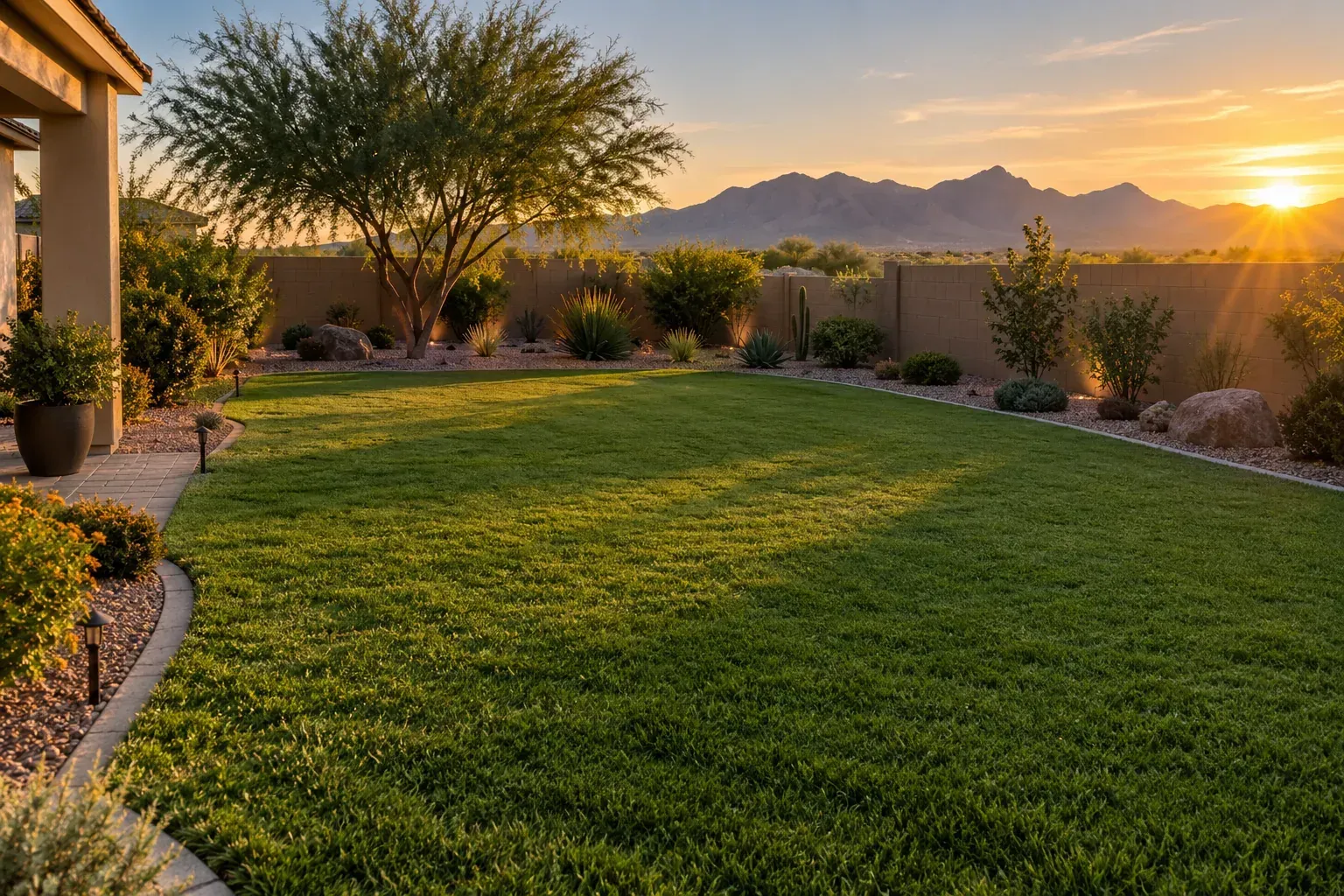
Sunset over a lush backyard lawn with trees, mountains, and a warm golden sky
By Happy Clean Lawnscapes • September 18, 2026
Lawn thin or patchy by September? Find the real cause, from salt buildup and sprinkler gaps to grubs, and the fixes that stop it happening next summer.
By Happy Clean Lawnscapes • September 1, 2026
September is the last window to repair summer lawn damage in Arizona. Get the week-by-week watering schedule and learn how to prep Bermuda before October overseeding.
By Happy Clean Lawnscapes • August 20, 2026
After a monsoon storm, the biggest dangers are the ones you cannot see. Learn how to assess tree damage safely, what to never touch, and how to avoid post-storm contractor scams.
By Happy Clean Lawnscapes • August 4, 2026
Arizona monsoon storms bring 60+ mph gusts and inches of rain in under an hour. Learn how to prepare drainage, trees, irrigation, and hardscape before the first storm hits.
Brown dirt patch in a green lawn, with cracked soil and dry grass in the center.
By Happy Clean Lawnscapes • July 16, 2026
Brown, scorched patches in your Arizona lawn? Learn how to identify what caused the burn, what to do in the first 48 hours, and when the grass can still be saved.
Homeowner inspecting heat-stressed tree branches in an Arizona backyard
By Happy Clean Lawnscapes • July 7, 2026
When Arizona hits an Extreme Heat Warning, one wrong move can kill your lawn or trees in days. Learn exactly how to water, mow, shade, and protect your landscape through a heat wave.

Arizona water bills spike every summer — usually from hidden
landscape waste. Learn how to find leak
By Happy Clean Lawnscapes • June 18, 2026
Arizona water bills spike every summer — usually from hidden landscape waste. Learn how to find leaks, fix waste, and lower your bill before peak heat hits.
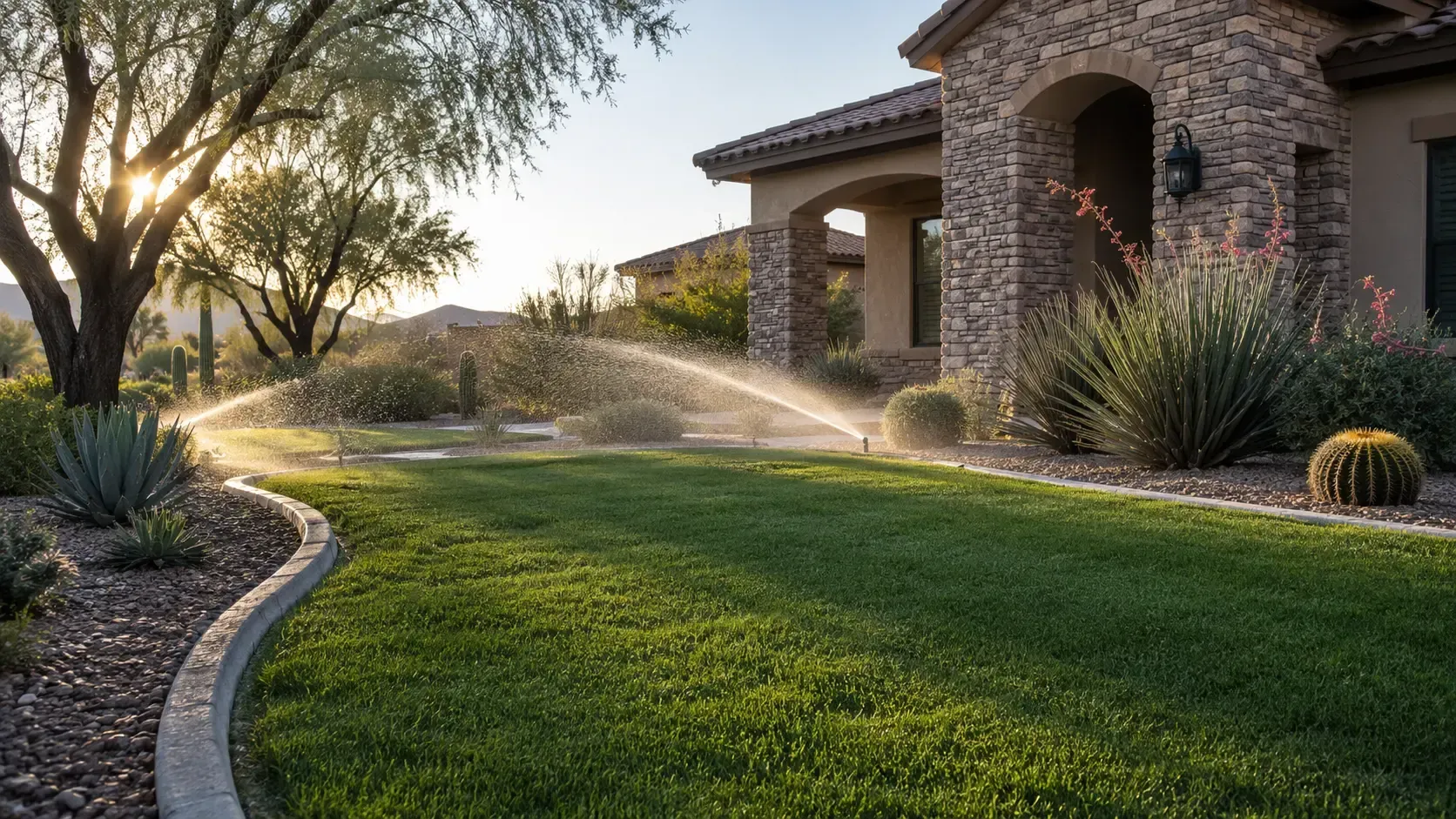
Smart Summer Irrigation Principles for Arizona Landscapes
June 11, 2026
Summer irrigation in Arizona is not about watering more — it's about watering smarter. Learn the principles that protect your lawn, plants, and trees while cutting waste during peak heat.
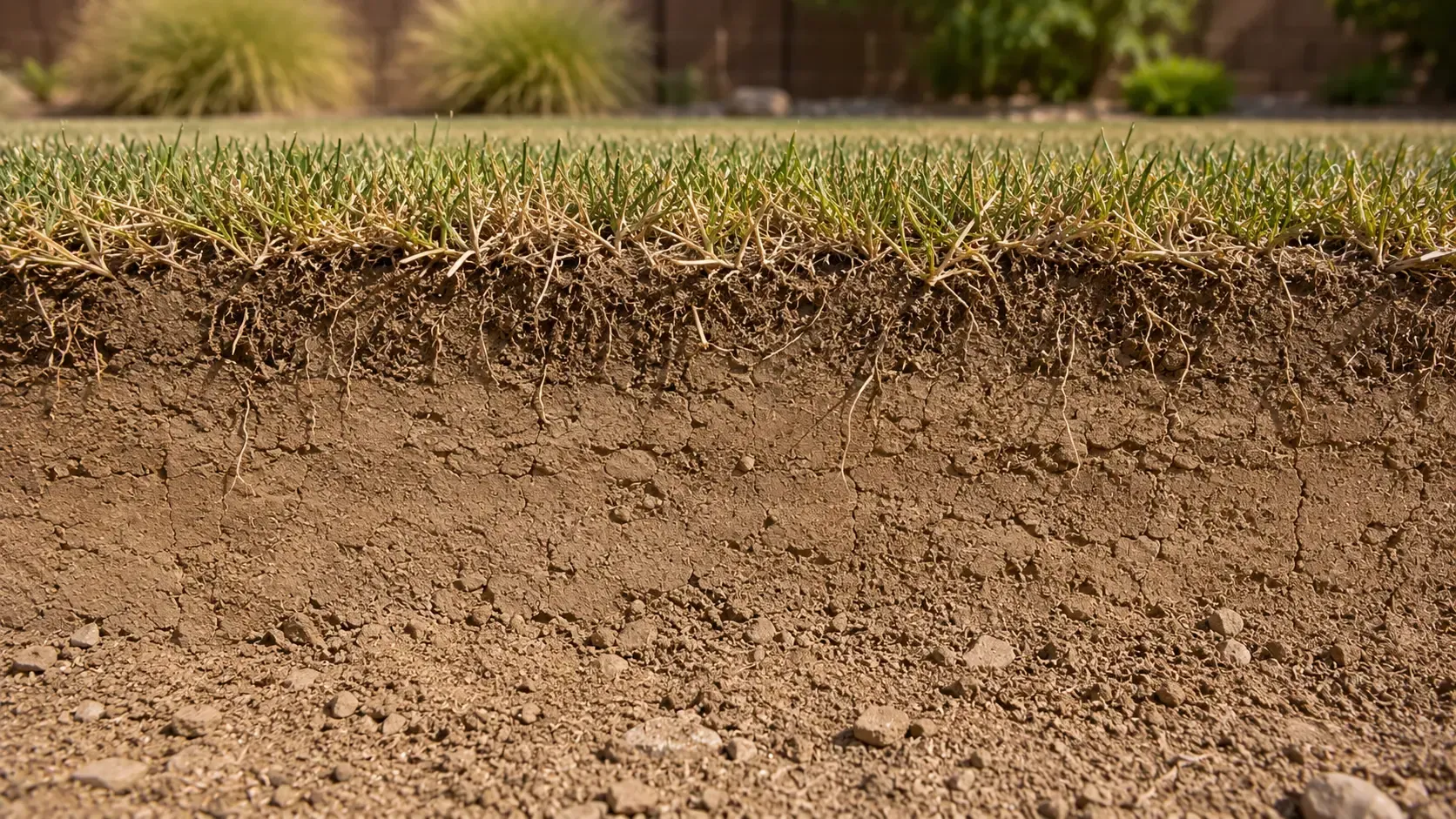
By Happy Clean Lawnscapes • May 21, 2026
Heat stress in Arizona lawns and plants often appears before homeowners realize. Learn how to spot early warning signs and protect your landscape before summer damage spreads.
Show More