
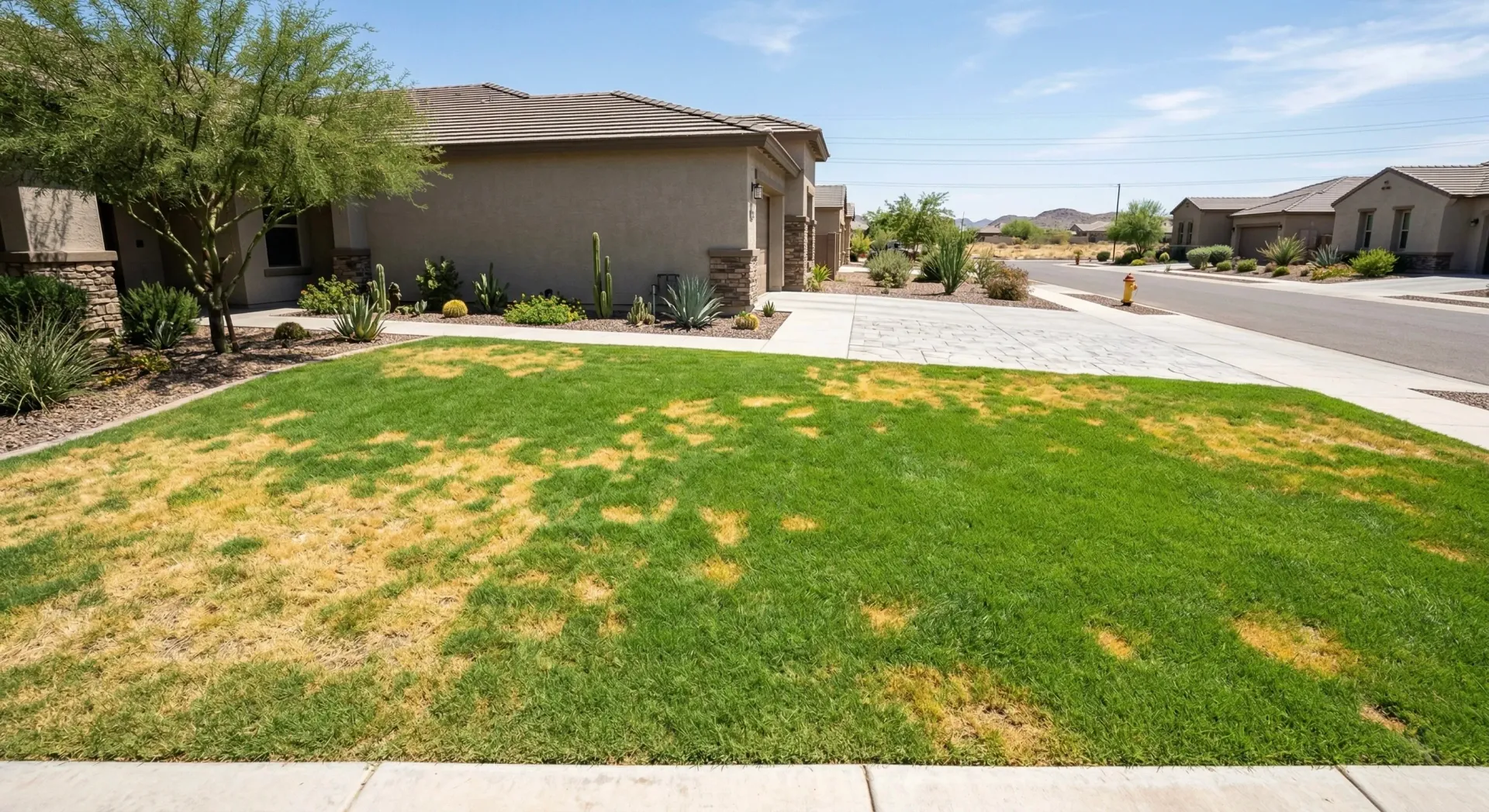

Your grass looked fine last week. Then after fertilizing, parts of it turned yellow, brown, or strangely patchy. Now you are wondering whether the lawn needs more water, more nutrients, or whether the fertilizer itself caused the damage.
That confusion is common in Buckeye and across the West Valley. Arizona lawns deal with heat, alkaline soil, and irrigation stress, so fertilization mistakes show up faster and hit harder here than they do in milder climates.
This guide will help you quickly diagnose whether you are dealing with signs of over fertilizing lawn, under fertilized lawn symptoms, or a different problem entirely. You will learn what to look for, what happens if you over fertilize lawn, how to fix the issue, and when it makes more sense to bring in professional help.
Why Fertilization Mistakes Are So Common in Arizona

In Arizona, lawns are already working against harsh conditions. High heat, strong sun, desert soil nutrients, and inconsistent watering habits all put extra pressure on turf.
That means even a small fertilization mistake can create visible lawn damage fast. What might be a minor issue elsewhere can become fertilizer burn symptoms, weak color, or thinning turf in Buckeye.
Many homeowners think every lawn problem is a watering issue. In reality, watering vs fertilizing lawn care is one of the biggest points of confusion in Arizona lawn problems.
Over-Fertilized vs Under-Fertilized: How to Tell the Difference

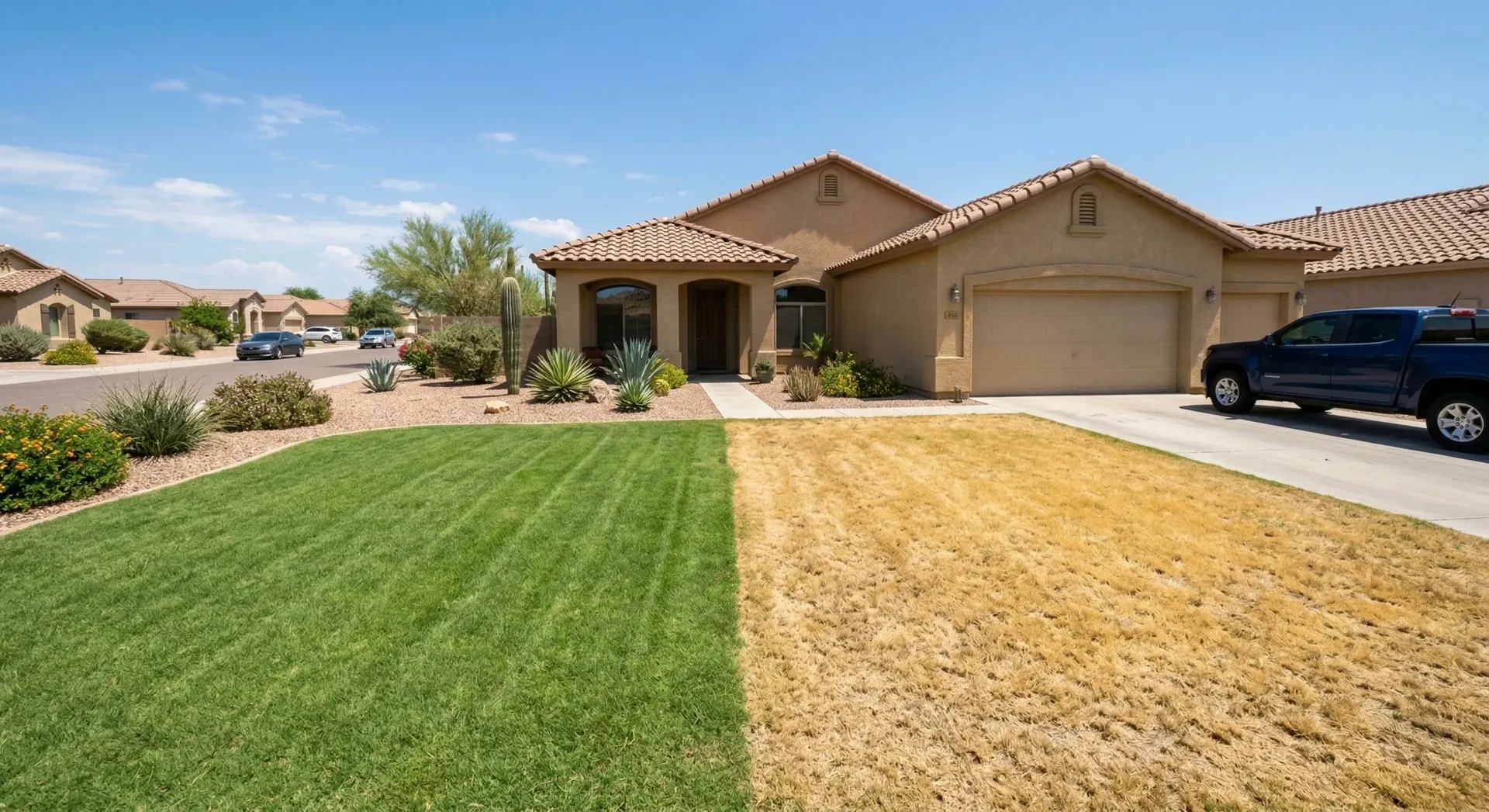
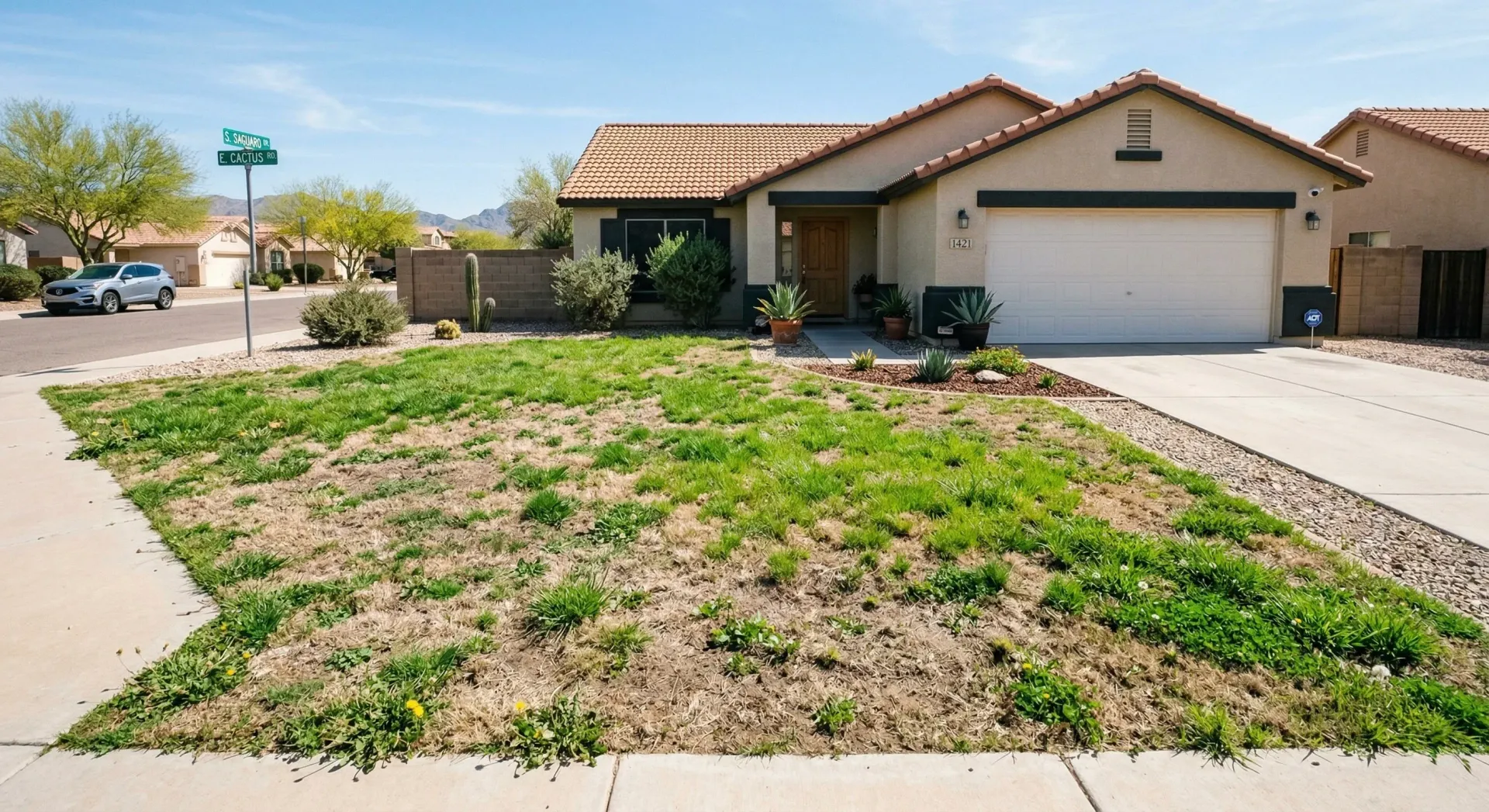
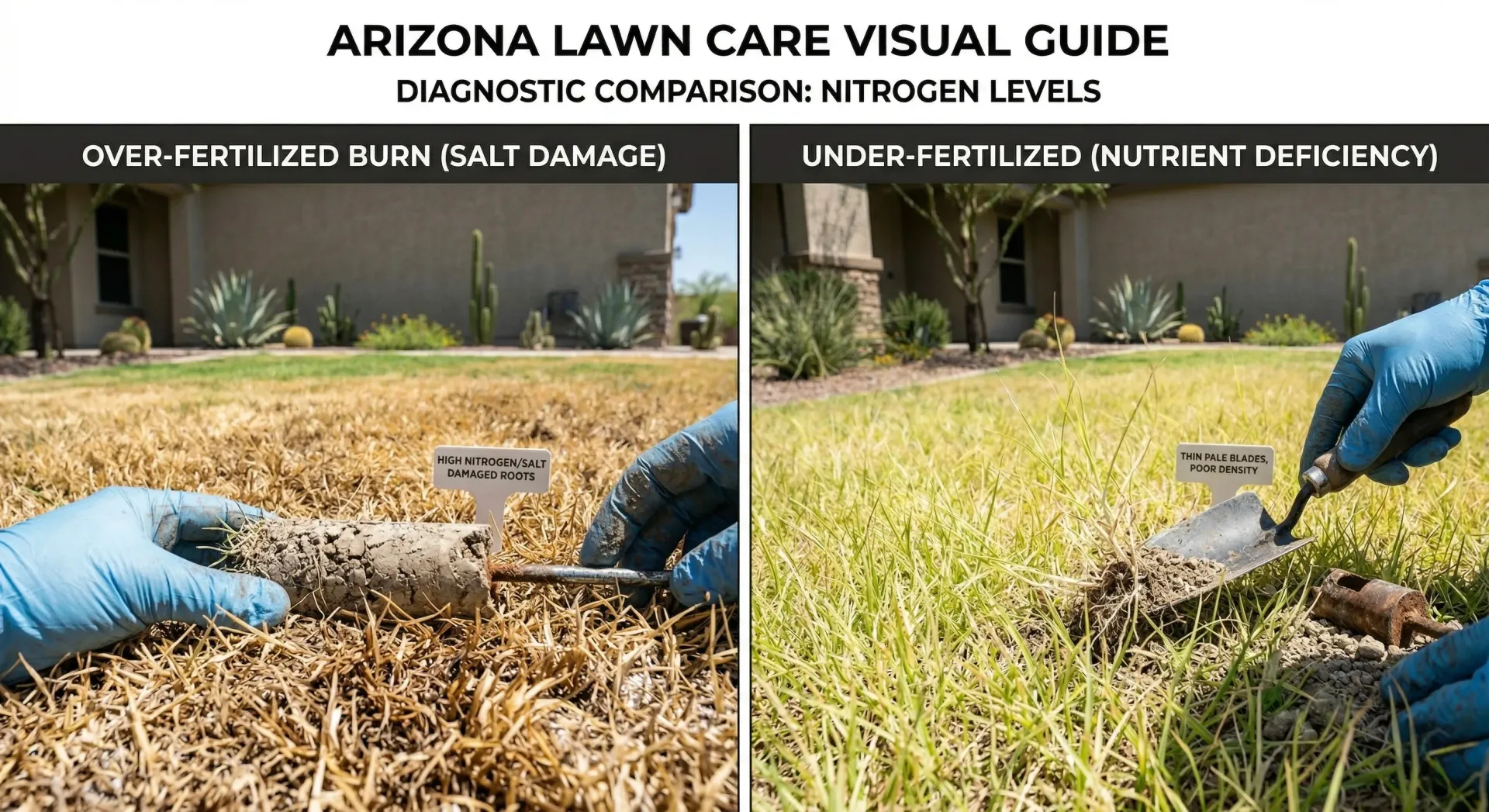
The biggest mistake homeowners make is treating every yellow lawn the same way. An over-fertilized lawn and an under-fertilized lawn can both look unhealthy, but the pattern and timing are usually different.
Signs of Over Fertilizing Lawn
If the lawn started declining soon after a fertilizer application, over-fertilizing should be one of the first things you check.
Common signs of over fertilizing lawn include:
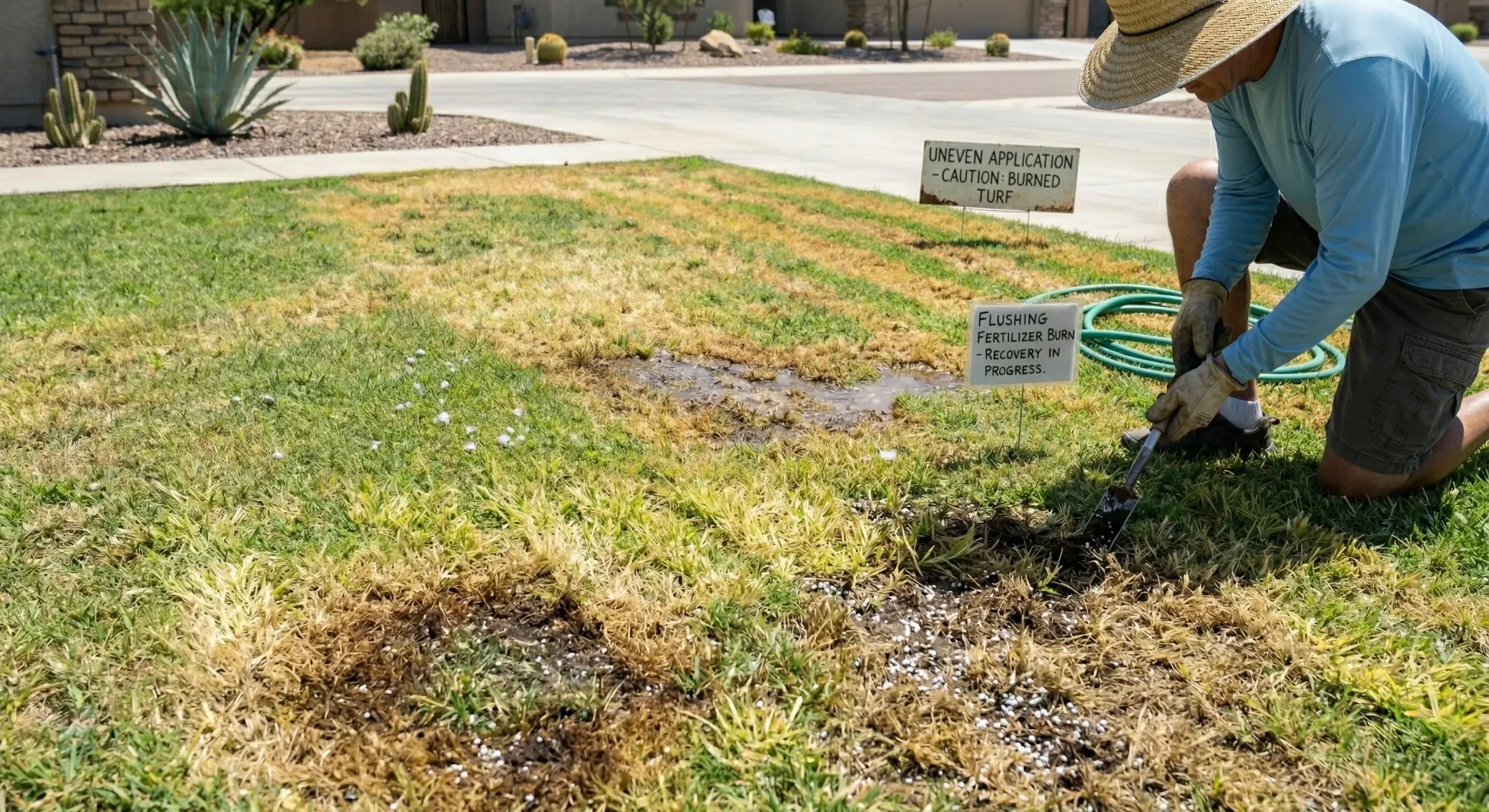
● Yellow or brown patches appearing after treatment
● Crispy or burnt-looking grass blades
● White crust or residue on the soil surface
● Rapid top growth followed by stress
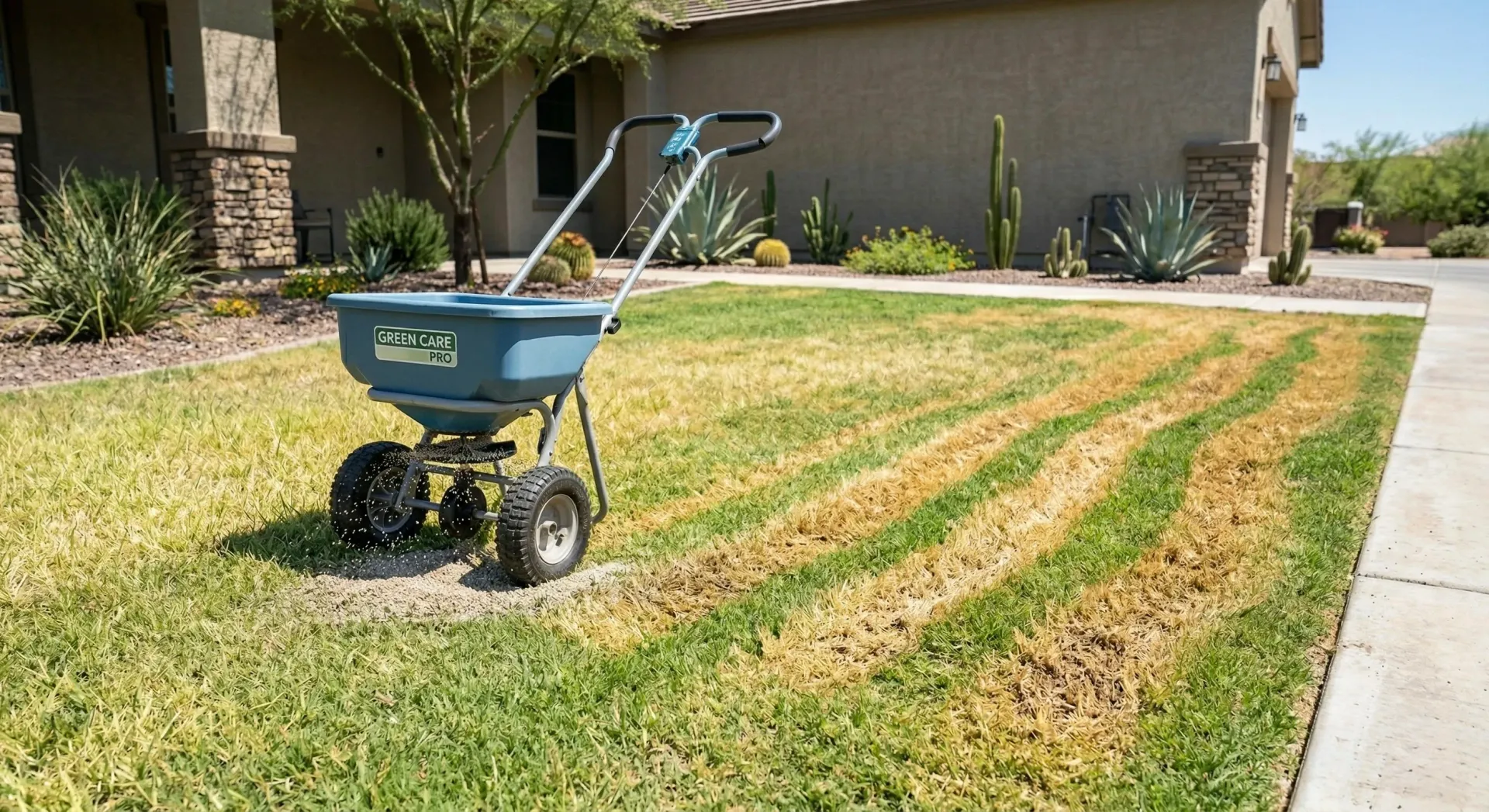
● Patchy damage in lines or spreader patterns
● Grass looking scorched even with watering
These are classic lawn fertilizer burn symptoms, especially in hot Arizona weather.
Under Fertilized Lawn Symptoms
An underfed lawn usually declines more gradually.
Common under fertilized lawn symptoms include:
● Pale green or yellow color across larger areas
● Slow growth
● Thin turf density
● Weak recovery after mowing or heat stress
● Grass that never fully greens up in season
If the decline has been building over time rather than showing up suddenly after fertilizing, underfeeding is more likely.
What Happens If You Over Fertilize Lawn in Arizona

Yes, too much fertilizer can absolutely damage your grass.
If you are asking, can too much fertilizer kill grass, the answer is yes. It can injure roots, dehydrate the turf, and in severe cases kill sections of the lawn.
In Arizona, this becomes more dangerous because heat and dry air make the salt stress worse. Fertilizer draws moisture away from the plant. When that happens during warm weather, the turf can burn fast.
What Does Fertilizer Burn Look Like?
Fertilizer burn usually shows up as:
● Yellow tips that turn brown
● Brown streaks where the spreader passed
● Dry, brittle blades
● Sudden patchiness after an application
● Areas that look singed or scorched
If you are asking why grass is turning yellow after fertilizing, fertilizer burn is one of the first things to rule out.
Quick Diagnosis Framework for Buckeye Homeowners
If your lawn is struggling, use this simple framework before doing anything else.
1. Check the Timing
Did the discoloration start within a few days of fertilizing?
If yes, over-fertilizing is a strong possibility.
If the lawn has looked weak for weeks or months, under-fertilization or another lawn care Arizona issue may be more likely.
2. Look at the Pattern
Is the damage concentrated in lines, strips, or concentrated patches?
That usually points to application error or fertilizer burn.
Is the lawn pale and weak more evenly across the yard?
That points more toward nutrient deficiency or underfeeding.
3. Review Your Watering
Did you water the lawn in properly after fertilizing?
Did the lawn already have irrigation issues before the application?
Watering vs fertilizing lawn care matters because poor irrigation can make both over- and under-fertilization symptoms look worse.
4. Check the Soil and Weather Conditions
Arizona lawns are more vulnerable when fertilizer is applied during extreme heat, on dry soil, or without enough follow-up watering.
5. Look Beyond the Grass
If trees, shrubs, or nearby landscape plants are also looking stressed, the problem may involve
broader desert soil nutrients or irrigation imbalance.
How to Fix Over Fertilized Lawn

If you think you overdid it, act quickly. The faster you respond, the better the odds of recovery.
Step 1: Stop Fertilizing Immediately
Do not add more product to “correct” the issue. That often makes the damage worse.
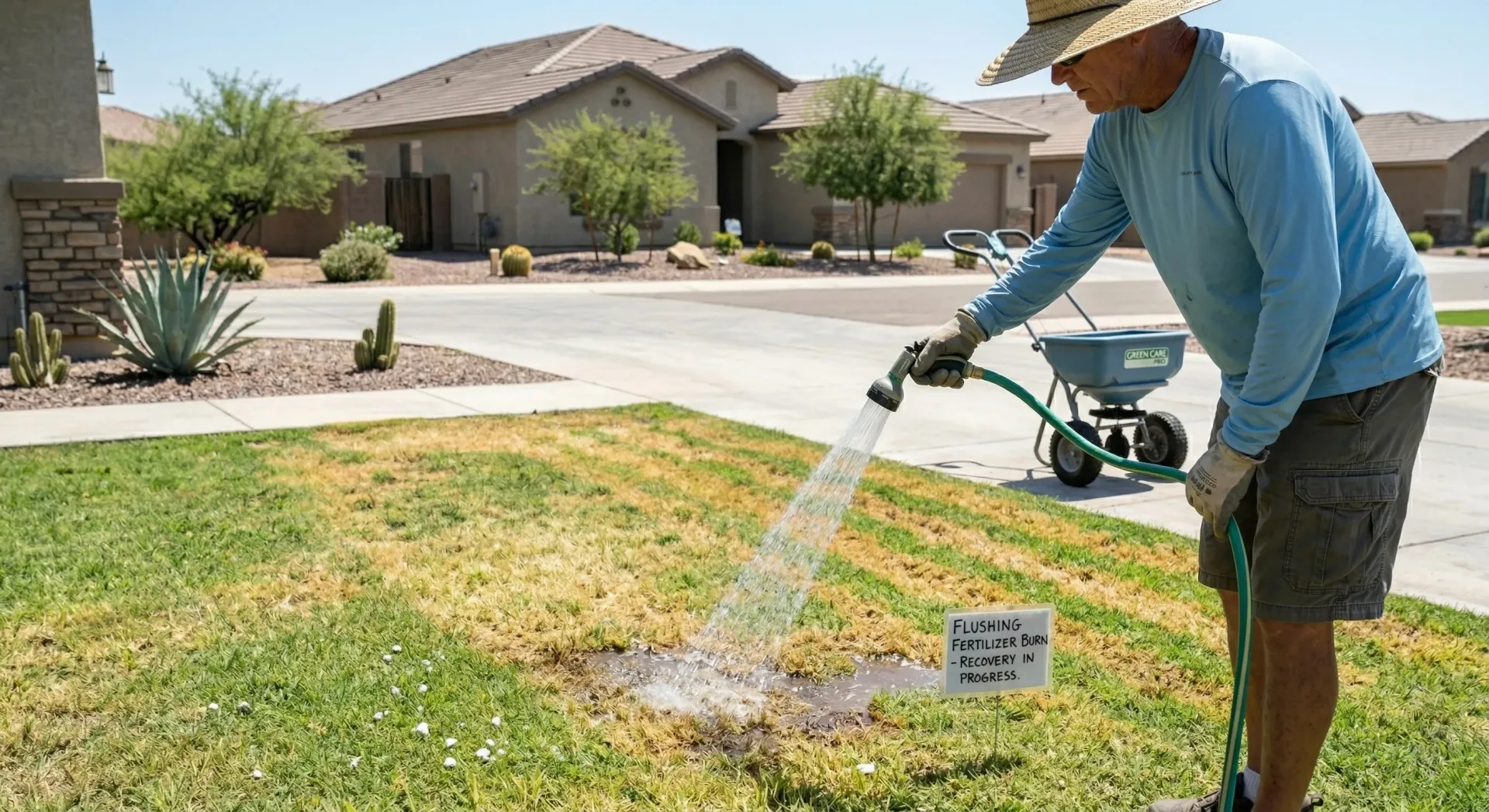
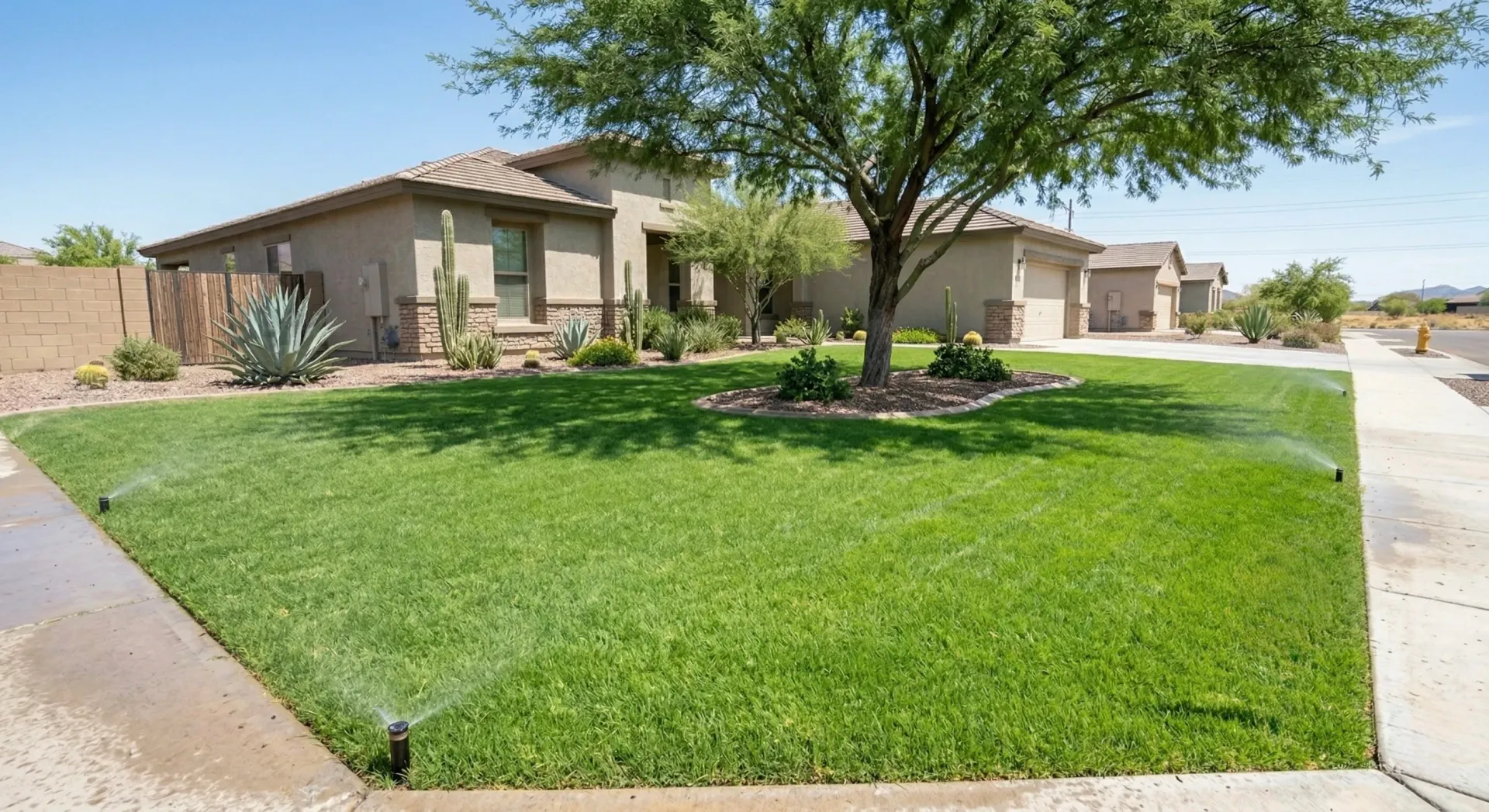
Step 2: Water Deeply but Carefully
In many cases, you need to flush excess salts through the root zone.
That does not mean drowning the lawn nonstop. It means giving the turf enough water to help dilute and move the fertilizer, while avoiding ongoing overwatering.
Step 3: Do Not Mow Aggressively
A stressed lawn should not be scalped or cut too short. Reduce additional stress while it recovers.
Step 4: Watch for Recovery Over the Next 1–3 Weeks
Light burn may improve if addressed early.
Severe lawn fertilizer burn symptoms may take longer and may require repair or spot replacement depending on the extent of root damage.
Step 5: Reassess Before Reapplying Anything
Do not resume fertilization until the lawn has stabilized and the root cause is clear.
How to Fix an Under-Fertilized Lawn
If the lawn is underfed rather than burnt, the goal is not to dump on more fertilizer all at once.
Step 1: Confirm Active Growth
Only fertilize when the grass is in an active growing phase.
Step 2: Use a Controlled, Appropriate Product
Arizona lawns respond better to a measured approach than to random heavy feeding.
Step 3: Pair Nutrition With Proper Irrigation
A weak lawn often needs both better nutrient timing and better watering habits.
Step 4: Improve Overall Lawn Care Conditions
Compaction, poor mowing habits, and soil issues can limit results even when fertilizer is applied correctly.
If Your Lawn Still Looks Bad, Do Not Guess Twice
The biggest cost in lawn care is not always the fertilizer. It is the repeated trial and error.
If you are not fully sure whether you are dealing with signs of over fertilizing lawn or under fertilized lawn symptoms, a wrong second move can make recovery slower and more expensive.
A proper lawn assessment can help you identify whether the real issue is nutrient burn, nutrient deficiency, irrigation, soil conditions, or a mix of Arizona lawn problems.
Common Fertilization Mistakes Arizona Homeowners Make

These are the mistakes that cause the most avoidable lawn damage in Buckeye and surrounding West Valley neighborhoods.
Applying Fertilizer During Heat Stress
Fertilizing when the lawn is already stressed by extreme heat increases burn risk.
Using Too Much Product
More fertilizer does not mean faster green-up. It often means more risk.
Uneven Application
Missed calibration, overlap, or poor spreader technique can create striping and burnt patches.
Fertilizing Dry Soil
Applying fertilizer to a thirsty lawn can make salt injury worse.
Confusing Yellow Grass With Underwatering
Many homeowners increase irrigation when the real issue is fertilizer damage or nutrient imbalance.
Using a Generic Schedule
Arizona grass needs local timing. What works in cooler states does not automatically work in Buckeye.
How Long Does It Take for Lawn to Recover From Over Fertilizing?
Recovery time depends on how severe the damage is.
Mild Damage
If the issue is caught early and flushed properly, some lawns begin improving within 1 to 3 weeks.
Moderate Damage
Visible recovery may take several weeks, especially during hotter weather.
Severe Damage
If roots are heavily damaged, parts of the lawn may not recover fully and may need repair or replacement.
That is why quick diagnosis matters. The longer fertilizer burn sits unaddressed, the harder recovery can become.
How Professionals Handle Fertilization Differently

Professional lawn care is not just about applying fertilizer. It is about reducing risk.
A good lawn care team looks at:
● Grass type
● Soil condition
● Seasonal timing
● Irrigation performance
● Existing stress factors
● Product selection and rate
● Recovery strategy if something is already wrong
That is especially important in Arizona, where desert soil nutrients and heat stress make mistakes less forgiving.
When DIY Is Not Enough
There is a point where DIY stops being efficient.
You should strongly consider professional help when:
The Lawn Is Getting Worse After Fertilizing
That usually means you need a diagnosis, not more products.
You See Burn Patterns or Widespread Yellowing
This can point to application error, salt injury, or deeper lawn care Arizona issues.
You Are Not Sure Whether It Is Water, Fertilizer, or Soil
Misdiagnosing the problem is one of the fastest ways to waste time and money.
The Damage Covers a Large Area
The larger the affected area, the more important it is to get the correction right the first time.
You Want Consistent Results Without Risk
Professional lawn care helps prevent the repeat cycle of underfeeding, overfeeding, and reactive watering.
Final Thoughts: Most Lawn Damage in Arizona Is Not Random
If your lawn suddenly looks burnt, yellow, weak, or patchy, there is a good chance fertilization is part of the problem.
The challenge is knowing whether you are dealing with signs of over fertilizing lawn, under fertilized lawn symptoms, or a lawn issue that only looks like one of those problems. In Buckeye, heat, irrigation habits, and desert soil all make that diagnosis more important.
The good news is that most fertilization-related issues can be improved when they are identified early and handled correctly. The bad news is that guessing usually makes them worse.

Need help figuring out what went wrong with your lawn? Schedule a professional lawn assessment in Buckeye and get a clear recovery plan that protects your grass, saves time, and helps you avoid costly fertilization mistakes.
FAQs
Can you over fertilize your lawn in Arizona?
Yes. Arizona lawns are especially vulnerable to over-fertilizing because heat, dry air, and soil
conditions can intensify fertilizer stress. Too much product can burn grass, damage roots, and
create yellow or brown patches.
How do I know if my lawn needs fertilizer?
A lawn that needs fertilizer usually shows slow growth, pale color, thin density, and poor
recovery over time. If the problem appeared suddenly right after an application, it is more likely
fertilizer damage than deficiency.
What does fertilizer burn look like?
Fertilizer burn often looks like yellowing tips, brown patches, scorched streaks, brittle grass
blades, or damage that follows spreader lines. It commonly appears shortly after application.
How long does it take for lawn to recover from over fertilizing?
Mild damage may start improving within 1 to 3 weeks if treated quickly. More severe damage
can take several weeks or may require repair if roots were heavily damaged.
Can too much fertilizer kill grass?
Yes. In severe cases, too much fertilizer can kill grass by drawing moisture away from the roots
and causing salt burn, especially during hot Arizona conditions.
Why is grass turning yellow after fertilizing?
Grass may turn yellow after fertilizing because of over-application, uneven application, poor
watering after treatment, heat stress, or a mismatch between product choice and lawn condition.