


How to Maintain a Professional Landscape Year-Round:
December 3, 2025
A white background with a few lines on it

A Facility Manager’s Guide for Arizona Businesses

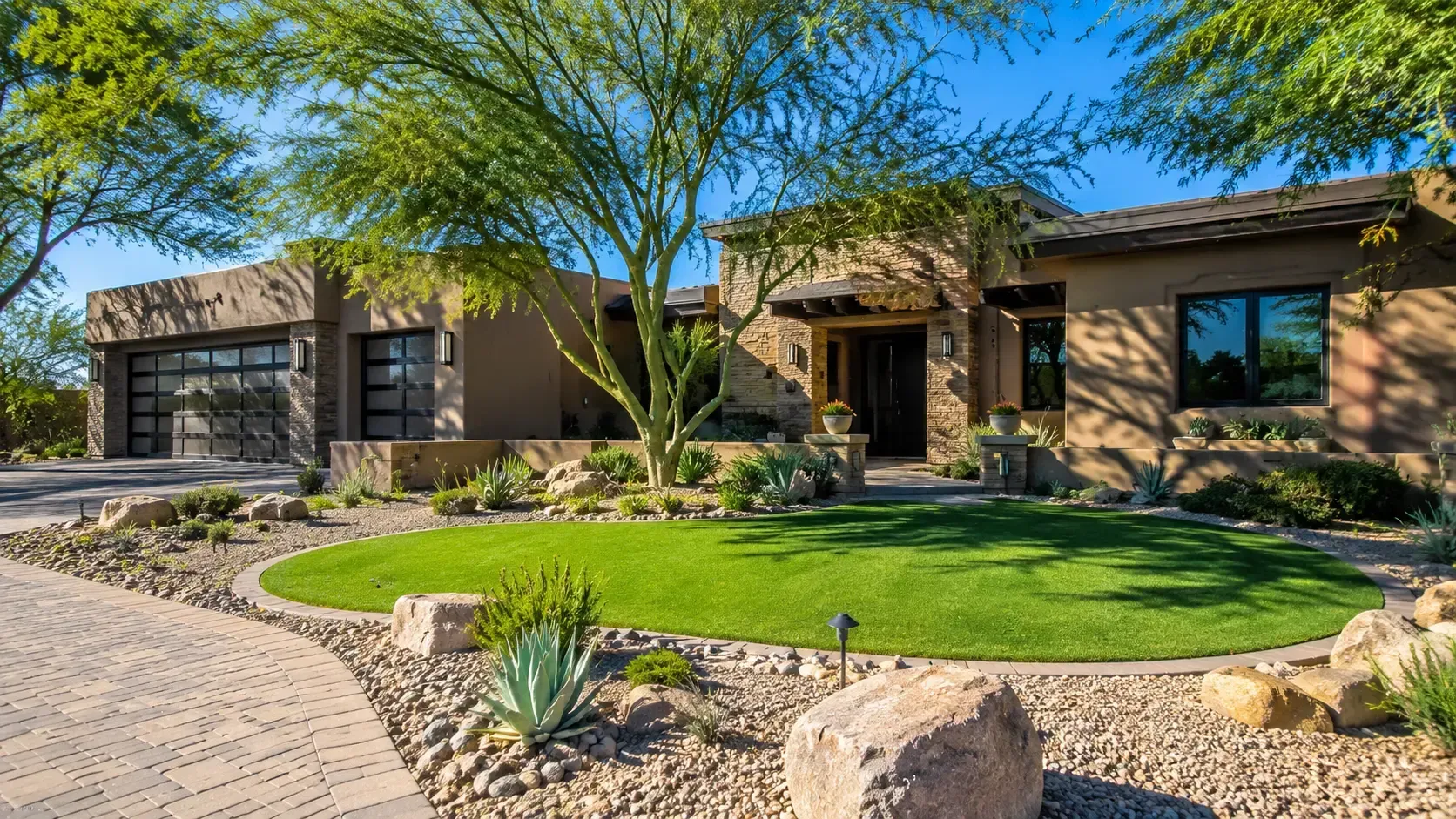
Green lawn grass.

Maintaining a sharp, professional landscape is one of the most underestimated tools a business has. For Arizona facilities — where heat, drought, dust, monsoons, and seasonal frost all collide — landscaping isn’t just about visual appeal. It’s about safety, liability reduction, energy efficiency, brand credibility, and customer impressions.


Whether you manage a corporate campus, retail center, HOA, medical office, industrial site, or hospitality property, this guide gives you a complete, Arizona-specific framework to maintain a commercial landscape that stays clean, safe, healthy, and welcoming 365 days a year.


This is the exact strategy used by high-performing facilities and the reason certain commercial properties always look better — and stay that way.

How to Use This Guide

This article is structured in the same educational style as our most-read resources.


✔ Year-round maintenance framework
✔ Seasonal breakdown (Spring → Winter)
✔ Watering & irrigation strategy
✔ Arizona-specific plant + turf recommendations
✔ Monsoon readiness checklist
✔ Budget efficiency strategy for facility managers
✔ Expert mistakes-to-avoid section
✔ FAQ section for managers
✔ Carefully selected internal links for deeper learning

1. Why Arizona Commercial Landscaping Requires a Different Approach

If you've managed properties in other states, Arizona will surprise you.

Here’s what makes commercial landscaping uniquely difficult here:


A facility manager must think strategically, not reactively.


Most businesses overspend because they fix landscaping only when it becomes a problem.


Top-performing facilities use a year-round maintenance calendar built for Arizona’s climate.

2. At a Glance: The Arizona Year-Round Landscape Strategy

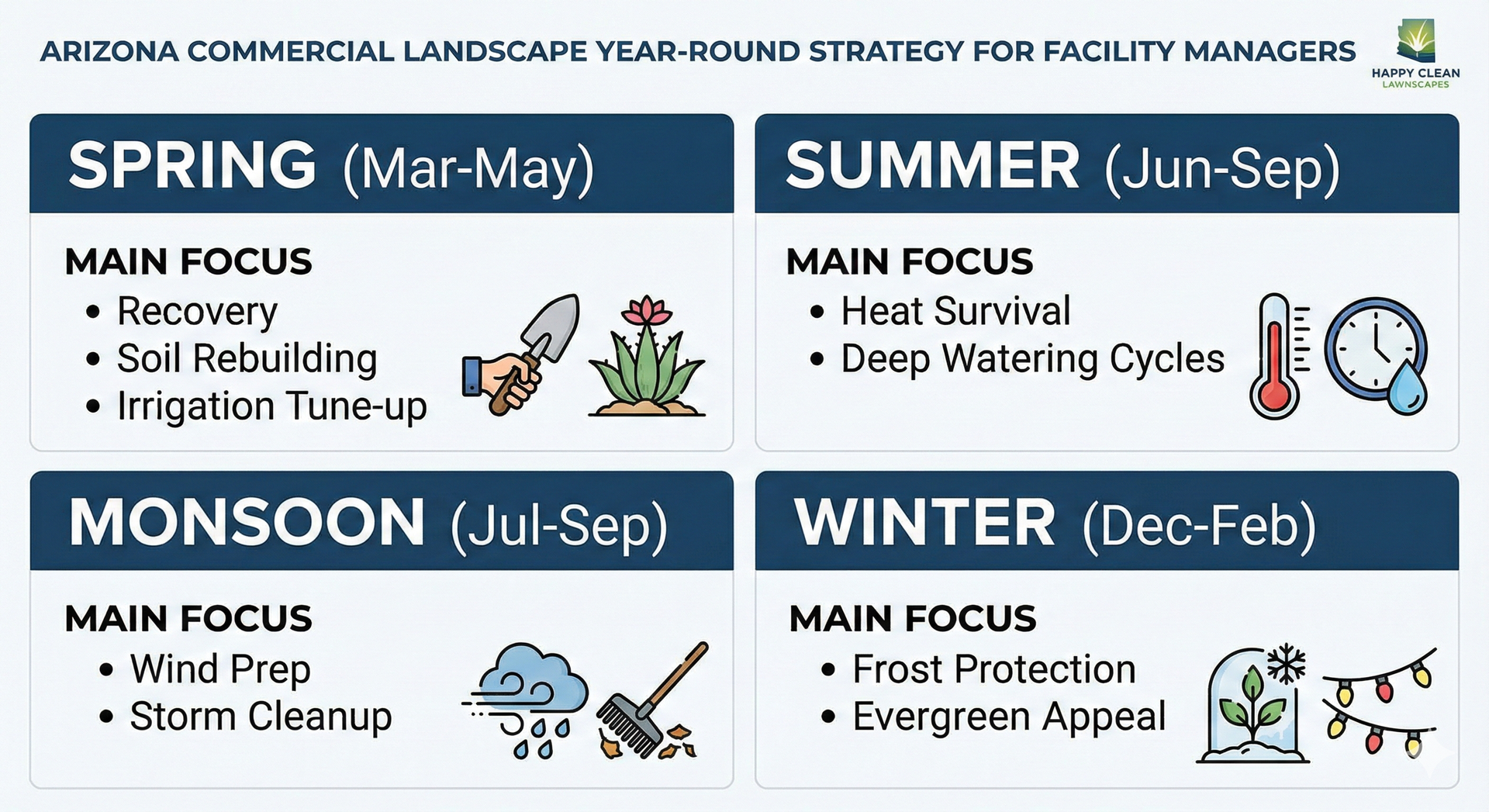
Season Main Focus Why It Matters
Spring Spring Plants wake from winter; irrigation needs calibration
Summer Heat survival, deep watering cycles 110°F temps can scorch unprotected landscapes
Monsoon Wind prep + storm cleanup Prevents flooding, branch failure & debris hazards
Fall Transition to cool season Prepares for turf overseeding & lower water use
Winter Frost protection & evergreen appeal Ensures entrances & signage stay visually clean
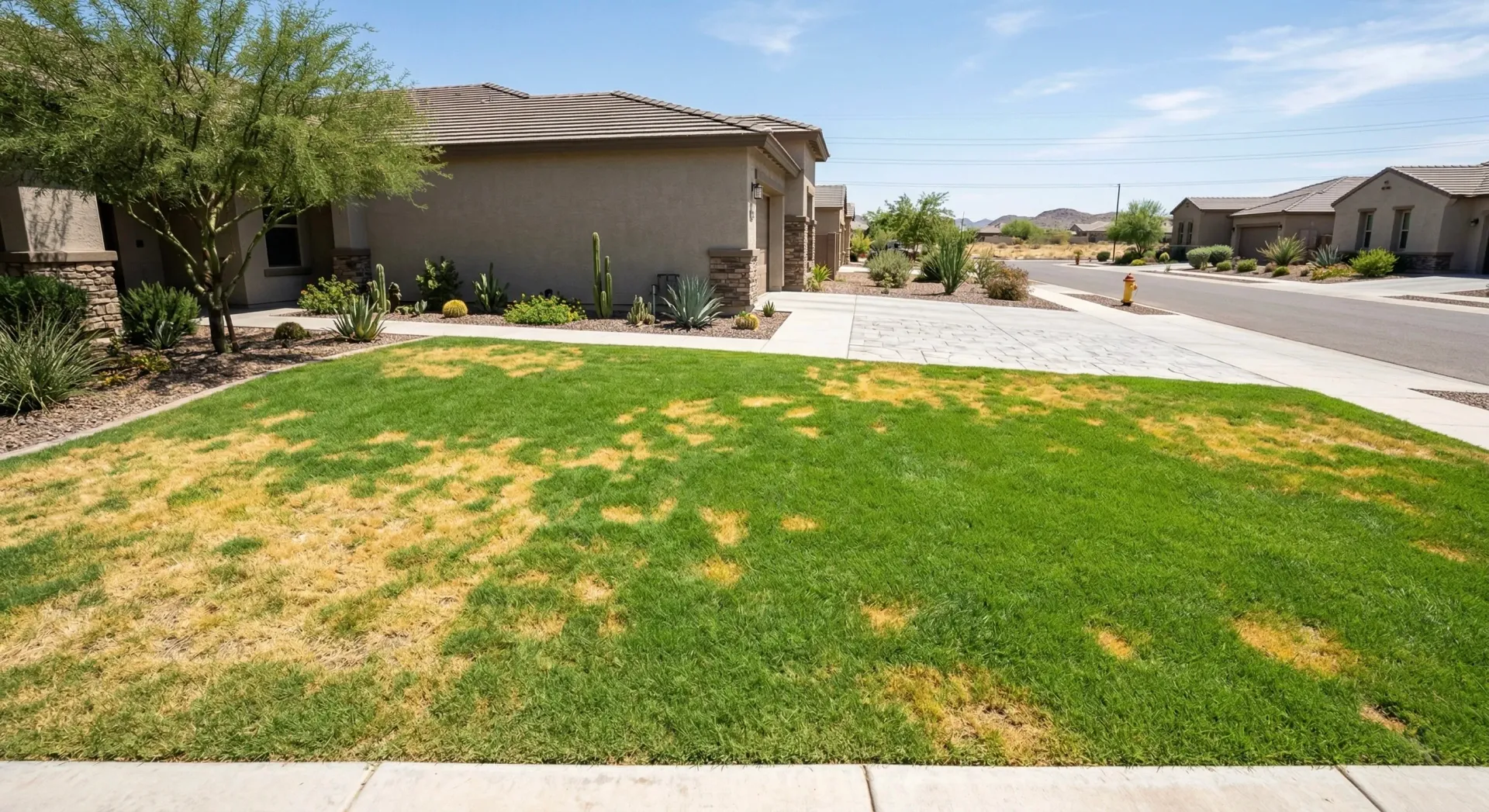
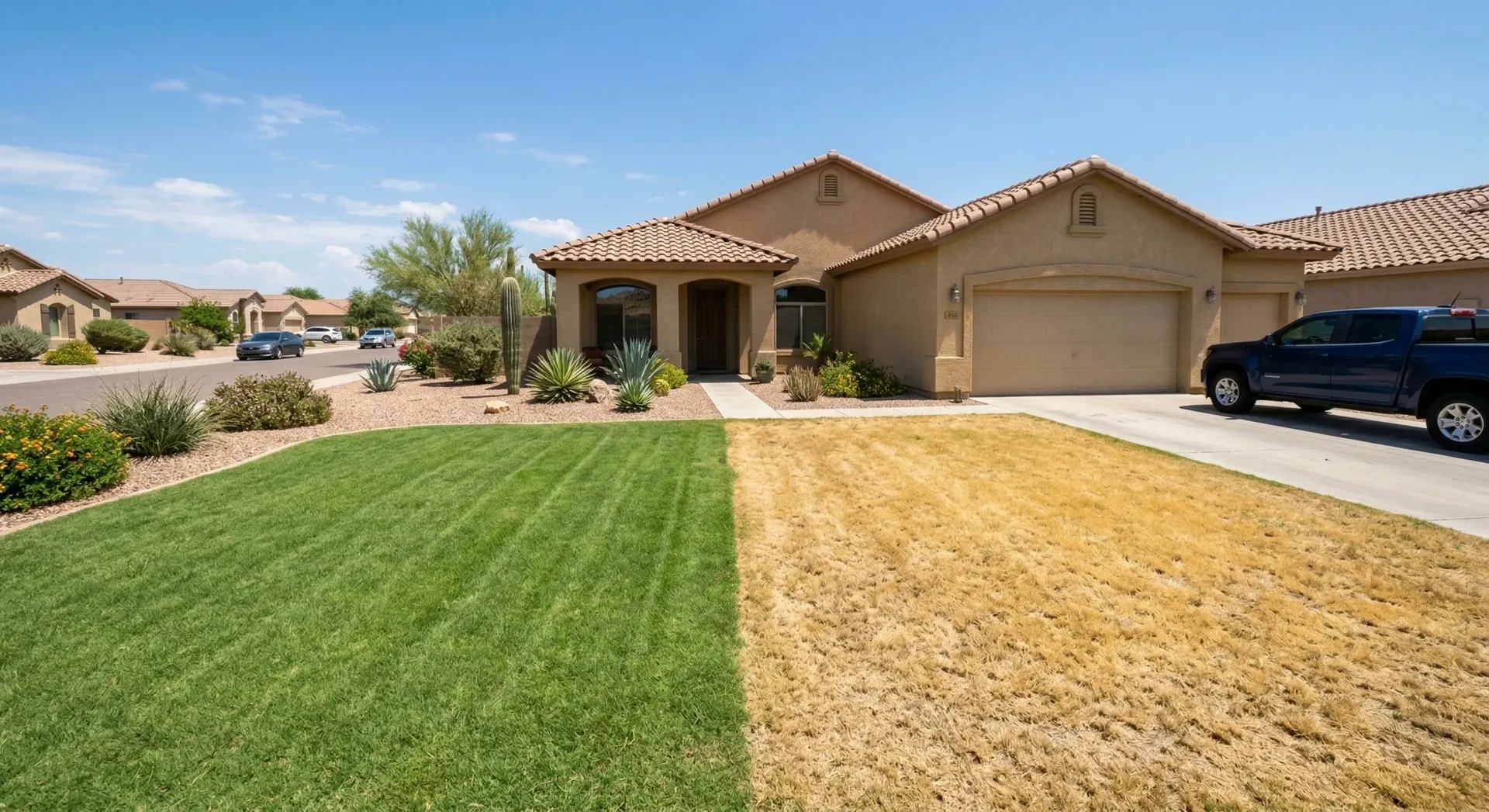
Lawn with dry grass spot.

3. Spring (March–May): Resetting the Property After Winter

Spring is the “reset” button for Arizona landscapes.


Plants are waking up, soil is dry and compact, and irrigation systems have gone months without heavy use.

Facility Manager Priorities

1. Repair Winter Damage

  • Trim frost-burned shrubs
  • Remove dead branches
  • Assess cold-damaged groundcover


Plants recover faster when pruned at the right time.


2. Fix Desert Soil Structure

Most commercial property soil is nutrient-poor, compact, and hydrophobic.


Using proper
desert soil preparation methods dramatically improves plant health and reduces long-term water costs.


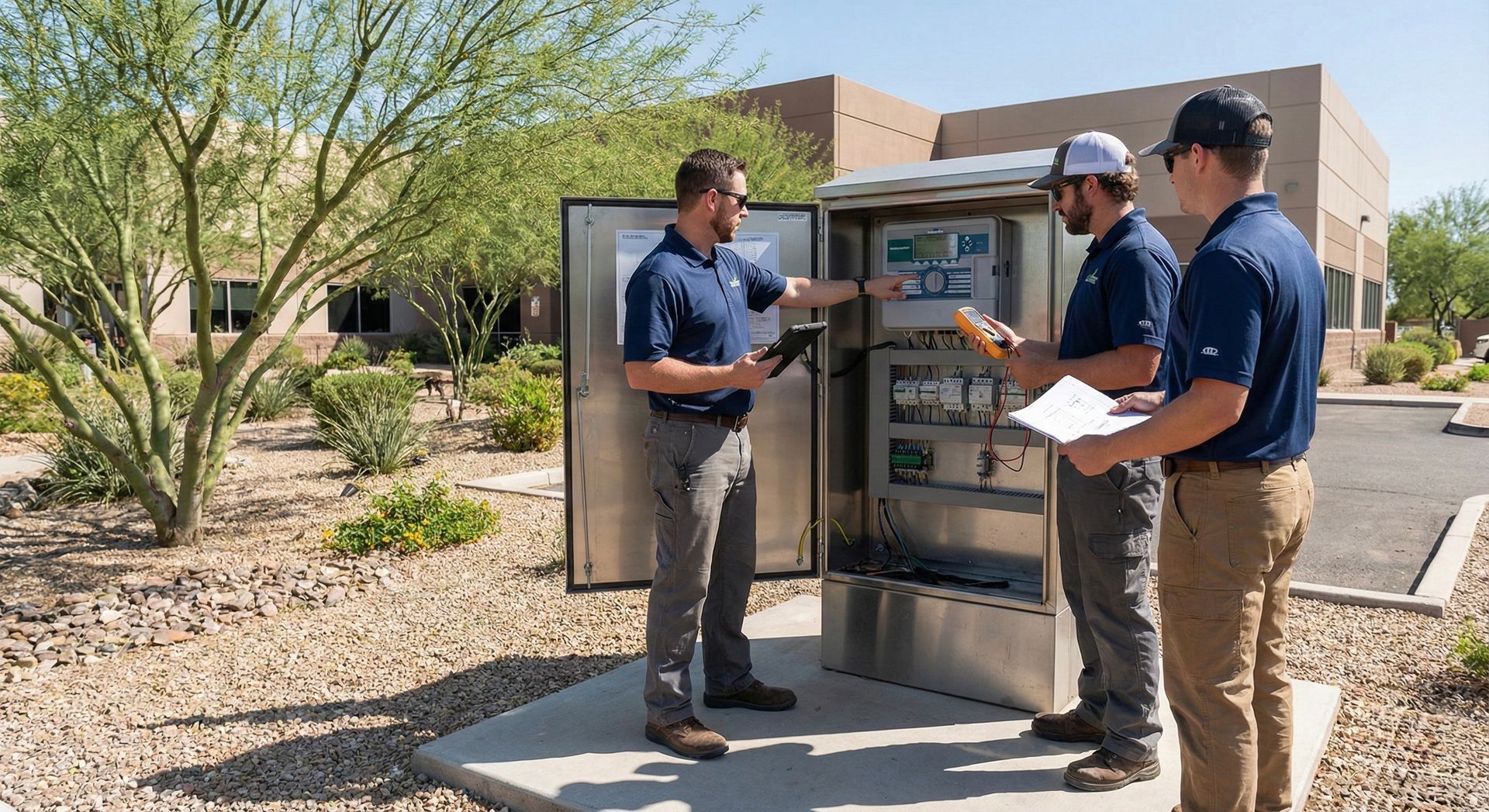
3. Tune Irrigation Systems

  • Clear clogged emitters
  • Reset schedules
  • Test pressure and coverage
  • Inspect valves for leaks


A single malfunctioning valve can waste hundreds of gallons per week.


4. Apply Spring Fertilizer

For turf or plant beds that require it, follow a careful, Arizona-appropriate feeding schedule.

Fertilizing the green lawn.

4. Summer (June–September): Surviving Extreme Heat

No season tests a commercial landscape harder than an Arizona summer.
Plants dry out, turf burns, irrigation runs nonstop, and facility managers get urgent calls from tenants or executives.

Summer Survival Priorities

1. Water Deep, Not Often

Shallow watering guarantees plant stress.


Use deep watering cycles early in the morning to strengthen roots and reduce evaporation.


2. Choose Heat-Proof Plant Species

Desert-adapted plants like Palo Verde, Desert Willow, and Texas Sage handle heat far better and reduce long-term replacement costs.


3. Reinforce High-Traffic Zones

Replace weak turf with:


4. Refresh Mulch

Mulch prevents soil from overheating and reduces water waste by up to 30%.

Fertilizing the green lawn.

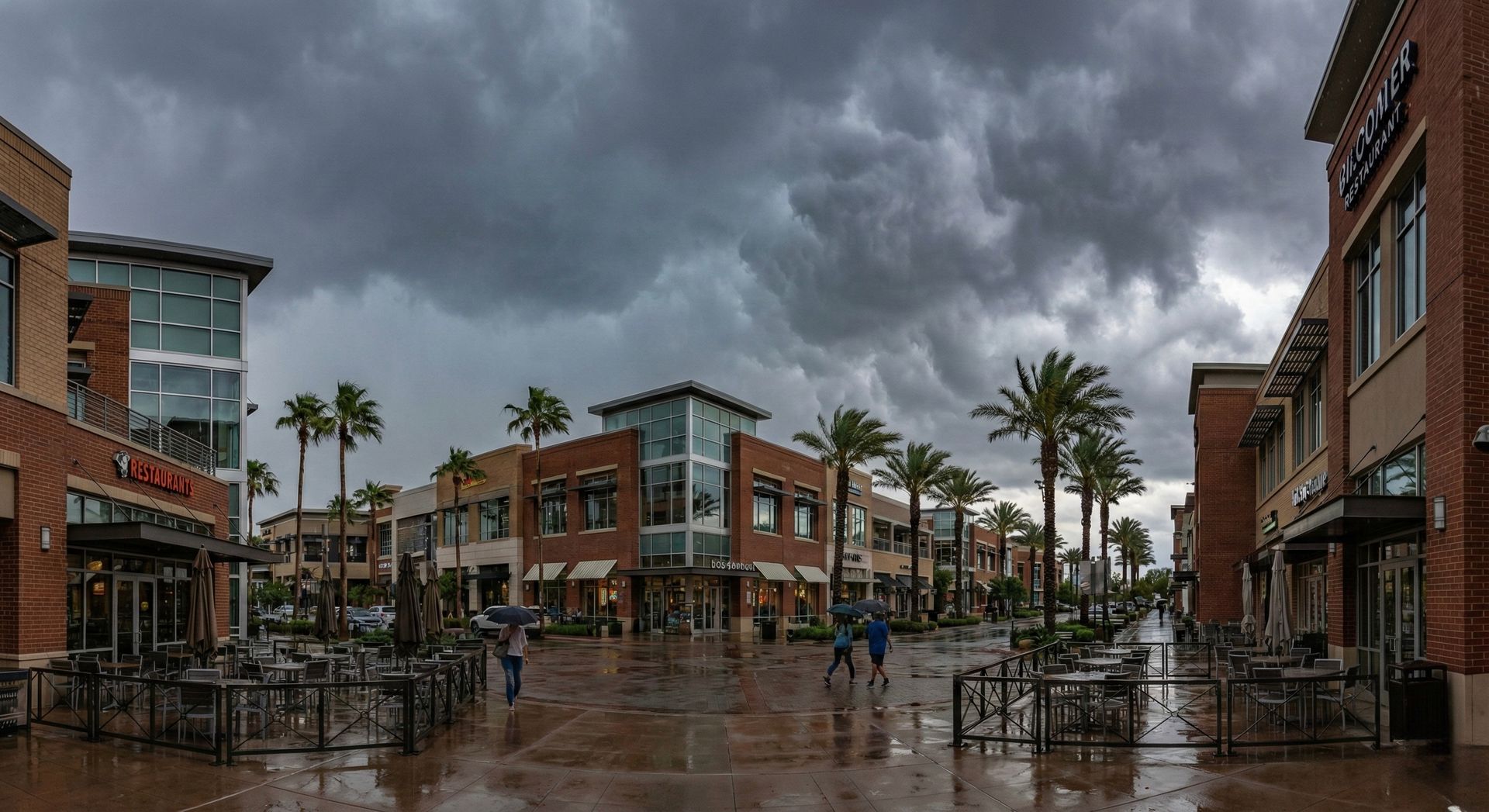
5. Monsoon Season (July–September): Risk Management & Safety

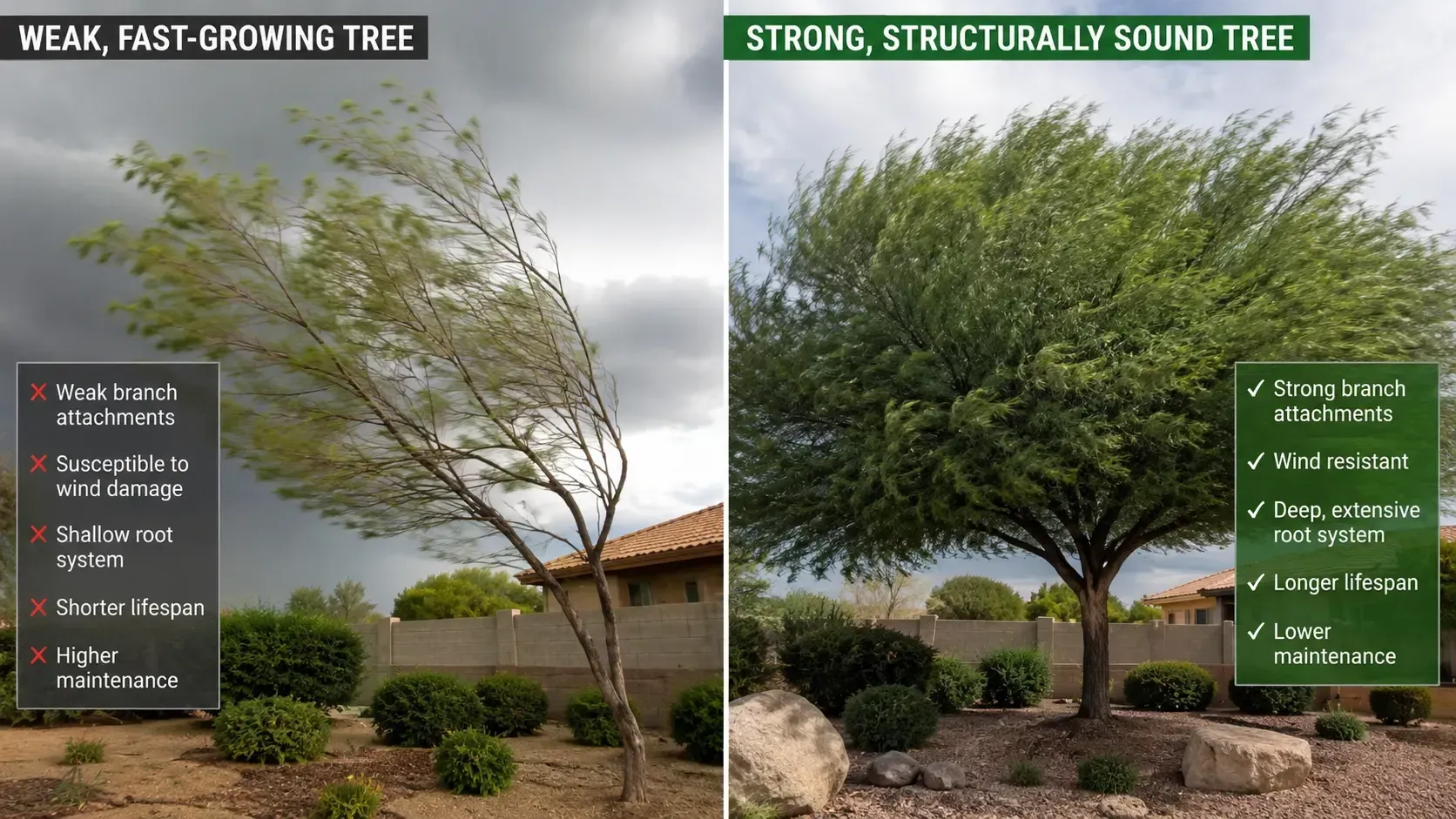
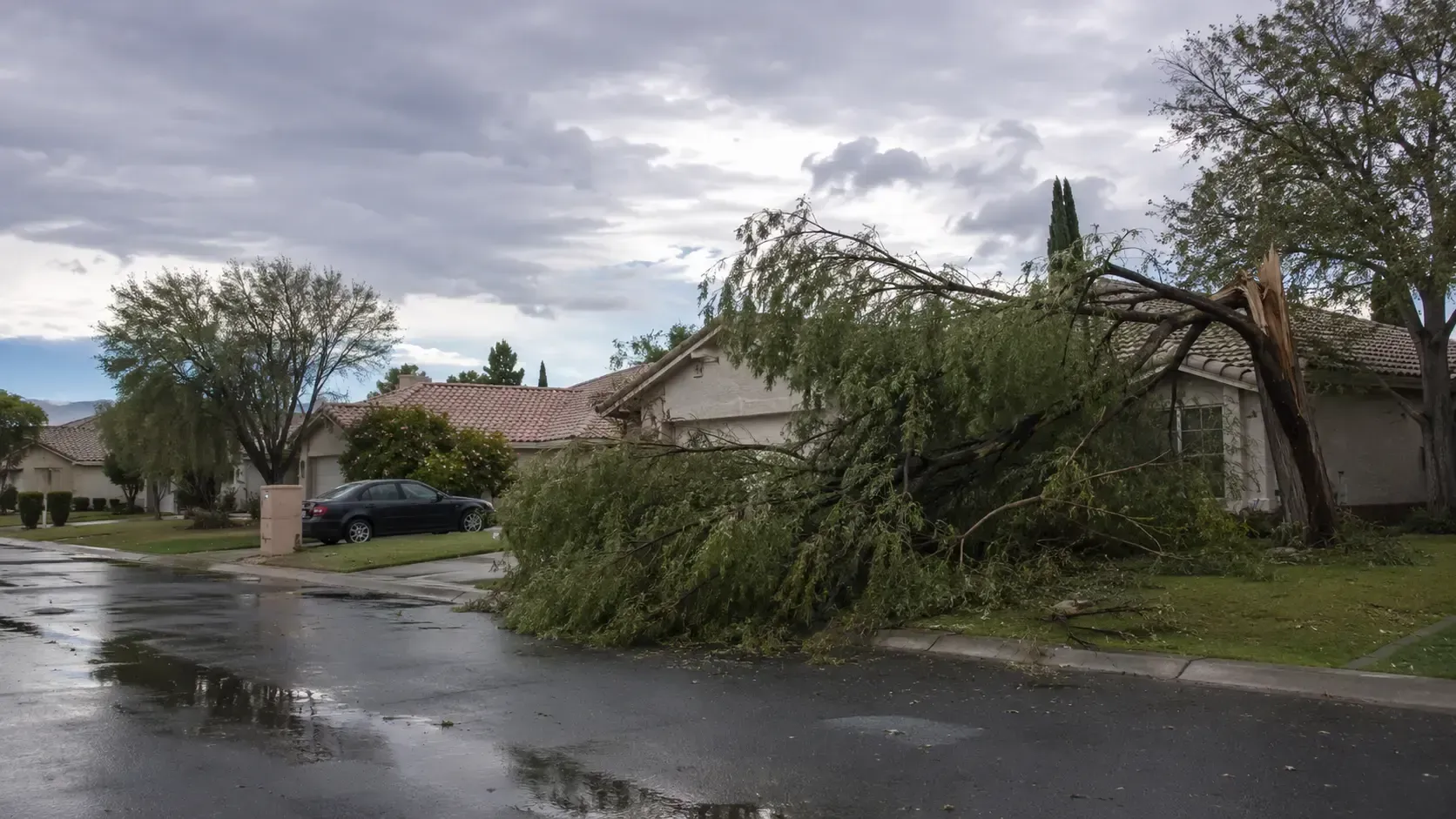
Strong winds, microbursts, flooding, and debris can cause property damage and safety hazards.

Your Monsoon Preparation Checklist

Before storms:

  • Remove weak/hanging branches
  • Trim trees away from buildings
  • Stabilize gravel in pathways
  • Clear drainage channels and scuppers
  • Inspect retaining walls


After storms:

  • Remove fallen branches
  • Clear sidewalks and parking lots
  • Check irrigation for storm damage
  • Reset displaced gravel
  • Inspect turf for waterlogging or fungus


A well-prepared landscape reduces liability risks, which is why commercial properties investing in preventative care spend less overall.

Fertilizing the green lawn.

6. Fall (October–November): Preparing for Cooler Weather

Fall is when commercial properties shift focus from heat protection to presentation.


Key Tasks

  • Final shaping of shrubs
  • Refresh gravel areas
  • Adjust irrigation for cooler temperatures
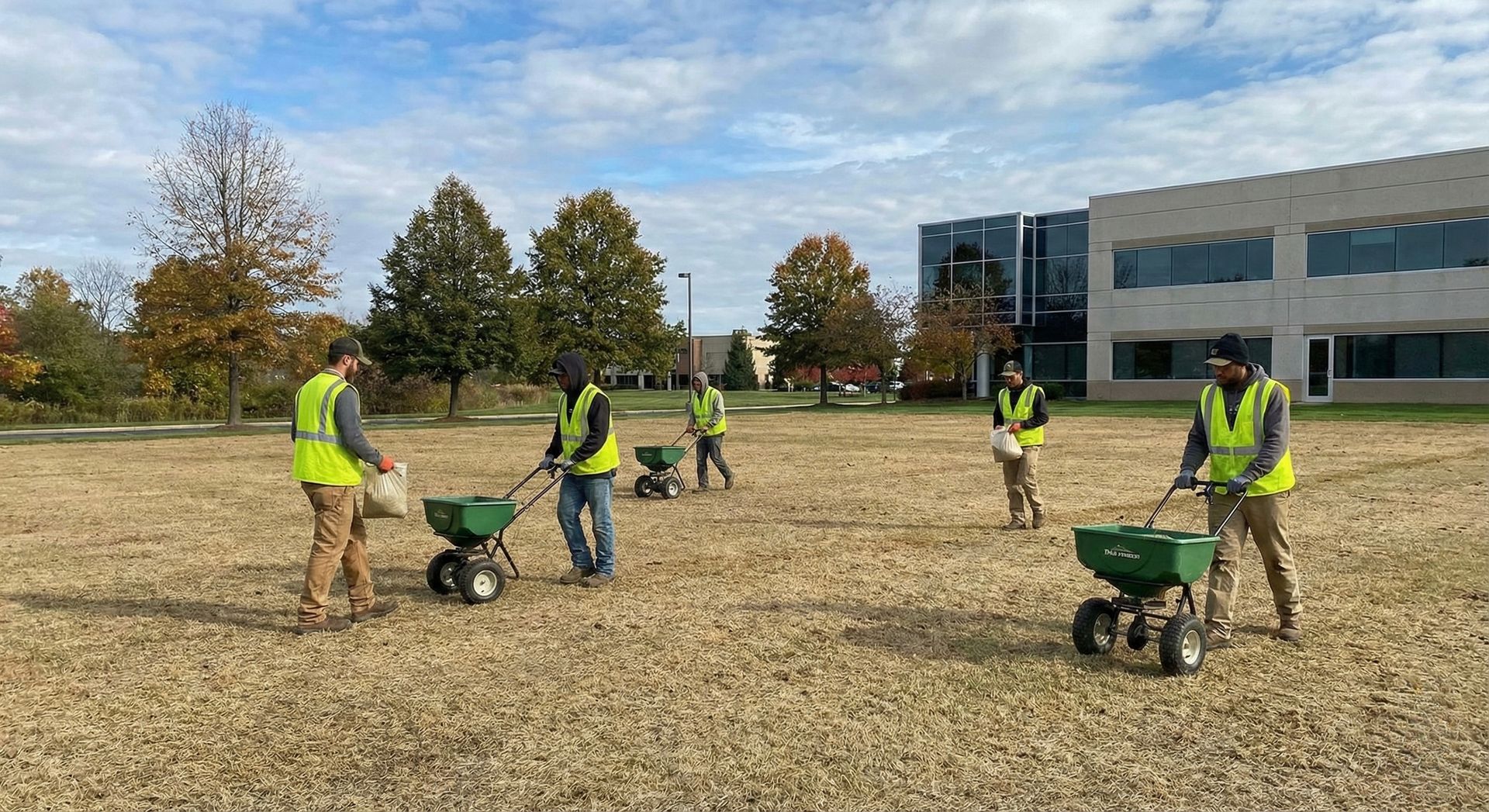
  • Begin winter turf overseeding for properties where green grass is essential
  • Inspect winter lighting
Fertilizing the green lawn.

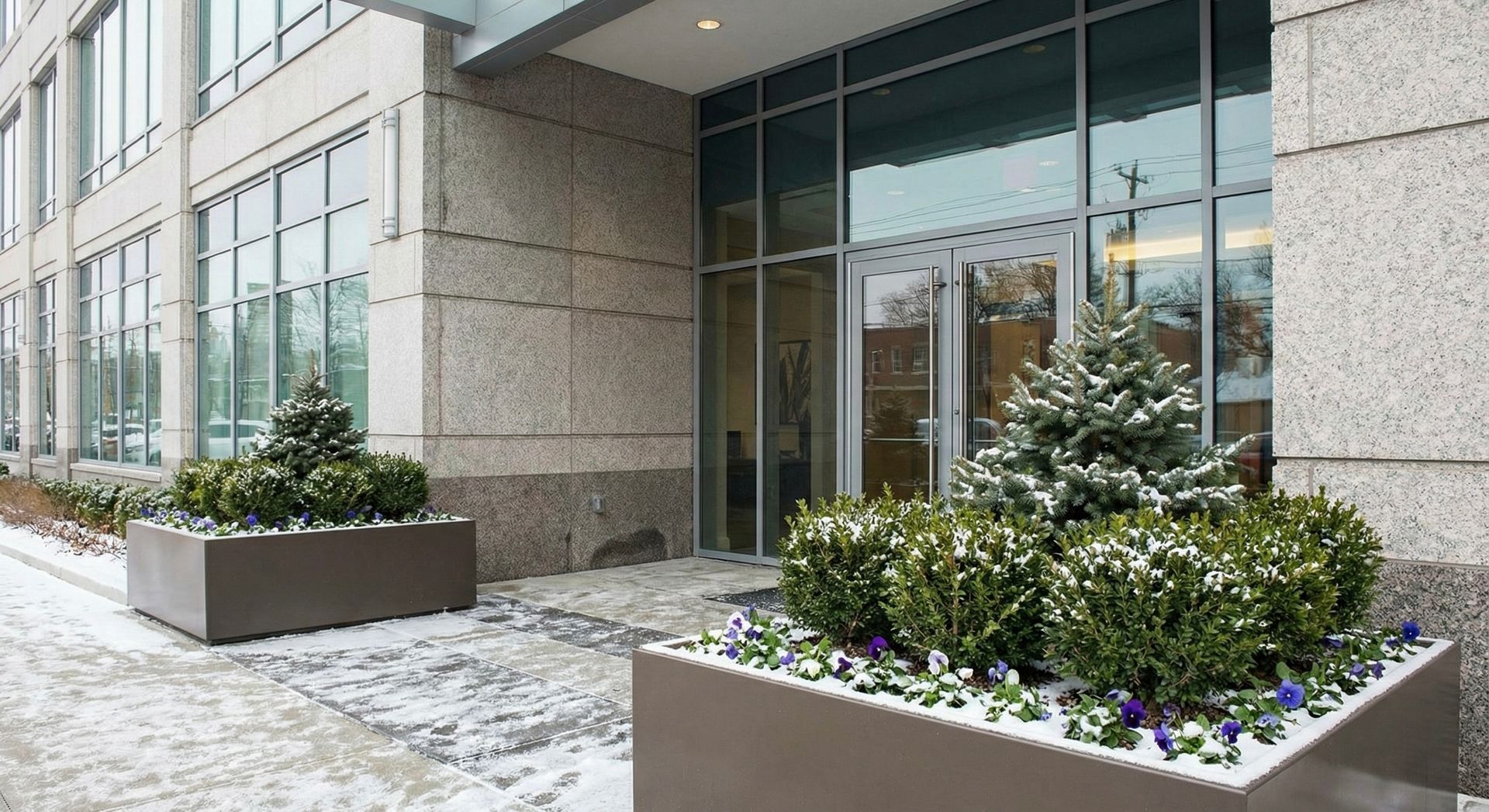
7. Winter (December–February): Frost Protection & Evergreen Appeal

Even in Arizona, frost pockets can cause real damage, especially in shaded courtyards, north-facing walls, and low-lying areas.


Winter Priorities


High-Visibility Evergreen Plant Choices

  • Great for signage, entrances, courtyards, or executive buildings:
  • Japanese Boxwood
  • Texas Sage
  • Carolina Cherry
  • Strawberry Tree
  • Agave & Hesperaloe
Fertilizing the green lawn.

8. Common Mistakes Facility Managers Make

1. Overwatering in Summer and Underwatering in Winter

Arizona’s climate flips normal watering logic.

The result? Turf fungus in winter and plant burn in summer.


2. Using "Pretty" Plants Instead of “Appropriate” Plants

The wrong species will die within a season — costing thousands over time.


3. Treating Landscaping as a Cosmetic Add-On

  • Landscaping affects:
  • First impressions
  • Foot traffic
  • Safety compliance
  • Revenue (yes — better-looking centers attract more visitors)


4. Hiring Vendors Who Only React, Not Plan

Great landscapes come from strategy, not emergency fixes.

9. Quick Comparison Table — Best Practices by Facility Type

Facility Type Landscape Priority Best Solutions
Corporate Offices Clean lines, evergreen appeal Evergreen shrubs, structured pruning, lighting
Retail Centers High foot traffic Ryegrass overseeding artificial turf
HOAs Cost efficiency Xeriscaping desert soil prep
Medical Offices Low maintenance + clean entrances Desert groundcovers
Industrial Sites Durability Gravel, rock, drought-tolerant trees

10. FAQ — Arizona Commercial Landscaping (High Conversion)

1. How often should commercial landscapes be maintained in Arizona?

Weekly in summer, biweekly in winter, with seasonal checkups.


2. What plants survive Arizona heat the best?

Palo Verde, Mesquite, Desert Willow, Agave, Texas Sage, and other drought-tolerant species.


3. How can a facility manager reduce landscaping costs?

Switch to xeriscaping, improve soil, use smart irrigation, and reduce turf.


4. Should commercial properties overseed for winter?

Yes — if appearance matters.

 Use ryegrass overseeding for storefronts, hotels, and high-traffic areas.


5. Does professional landscaping impact customer impressions?

Absolutely.

Clean, maintained landscapes increase foot traffic, brand trust, and tenant satisfaction.

Soft, Trust-Based, Conversion-Focused

A well-maintained landscape tells customers that your business is professional before they ever walk through the door.
If you want year-round consistency, lower costs, and a landscape your tenants or clients will appreciate…


Request a free commercial landscape estimate today.
Let our Arizona experts design a maintenance plan tailored to your property.

A green background with a white outline of a heart.
A Sharp, vibrant Arizona yard featuring evergreen shrubs, agave, and cypress trees in warm morning l
December 14, 2025
Evergreen species that stay vibrant, structured, and healthy all winter long.
Green lawn grass.
November 17, 2025
1. Understanding Arizona Winter Lawn Behavior
Beautiful aerial shot of the garden.
November 5, 2025
Discover the top commercial landscaping ideas Arizona businesses trust to attract customers, save water, and elevate curb appeal. Expert tips from Happy Clean Lawnscapes.
An office building showing high-impact curb appeal zones
October 13, 2025
Commercial Landscaping is a Whole Different Ball Game in Arizona
October 1, 2025
Not all turf is created equal, especially for commercial use. Here's the real deal on what holds up best in our Arizona climate: For Office Parks & Corporate Campuses: Polyethylene Turf - This is the 'luxury sedan' of turf. It's the one that looks and feels most like real grass, with that soft texture that makes your property say 'we pay attention to details.' It handles sun exposure really well without fading, which is crucial for our Arizona summers. For High-Traffic Areas & Shopping Centers: Nylon Turf - Think of this as the 'work truck' option. It's the most durable turf on the market, tough enough for hundreds of people walking across it daily without showing wear. The fibers bounce right back, even in high-traffic entryways or common areas that get constant foot traffic. For Apartments & HOAs: Polypropylene Turf - The 'family minivan' - perfect balance of durability, safety for kids and pets, and budget-friendly for larger common areas. It's cost-effective for covering big spaces while still standing up to playground use and pet areas. Plus, it stays cooler than other options, which parents really appreciate.
September 17, 2025
Why Busy Homeowners Need Easier Lawns
September 1, 2025
Why Busy Homeowners Need Easier Lawns
By Happy Clean Landscapes August 20, 2025
Why Fertilization Matters for Arizona Lawns
By Happy Clean Landscapes July 14, 2025
Why Seasonal Lawn Care is Important
By Happy Clean Landscapes July 2, 2025
If you're struggling with keeping your plants hydrated without wasting water, don’t worry—there are smart watering strategies that can make a significant difference. Learn how to maximize water efficiency and ensure your plants get exactly what they need.
Show More