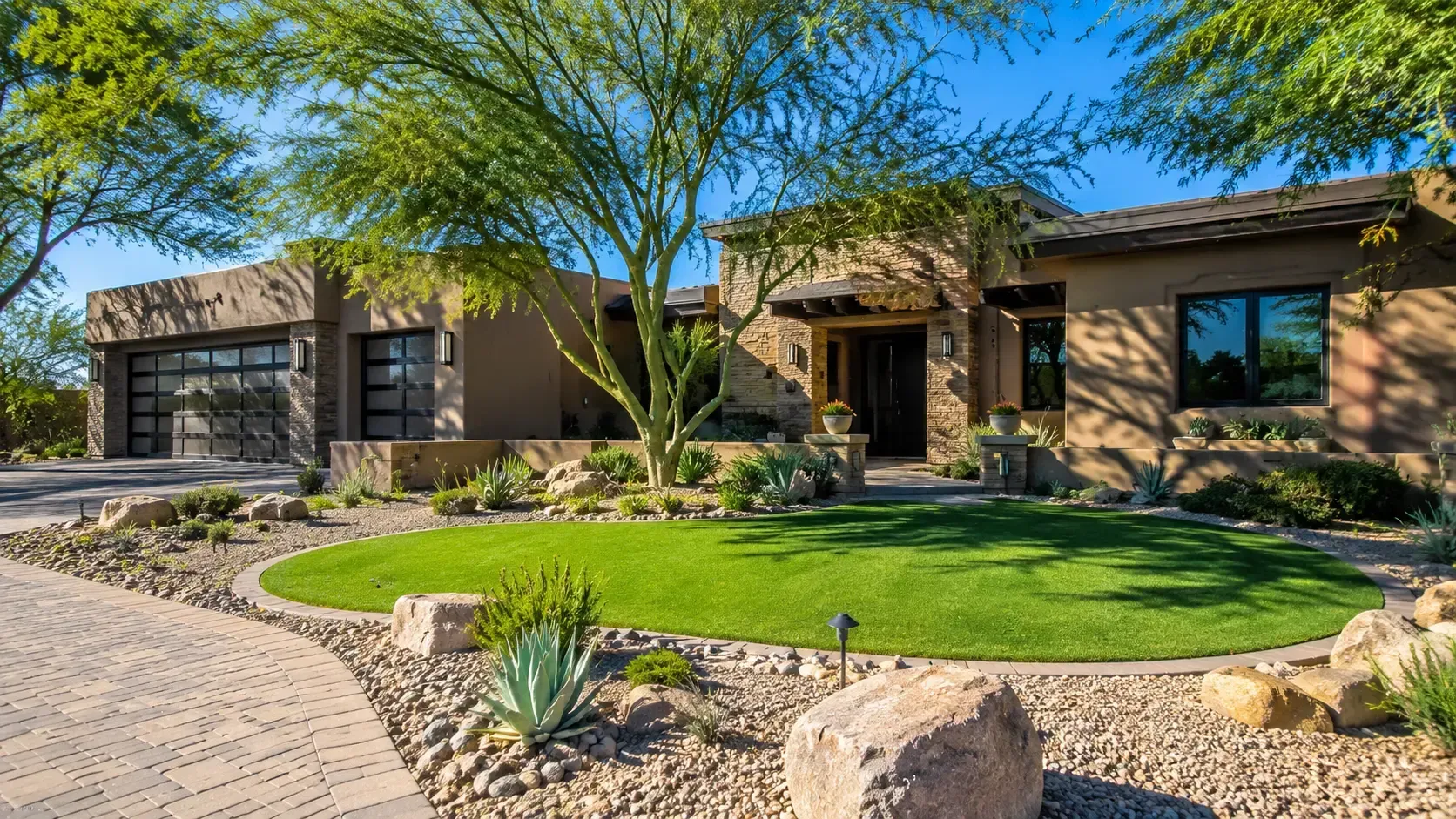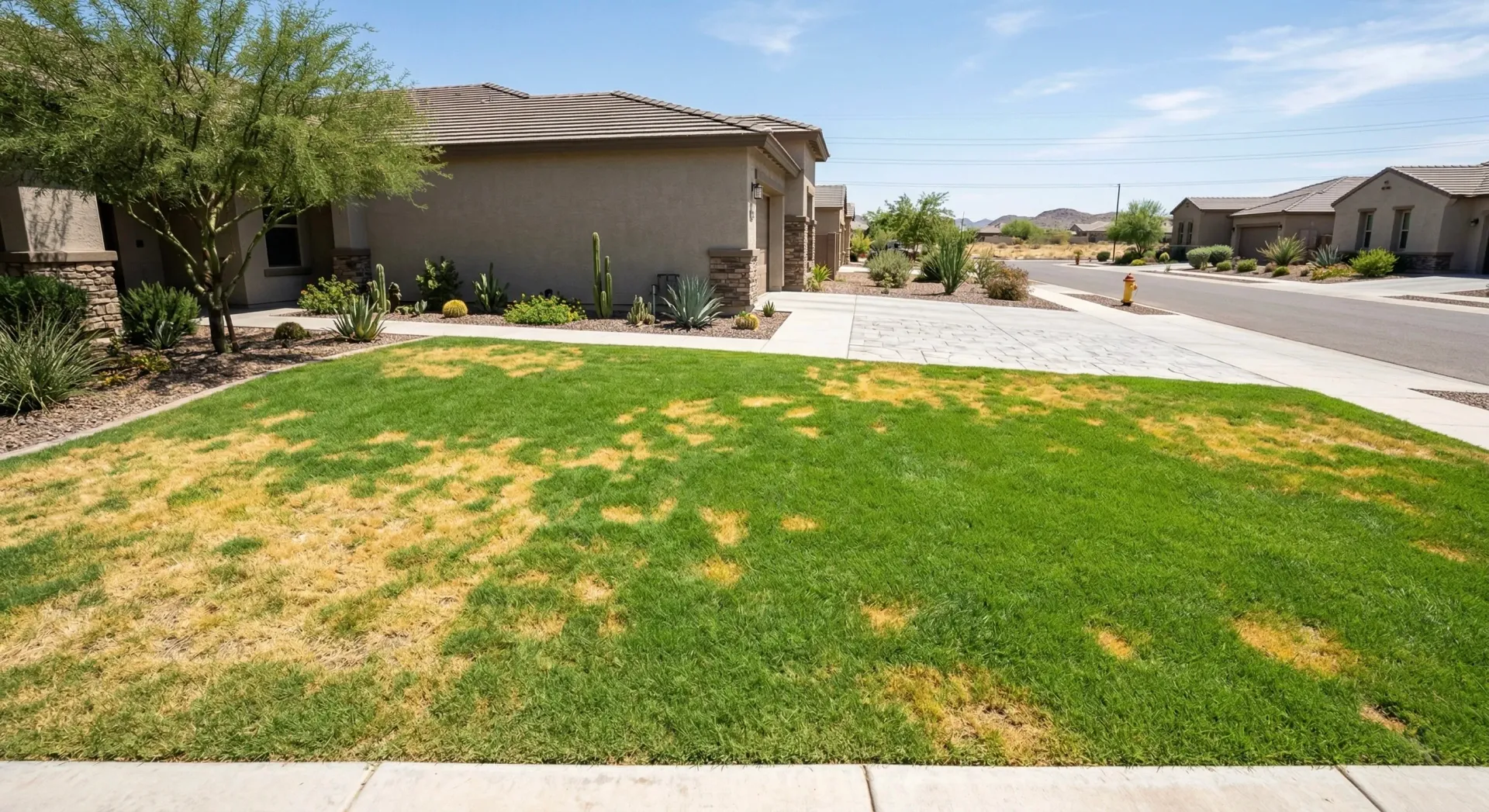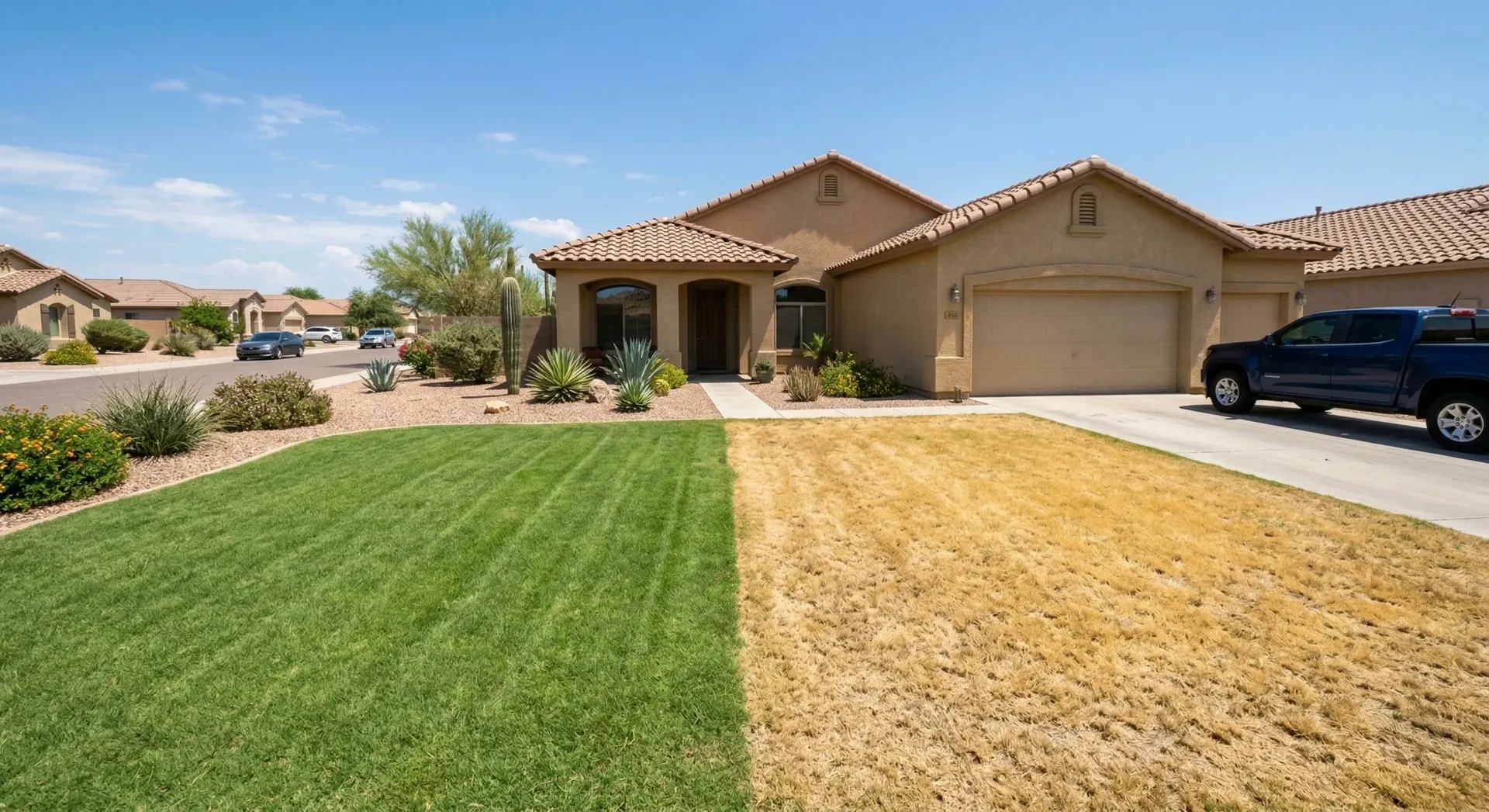


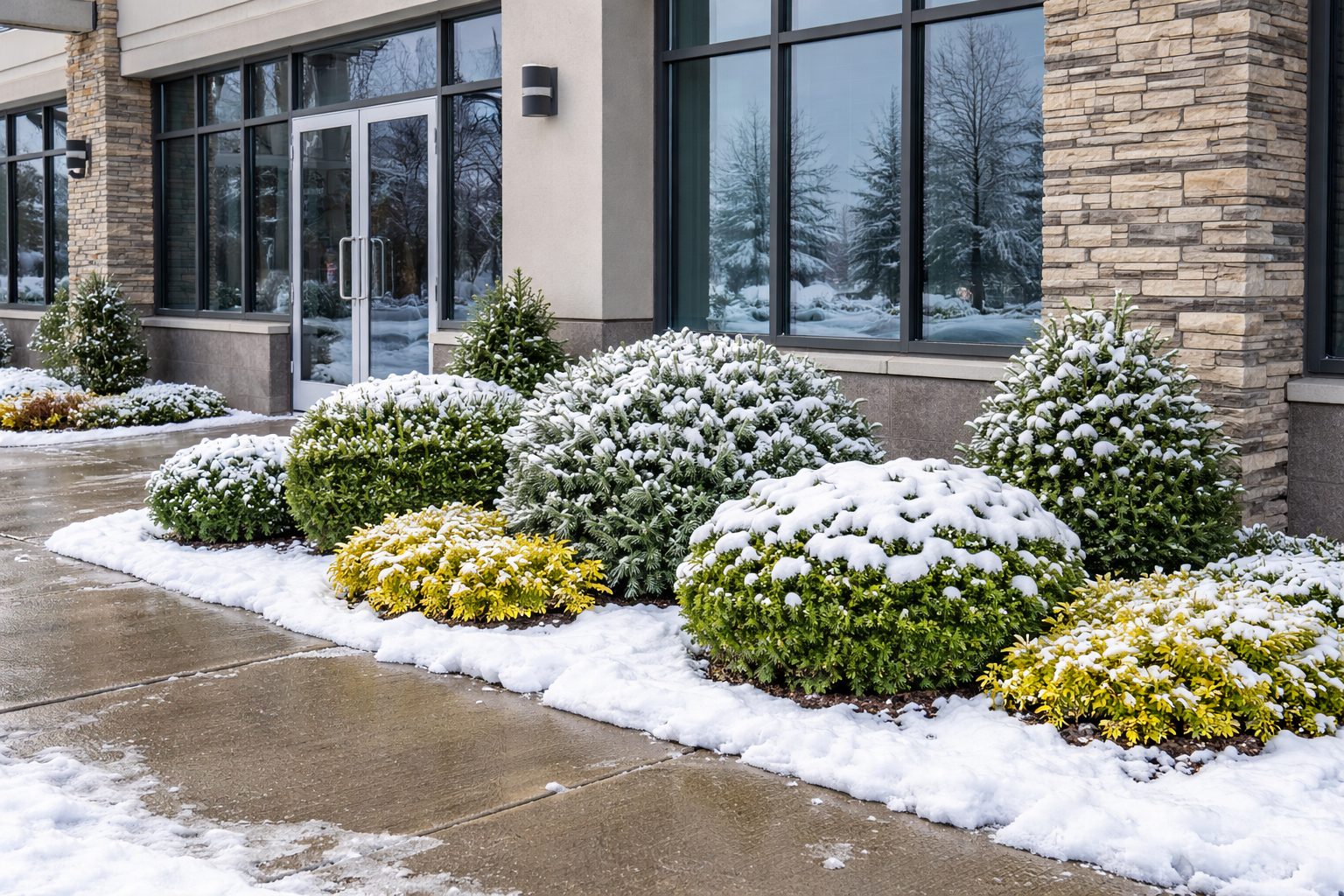

Arizona winter landscapes often surprise new homeowners and facility managers. While the climate is mild, winter can still strip gardens and commercial properties of color, structure, and life. Deciduous trees lose their leaves. Flowering shrubs fade. Many popular perennials go dormant.
Yet the properties that look beautiful year-round — from North Scottsdale estates to Buckeye commercial plazas — all rely on the same secret:
Evergreen species that stay vibrant, structured, and healthy all winter long.
This guide dives deep into the best evergreens for Arizona winters.
You’ll learn:
- Which evergreen trees thrive in frost and low-water conditions
- Evergreen shrubs that stay green without heavy maintenance
- Evergreen accents that offer bold visual structure
- Best plants by region: Phoenix, Tucson, Flagstaff, Prescott
- Detailed care, watering, planting, and frost strategies
- Landscape design advice from Arizona professionals
- Common mistakes to avoid when choosing evergreens
- Internal links to deeper expert guides
By the end, you’ll know exactly how to design a winter-proof landscape that stays green all year — with
less water, less maintenance, and far better curb appeal.
How to Use This Guide
- Start with the “At a Glance” comparison table
- Use the detailed plant sections to choose species
- Read region-specific guidance for your city
- Follow watering + frost instructions carefully
- Identify 3–5 evergreen species suited to your property type
- End with the expert FAQ
1. Why Evergreens Matter in Arizona Landscape Design
Arizona’s unique desert climate creates challenges in winter that are often overlooked:
- Cold desert nights can dip into the 20s
- Low humidity intensifies frost damage
- Sun–frost cycle burns new growth
- Dry winter winds dehydrate shallow-rooted plants
- Dormant summer shrubs leave gaps in the landscape
But evergreens solve these problems because they:
- Maintain color all year
- Keep visual structure through dormancy season
- Provide wind buffering during winter storms
- Require less water
- Reduce winter maintenance
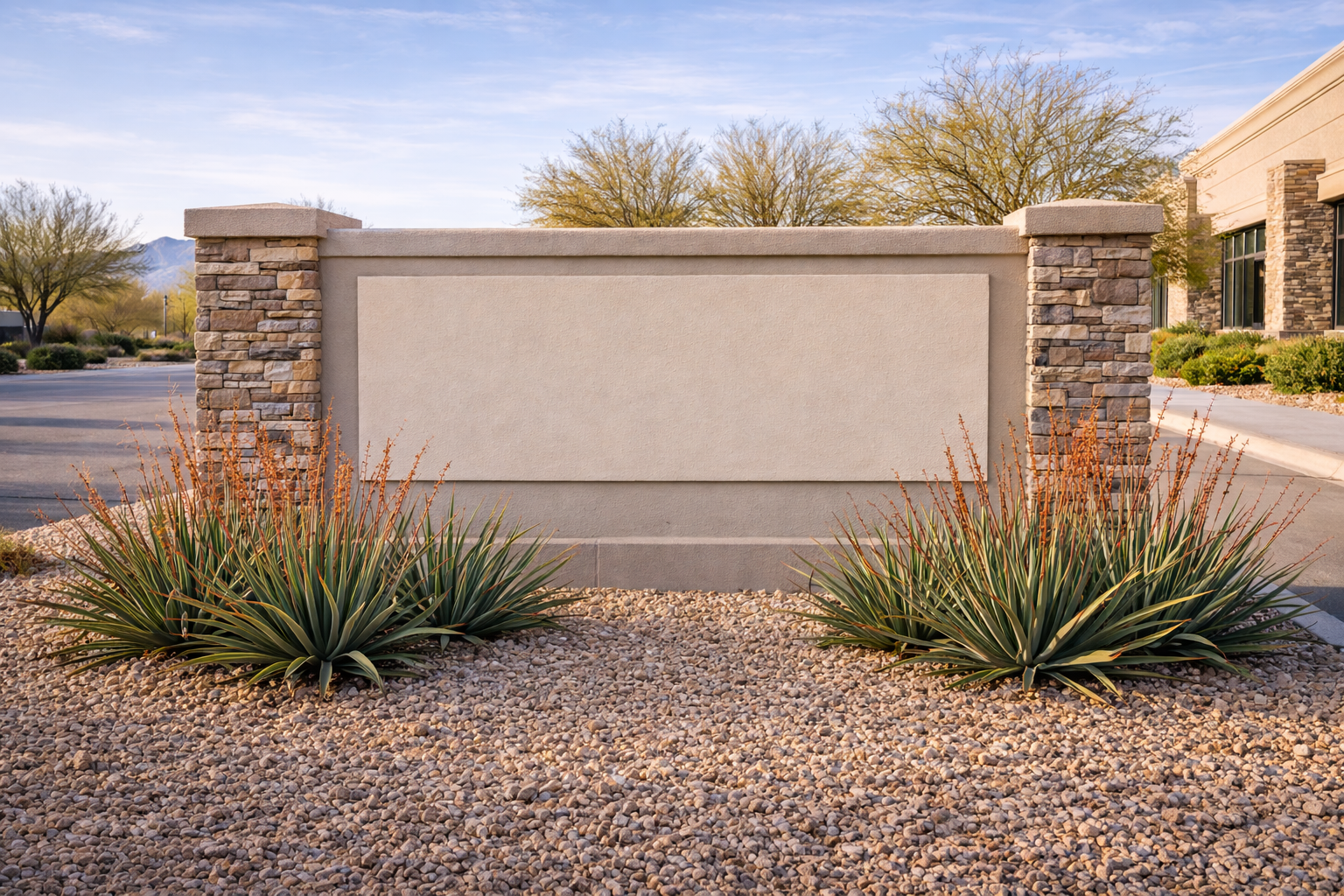
- Make entrances and signage look polished
Evergreens
anchor a landscape — everything else becomes seasonal enhancement.
2. At a Glance: The Best Evergreens for Arizona Winters
| Category | Best Options | Water Use | Frost Tolerance | Landscape Role |
|---|---|---|---|---|
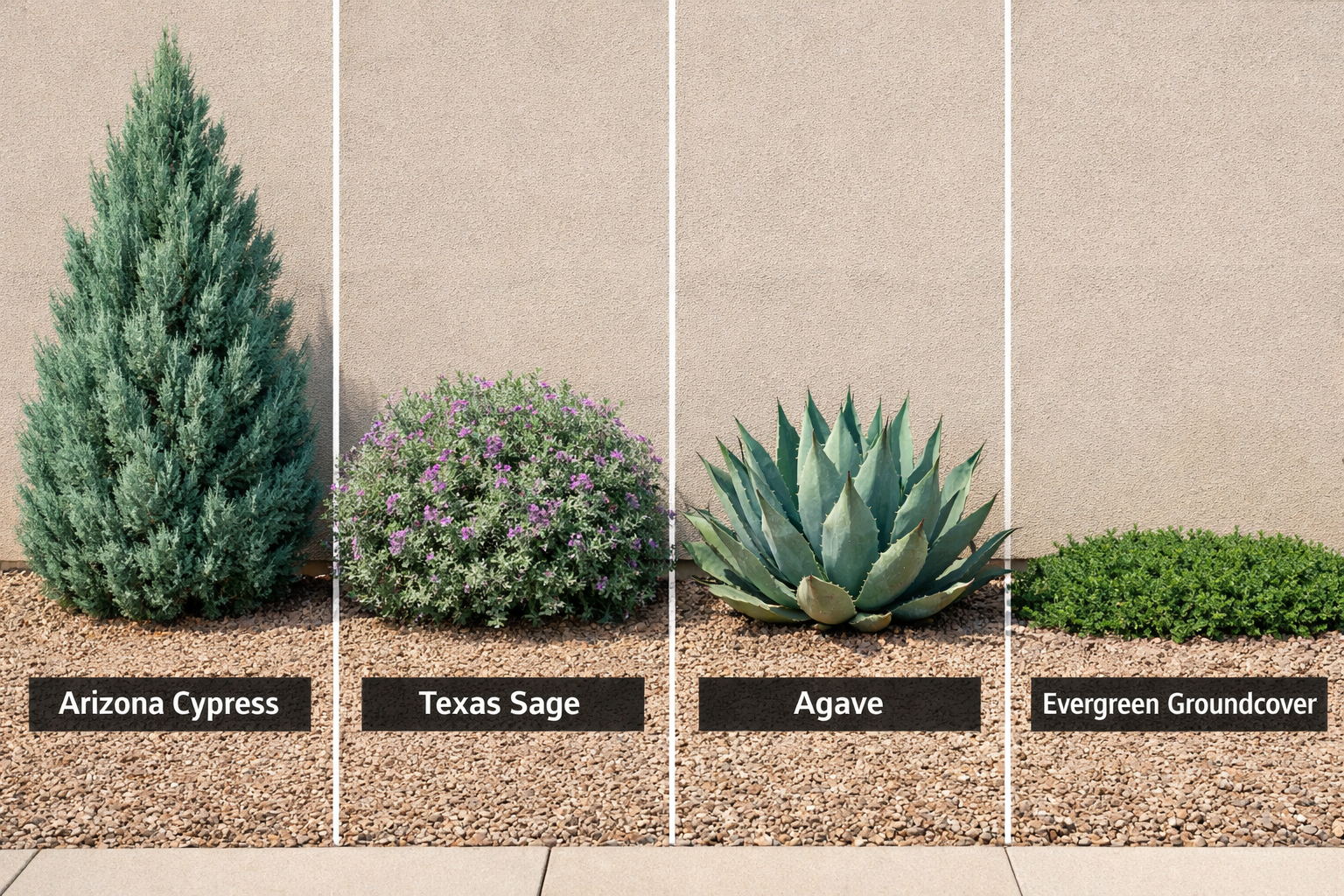
| Evergreen Trees | Arizona Cypress, Aleppo Pine, African Sumac | Low | High | Height, privacy, structure |
| Evergreen Shrubs | Texas Sage, Japanese Boxwood, Hopseed Bush | Low–Medium | High | Screening, form, entry definition |
| Evergreen Accents | Agave, Yucca, Red Yucca | Very Low | Very High | Bold shapes, modern appeal |
| Evergreen Groundcovers | Myoporum, Trailing Rosemary | Medium | Medium–High | Bed coverage, erosion control |
3. Evergreen Trees — Arizona’s Best Year-Round Backbone
Evergreen trees define the skyline of a landscape. They give height, shade, privacy, and structure — especially in winter when deciduous trees go bare.
Below are the top trees chosen by Arizona landscape architects and maintenance experts, with detailed pros/cons and city-specific notes.
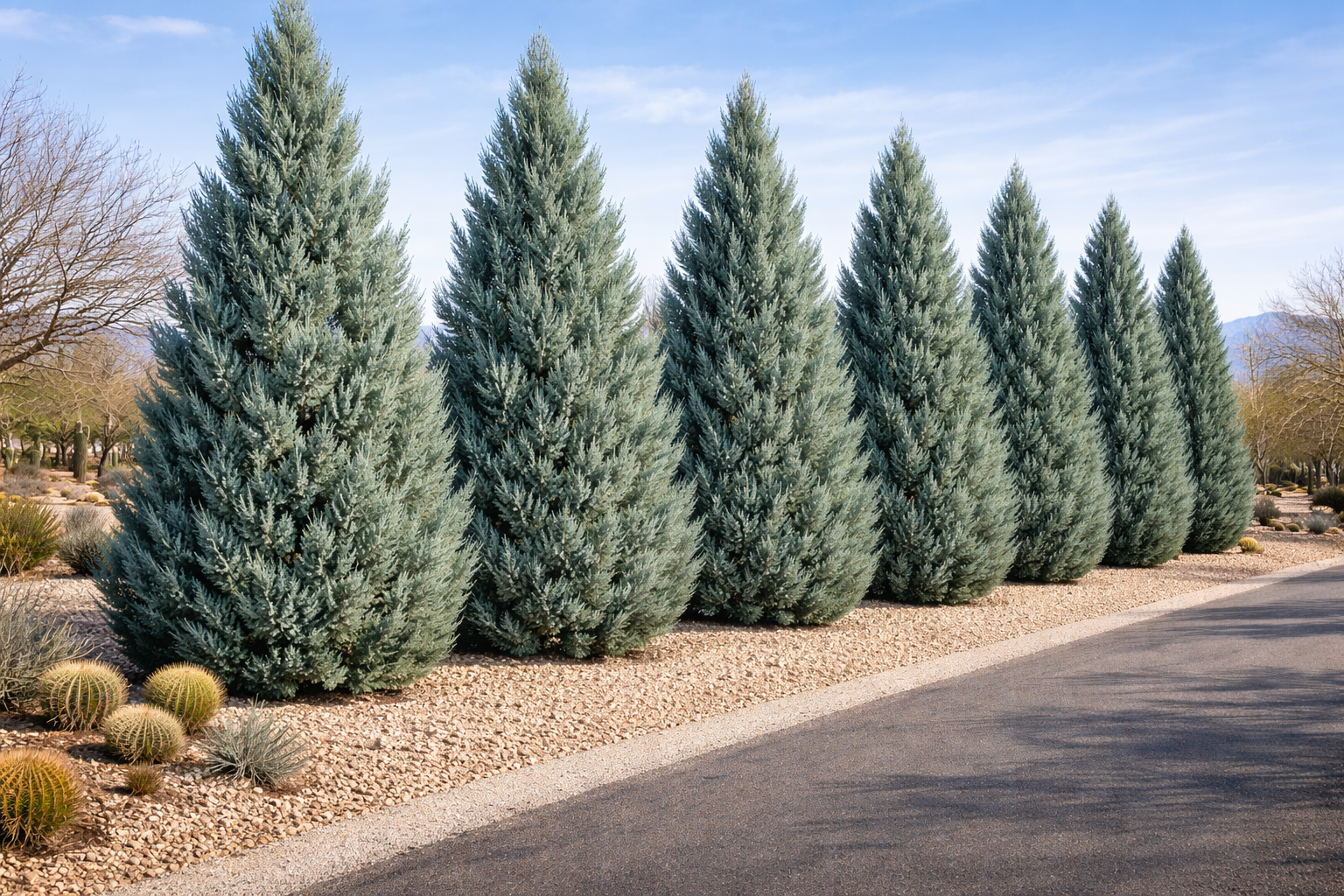
Arizona Cypress — The Winter Warrior (Top Pick)
Color: ✔ Blue-green
Water Use: ✔ Low
Frost Tolerance: ✔ Excellent
Growth Rate: ✔ Medium
Why We Recommend It
- Stays vibrant all winter
- Ideal for screening walls, parking lots, or neighboring properties
- Handles poor desert soil (S1B2) remarkably well
- Extremely drought-tolerant (S2B2)
- Works in both commercial and residential designs
Best For:
- Large properties
- Perimeter plantings
- Noise and wind buffering
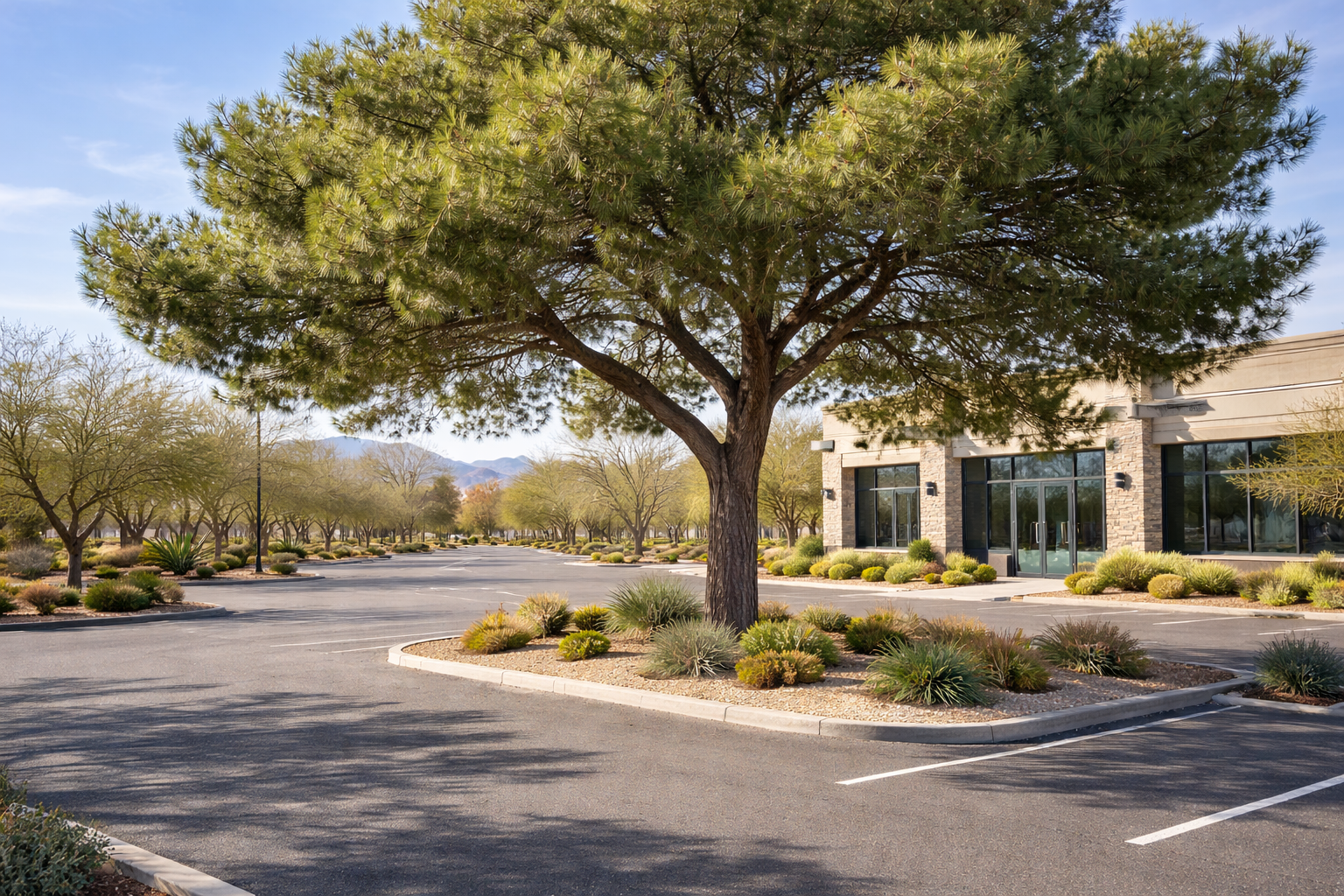
Aleppo Pine — Shade + Evergreen Presence
Large, elegant, and fast-growing, Aleppo Pines thrive in low-elevation Arizona cities.
Why It Works in Winter
- Strong, flexible branches handle wind
- Deep root system tolerates drought (S2B2)
- Provides evergreen shade
- Excellent choice for corporate campuses and HOAs
City Notes
- Performs best in Phoenix, Mesa, Chandler, Tucson
- Needs space away from buildings
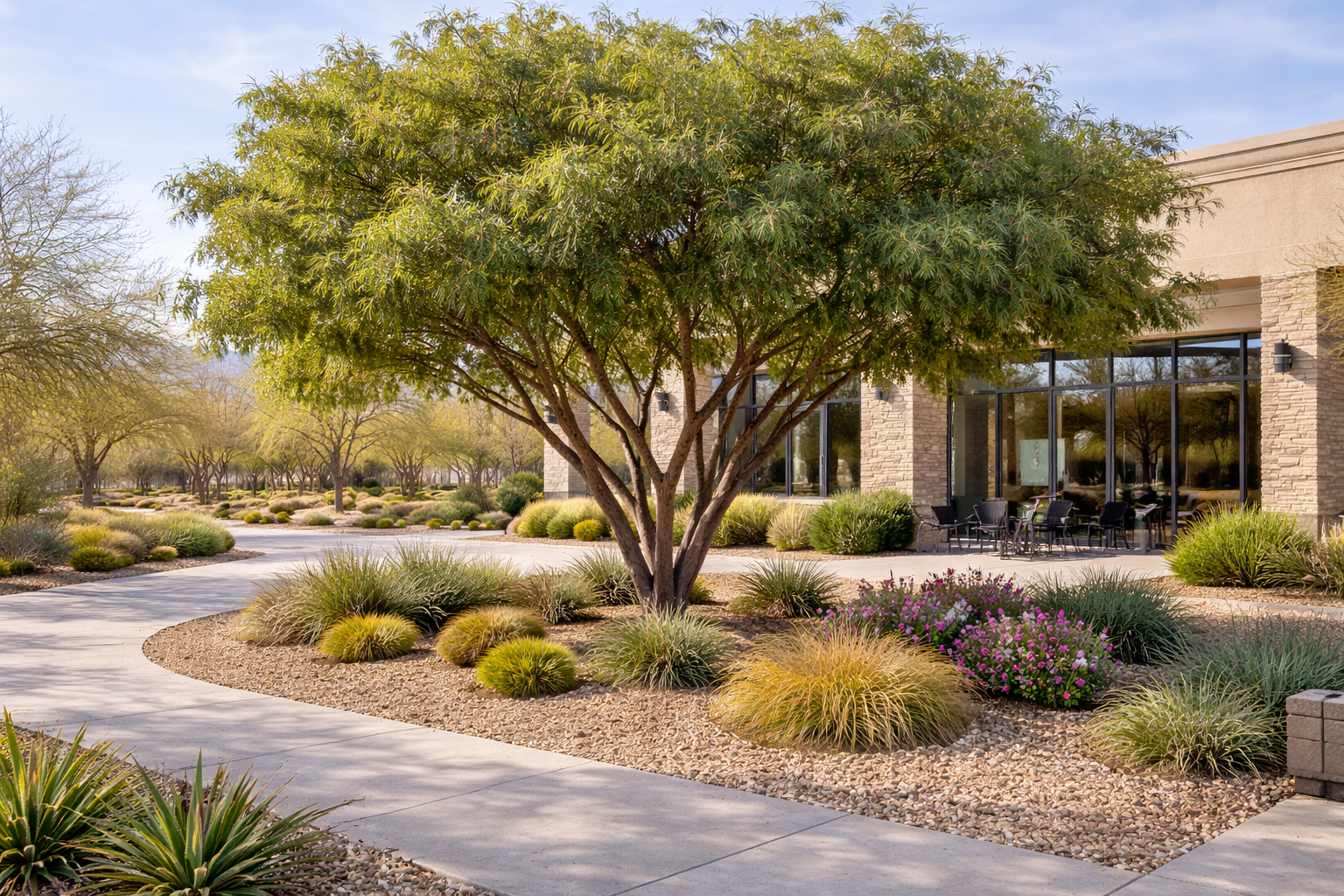
African Sumac — Strong Structure, Beautiful Form
Why It’s a Great Evergreen
- Keeps lush foliage year-round
- High frost tolerance
- Fast growth and strong roots
- Natural desert aesthetic
Best Used For:
- Courtyard anchor trees
- Accent trees near signage
- Shaded walkways
4. Evergreen Shrubs — The Core of Winter Landscaping
Shrubs are the workhorses of a winter landscape — they give shape, depth, and greenery even when everything else is dormant.
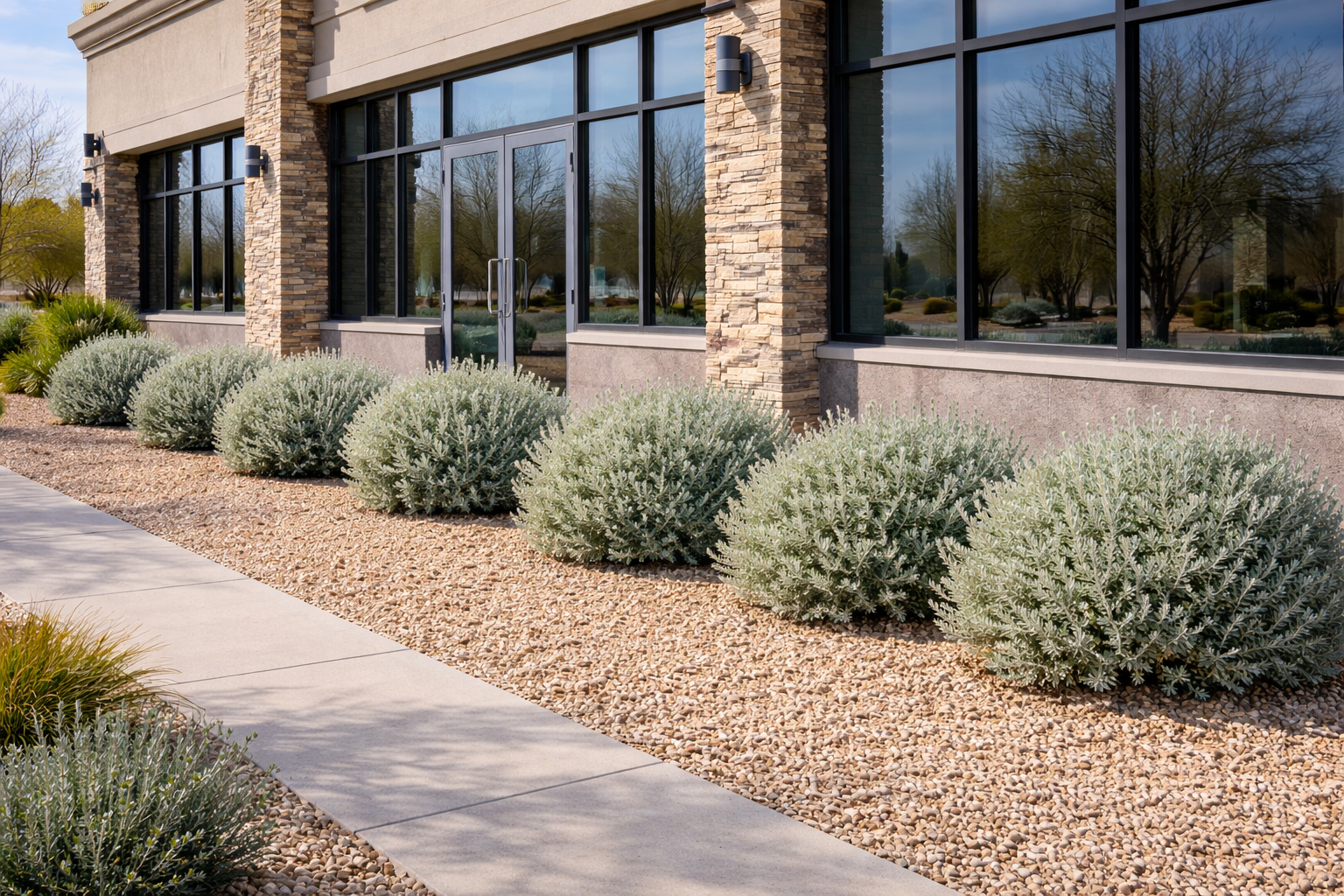
Texas Sage (Silver Leaf Sage)
Why AZ Landscapers Love It
- Soft silver-green foliage year-round
- Very low water use (S2B2)
- Excellent frost tolerance
- Natural desert look
- Resistant to pests and wind
Best For:
- Long commercial beds
- Desert-themed landscapes
- Accent planting under windows
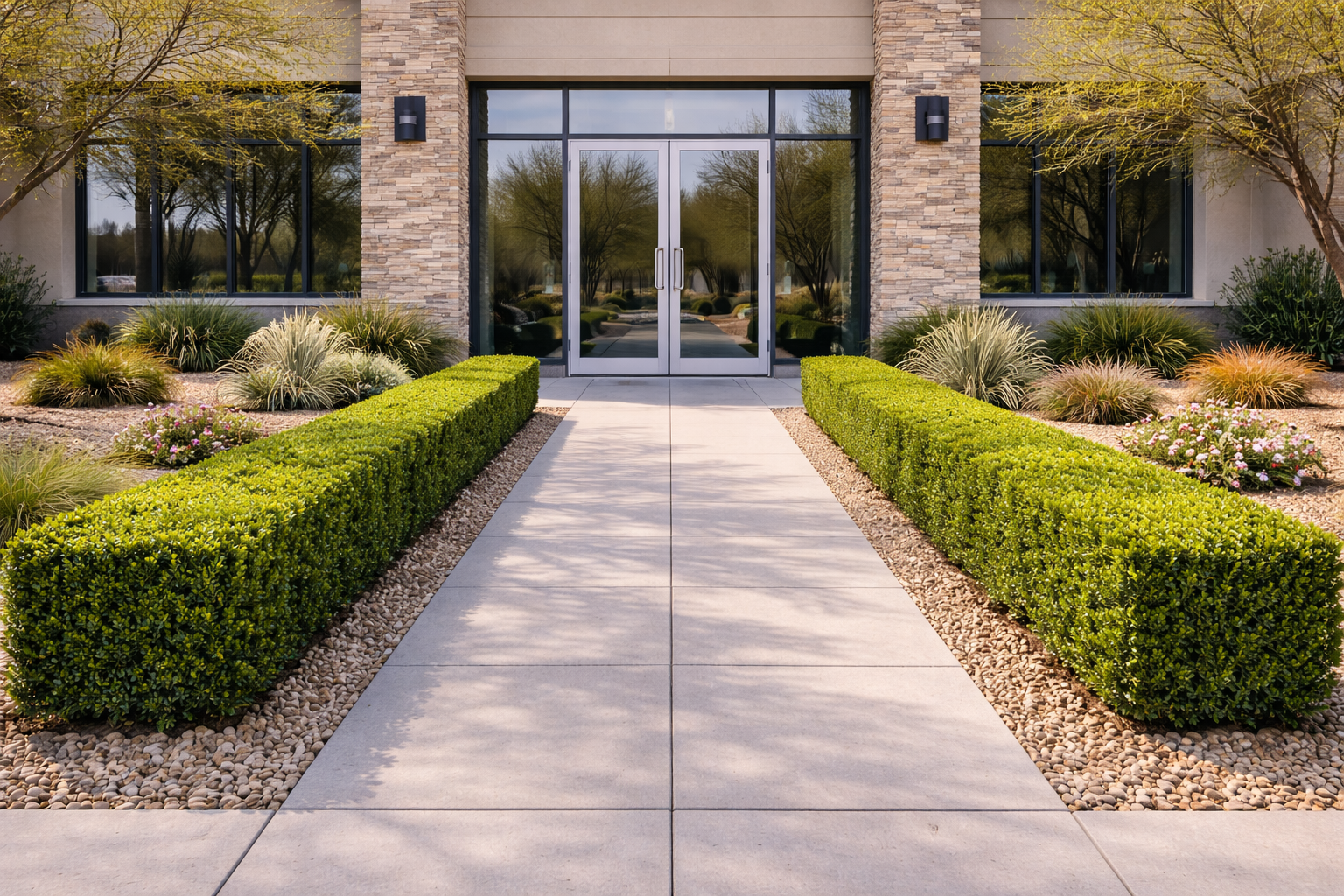
Japanese Boxwood — Clean, Formal, Always Green
Why It’s Used in High-End Properties
- Deep green foliage through winter
- Clean, structured shape
- Perfect for entrances and offices
- Easy to maintain
Maintenance Tip
- Avoid full afternoon sun in Tucson and Phoenix — prefers morning sun.
Hopseed Bush (Green or Purple)
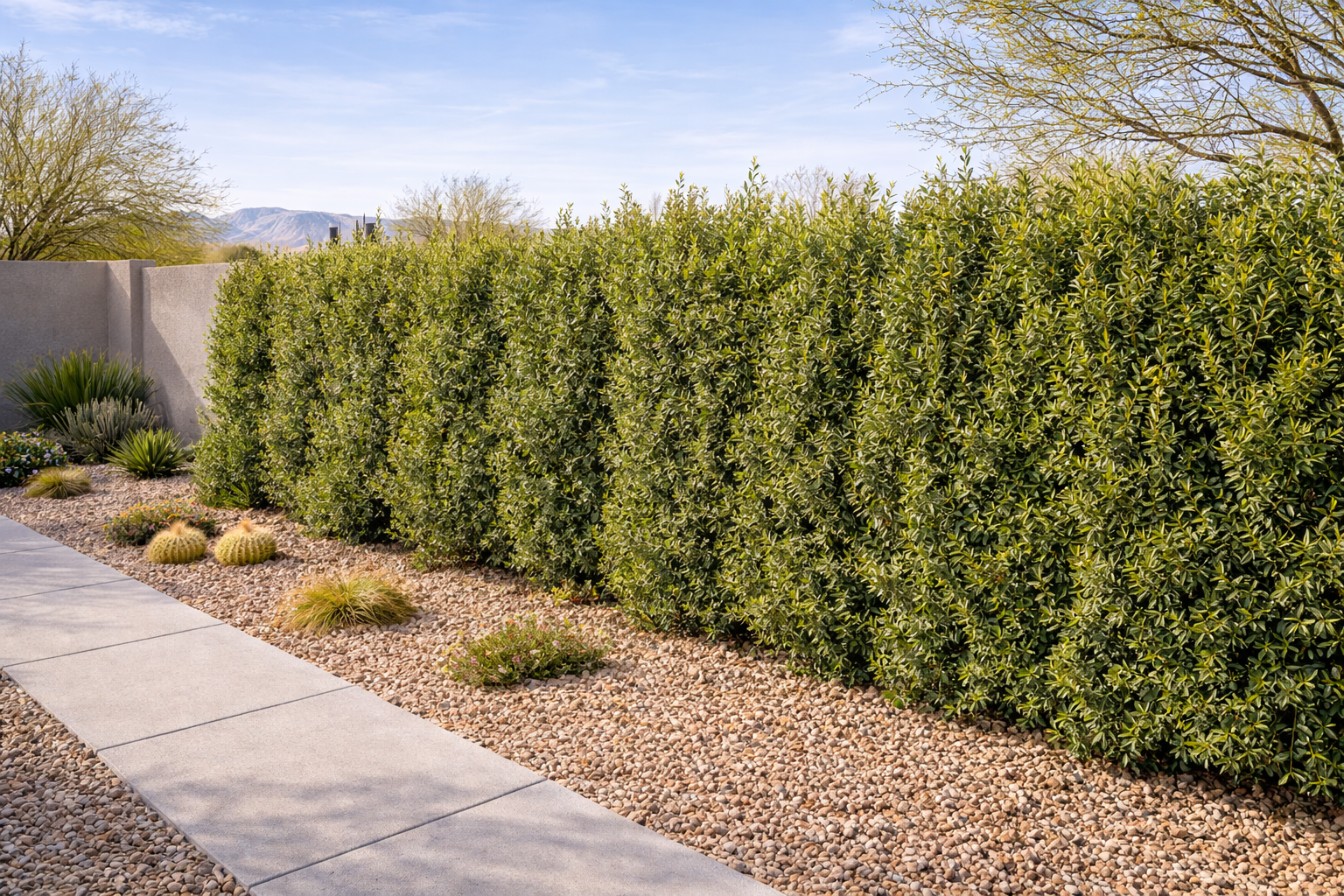
Tall, fast-growing evergreen shrub.
Why It’s Effective
- Year-round privacy
- Excellent screening
- Handles heat and frost equally well
- Ideal for dividing walkways or service areas
5. Evergreen Accents — Arizona’s Most Beautiful Winter Sculptures
Evergreen accents are what make a winter landscape visually striking. These are your “structure plants,” the ones clients point to and say,
“That looks amazing — what is that?”
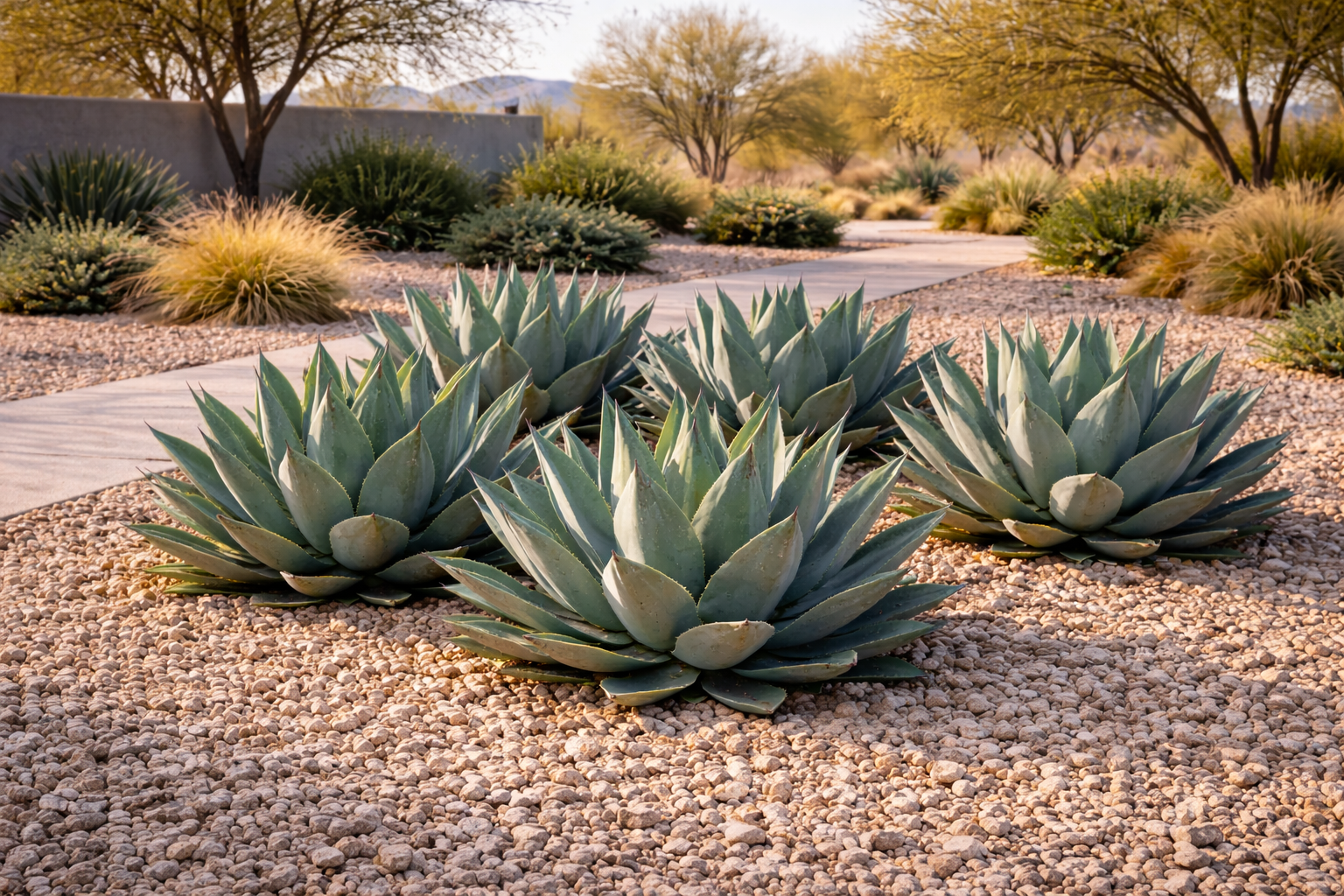
Agave (Blue, Parryi, Americana)
Why Agave Stands Out
- Architectural, sculptural form
- Zero winter dieback
- Very low maintenance
- Frost-tolerant
- Pairs well with desert trees
Yucca (Spanish Dagger, Rostrata)
Benefits
- Evergreen sword-like leaves
- Works in modern architecture
- Handles winter winds extremely well
- Excellent for entry features
6. Groundcovers that Stay Green & Attractive
Myoporum
Fast establishment, rich green foliage.
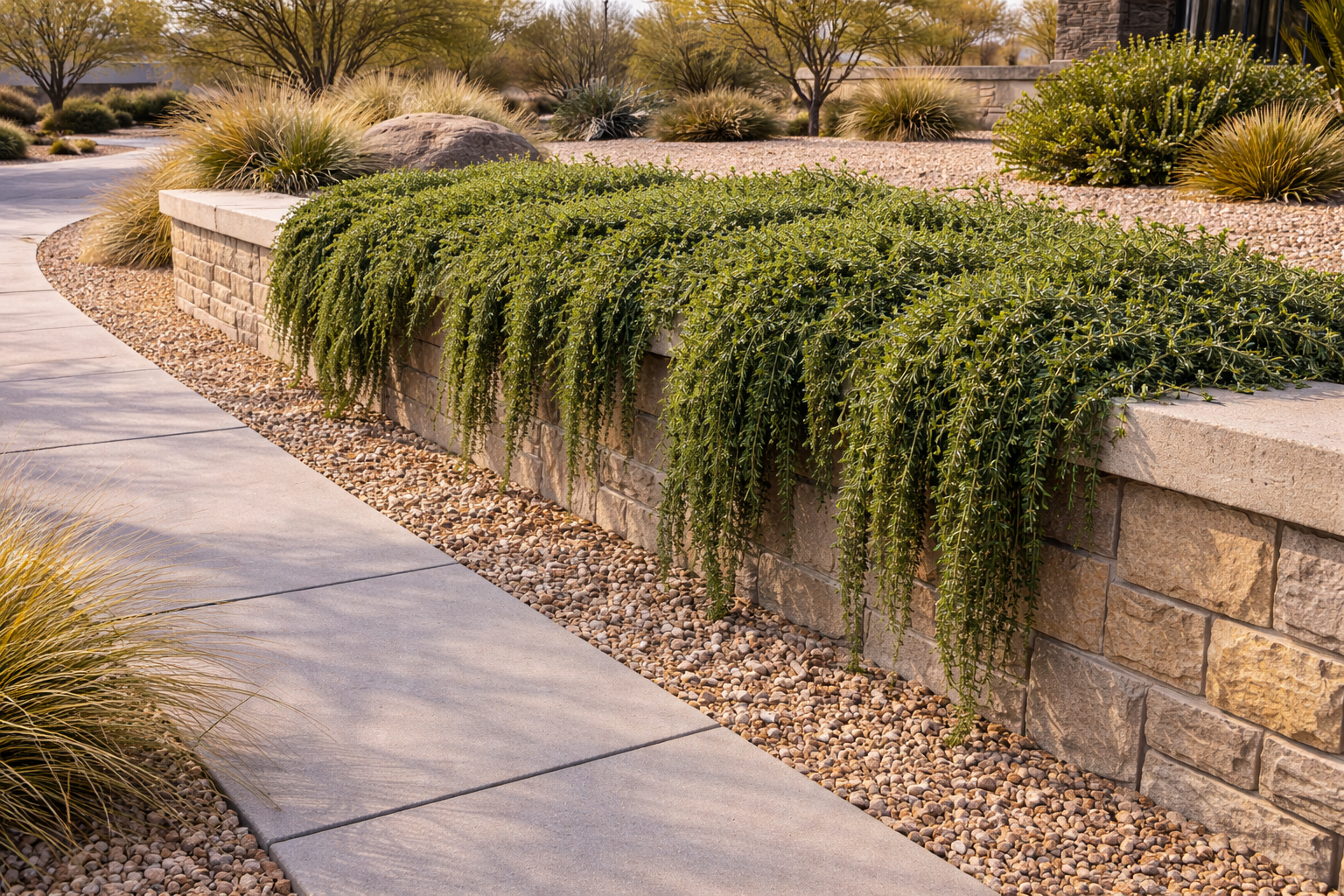
Trailing Rosemary
Fragrant, evergreen, great for wall spills.
Dwarf Myrtle
Compact, evergreen, clean form.
7. Winter Watering Guide for Evergreens
Watering in winter is often misunderstood.
Plants need less water — not zero water.
Winter Watering Rules
- Trees: Deep water every 21–30 days
- Shrubs: Every 14–21 days
- Groundcover: Every 10–14 days
- Accents: Minimal water required
- Always water morning only
Hot tip:
Use
deep watering cycles to strengthen root systems before frost events.

8. Frost Protection for Evergreen Plants
Evergreens tolerate cold better than flowering shrubs, but young plants, tropical species, and shallow-root plants need protection.
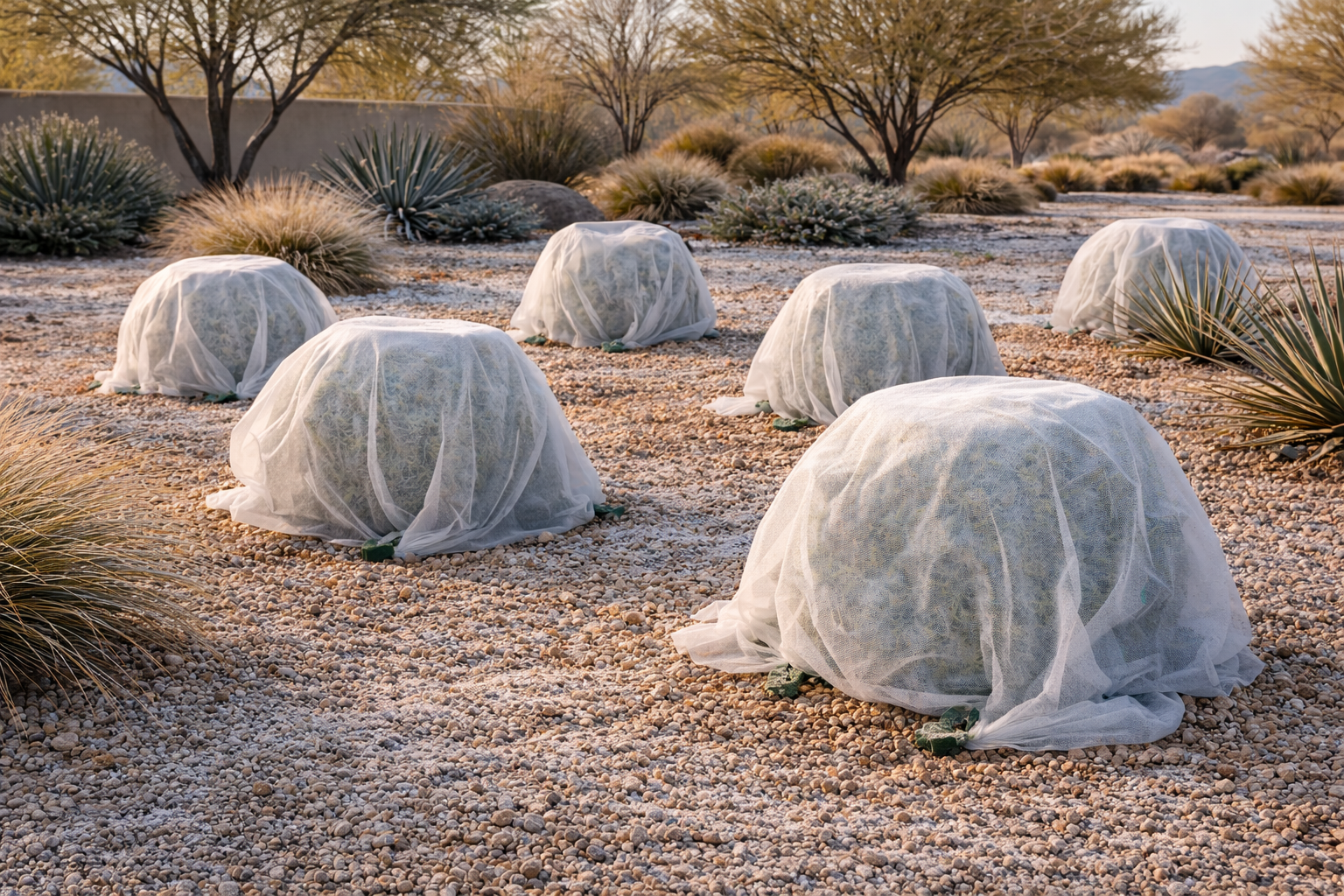
Frost Protection Checklist
- Cover vulnerable shrubs with frost cloth
- Water roots before a cold night
- Avoid pruning before cold spells
- Install wind-blocking shrubs (Texas Sage, Hopseed)
- Use mulch for root insulation
9. Best Evergreens by Arizona Region
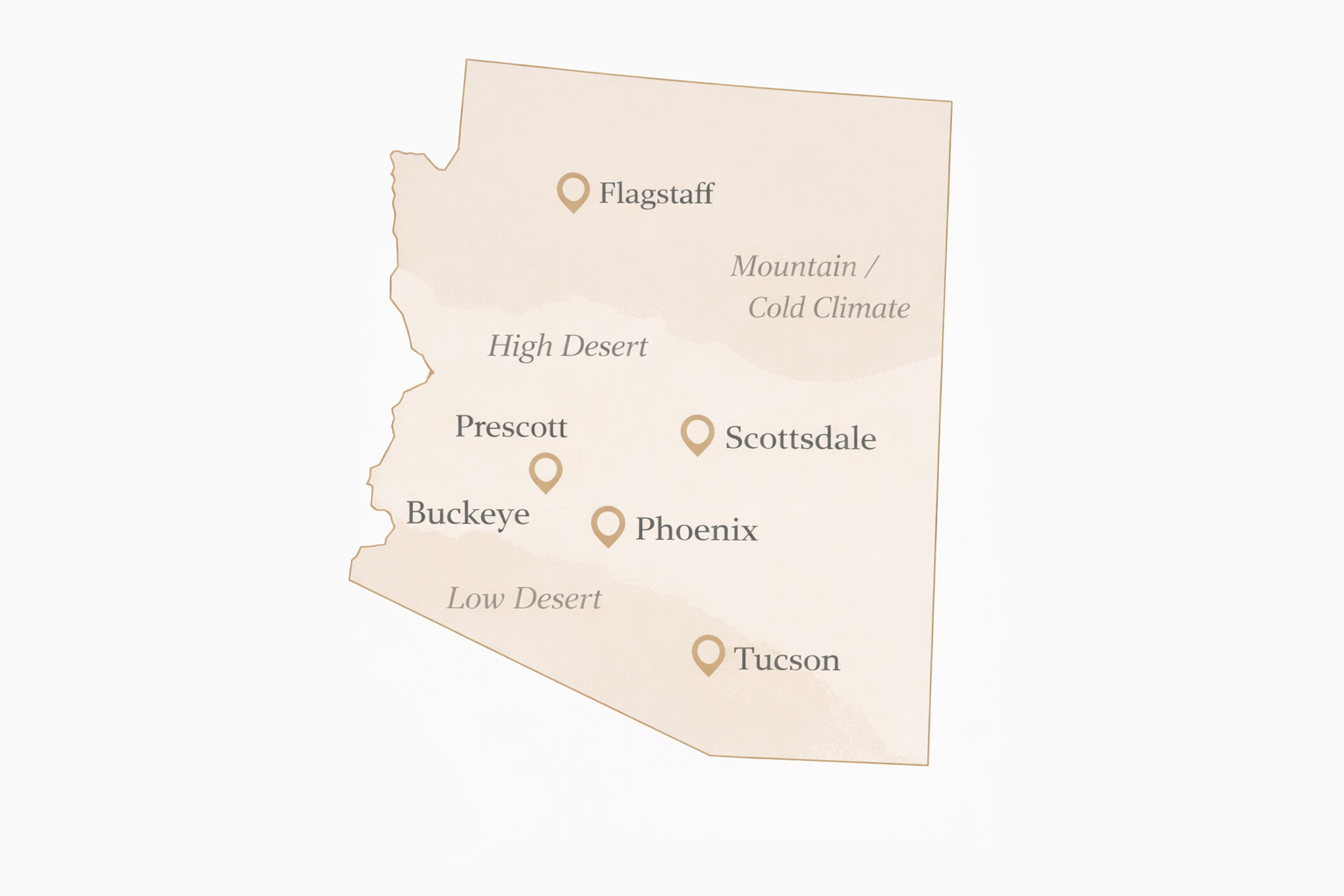
Phoenix / Scottsdale / Mesa
- Texas Sage
- Japanese Boxwood
- Agave
- Arizona Cypress
Buckeye / Goodyear / Surprise
- Colder desert nights → choose hardy species:
- Hopseed
- Texas Sage
- Rosemary
- Red Yucca
Tucson
- African Sumac
- Agave varieties
- Yucca
- Desert Willow
Flagstaff / Prescott / Sedona
- Much colder → use high-frost evergreens:
- Arizona Cypress
- Austrian Pine
- Mugo Pine
- Spruce varieties
| Facility Type | Landscape Priority | Best Solutions | |
|---|---|---|---|
| Corporate Offices | Clean lines, evergreen appeal | Evergreen shrubs, structured pruning, lighting | |
| Retail Centers | High foot traffic | Ryegrass overseeding | artificial turf |
| HOAs | Cost efficiency | Xeriscaping | desert soil prep |
| Medical Offices | Low maintenance + clean entrances | Desert groundcovers | |
| Industrial Sites | Durability | Gravel, rock, drought-tolerant trees |
10. How to Design a Winter Landscape That Still Looks Lush
Here’s how Arizona professionals build winter-proof landscapes:
Use evergreen trees for height
Arizona Cypress, Aleppo Pine, African Sumac
Use evergreen shrubs for form
Japanese Boxwood, Hopseed, Texas Sage
Use evergreen accents for visual interest
Agave, Yucca, Hesperaloe
Use evergreen groundcovers for continuity
Myoporum, Rosemary, Myrtle
Then pair seasonally with:
- Desert bloomers
- Spring perennials
- Summer annuals
This is how high-end communities and corporate plazas stay green year-round.
11. Common Mistakes in Planting Evergreens
1. Choosing species that need too much water
Arizona needs drought-adapted evergreens
2. Overwatering in winter
Leads to fungus, rot, and weak root systems
3. Ignoring soil conditioning
Desert soil needs rehab to support evergreen success.
4. Planting trees too close to structures
Evergreen trees need space to grow wide and deep.
5. No frost preparation
Young evergreens can burn without protection.
12. Evergreen FAQ
1. What evergreen trees survive frost AND drought?
Arizona Cypress and African Sumac are the top two performers.
2. Are evergreens really low maintenance?
Yes — they require minimal trimming and less water than flowering shrubs.
3. How often do evergreens need watering in winter?
Deeply every 14–30 days depending on species.
4. Will evergreens stay green in full sun?
Yes — especially agave, yucca, Texas Sage.
5. Can I mix evergreens with seasonal plants?
Absolutely. Evergreens give structure; seasonal plants add color.
A landscape that stays green all winter sends a message of stability, quality, and care — whether at a home or commercial property.
If you want a landscape that looks incredible all year with less stress and maintenance…
👉 Request a free Arizona evergreen landscape estimate today.
Let our designers create a winter-proof landscape plan tailored to your property.