

Arizona Soil Health & Preparation: The Foundation for a Thriving Lawn and Landscape
February 3, 2026
A white background with a few lines on it

Healthy lawns and landscapes in Arizona don’t fail because homeowners choose the wrong grass, trees, or plants.

They fail because the soil beneath them cannot properly support root systems.


Across Phoenix, Buckeye, Verrado, Surprise, and the wider West Valley, soil condition is the most underestimated factor behind thinning lawns, stressed trees, drainage problems, and rising water bills. Even landscapes with “correct” irrigation schedules and routine maintenance struggle when soil structure is ignored.


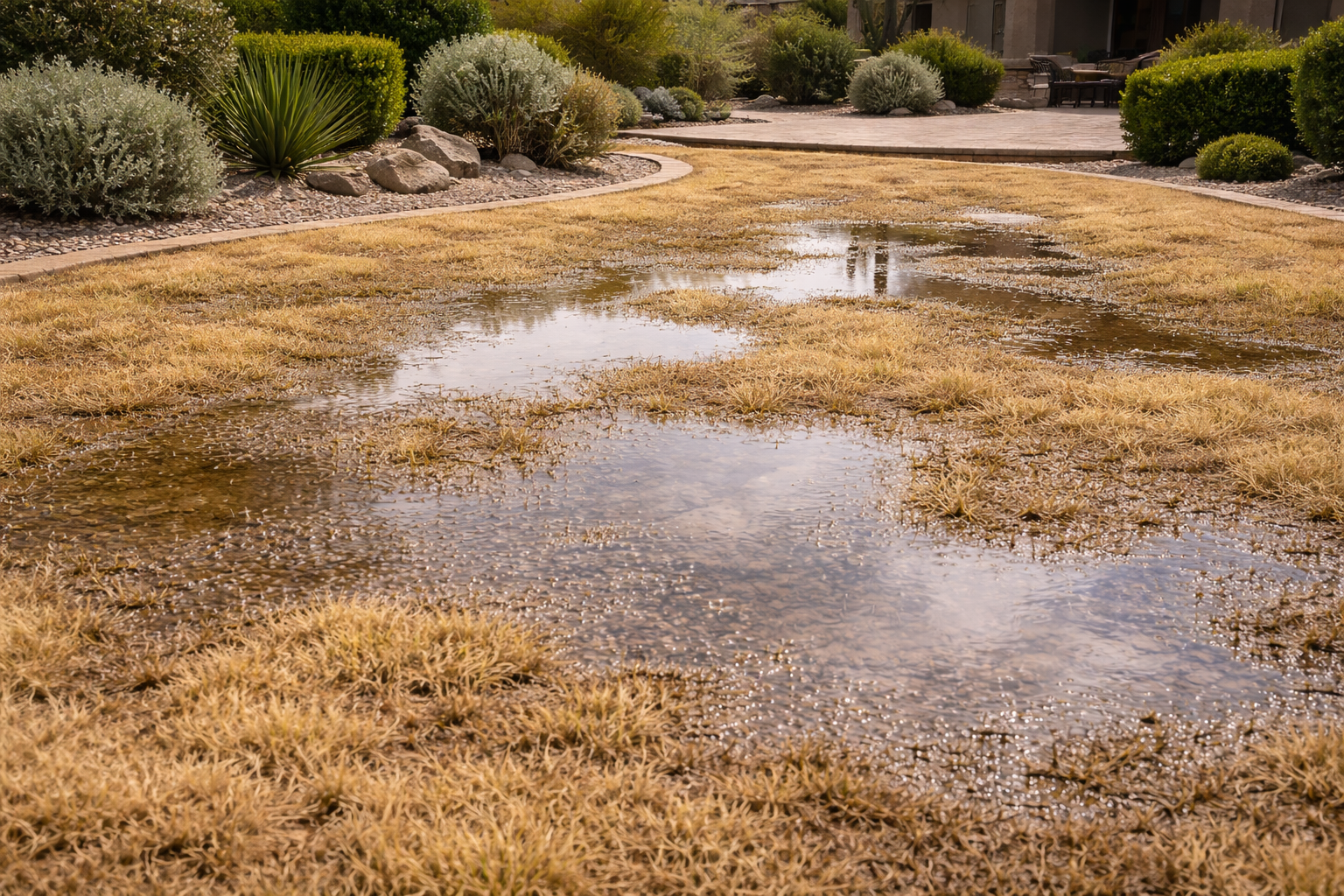
If your lawn dries out too quickly, puddles after watering, or never fills in evenly, the issue is rarely the plant itself.
It is almost always
soil compaction, poor infiltration, or depleted soil structure.


This guide explains how Arizona soil behaves, how to identify soil-related problems early, and why late winter preparation is one of the most effective steps you can take before spring growth begins.

How to Use This Guide

  • Understand why Arizona soil behaves differently than other regions
  • Learn to identify soil-driven landscape problems
  • See how soil health affects water use and plant performance
  • Understand what should be addressed before spring growth
  • Know when professional soil assessment makes sense


This builds on winter stress insights covered in Winter Lawn Care in Arizona and prepares your landscape for recovery after How to Assess Winter Damage on Arizona Lawns and Trees.

Why Arizona Soil Is So Challenging

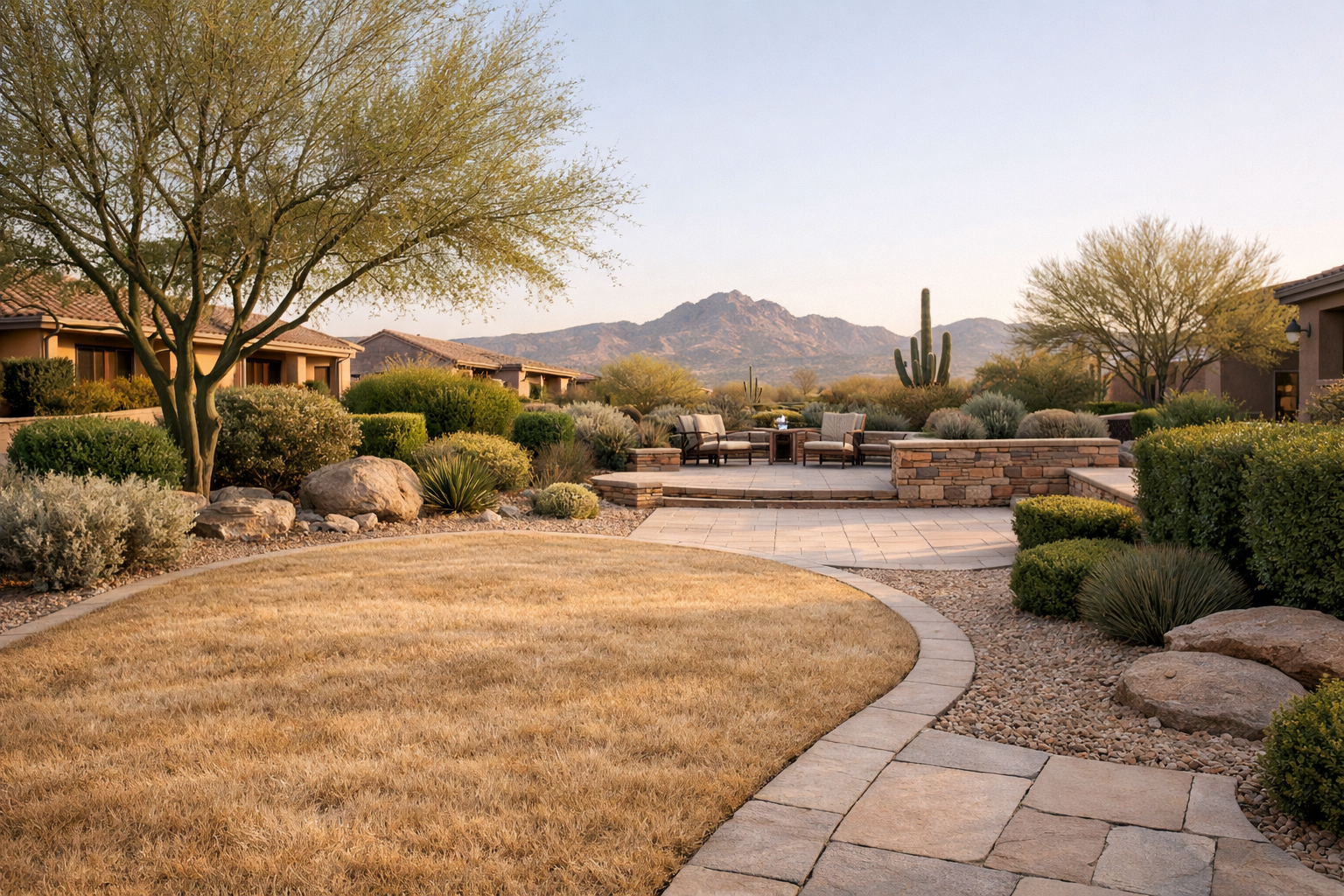
Arizona soil is not inherently “bad,” but it is structurally limited when left untreated.


Most residential and commercial properties in the Phoenix metro area sit on soil that has been:


  • Heavily compacted during construction
  • Stripped of organic material
  • Exposed to extreme heat and evaporation
  • Left with minimal biological activity


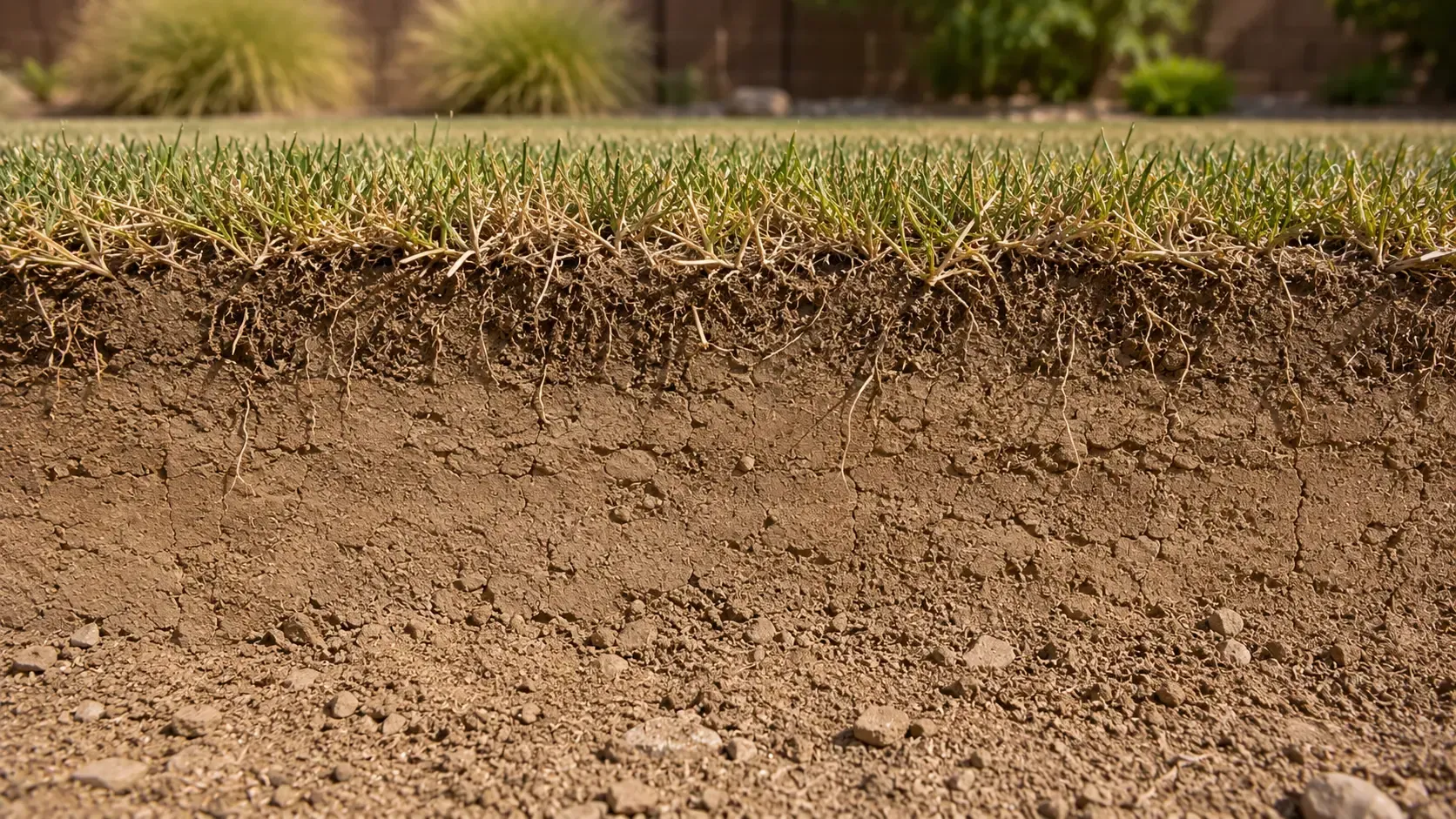
In newer West Valley developments like Buckeye and Verrado, soil is often compacted even deeper due to heavy equipment use during grading and home construction. This creates dense subsurface layers that restrict water movement and root penetration.


Common Arizona soil limitations include:


  • Low organic matter content
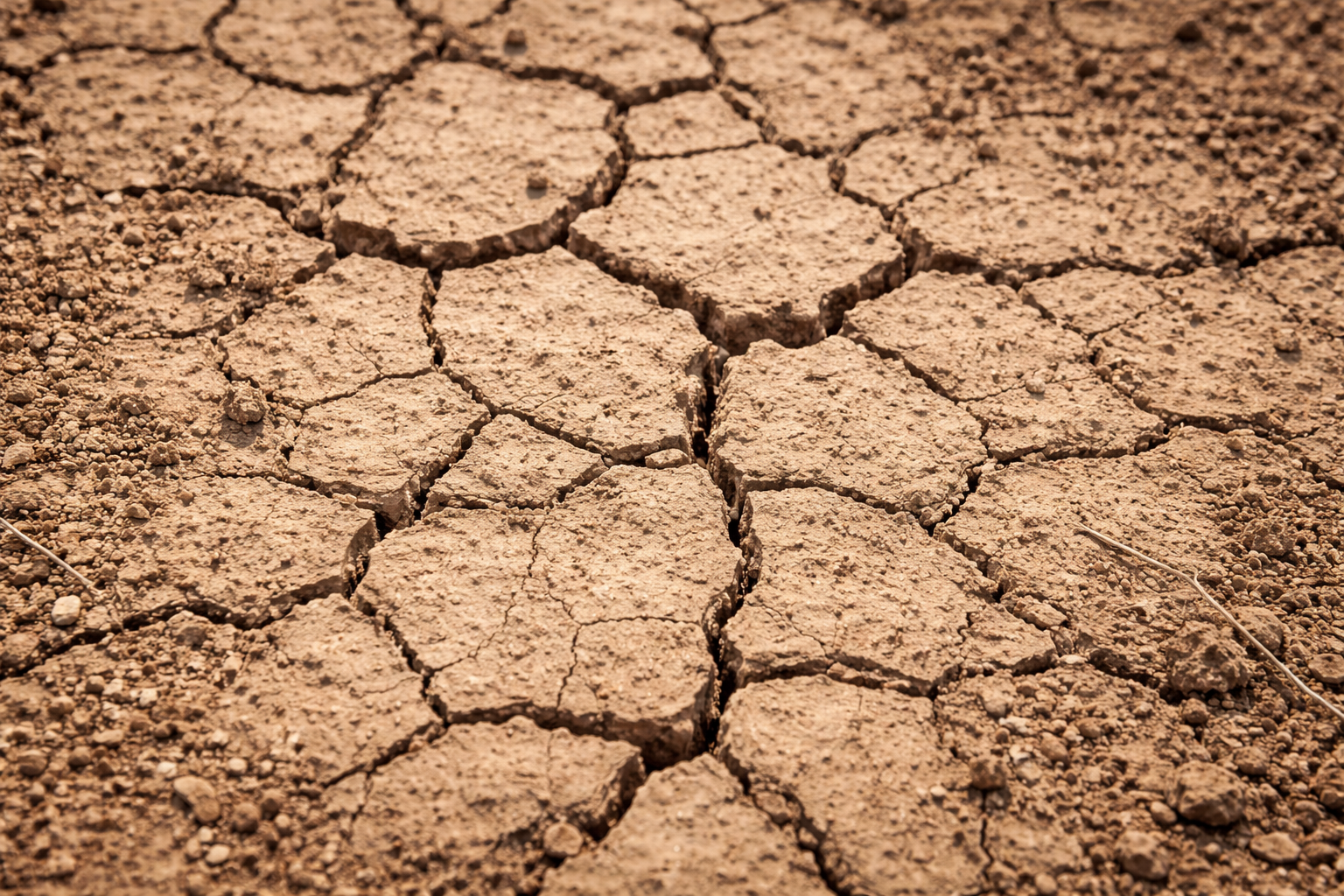
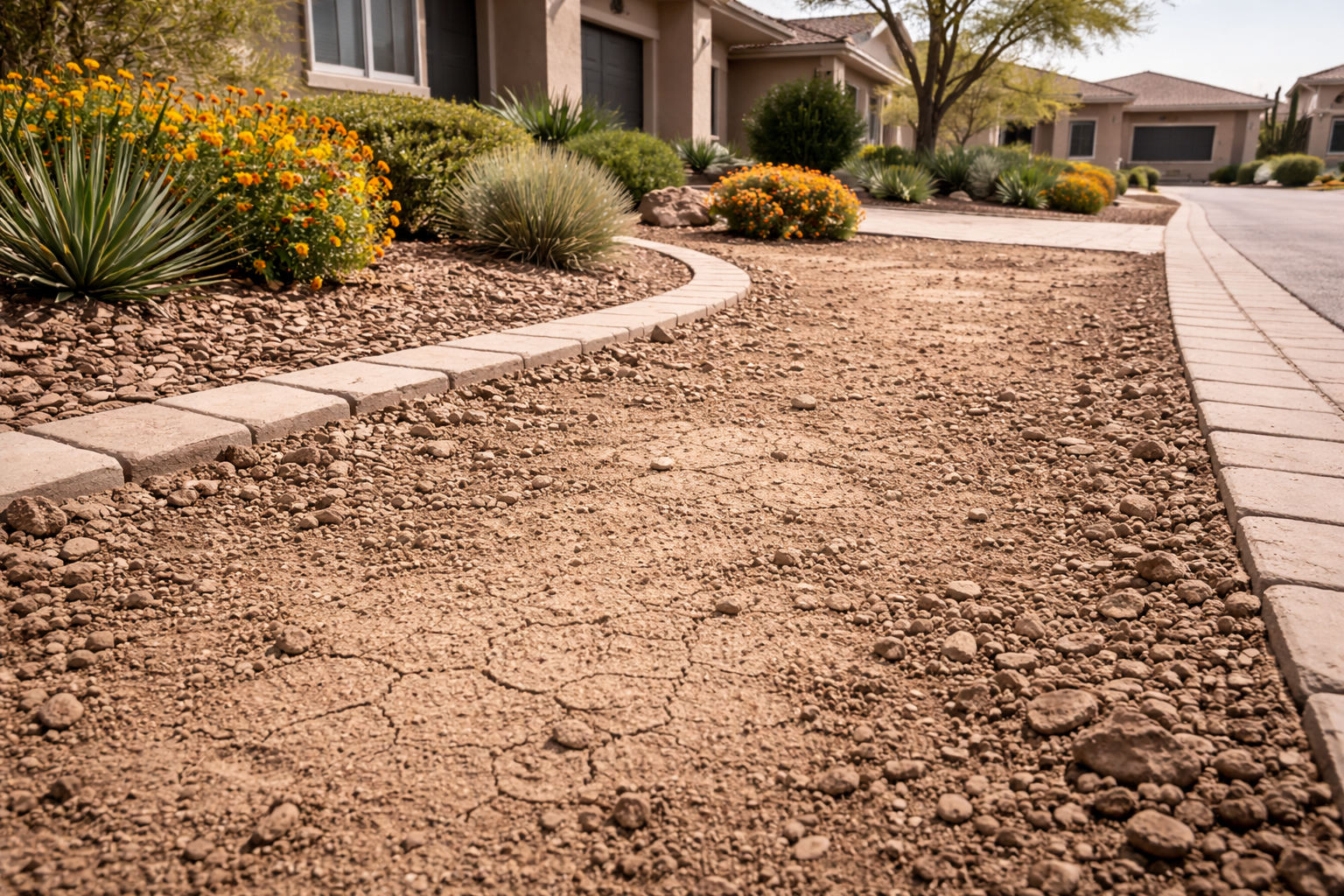
  • High compaction near the surface
  • Poor water infiltration and runoff
  • Hard subsurface layers such as caliche
  • Limited oxygen exchange in the root zone


Plants can survive in these conditions — but survival is not the same as long-term health.

Signs Your Soil Is Holding Your Landscape Back

Many soil problems are mistakenly treated as watering or fertilization issues.


Common warning signs include:


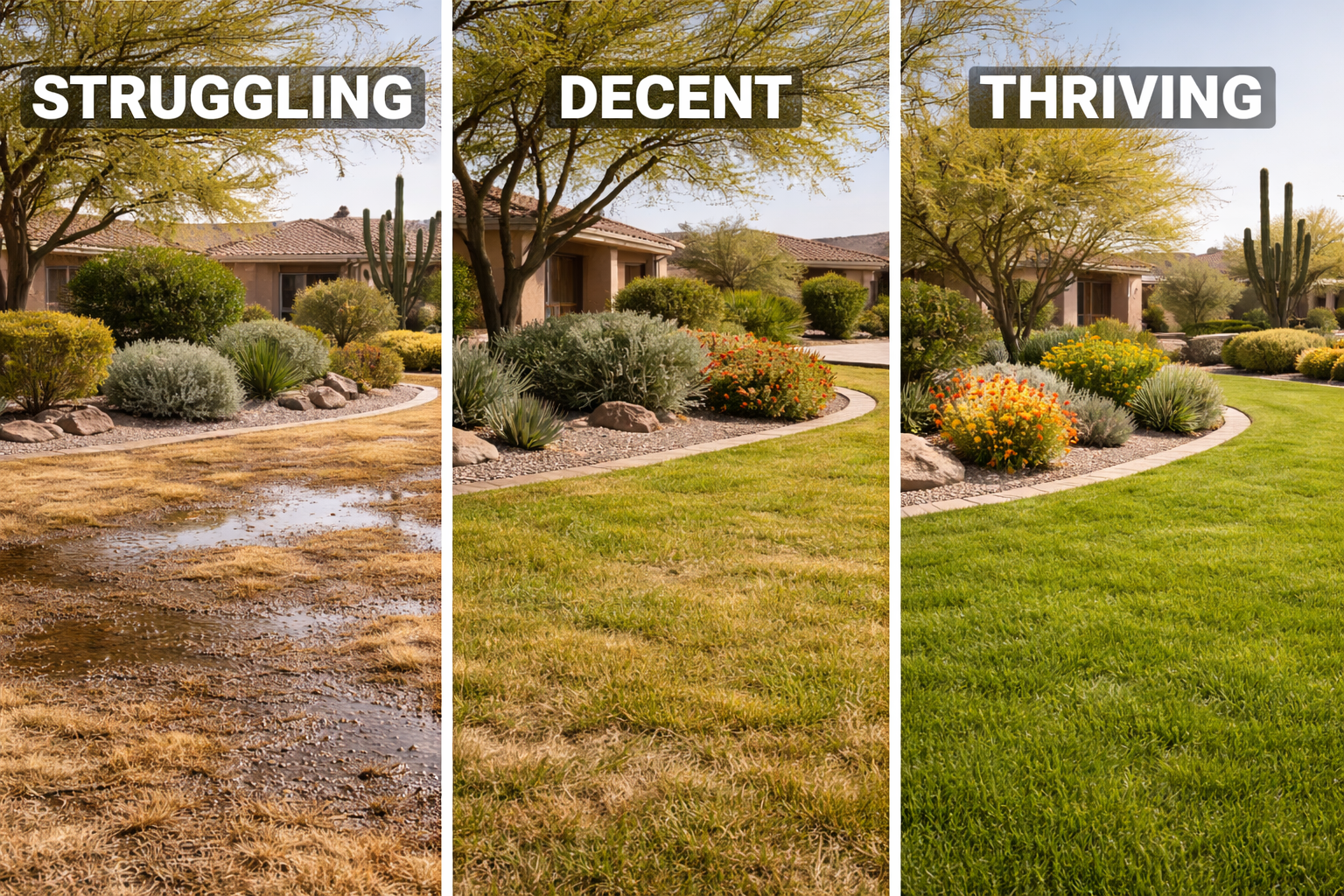
  • Water pooling on the surface while turf still dries out
  • Grass thinning in recurring patches
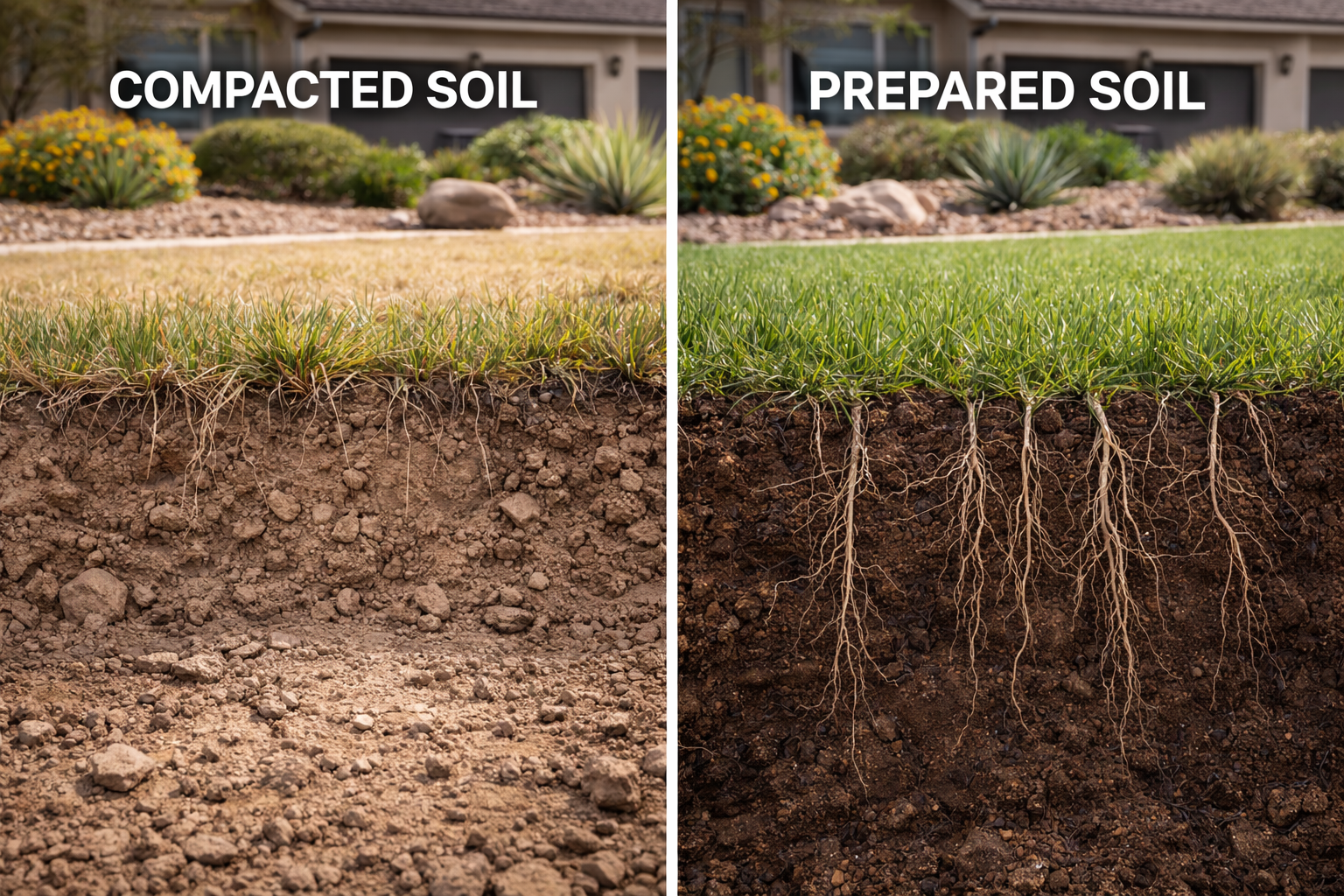
  • Roots remaining shallow instead of growing downward
  • Yellowing plants without pest activity
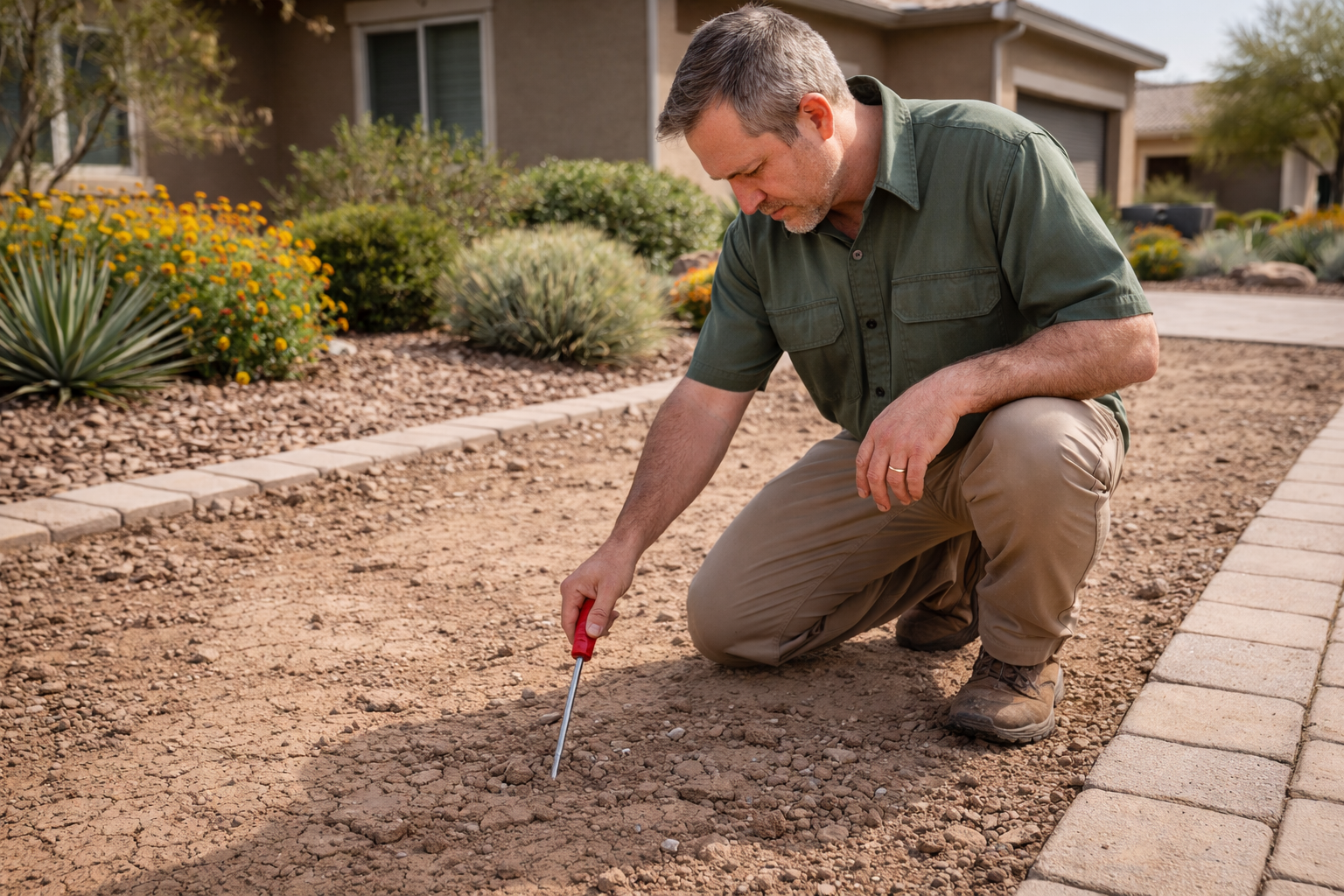
  • Soil that resists probing or screwdriver testing
  • Runoff during irrigation cycles


These symptoms often become visible after winter stress or during early spring activation, especially when soil cannot support root recovery following cold weather damage.

Understanding Soil Types Across the Phoenix Metro Area

While desert soils share similarities, local conditions vary by location and development age.

Phoenix & Scottsdale

Older neighborhoods often contain:


  • Dense, compacted clay-based soils
  • Shallow caliche layers
  • Drainage limitations without structural improvement

Buckeye, Verrado, Surprise

Newer developments frequently exhibit:


  • Construction-compacted soil profiles
  • Extremely low organic content
  • Poor infiltration caused by grading and soil sealing


These soil conditions directly affect how lawns and plants respond during early spring growth, particularly when paired with improper watering schedules discussed in Seasonal Watering Guide.

Higher-Elevation Arizona Areas

Cooler regions may retain moisture longer but still suffer from:


  • Compaction
  • Reduced biological activity
  • Seasonal root stress if soil structure is ignored


Understanding your location determines how aggressive soil preparation needs to be.

What “Healthy Soil” Means in an Arizona Landscape

Healthy Arizona soil does not resemble dark, loose soil from cooler climates — and attempting to force that structure often causes more harm than good.


Instead, functional desert soil provides:


  • Structural stability with improved pore space
  • Controlled drainage without prolonged saturation
  • Adequate oxygen availability for roots
  • Organic material that supports microbial processes
  • Reduced surface crusting and erosion


The goal is functionality, not transformation.


This article complements the deeper technical breakdown in Desert Soil Preparation: How to Ensure Your Plants Thrive.

How Professionals Prepare Arizona Soil Before Spring

Professional soil preparation focuses on root-zone performance, not surface appearance.


Effective preparation may involve:


  • Evaluating compaction depth and severity
  • Identifying drainage flow and runoff patterns
  • Improving infiltration without destabilizing soil
  • Incorporating appropriate organic amendments
  • Correcting grading that concentrates water
  • Preparing root zones before active growth resumes


February is ideal for this work because:


  • Soil temperatures are moderate
  • Root systems are beginning to reactivate
  • Corrections have time to stabilize before spring demand
  • Water efficiency improves before heat stress begins


This approach improves results from irrigation strategies outlined in Beyond Drip Irrigation: Smart Watering Strategies and Seasonal Watering Guide.

Common Soil Preparation Mistakes Homeowners Make

Some well-intended actions actually worsen Arizona soil problems.


Frequent mistakes include:


  • Adding sand to compacted clay soil
  • Amending only the top few inches
  • Ignoring grading and drainage flow
  • Planting before relieving compaction
  • Assuming fertilizer can compensate for soil structure
  • Skipping preparation and relying on spring growth alone


These mistakes often result in uneven turf growth, plant stress, and higher water use later in the season.

Soil Preparation for Different Landscape Elements

Different landscape elements place different demands on soil.

Lawns

  • Even infiltration
  • Reduced compaction
  • Root depth to tolerate summer heat

Trees

  • Stable but breathable root zones
  • Protection from standing water
  • Long-term soil planning for canopy health

Shrubs & Plant Beds

  • Consistent moisture availability
  • Reduced surface crusting
  • Improved oxygen exchange


Correct soil preparation prevents failures that often appear later in tree stress and decline addressed in The Ultimate Tree Watering Schedule for Arizona.

When Soil Preparation Should Happen

Waiting until April or May to address soil issues often leads to:


  • Fighting rising temperatures
  • Increasing irrigation frequency
  • Delaying root development
  • Reducing spring growth potential


Late winter preparation allows landscapes to respond gradually as soil temperatures rise — particularly important in fast-warming areas like Phoenix and Surprise.

Why Soil Preparation Pays Off Long-Term

Proper soil preparation leads to:


  • Stronger root systems
  • Improved water efficiency
  • More consistent turf density
  • Better plant resilience
  • Reduced long-term maintenance costs


It is one of the few improvements that benefits every part of the landscape simultaneously.

Frequently Asked Questions

  • Can Arizona soil really be improved without replacing it?

     Yes. Most soil issues can be corrected through compaction relief, drainage correction, and organic improvement.

  • Is caliche always a problem?

     Not always — but when it restricts drainage or root growth, it must be managed properly.

  • How long do soil improvements last?

    When done correctly, benefits last for years, especially when paired with proper irrigation and maintenance.

  • Does soil preparation reduce water usage?

     Yes. Improved infiltration and root depth allow plants to use water more efficiently

Final Thought: Strong Landscapes Start Below Ground

In Arizona, soil condition determines whether landscapes struggle every season or improve year after year.


If you are planning spring recovery, planting, or lawn improvement, addressing soil health now is the smartest step you can take — especially after winter stressand before spring growth accelerates.


👉 Request a professional soil assessment and preparation plan to set your property up for a healthier, more resilient spring.

A green background with a white outline of a heart.
A Sharp, vibrant Arizona yard featuring evergreen shrubs, agave, and cypress trees in warm morning l
December 14, 2025
Evergreen species that stay vibrant, structured, and healthy all winter long.
December 3, 2025
How to Use This Guide
Green lawn grass.
November 17, 2025
1. Understanding Arizona Winter Lawn Behavior
Beautiful aerial shot of the garden.
November 5, 2025
Discover the top commercial landscaping ideas Arizona businesses trust to attract customers, save water, and elevate curb appeal. Expert tips from Happy Clean Lawnscapes.
An office building showing high-impact curb appeal zones
October 13, 2025
Commercial Landscaping is a Whole Different Ball Game in Arizona
October 1, 2025
Not all turf is created equal, especially for commercial use. Here's the real deal on what holds up best in our Arizona climate: For Office Parks & Corporate Campuses: Polyethylene Turf - This is the 'luxury sedan' of turf. It's the one that looks and feels most like real grass, with that soft texture that makes your property say 'we pay attention to details.' It handles sun exposure really well without fading, which is crucial for our Arizona summers. For High-Traffic Areas & Shopping Centers: Nylon Turf - Think of this as the 'work truck' option. It's the most durable turf on the market, tough enough for hundreds of people walking across it daily without showing wear. The fibers bounce right back, even in high-traffic entryways or common areas that get constant foot traffic. For Apartments & HOAs: Polypropylene Turf - The 'family minivan' - perfect balance of durability, safety for kids and pets, and budget-friendly for larger common areas. It's cost-effective for covering big spaces while still standing up to playground use and pet areas. Plus, it stays cooler than other options, which parents really appreciate.
September 17, 2025
Why Busy Homeowners Need Easier Lawns
September 1, 2025
Why Busy Homeowners Need Easier Lawns
Show More