


Winter Lawn Care in Arizona: Expert Tips to Keep Grass Healthy Through Cold Months
November 17, 2025
A white background with a few lines on it

Arizona winters may be mild compared to other states — but your lawn still faces real challenges: cooler nights, shorter days, frost,  dormant warm-season grasses, and inconsistent moisture.


This guide gives you professional, Arizona-specific winter lawn care strategies just to keep your grass green, healthy, and ready for spring.


Whether you're maintaining Bermuda, Ryegrass, St. Augustine, or hybrid warm-season lawns, you’ll find tailored steps and expert-level recommendations below.

How to Use This Guide

This article is organized into practical, bite-sized sections:


  • What Arizona lawns need in winter
  • Lawn-type-specific winter tips
  • Frost protection guide
  • Month-by-month Arizona winter lawn schedule
  • Mistakes to avoid
  • Quick comparison table
  • FAQs


Perfect for homeowners who want a step-by-step plan without complicated jargon.

1. Understanding Arizona Winter Lawn Behavior

Warm-Season Grasses (Bermuda, St. Augustine, Zoysia)

  • Growth slows dramatically when temps drop below 60°F
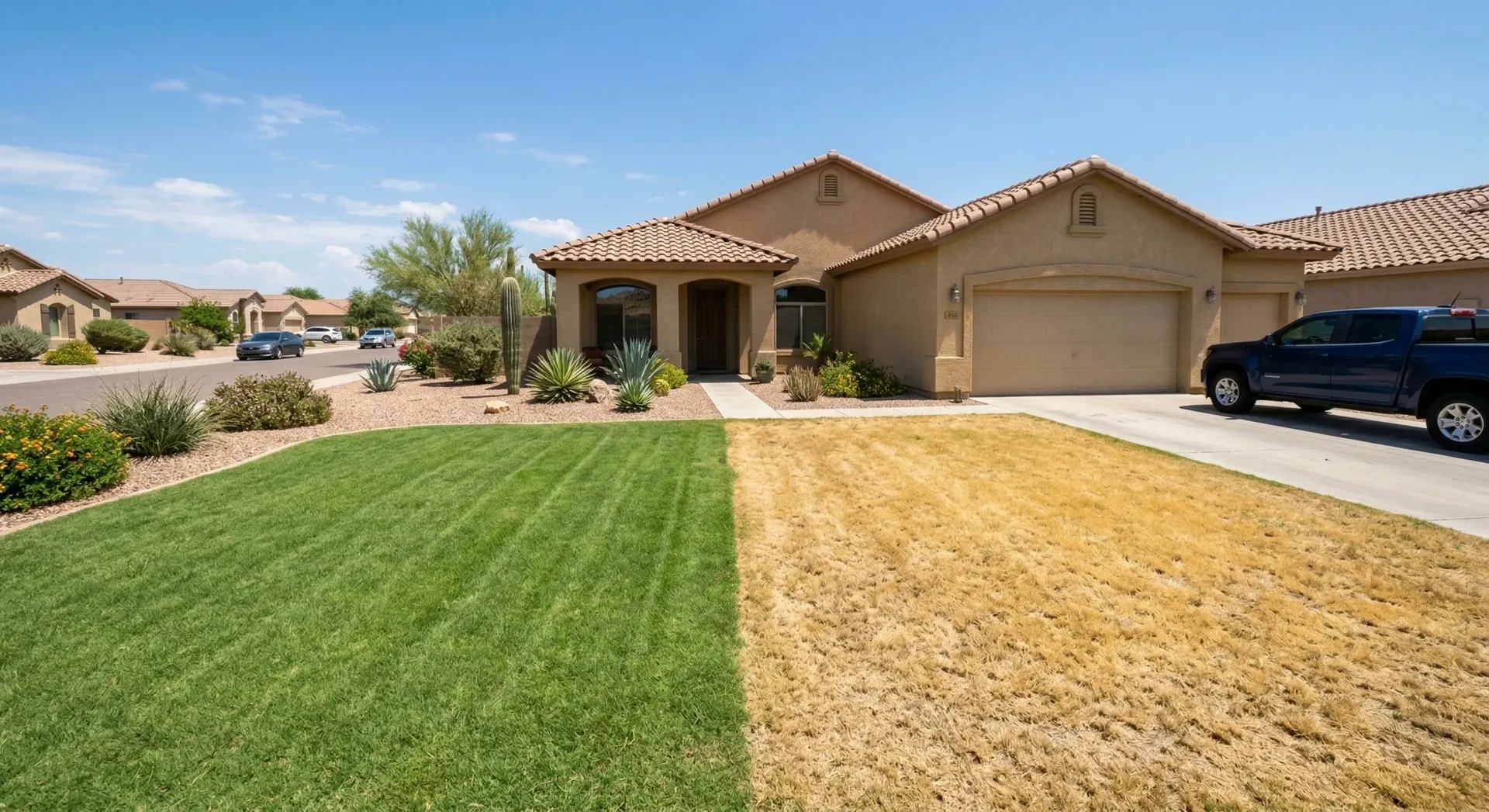
  • Leaves may yellow or turn straw-brown
  • Lawns enter dormancy, conserving energy


Cool-Season Grass (Overseeded Ryegrass)

  • Actively grows during winter
  • Needs consistent mowing, watering, and light feeding
  • Offers bright green color all season
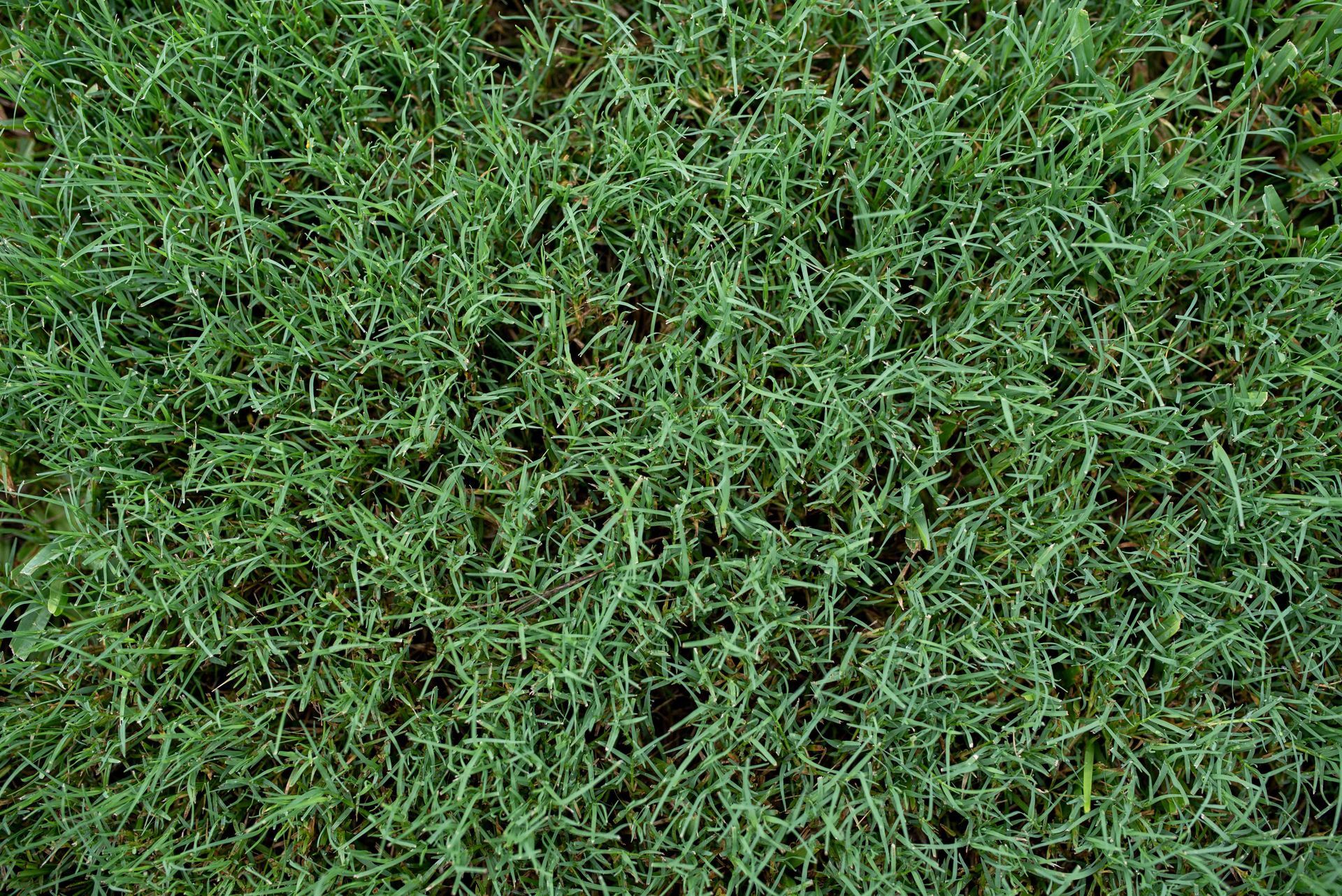
Green lawn grass.

2. Essential Winter Lawn Care Tips for Arizona

2.1 Watering (The Most Common Mistake)

Arizona’s dry winter air still removes moisture from soil — even when the grass isn't actively growing.

Proper hydration requires
deep watering cycles to maintain strong roots.


Best Practice

  • Water every 10–14 days for dormant warm-season lawns
  • Water every 5–7 days for ryegrass
  • Always irrigate in the morning to prevent frost formation
  • Use deep watering cycles to encourage root strength


City-Specific Notes

  • Phoenix / Scottsdale / Mesa: Low cold risk; maintain normal winter watering schedule.
  • Buckeye / Surprise / Goodyear: Slightly colder mornings; consider longer intervals between watering.
  • Flagstaff / Prescott: High frost frequency; restrict watering and only irrigate on warm afternoons.
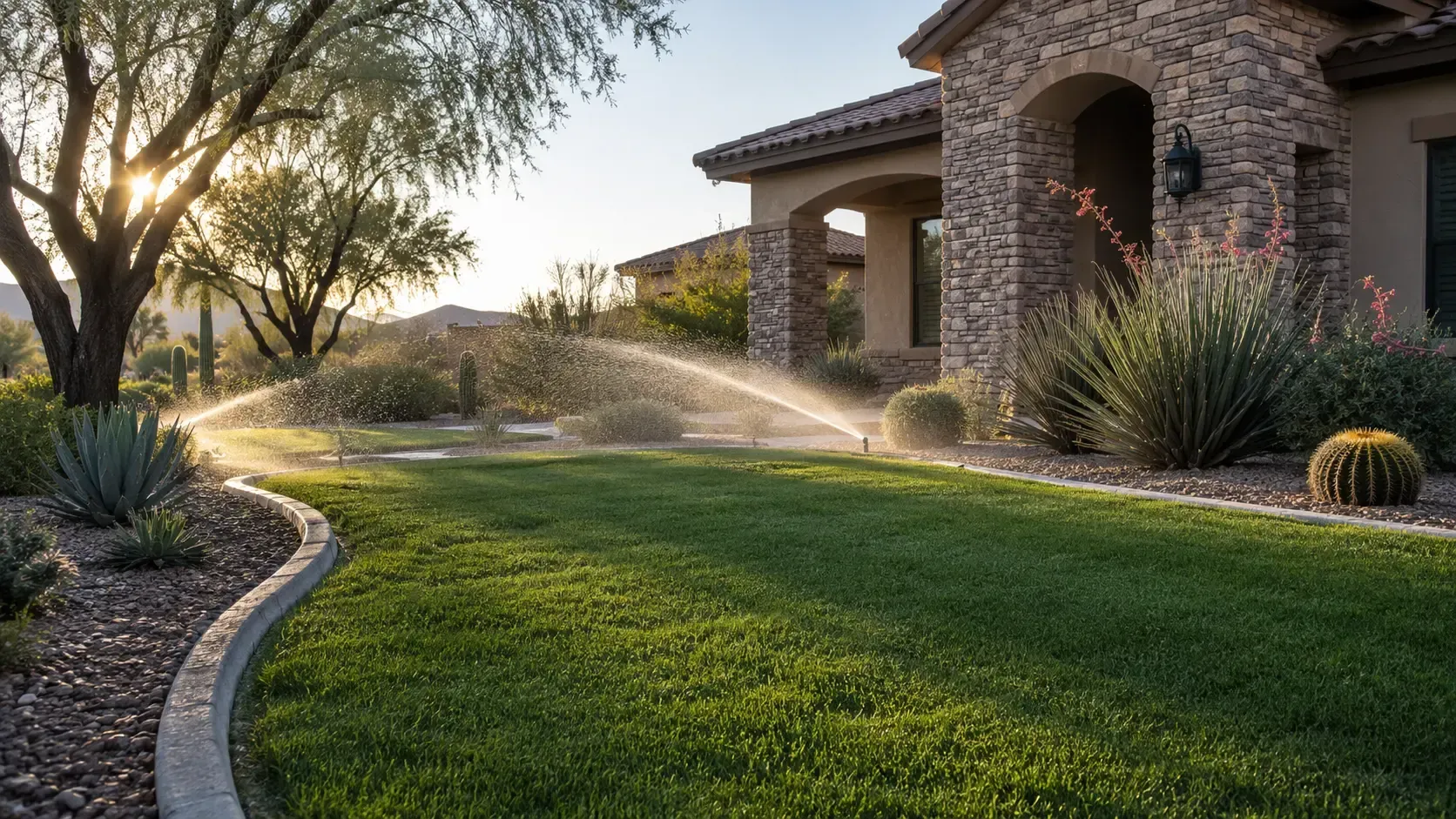
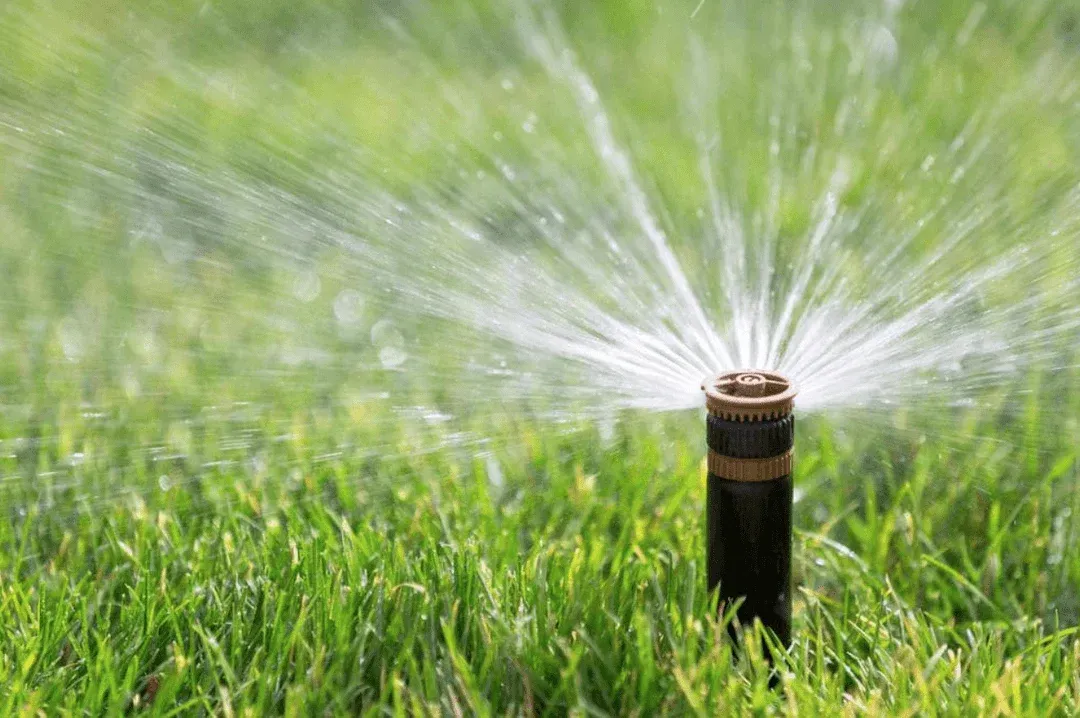
Lawn sprinkler spraying water.

2.2 Fertilization

Winter fertilizing depends entirely on whether your lawn is overseeded.


If You Have Overseeded Ryegrass

  • Apply high-nitrogen fertilizer around mid-December
  • Repeat a light feeding in late January to maintain color
  • Avoid heavy fertilization — it stresses roots


If You Have Dormant Bermuda

  • Do NOT fertilize in winter
  • Bermuda cannot absorb nutrients in cold soil
  • Feeding during dormancy can cause fungal problems

2.3 Mowing

Dormant Bermuda

  • Mowing is optional
  • If you mow, keep blade height higher to protect crowns


Overseeded Ryegrass

  • Maintain at 1.5–2 inches
  • Mow weekly
  • Keep blades sharp to avoid tearing the delicate winter grass

2.4 Frost Protection

Arizona lawns often experience early-morning frost (S2B3) between December and February, especially in the West Valley.


Do This

  • Skip mowing when frost is present
  • Avoid walking on frosted grass (leads to crushed blades)
  • Use a quick rinse cycle after sunrise to melt frost slowly


Avoid This

  • Never water at night
  • Never apply fertilizer until frost risk ends

3. Overseeded vs Non-Overseeded Lawns: What You Should Do

If You Overseeded With Ryegrass

Your winter checklist:

  • Water consistently
  • Light fertilization
  • Weekly mowing
  • Occasional dethatching of clumping rye


Benefits:

  • Green lawn all winter
  • Strong early-spring rebound

If You Did NOT Overseed

Your winter checklist:

  • Minimal watering
  • No fertilization
  • Avoid foot traffic
  • Prep for spring transition in March


Benefits:

  • Lower water costs
  • Stronger Bermuda recovery in spring

4. Winter Lawn Problems to Watch For

1. Fungus (Brown Patch / Dollar Spot)

  • Caused by moisture + cold soil
  • Solution: reduce watering, increase sunlight exposure


2. Ryegrass Scalping

  • From mowing too low
  • Solution: raise blade height


3. Foot Traffic Damage

  • Dormant Bermuda bruises easily
  • Solution: limit heavy usage during mornings
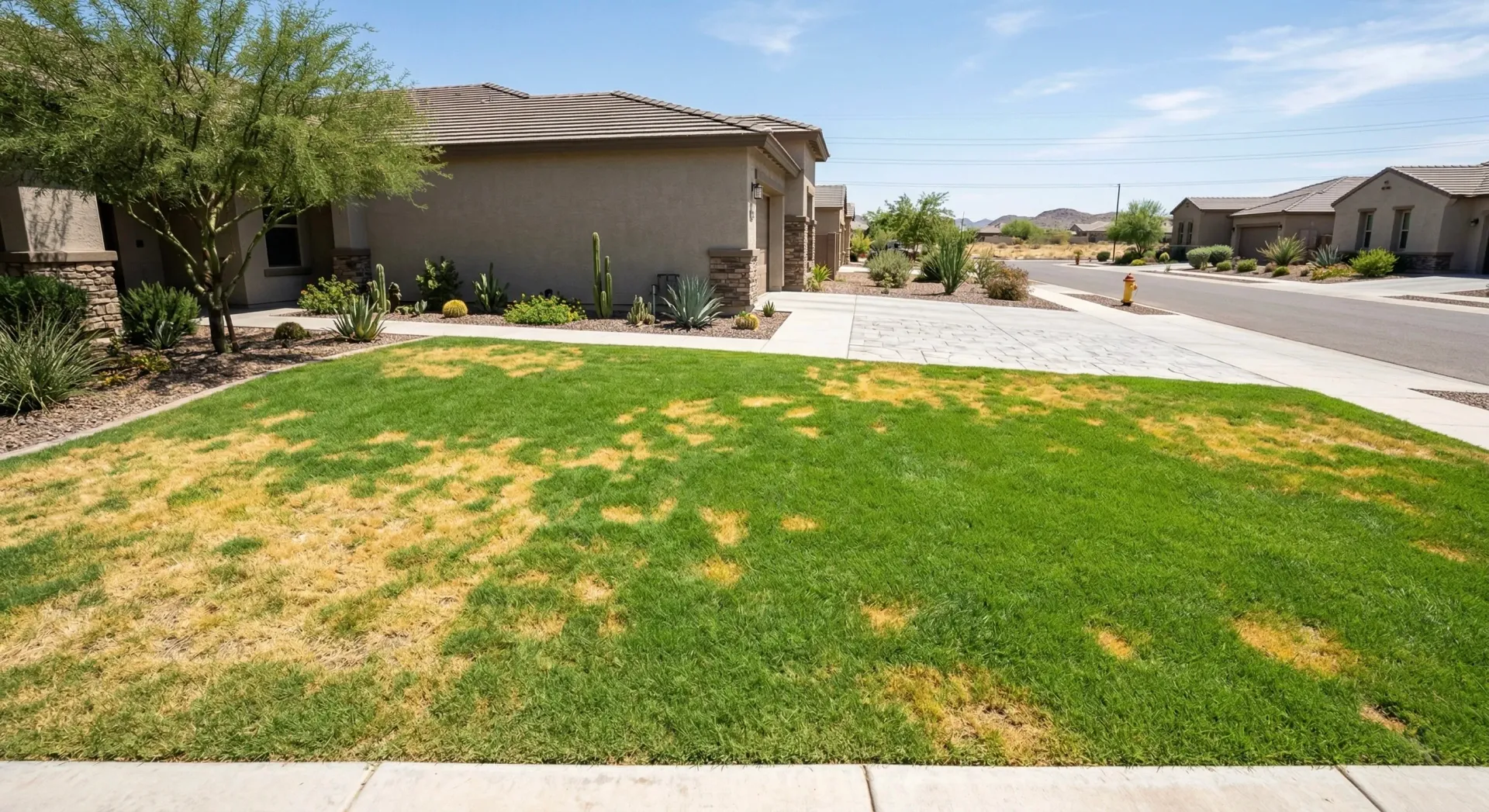
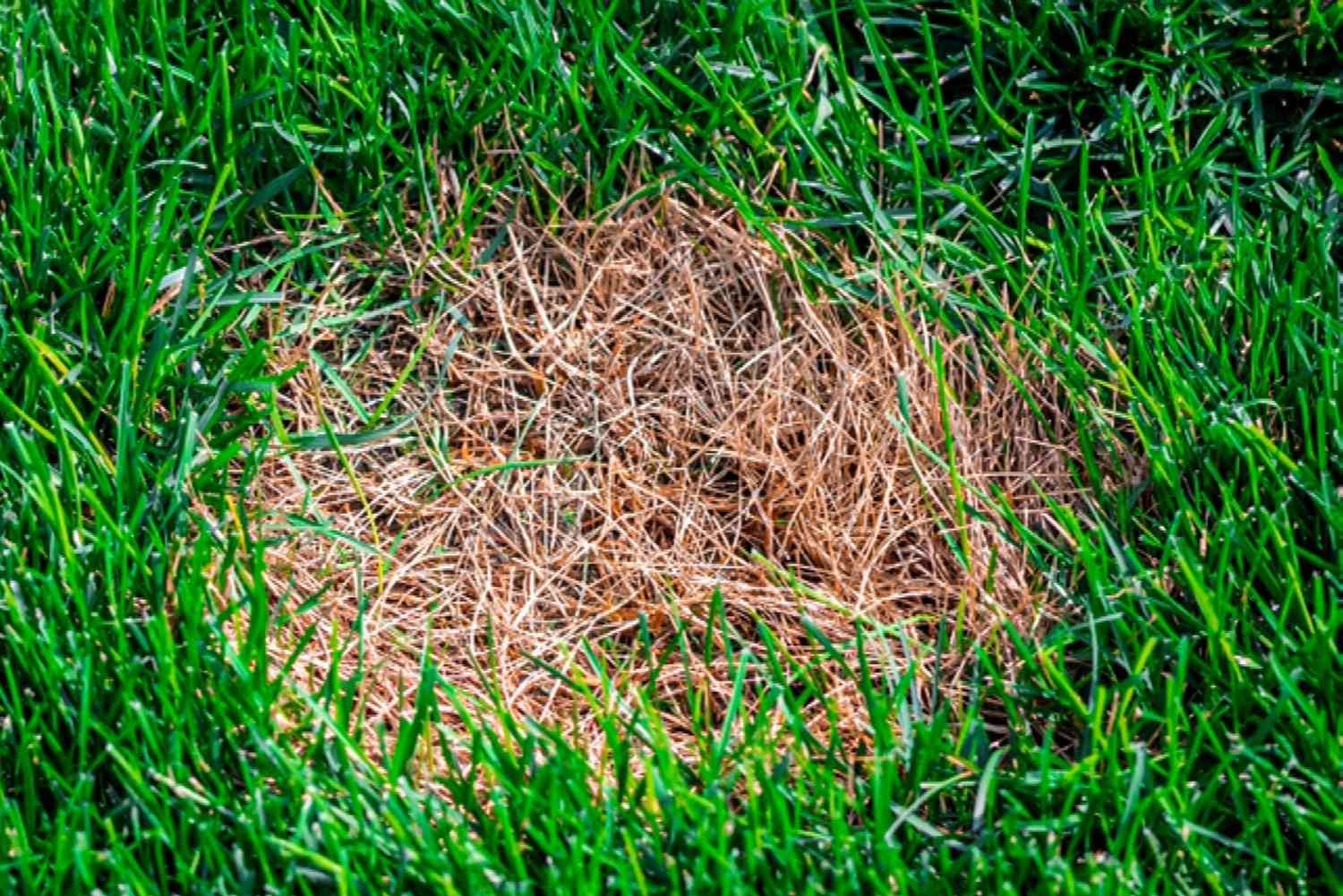
Lawn with dry grass spot.

5. Quick Comparison Table — Arizona Winter Lawn Guide

Lawn Type Watering Frequency Fertilizer Mowing Frost Sensitivity Best For
Bermuda (Dormant) Every 10–14 days None Optional High Low-maintenance households
Overseeded Ryegrass Every 5–7 days Light (Dec + Jan) Weekly Moderate Year-round green color
St. Augustine Every 10–12 days Very light Seasonal High Shaded yards
Zoysia Every 12–14 days None Minimal High Drought-tolerant homes

6. Month-By-Month Arizona Winter Lawn Schedule

November

  • Overseeding finishes
  • Begin ryegrass mowing
  • Reduce irrigation for Bermuda


December

  • Apply first winter fertilizer (only for ryegrass)
  • Protect from frost


January

  • Light feeding for ryegrass
  • Minimal watering for dormant Bermuda


February

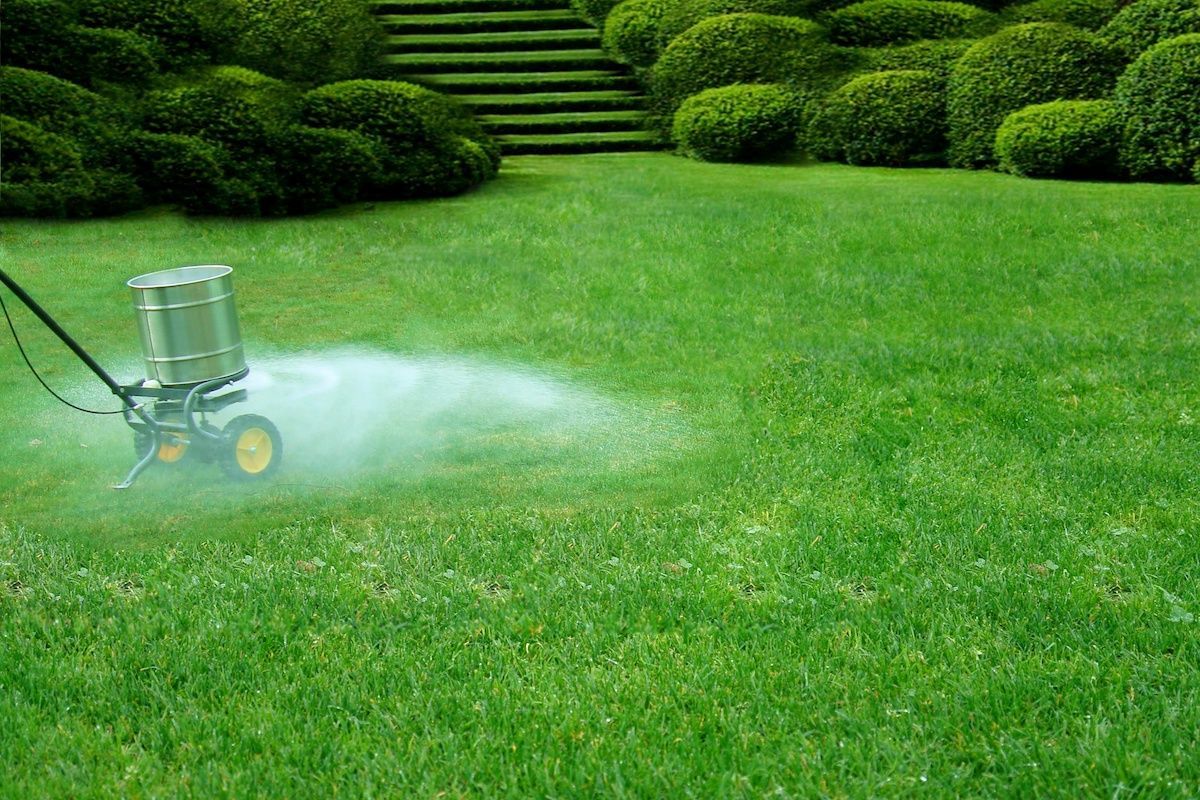
Fertilizing the green lawn.

7. Winter Lawn Care FAQs

  1. Why does my Bermuda lawn turn brown in winter?
    That’s normal dormancy — the grass is conserving energy until soil temps rise above 65°F.
  2. 2. Should I overseed every winter?
    If you want a green lawn year-round, yes. If you want strongest Bermuda growth in summer, skip overseeding.
  3. 3. Can I water during frost?
    Never water at night. Only rinse frost after sunrise.
  4. 4. Is it safe to fertilize in December?
    Yes — but only for ryegrass. Never fertilize dormant Bermuda.

Final Tips for a Healthy Arizona Winter Lawn


A little attention during winter sets up your lawn for exceptional growth and color the moment temperatures rise.

A green background with a white outline of a heart.
A Sharp, vibrant Arizona yard featuring evergreen shrubs, agave, and cypress trees in warm morning l
December 14, 2025
Evergreen species that stay vibrant, structured, and healthy all winter long.
December 3, 2025
How to Use This Guide
Beautiful aerial shot of the garden.
November 5, 2025
Discover the top commercial landscaping ideas Arizona businesses trust to attract customers, save water, and elevate curb appeal. Expert tips from Happy Clean Lawnscapes.
An office building showing high-impact curb appeal zones
October 13, 2025
Commercial Landscaping is a Whole Different Ball Game in Arizona
October 1, 2025
Not all turf is created equal, especially for commercial use. Here's the real deal on what holds up best in our Arizona climate: For Office Parks & Corporate Campuses: Polyethylene Turf - This is the 'luxury sedan' of turf. It's the one that looks and feels most like real grass, with that soft texture that makes your property say 'we pay attention to details.' It handles sun exposure really well without fading, which is crucial for our Arizona summers. For High-Traffic Areas & Shopping Centers: Nylon Turf - Think of this as the 'work truck' option. It's the most durable turf on the market, tough enough for hundreds of people walking across it daily without showing wear. The fibers bounce right back, even in high-traffic entryways or common areas that get constant foot traffic. For Apartments & HOAs: Polypropylene Turf - The 'family minivan' - perfect balance of durability, safety for kids and pets, and budget-friendly for larger common areas. It's cost-effective for covering big spaces while still standing up to playground use and pet areas. Plus, it stays cooler than other options, which parents really appreciate.
September 17, 2025
Why Busy Homeowners Need Easier Lawns
September 1, 2025
Why Busy Homeowners Need Easier Lawns
By Happy Clean Landscapes August 20, 2025
Why Fertilization Matters for Arizona Lawns
By Happy Clean Landscapes July 14, 2025
Why Seasonal Lawn Care is Important
By Happy Clean Landscapes July 2, 2025
If you're struggling with keeping your plants hydrated without wasting water, don’t worry—there are smart watering strategies that can make a significant difference. Learn how to maximize water efficiency and ensure your plants get exactly what they need.
Show More