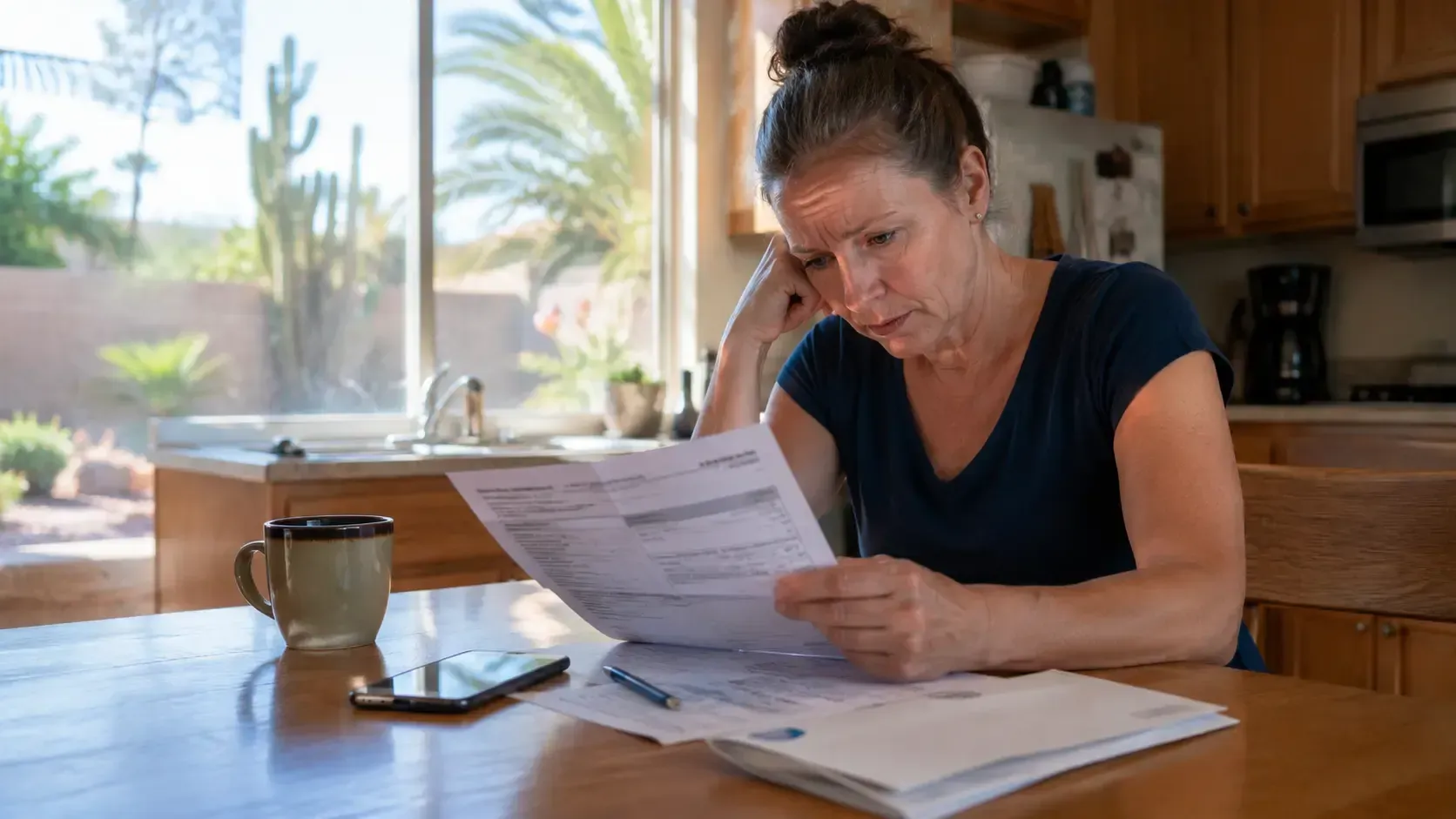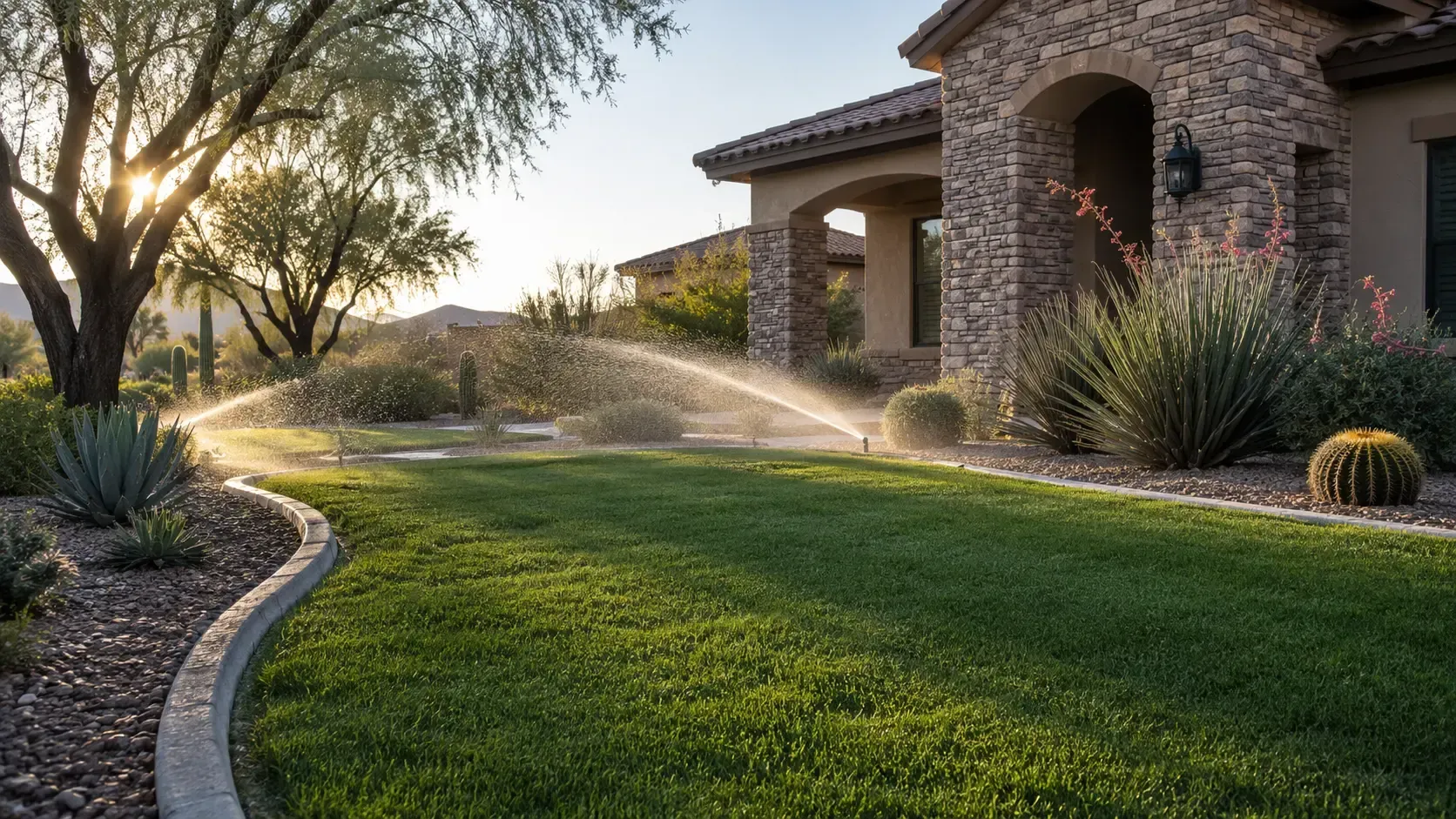


Let's be honest - keeping natural grass alive in Arizona is exhausting. Between the brutal sun,
water restrictions, and crazy
water bills, it feels like you can't win. Artificial turf has become the smart alternative for homeowners and businesses who want a lush, green lawn year-round without the water, chemicals, or constant maintenance. But not all turf is created equal. This comprehensive guide covers everything you need to know about artificial turf installation in Arizona.
Why Arizona Homeowners Are Switching to Artificial Turf
Seriously, the numbers speak for themselves. Here's what business owners are telling me after switching:
- Water Savings: We're saving over 55,000 gallons of water annually - that's like filling a swimming pool with cash we used to pour into the ground
- Cost Efficiency: No more water bills, fertilizer costs, or paying landscapers to mow every week - our maintenance budget dropped by 60%
- Always Professional: Our property looks sharp and welcoming 365 days a year, even during monsoon season and peak summer heat
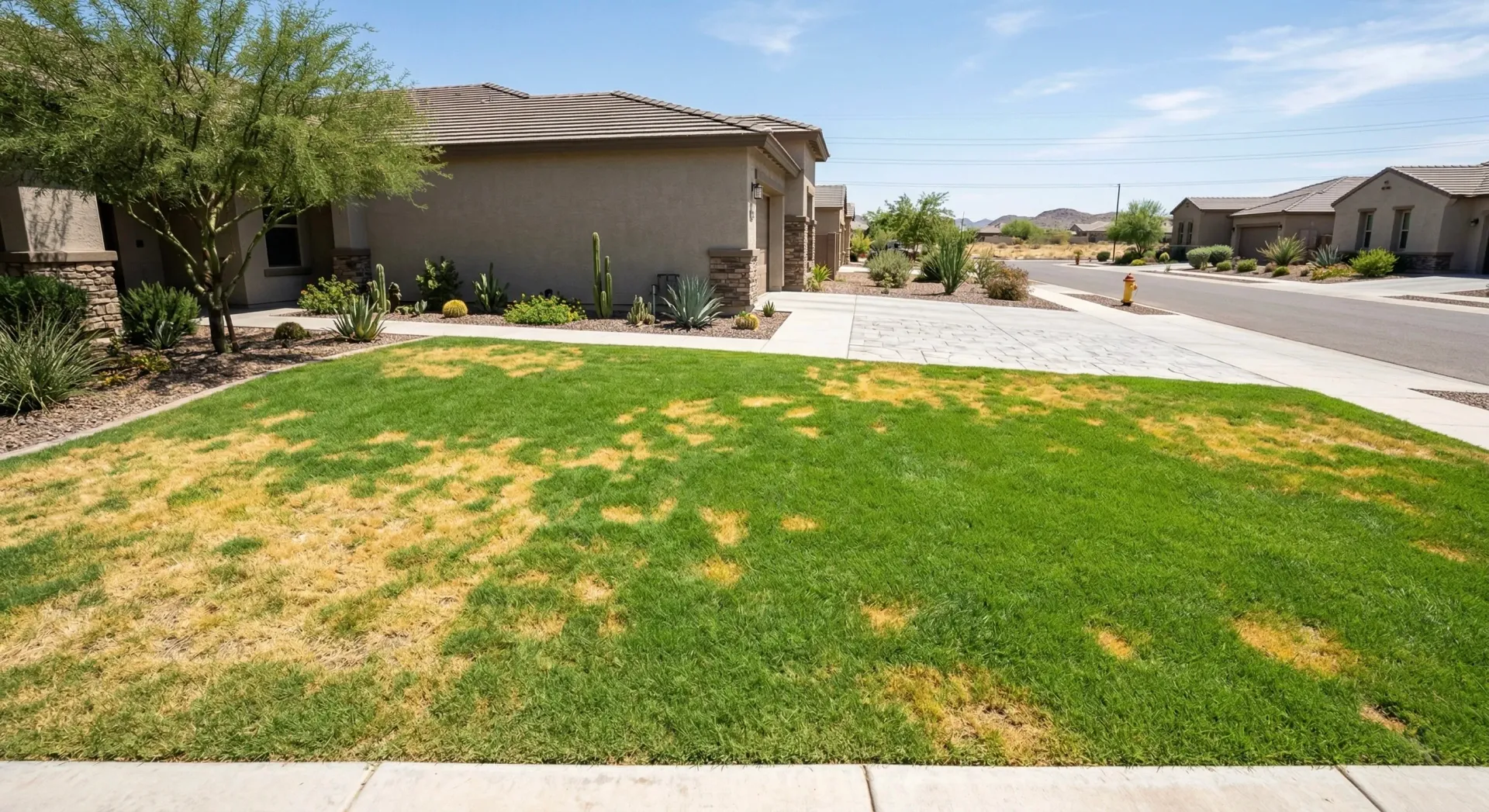
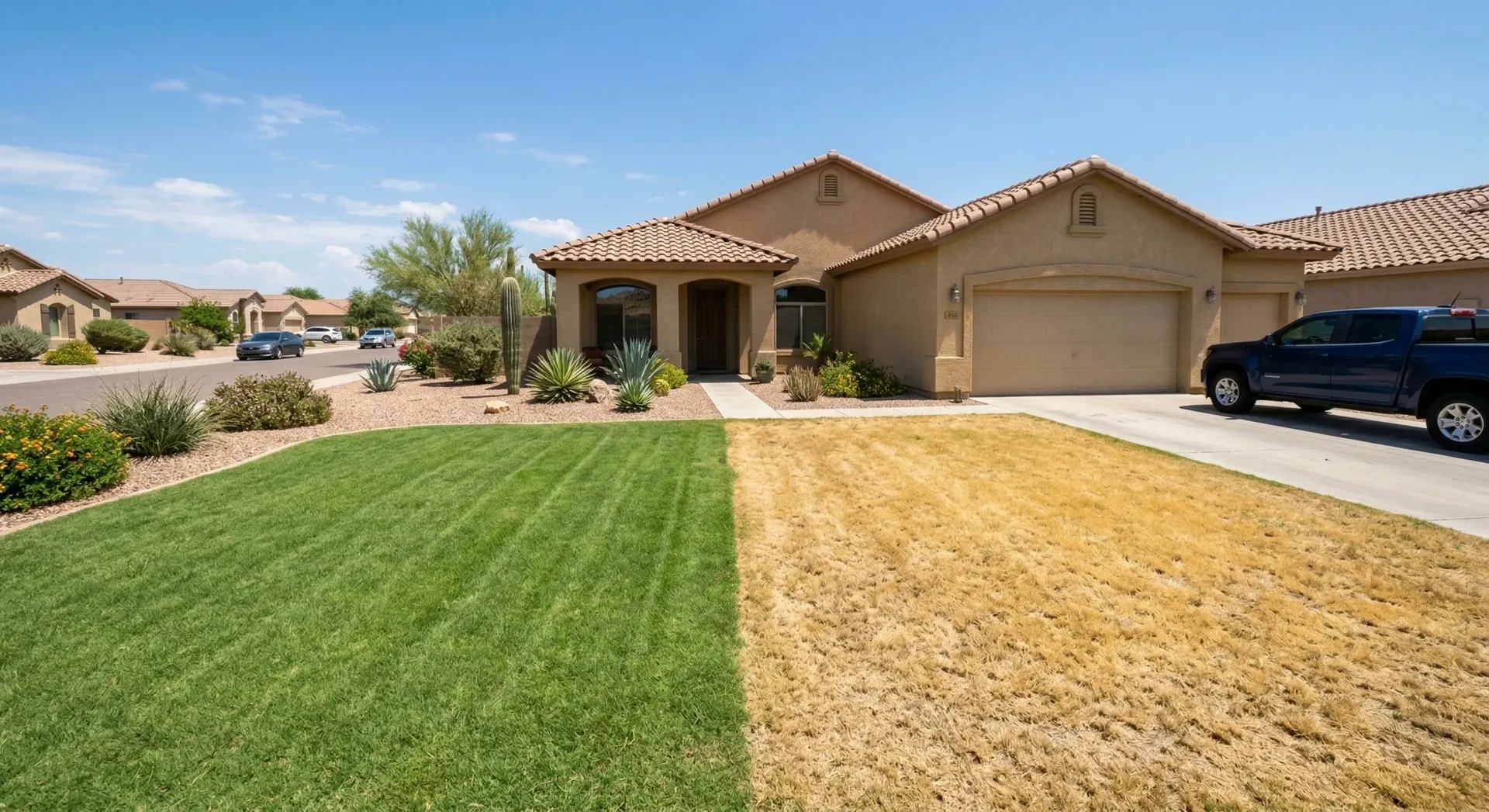
- Zero Headaches: No more brown spots, mud tracks in the lobby, or apologizing to tenants about the lawn during water restrictions
- Drought-Proof Reputation: We're seen as an environmentally conscious business because we're not wasting water on grass
The 3 Types of Turf That Work Best for Arizona Businesses

Not all turf is created equal, especially for commercial use. Here's the real deal on what holds up best in our Arizona climate:
For Office Parks & Corporate Campuses:
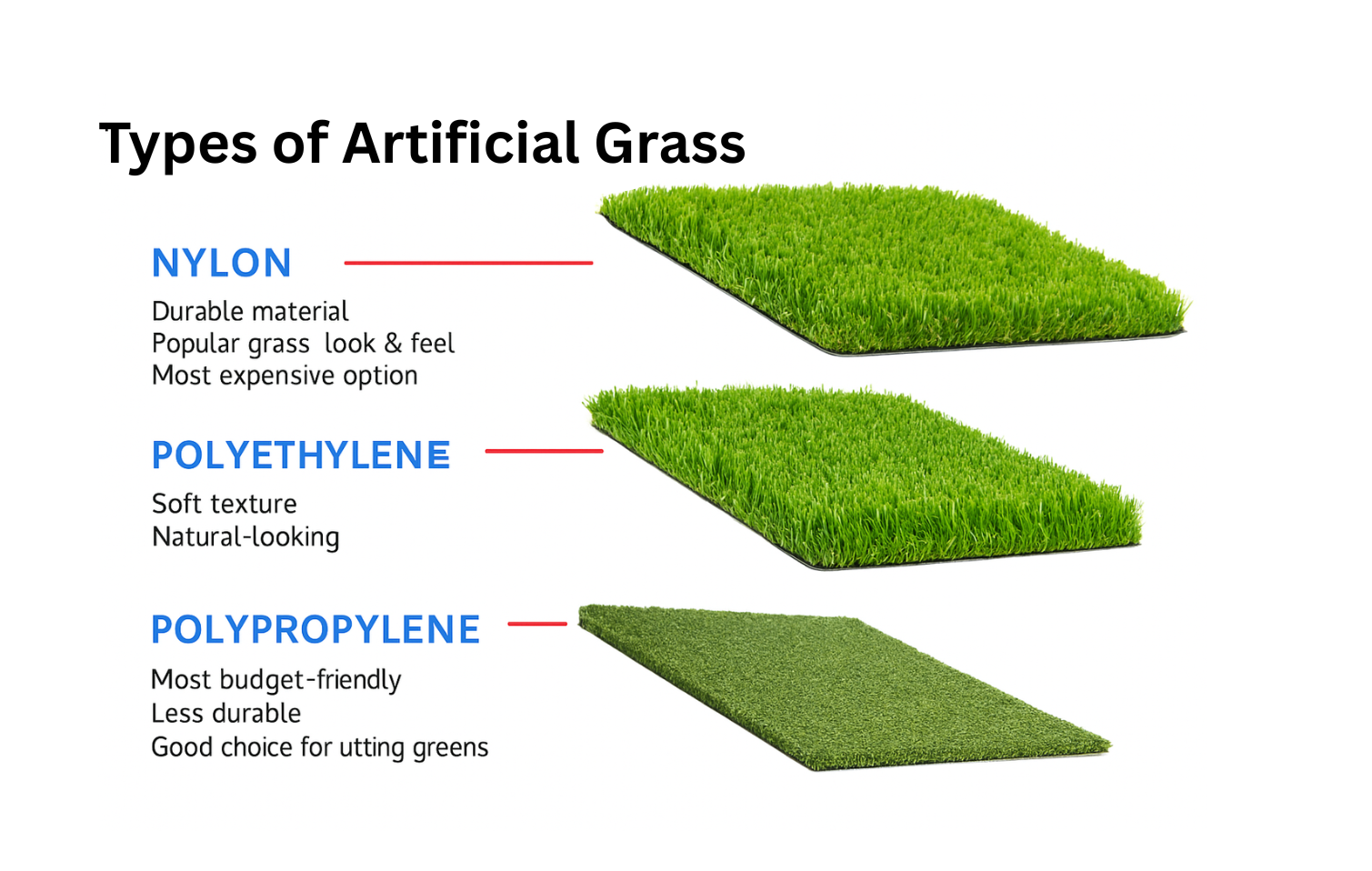
Polyethylene Turf - This is the 'luxury sedan' of turf. It's the one that looks and feels most like real grass, with that soft texture that makes your property say 'we pay attention to details.' It handles sun exposure really well without fading, which is crucial for our Arizona summers.
For High-Traffic Areas & Shopping Centers:
Nylon Turf - Think of this as the 'work truck' option. It's the most durable turf on the market, tough enough for hundreds of people walking across it daily without showing wear. The fibers bounce right back, even in high-traffic entryways or common areas that get constant foot traffic.
For Apartments & HOAs:
Polypropylene Turf - The 'family minivan' - perfect balance of durability, safety for kids and pets, and budget-friendly for larger common areas. It's cost-effective for covering big spaces while still standing up to playground use and pet areas. Plus, it stays cooler than other options, which parents really appreciate.
Artificial Turf Comparison Chart
| Turf Type | Best For... | The Vibe | Cost (Estimate) | Why It Works in AZ |
|---|---|---|---|---|
| Polyethylene | Office Parks & Corporate Campuses | The "Luxury Sedan" - looks and feels amazing. | $$$ ($12-18/sq. ft.) | Superior UV resistance prevents fading in our brutal sun. It's the most "realistic" looking. |
| Nylon | High-Traffic Areas & Shopping Centers | The "Work Truck" - built | $$$$ ($15-22/sq. ft.) | Most durable fiber; bounces back from heavy foot traffic without matting down. |
| Polypropylene | Apartments, HOAs & Large Common Areas | The "Family Minivan" - practical, safe, and budget-friendly. | $$ ($8-14/sq. ft.) | Cost-effective for large areas and stays cooler underfoot, which is great for kids and pets. |
Which One is Right for Your Property?
Choose Polyethylene if: Your main goal is curb appeal and making a great first impression. It's what you put in the front where clients and visitors see it first.
Choose Nylon if: You've got areas that get absolutely pounded by foot traffic all day long. It's your go-to for entrances, pathways, and common walkways.
Choose Polypropylene if: You need to cover a lot of ground without breaking the bank, but still want a solid, solid product for playgrounds or general common areas.
Remember, we often mix and match! There's no rule saying you can't use the fancy stuff out front and the durable stuff in the high-traffic areas out back. We do it all the time to get you the best performance for your budget.
The Installation Process (Without the Stress)
Busy owners get nervous about the disruption, but here's how we make it painless for your business:
- We work around your schedule - early mornings, weekends, whatever minimizes impact on your operations
- Phased installation - if you've got a large property, we can do it in sections so you're never without usable space
- Clean as we go - we treat your property like it's our own, keeping everything tidy and safe
- One and done - once it's in, you're set for 15+ years of beautiful, low-maintenance turf
What Your Artificial Turf ACTUALLY Needs in Arizona
Forget the scary stories about crazy maintenance. Keeping your turf looking great is stupidly simple. Here’s the real, no-BS maintenance schedule.

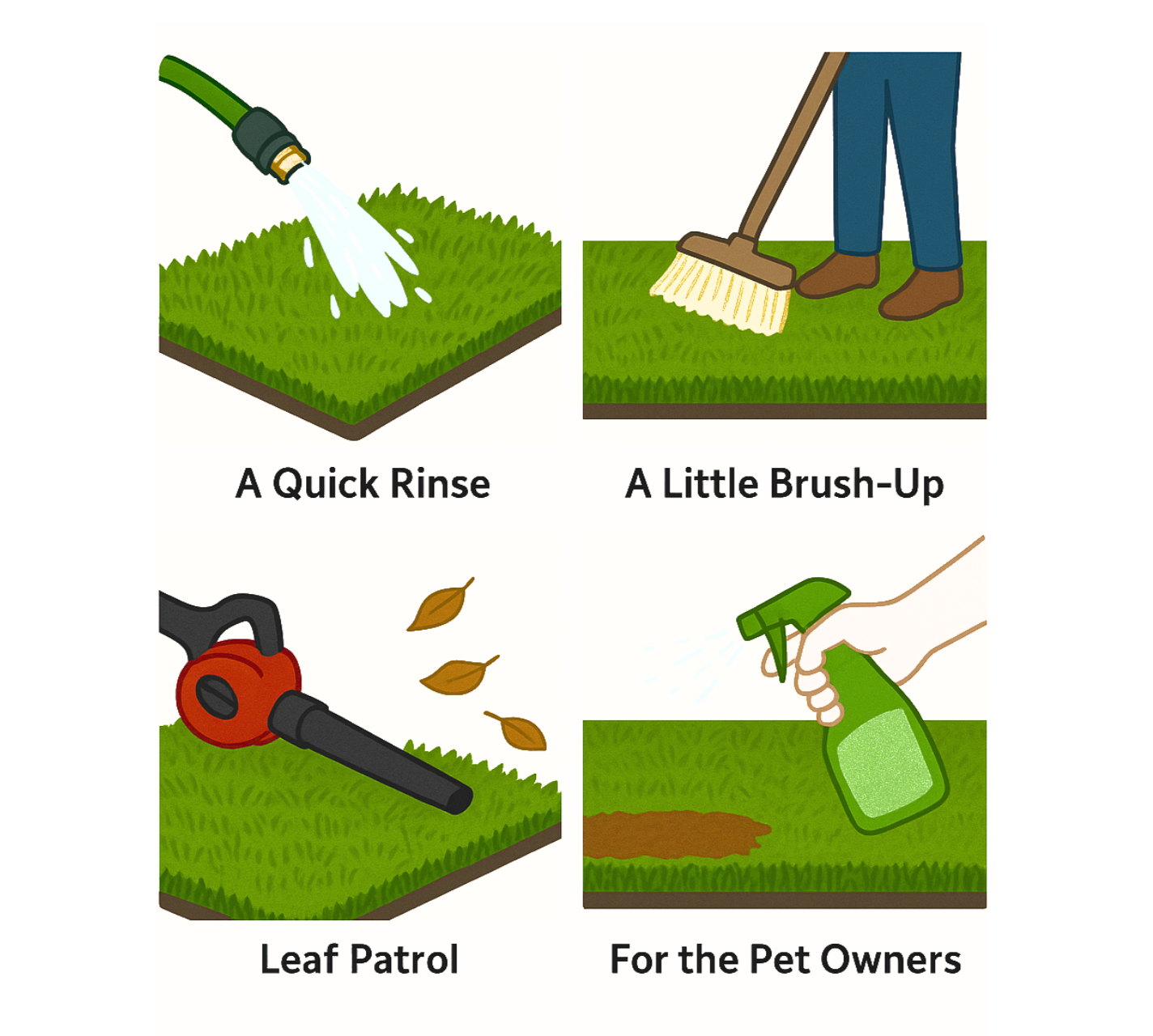
- A Quick Rinse: Once a month, just hose it down. This isn't about watering—it's about washing away the dust and pollen that settles on everything here. It keeps the green, well, green.
- A Little Brush-Up: Every couple of months, take a stiff broom or a plastic rake and give it a quick brush against the grain. This fluffs the blades back up and keeps it from getting matted down. It takes 10 minutes.
- Leaf Patrol: When the trees decide to drop their leaves (you know the season), a quick blow with a leaf blower does the trick. It's way easier than raking a real lawn.
- For the Pet Owners: If you've got dogs, just rinse the area where they do their business a little more often. Maybe once a quarter, use a simple, turf-safe disinfectant to keep it fresh. It's a fraction of the work you'd spend reseeding and patching a real grass pee spot.
The bottom line: We're talking about an hour or two of easy work per season. Compare that to the weekly mowing, edging, and fertilizing you're used to. It’s not even a contest.
Common Artificial Turf Mistakes to Avoid
Listen, I've seen some real turf disasters over the years. Most of them could have been avoided if someone had just given the owner some straight talk upfront. Here are the big ones to watch out for:
- Going Cheap on the Turf Itself. This is the biggest one. That bargain-bin turf might look fine in the showroom, but under the Arizona sun, it'll fade to a sad, blueish-green in a year or two. You're not saving money; you're just buying a replacement a few years early.
- Skipping the Drainage Talk. 'But it never rains here!' Yeah, until it does. A monsoon downpour will turn a poorly drained turf installation into a smelly, soggy swimming pool. Proper drainage isn't a suggestion here—it's a requirement.
- Cutting Corners on the Base. Think of the base like the foundation of your house. If it's not perfectly level and compacted, you'll end up with lumps, wrinkles, and puddles. It’s the invisible part of the job, but it’s what makes your lawn look and feel perfect for years.
- DIY is okay…? But it is NOT a good idea. I get it, it looks easy enough on YouTube. But without the right tools and experience, you'll likely void the manufacturer's warranty before you even finish. This is one of those 'pay me now, or pay me later' situations, and later is always more expensive.
Frustrating, right? The truth is, a perfect artificial lawn isn't about just buying rolls of grass—it's about expert planning and installation to avoid these exact pitfalls.
Why risk your investment when you can get it done right the first time?
Let us handle the details so you can just enjoy the results.
Get your free, no pressure consultation
FAQ: Artificial Turf in Arizona
What's the realistic ROI for a commercial property?
Most of our commercial clients see a full return on investment in 2-4 years. You're not just buying turf—you're eliminating recurring costs. We'll provide a detailed breakdown showing your specific savings on water bills, weekly mowing, fertilization, aeration, and sprinkler repair. For many properties, the water savings alone cover the cost within 36 months.
We have a large property. Can we phase the installation over multiple budget cycles?
Of course. In fact, that's how most of our large-scale clients do it. We can start with the high-visibility areas for maximum curb appeal this year, and roll out the remaining areas over the next 1-2 years. We'll create a master plan so everything integrates seamlessly in the end.
How does this affect our property value?
In two ways: First, it permanently boosts your curb appeal, making the property more attractive to potential tenants and buyers. Second, it's seen as a major capital improvement that lowers the property's operating expenses—a huge plus on any pro forma.
What's the maintenance really like compared to natural grass?
Think of it as a 95% reduction. You're swapping weekly mowing, edging, and fertilizing for a simple quarterly deep-clean and brush-up. We can handle it with a commercial maintenance plan, or your existing crew can manage it with minimal training.