

Heat Stress Signs in Arizona Lawns & Plants: How to Spot Damage Before It Spreads
Happy Clean Lawnscapes • May 21, 2026
A white background with a few lines on it

What does heat stress look like on a lawn?

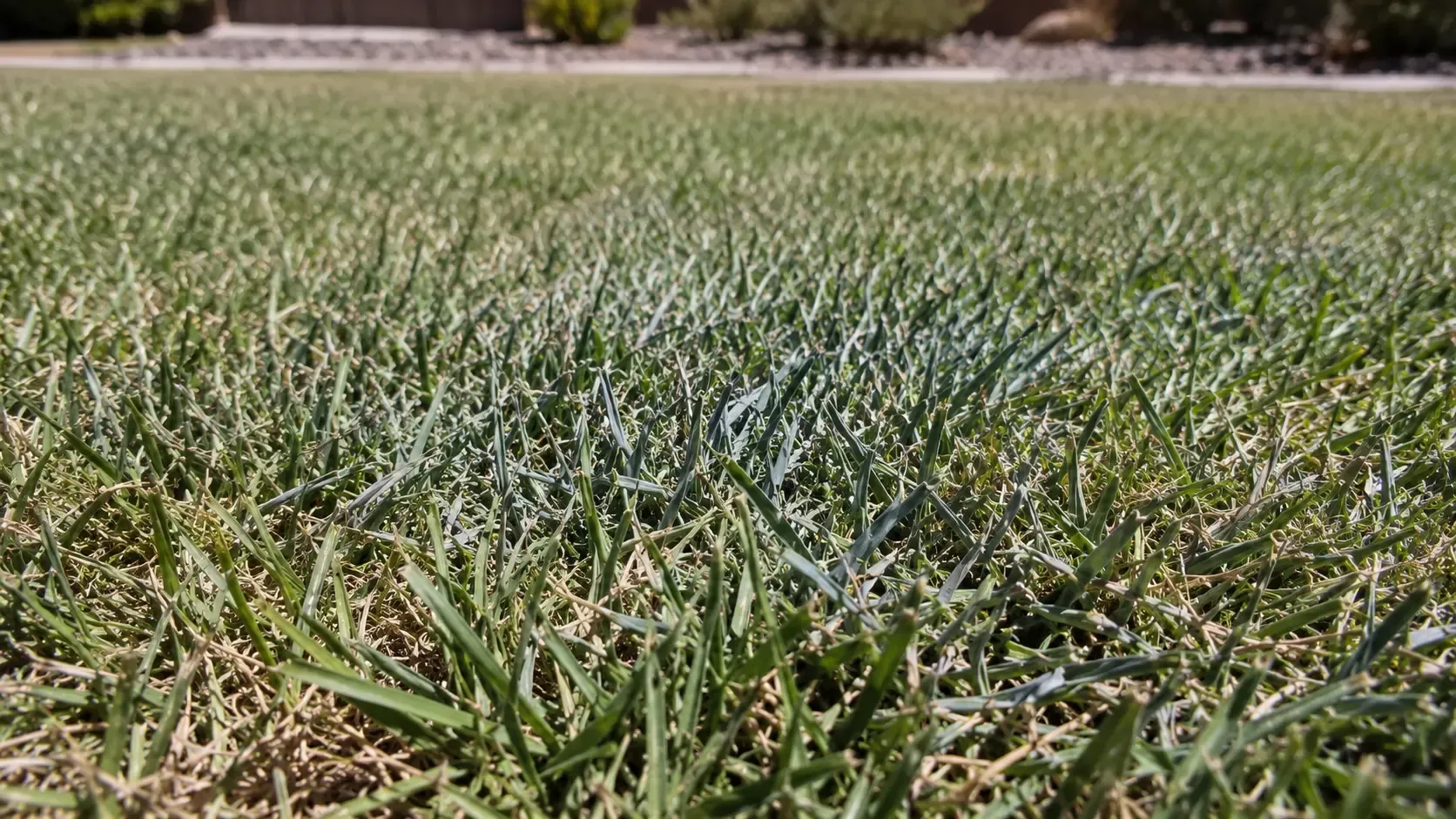
Heat-stressed lawns often show a bluish-gray tint, blades folding inward, footprints remaining visible after walking on the grass, and uneven thinning in sun-exposed areas.

Can heat stress kill grass in Arizona?

Yes. If heat stress is not addressed early, it can damage roots beyond recovery and lead to permanent turf loss, especially in areas with poor shade or weak irrigation.

How do I know if it's heat stress or underwatering?

Heat stress usually appears in exposed zones and does not improve immediately after watering. Underwatering tends to follow irrigation patterns and improves once water is properly applied.

What time should I water during heat stress?

Early morning is the most effective window. It allows the soil to absorb moisture before evaporation peaks and helps the lawn build resilience for the day.

Should I fertilize during a heat wave?

No. Fertilizing stressed plants or lawns during peak heat often causes burn instead of growth. Wait until heat pressure eases before applying any nutrients.

How often should I inspect my landscape for heat stress in Arizona?

During late spring and summer, a quick visual inspection every few days is ideal. Most heat stress issues are easier to fix when caught within the first week of symptoms.

Heat Stress Signs in Arizona Lawns & Plants: How to Spot Damage Before It Spreads

By the time most Arizona homeowners notice heat stress, the damage is already advanced. That is the real problem.

Because in desert climates, heat stress does not show up the way most people expect.

It shows up as:

  • Subtle color shifts
  • Slowed growth
  • Wilting that does not bounce back overnight
  • Patchy turf decline
  • Curling, dropping, or scorched leaves

The earlier these signs are caught, the easier the recovery.

The longer they go unnoticed, the more expensive the fix becomes, sometimes requiring full replacement of damaged plants, trees, or entire turf zones.

Heat stress is not a single event. It is a building pressure that hits your landscape gradually until something visibly breaks.

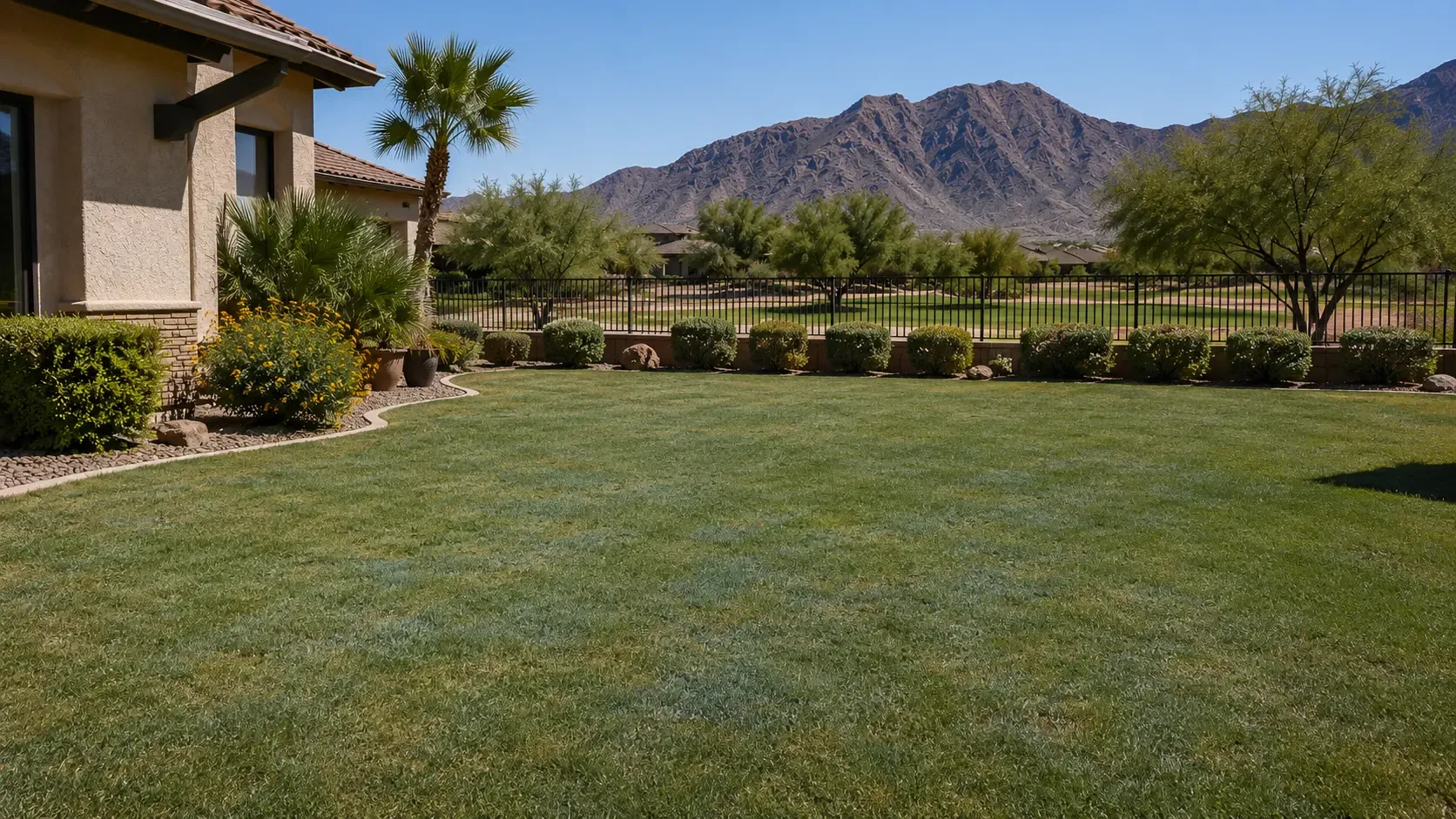
Backyard lawn with desert mountains, palm trees, and a house in the foreground

Why Heat Stress Hits Arizona Lawns and Plants Harder Than Most States

Arizona's climate creates conditions that accelerate heat stress faster than almost anywhere else in the country.

Landscapes here face:

  • Surface temperatures often exceeding 150°F
  • Long stretches of extreme UV exposure
  • Low humidity and rapid evaporation
  • Hard, compact desert soils
  • Reflective heat from hardscape, walls, and rock

This combination puts continuous strain on turf root systems, shallow-rooted plants, young trees still in establishment, and lawns transitioning from spring growth.

If your landscape is still recovering from cooler-season stress, the heat-stress window opens even earlier than you would expect. Review the foundation laid out in our spring lawn and tree recovery guide before assuming your landscape is summer-ready.

The Biggest Mistake Homeowners Make When Spotting Heat Stress

Most homeowners assume heat stress shows up as obvious browning or wilting. By the time that happens, the lawn or plant is already in advanced decline.

The most common identification mistakes include:

  • Confusing heat stress with underwatering and overcompensating with irrigation
  • Mistaking discoloration for fertilizer issues
  • Ignoring early symptoms because the lawn "still looks green"
  • Treating individual symptoms instead of the underlying heat pressure
  • Waiting until peak summer to react instead of preparing before

In Arizona, heat stress can advance from "barely visible" to "irreversible damage" in under two weeks during peak season.

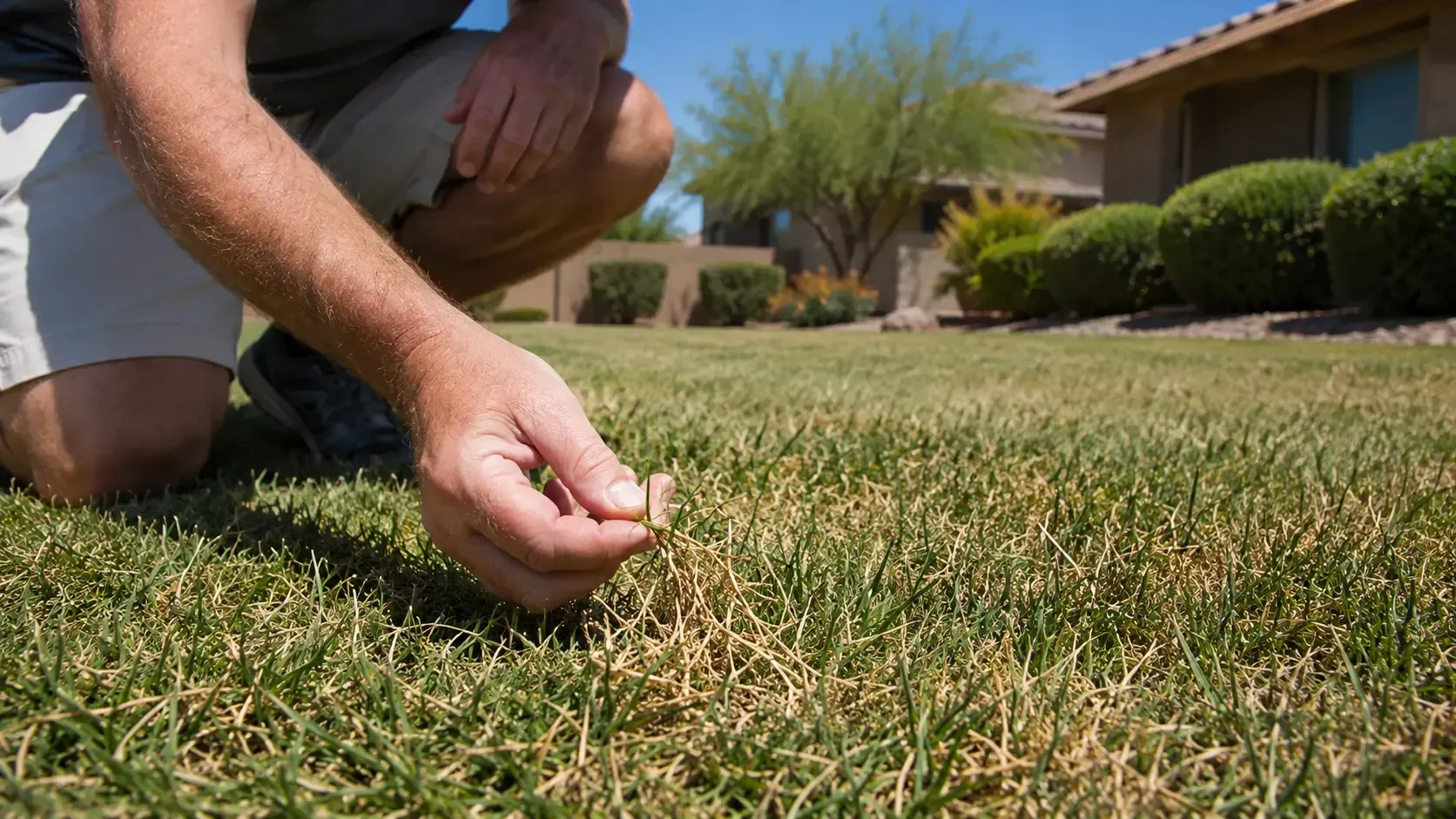
Person kneeling to inspect dry grass in a suburban yard on a sunny day

Early Warning Signs of Heat Stress in Lawns

Lawns usually show heat stress before plants and trees do, but the signs are easy to dismiss.

Watch for:

  • Grass blades folding inward or curling
  • A bluish-gray tint replacing healthy green
  • Footprints staying visible after walking on the lawn
  • Patchy, uneven color across the yard
  • Slower recovery between irrigation cycles
  • Thinning density in high-exposure zones
  • Dry, crunchy edges along sidewalks, walls, and driveways

These are not random cosmetic issues. They are early indicators that the lawn's root zone is fighting moisture loss faster than irrigation can replace it.

If you are seeing these signs, your watering schedule may already be falling behind. Review the principles in our seasonal watering guide for Arizona lawns to confirm your current routine still matches the season.

Close-up of dew-covered grass in a field, with a blurred tree line in the background

Early Warning Signs of Heat Stress in Plants and Trees

Plants and trees show heat stress differently than lawns.

The most common early signs include:

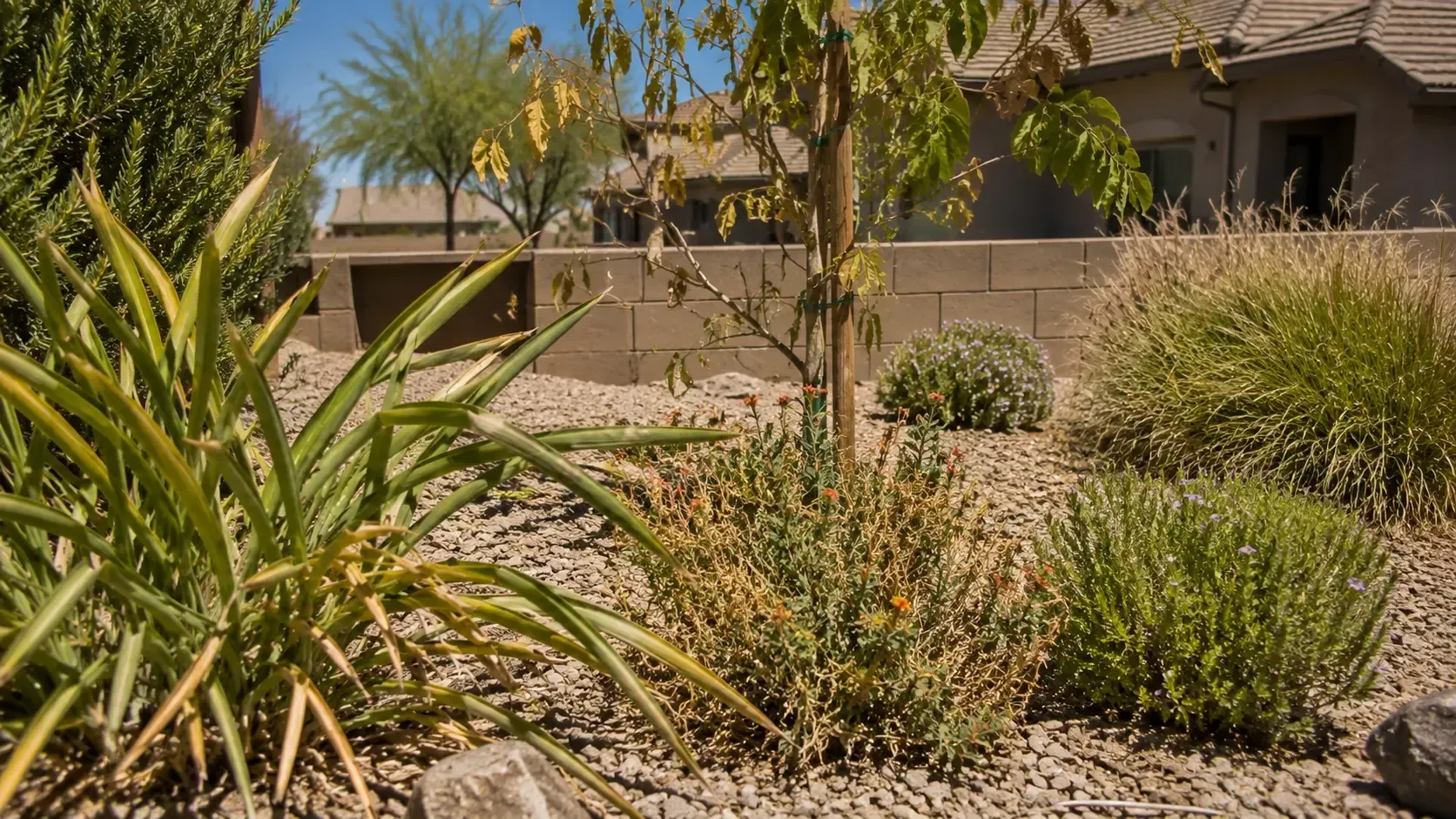
  • Leaves curling, cupping, or folding to reduce surface area
  • Drooping or wilting even when soil is moist
  • Yellowing at the leaf edges before the center
  • Scorched, brown leaf tips
  • Premature leaf drop in mid-season
  • Slowed or stalled new growth
  • Bark cracking on younger trees from intense direct sun

Trees that were planted without proper placement or shade planning tend to show stress symptoms earliest.

For the placement and shade fundamentals that prevent this exact issue, review our guide to tree selection and shade planning in Arizona.

Desert landscaping with agave, shrubs, gravel, and a house in the background.

Heat Stress vs Watering Issues: How to Tell the Difference

This is where most homeowners go wrong. The instinct is to water more the moment something looks off. But heat stress and irrigation issues require very different responses.

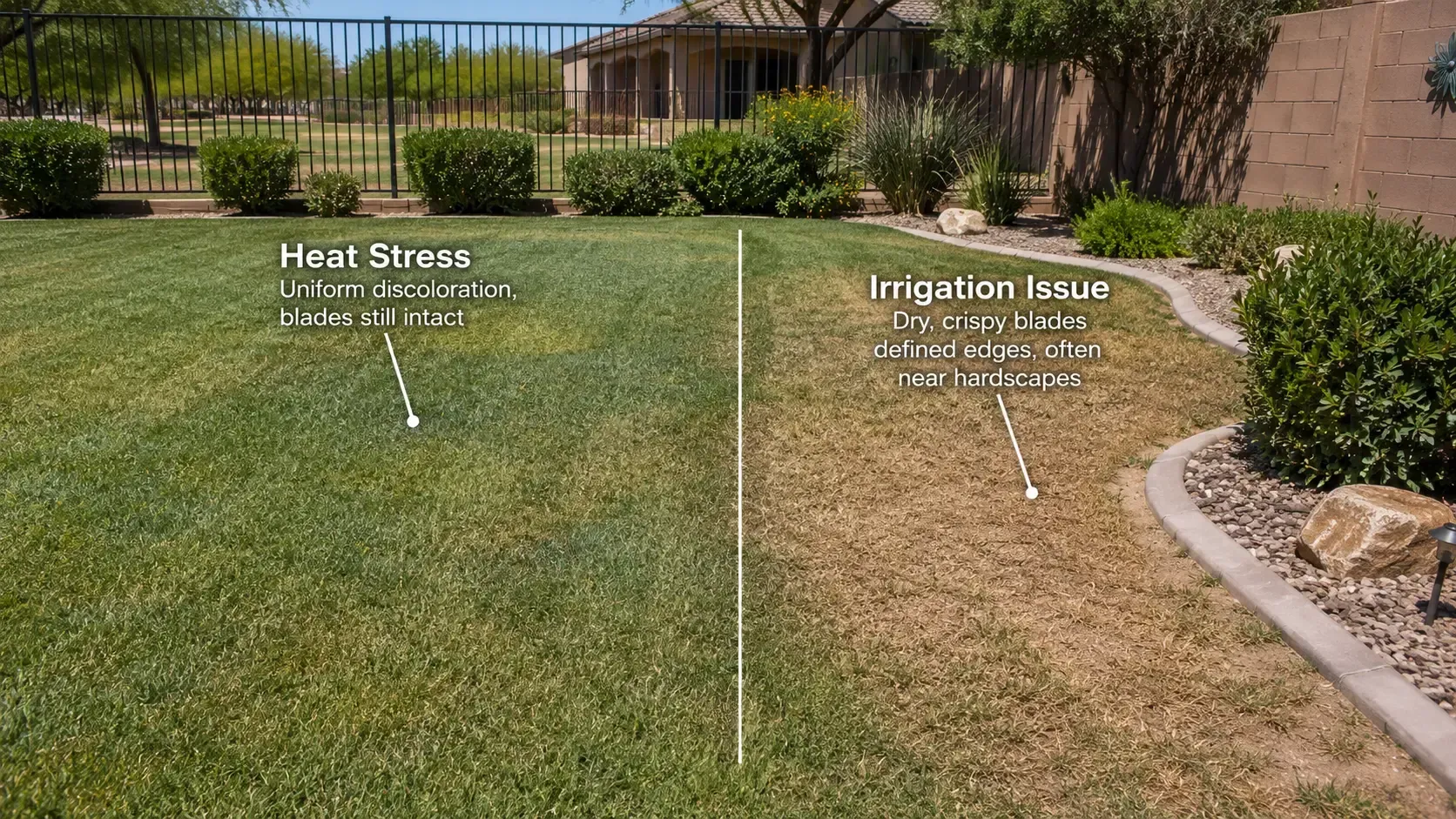
Heat stress usually shows:

  • Wilting that does not recover even after watering
  • Uniform color change across exposed areas
  • Damage concentrated on west and south-facing zones
  • Symptoms appearing during peak heat hours

Watering issues usually show:

  • Patchy damage in specific irrigation zones
  • Dry pockets near broken emitters or weak heads
  • Damage following spray patterns or sprinkler gaps
  • Symptoms appearing regardless of time of day

Misdiagnosis leads to overwatering, which then creates root rot, fungal pressure, and even worse stress.

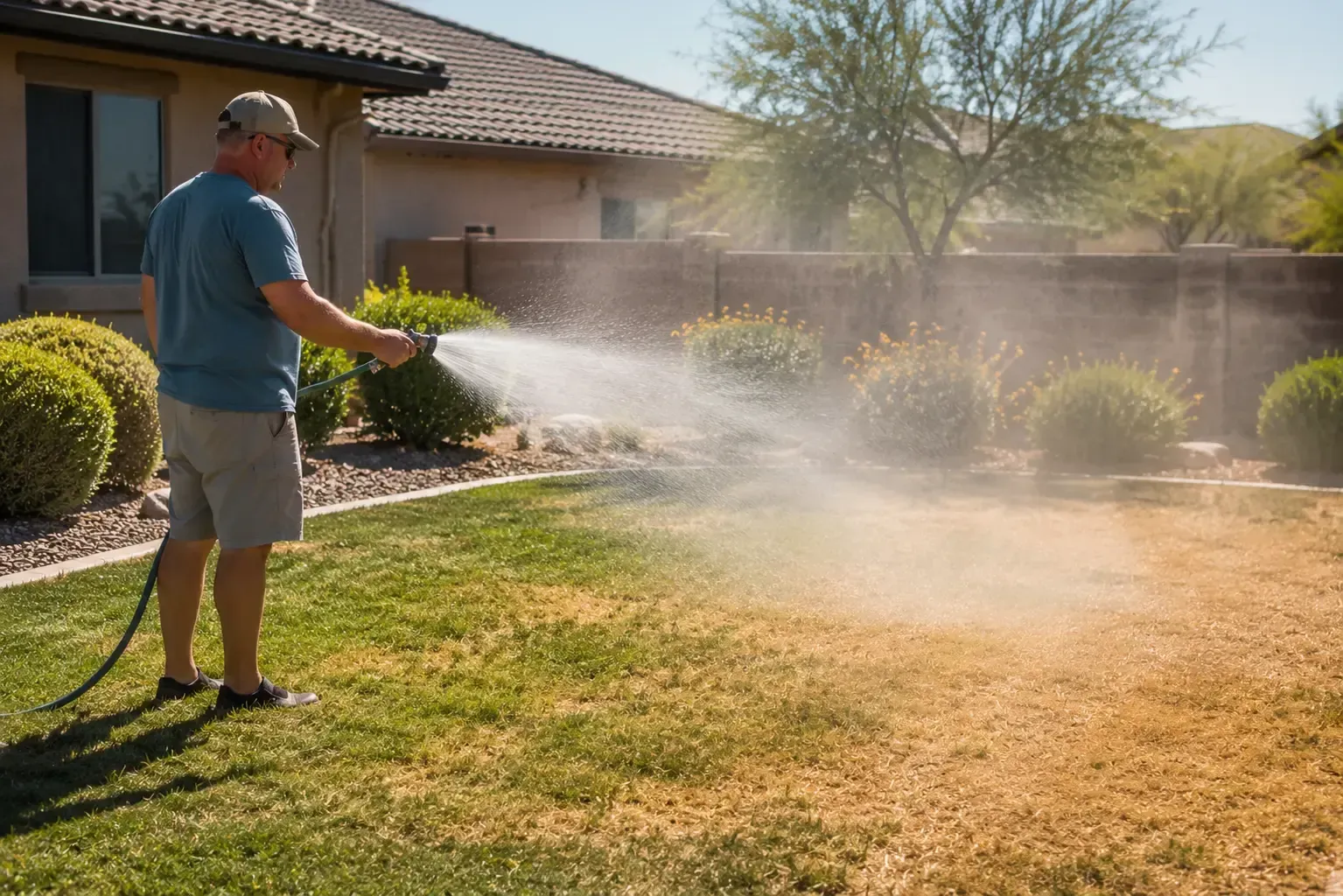
Lawn comparison showing heat stress on left and irrigation zone on right in a sunny backyard

Why Heat Stress Spreads Faster in Arizona Soil

Most homeowners overlook the role of soil in heat stress.

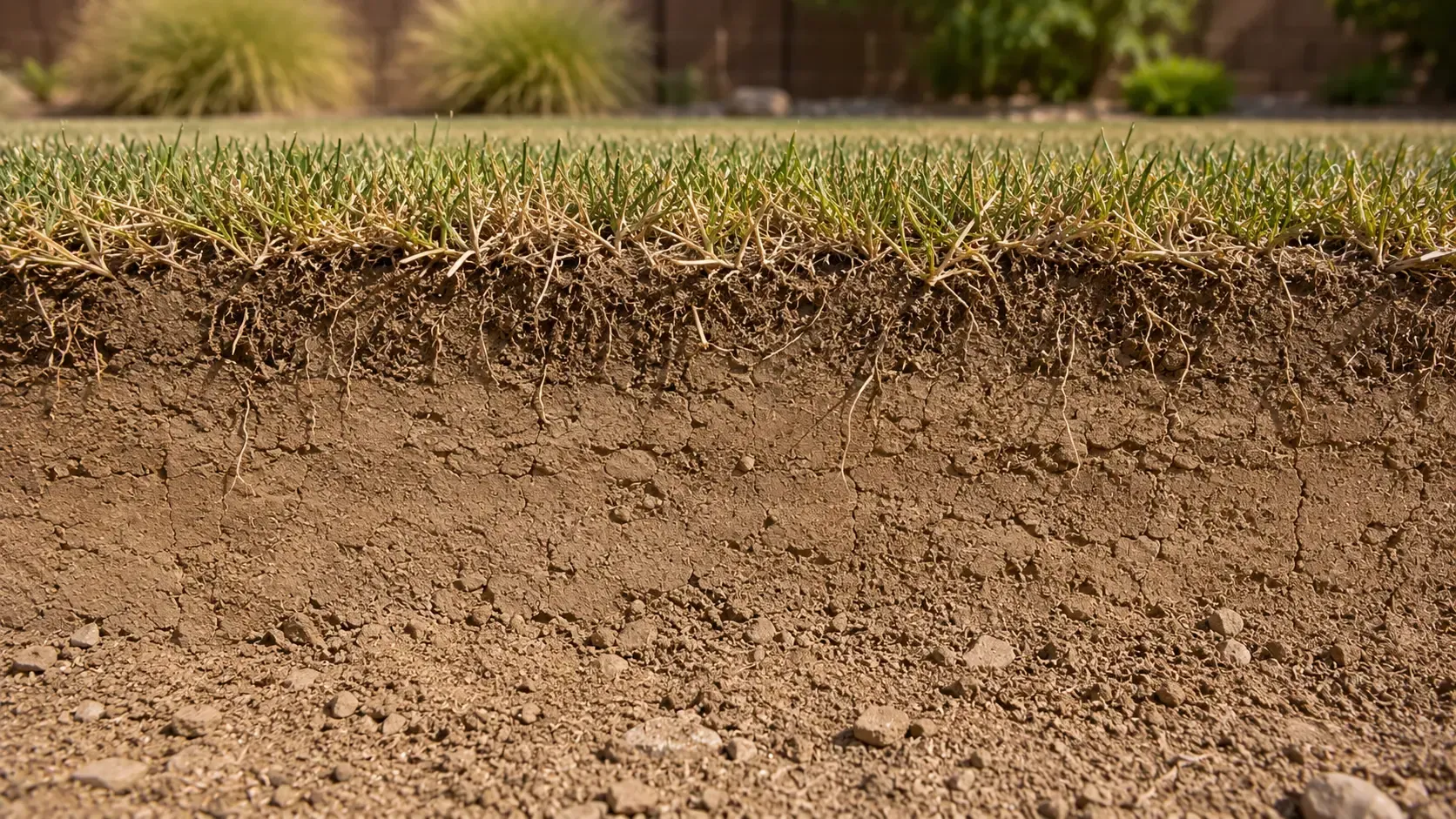
Arizona soils are typically compacted, low in organic matter, quick to lose moisture, high in mineral salts, and poor at distributing irrigation evenly.

These conditions cause heat stress to spread underground before it appears on the surface. Roots overheat. Moisture evaporates faster than it can be absorbed. Salts concentrate near root zones and amplify dehydration stress.

If your soil has not been assessed or amended recently, the visible heat stress on your lawn is often a symptom of a deeper soil problem.

Cross-section of a grassy soil bank with exposed brown earth beneath.

Common Heat Stress Mistakes That Make Damage Worse

These are the mistakes that turn manageable stress into permanent damage.

Watering at the wrong time of day. Midday watering loses most of its volume to evaporation and can scald stressed turf.

Mowing too short during heat waves. Short grass exposes more soil to sun and amplifies surface temperature.

Fertilizing during peak heat. Stressed lawns cannot process nutrients efficiently and often burn instead.

Ignoring shade gaps. Areas with no canopy protection take damage first and recover slowest.

Continuing the same irrigation schedule year-round. Spring schedules cannot sustain a lawn through May, June, and July.

For the deeper context on how spring habits transition into summer pressure, our guide to early-season lawn and tree mistakes outlines the exact errors that set up bigger problems later.

Person watering a dry suburban lawn with a hose on a sunny day

How to Respond to Heat Stress Early

The right response depends entirely on how early the stress is caught.

If symptoms are mild:

  • Adjust irrigation timing to early morning
  • Increase frequency, not necessarily volume
  • Raise mowing height to protect soil
  • Add temporary shade to vulnerable plants
  • Avoid fertilizer until heat pressure drops

If symptoms are moderate:

  • Pause aggressive landscaping activity
  • Inspect irrigation system performance
  • Check for soil compaction and runoff
  • Provide deep, slow watering cycles
  • Limit foot traffic on affected turf zones

If symptoms are severe:

  • Stop guessing
  • Get a professional assessment before applying any further water, fertilizer, or treatment

A wrong move at the severe stage often causes more damage than the heat itself.

Why Heat Stress Identification Should Happen Before Peak Summer

The most important shift Arizona homeowners can make is treating heat stress as a planning issue, not a reactive one.

Waiting until visible damage appears means recovery is slower, plant replacement costs are higher, irrigation bills climb without solving the problem, and lawn density may take a full season to restore.

Catching stress signs before peak heat lets you adjust irrigation, shade, soil, and maintenance routines while the landscape can still respond.

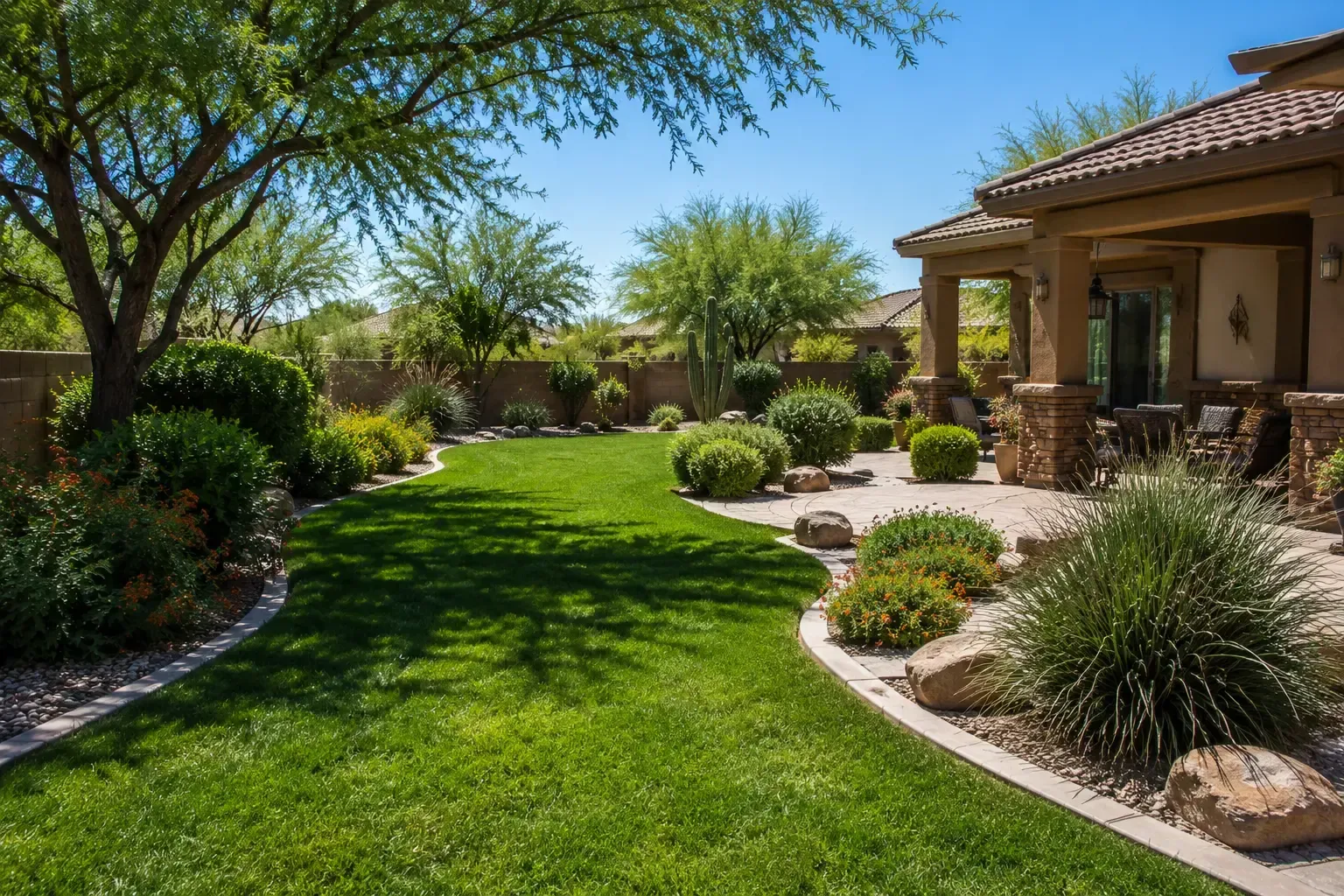
Sunlit landscaped backyard with green lawn, shrubs, trees, and a stucco patio house

Long-Term Benefits of Catching Heat Stress Early

Homeowners who identify heat stress early consistently see lower summer water bills, healthier turf density year-round, fewer dead or dying plants, reduced need for emergency replacements, stronger root systems heading into monsoon season, and a landscape that recovers faster in fall.

Heat stress is not something Arizona landscapes avoid. It is something they manage.

The difference between a thriving yard and a damaged one usually comes down to who noticed the signs first.

When to Get Professional Help

Some heat stress issues are too advanced or too widespread for DIY correction.

You should strongly consider a professional landscape assessment when damage is spreading despite irrigation adjustments, multiple plant types are showing stress at the same time, turf is browning in patterns that do not match irrigation zones, trees are dropping leaves or cracking bark mid-season, or you are not sure whether the cause is heat, water, soil, or pests.

If your Buckeye lawn, plants, or trees are showing early signs of heat stress, schedule a professional landscape assessment before peak summer arrives. Catching the problem early is faster, safer, and significantly cheaper than recovering from advanced damage.

FAQ: Heat Stress in Arizona Lawns & Plants

  • What does heat stress look like on a lawn?

    Heat-stressed lawns often show a bluish-gray tint, blades folding inward, footprints remaining visible after walking on the grass, and uneven thinning in sun-exposed areas.

  • Can heat stress kill grass in Arizona?

    Yes. If heat stress is not addressed early, it can damage roots beyond recovery and lead to permanent turf loss, especially in areas with poor shade or weak irrigation.

  • How do I know if it's heat stress or underwatering?

    Heat stress usually appears in exposed zones and does not improve immediately after watering. Underwatering tends to follow irrigation patterns and improves once water is properly applied.

  • What time should I water during heat stress?

    Early morning is the most effective window. It allows the soil to absorb moisture before evaporation peaks and helps the lawn build resilience for the day.

  • Should I fertilize during a heat wave?

    No. Fertilizing stressed plants or lawns during peak heat often causes burn instead of growth. Wait until heat pressure eases before applying any nutrients.

  • How often should I inspect my landscape for heat stress in Arizona?

    During late spring and summer, a quick visual inspection every few days is ideal. Most heat stress issues are easier to fix when caught within the first week of symptoms.

A green background with a white outline of a heart.
By Happy Clean Lawnscapes September 1, 2026
September is the last window to repair summer lawn damage in Arizona. Get the week-by-week watering schedule and learn how to prep Bermuda before October overseeding.
By Happy Clean Lawnscapes August 20, 2026
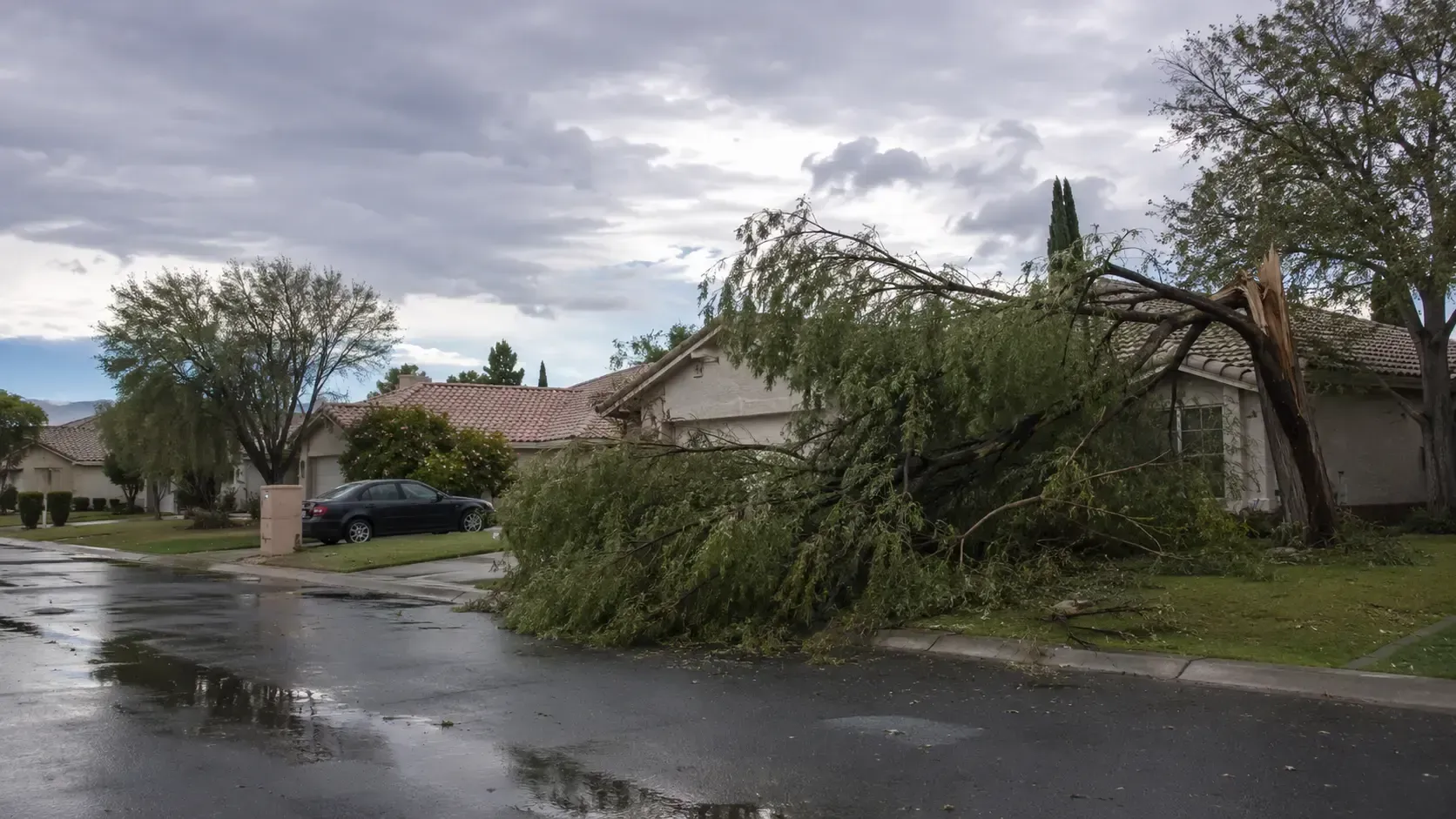
After a monsoon storm, the biggest dangers are the ones you cannot see. Learn how to assess tree damage safely, what to never touch, and how to avoid post-storm contractor scams.
By Happy Clean Lawnscapes August 4, 2026
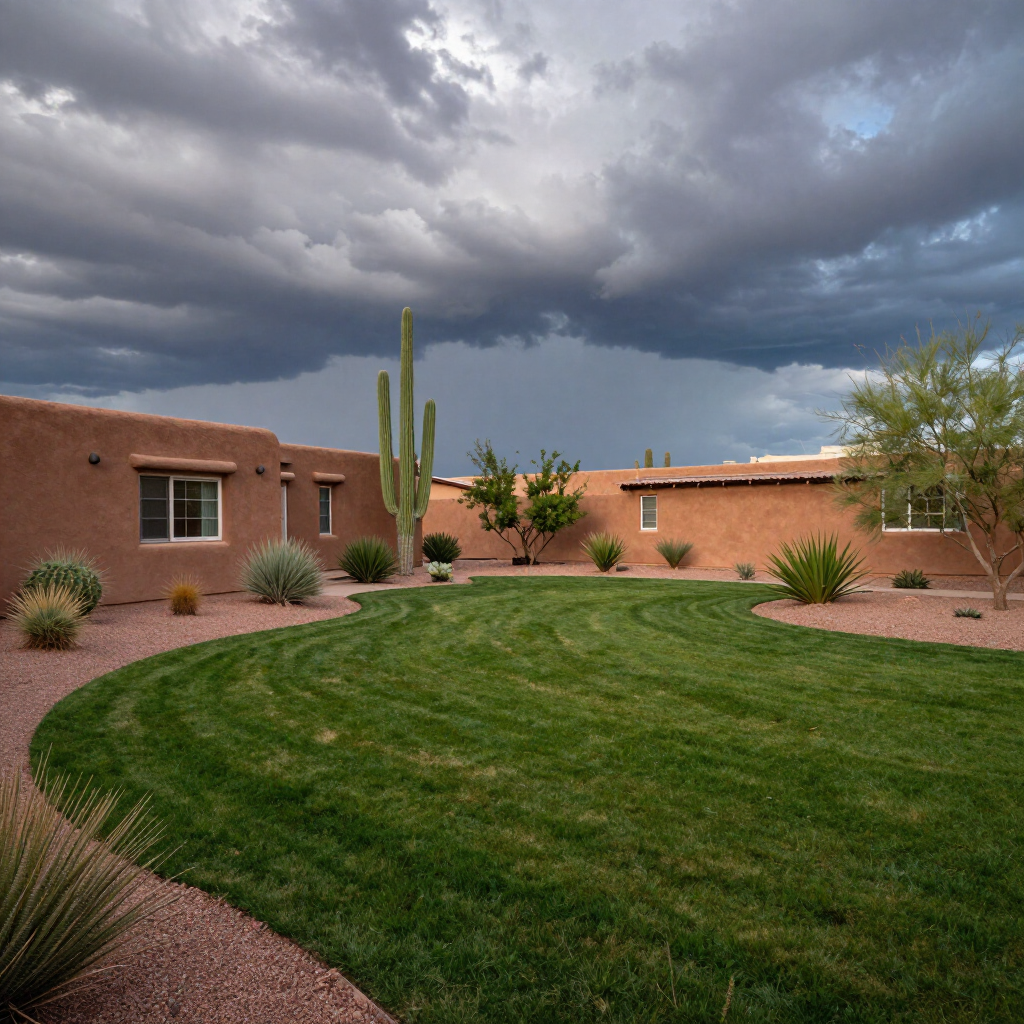
Arizona monsoon storms bring 60+ mph gusts and inches of rain in under an hour. Learn how to prepare drainage, trees, irrigation, and hardscape before the first storm hits.
Brown dirt patch in a green lawn, with cracked soil and dry grass in the center.
By Happy Clean Lawnscapes July 16, 2026
Brown, scorched patches in your Arizona lawn? Learn how to identify what caused the burn, what to do in the first 48 hours, and when the grass can still be saved.
Homeowner inspecting heat-stressed tree branches in an Arizona backyard
By Happy Clean Lawnscapes July 7, 2026
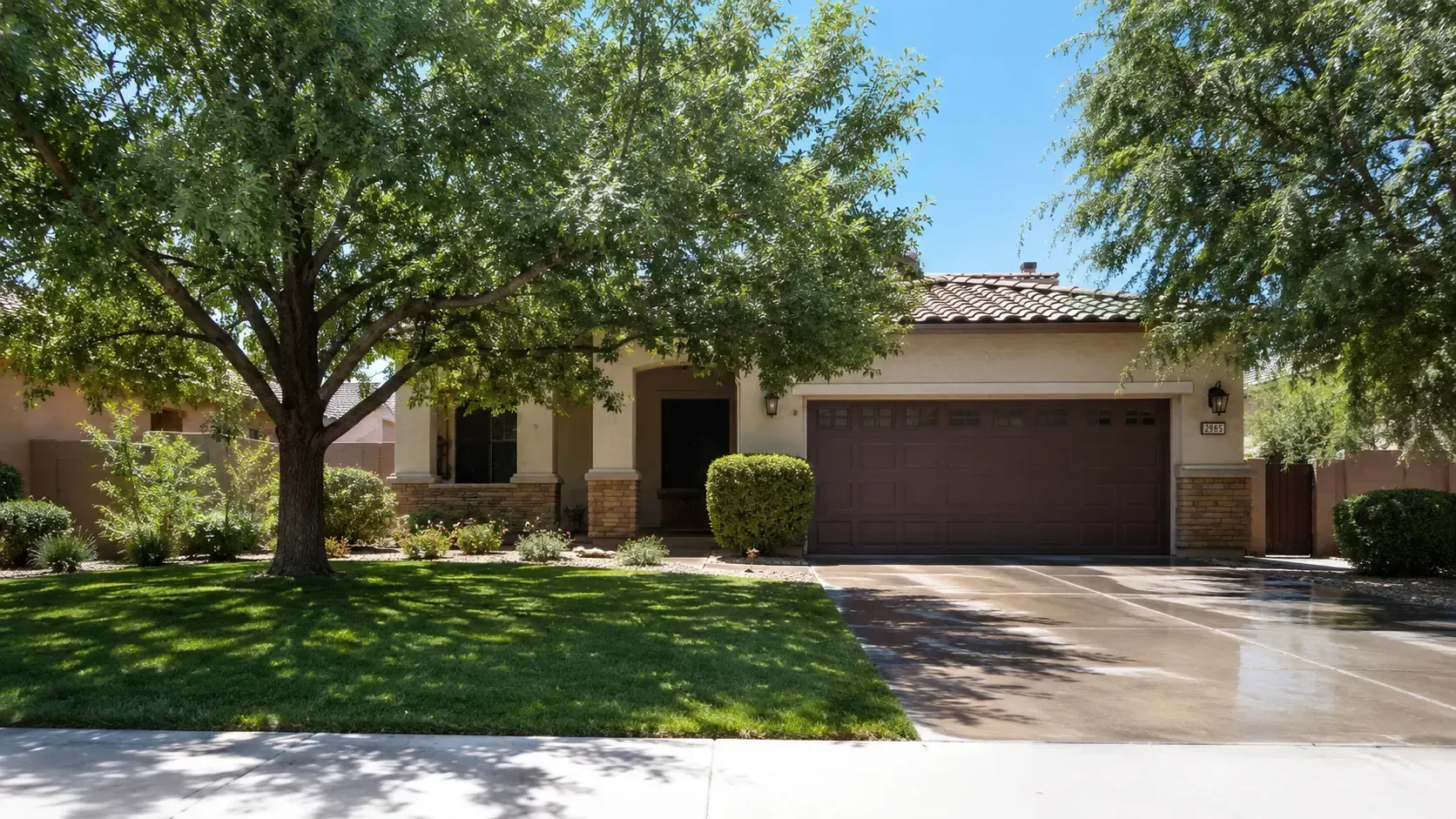
When Arizona hits an Extreme Heat Warning, one wrong move can kill your lawn or trees in days. Learn exactly how to water, mow, shade, and protect your landscape through a heat wave.

Arizona water bills spike every summer — usually from hidden
landscape waste. Learn how to find leak
By Happy Clean Lawnscapes June 18, 2026
Arizona water bills spike every summer — usually from hidden landscape waste. Learn how to find leaks, fix waste, and lower your bill before peak heat hits.
Smart Summer Irrigation Principles for Arizona Landscapes
June 11, 2026
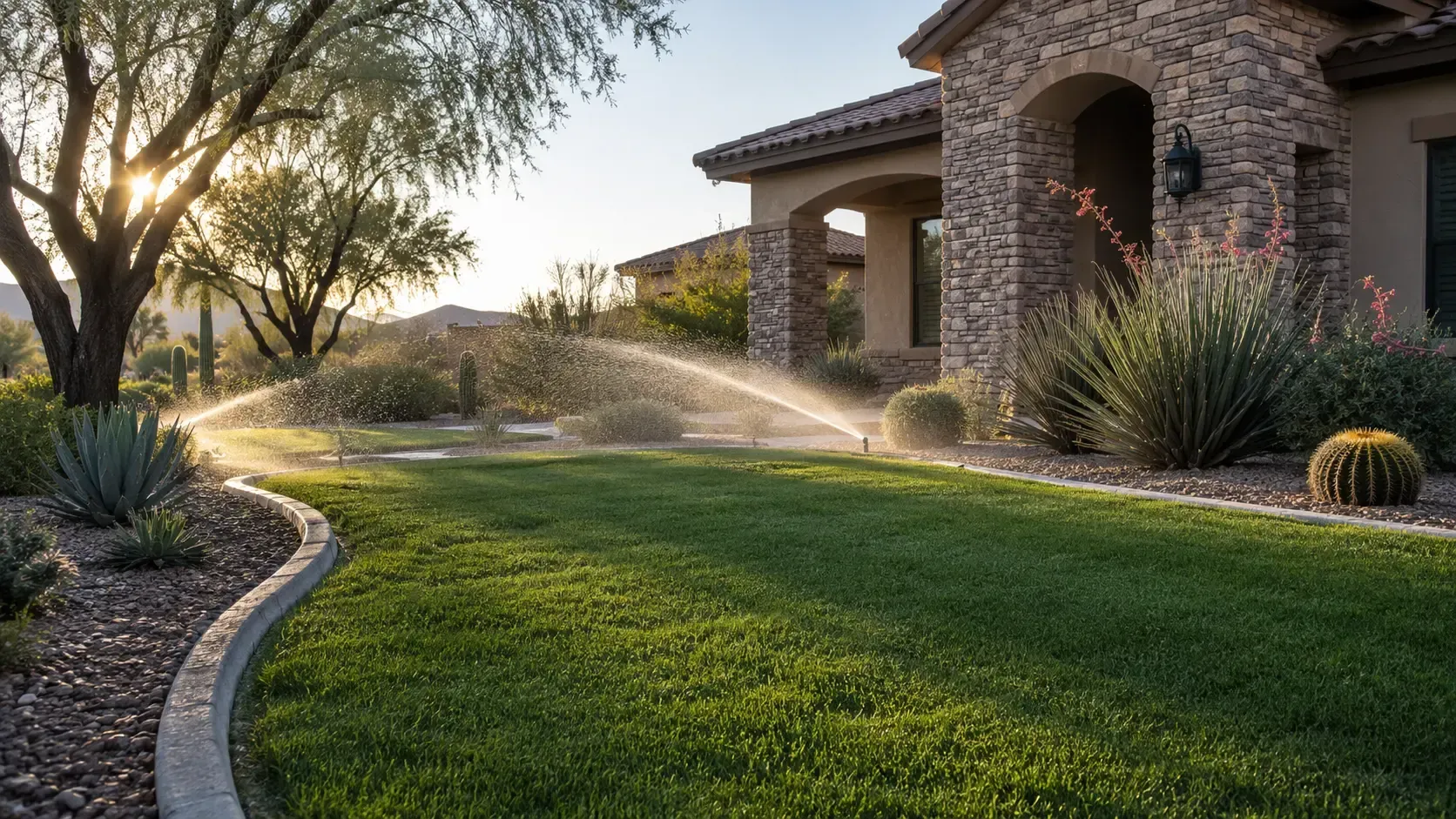
Summer irrigation in Arizona is not about watering more — it's about watering smarter. Learn the principles that protect your lawn, plants, and trees while cutting waste during peak heat.
May 5, 2026
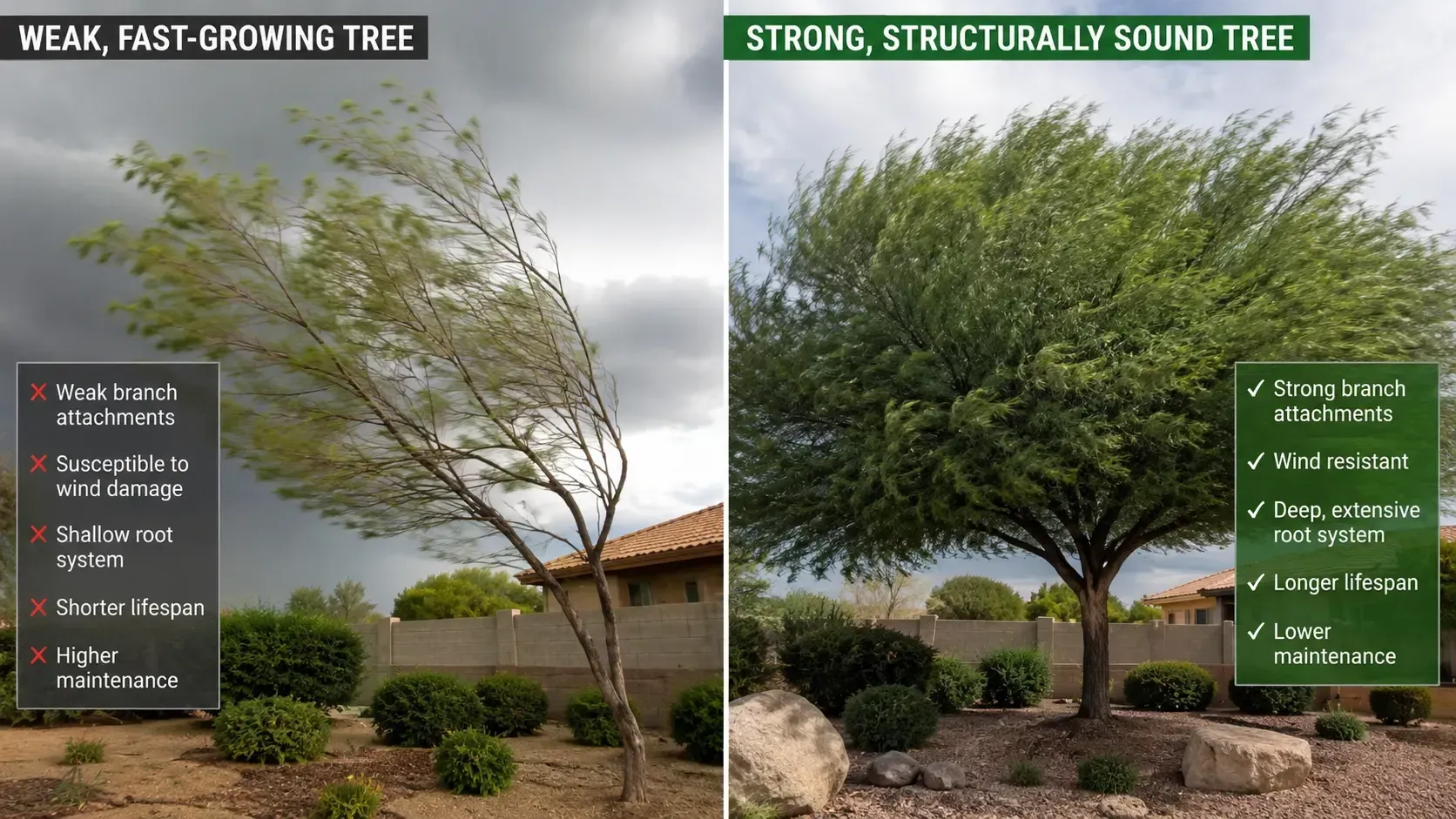
Choosing the wrong trees in Arizona can lead to heat stress, root damage, and high water use. Learn how to select and position shade trees properly for a healthier, cooler landscape.
April 17, 2026
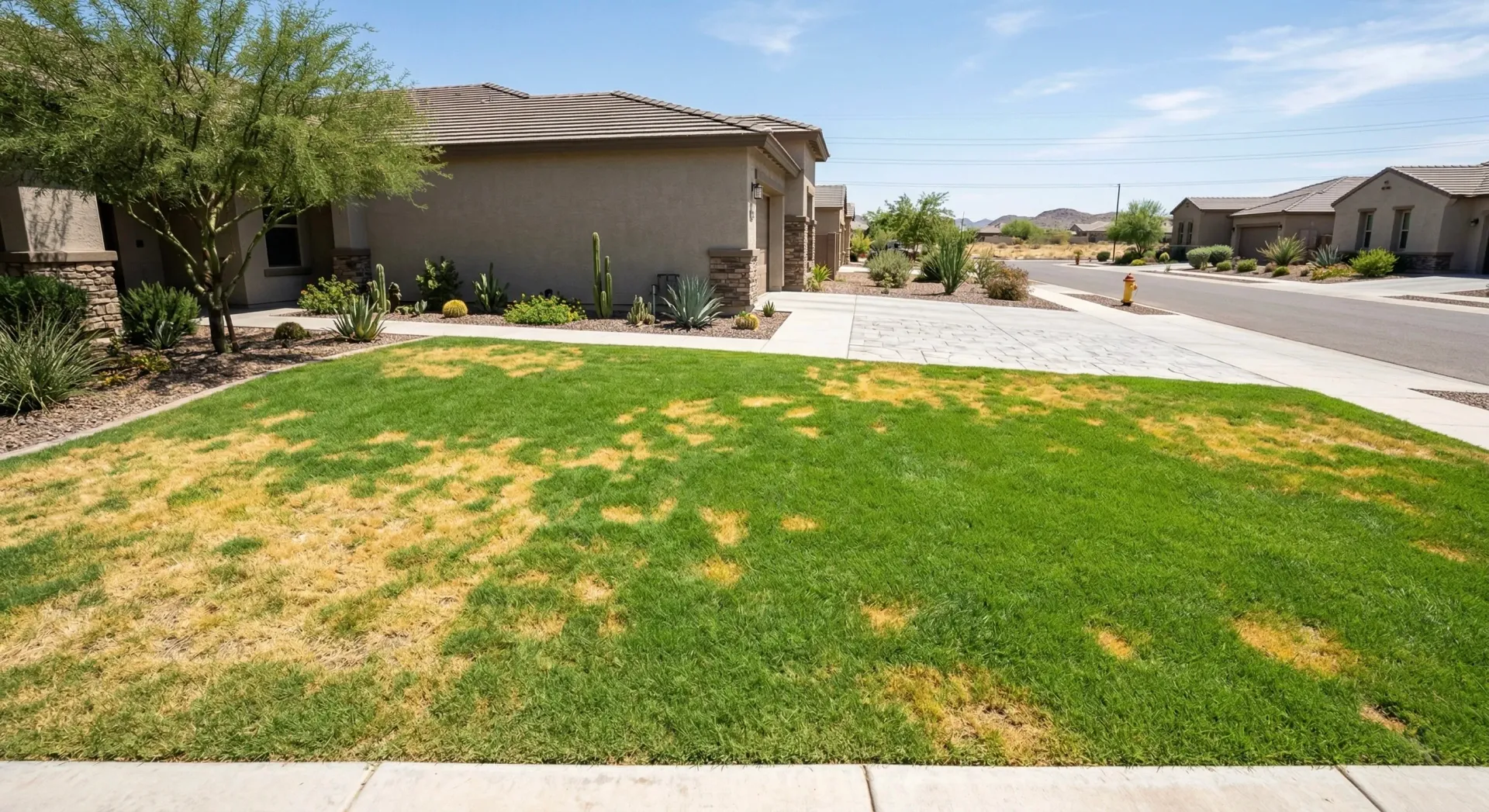
Yellow grass, burnt patches, weak growth? Learn the signs of over fertilizing lawn in Arizona and how to fix damage before it gets worse.
April 10, 2026
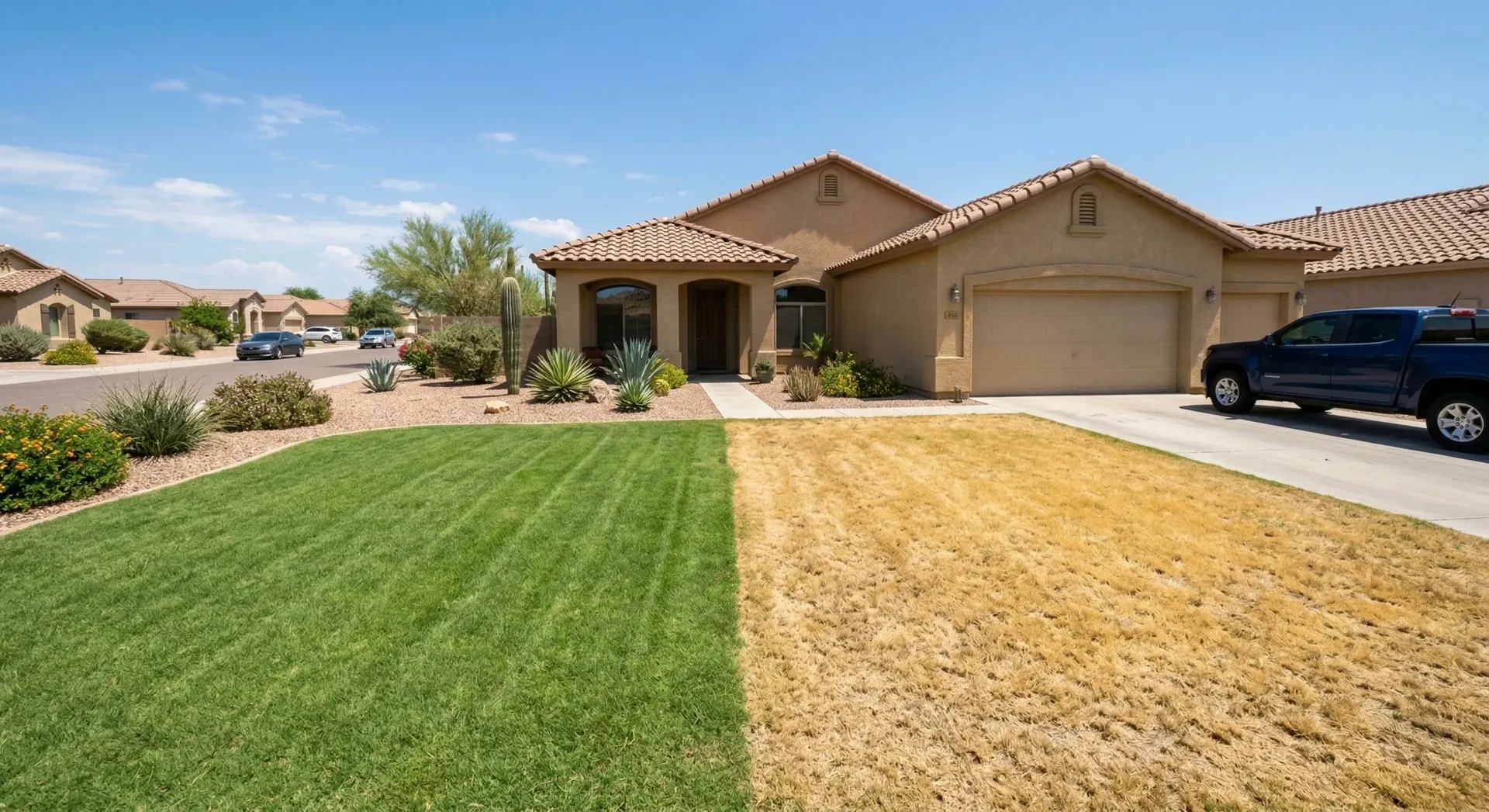
Learn when to fertilize lawn in Arizona, what fertilizer works best, and how to keep Buckeye grass and trees healthy year-round.
Show More