


Smart Irrigation Principles for Arizona Summers: How to Water Efficiently Without Wasting a Drop
June 11, 2026
A white background with a few lines on it

Smart Irrigation Principles for Arizona Summers: How to Water Efficiently Without Wasting a Drop

When Arizona summers hit, most homeowners do the same thing.


They water more.


That is almost always the mistake.


Because in desert climates, summer irrigation is not a volume problem — it is a strategy problem.


The wrong approach leads to:


● Water waste

● Higher utility bills

● Shallow root systems

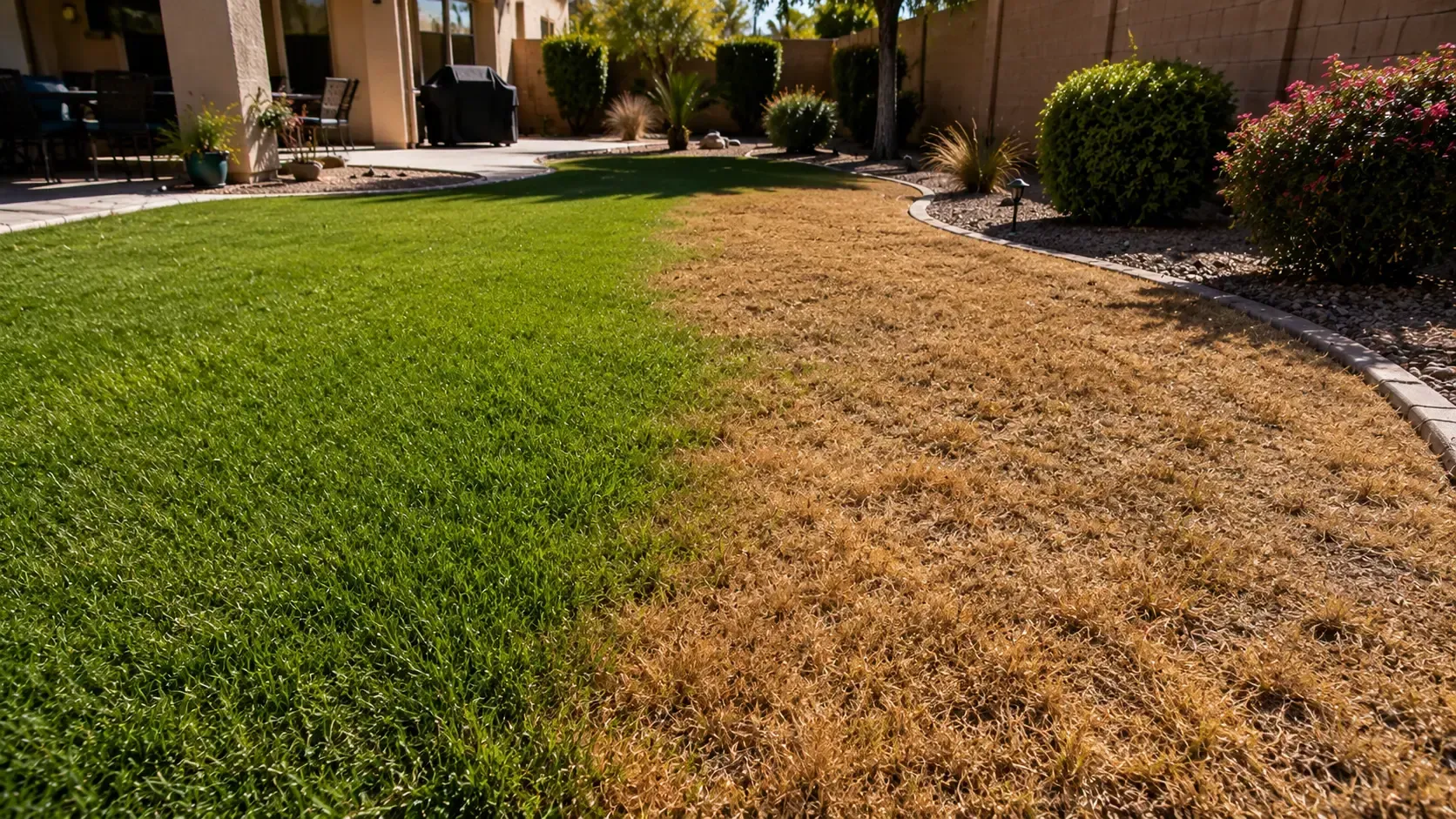
● Stressed lawns and plants

● Heat damage that worsens despite "more watering"


The right approach delivers:


● Deeper, stronger roots

● Lower water bills

● Healthier turf through the worst heat months

● Better recovery after heat waves

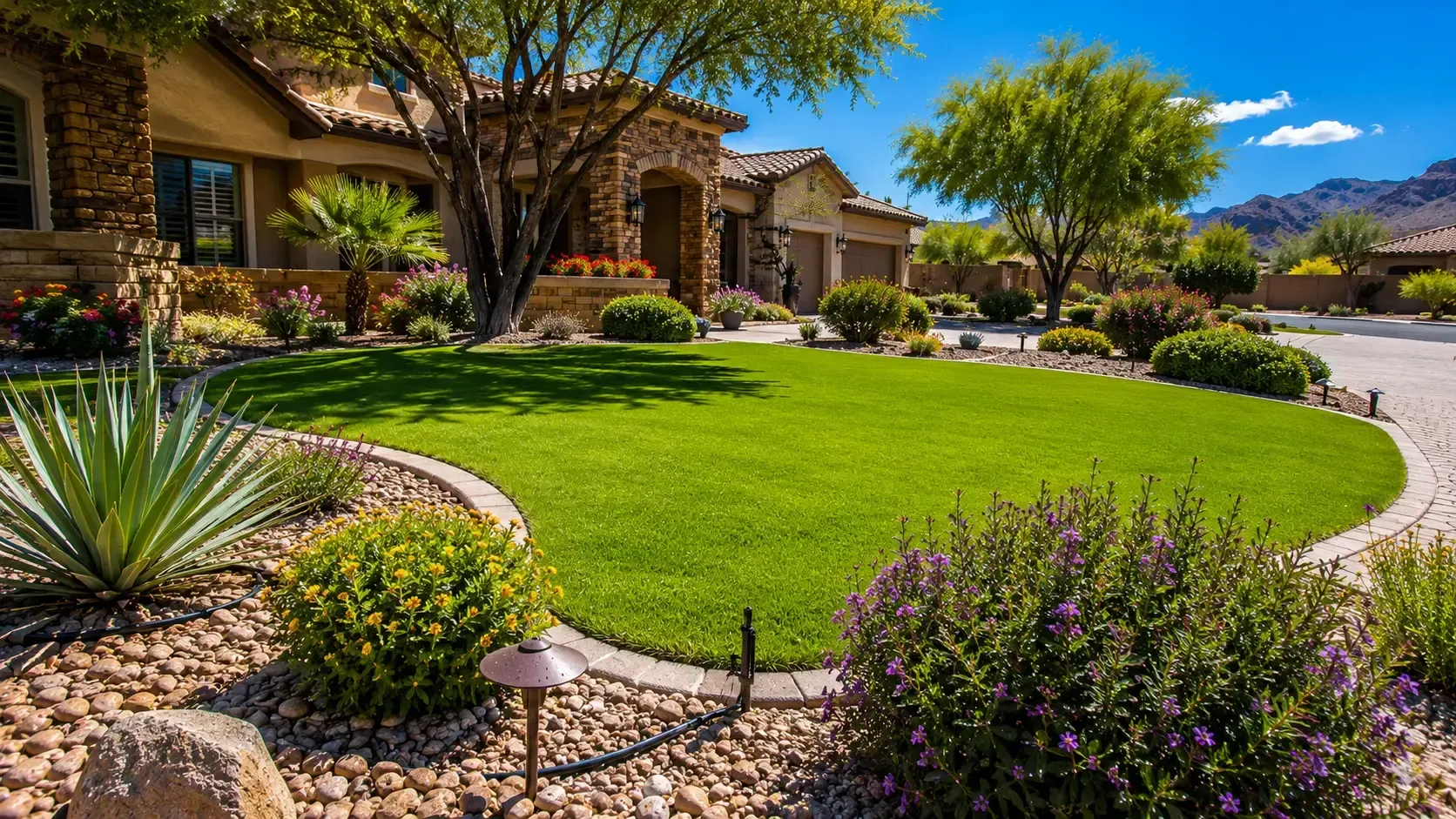
● Long-term landscape resilience


Smart summer irrigation in Arizona is built on principles — not gallons.

Why Summer Irrigation in Arizona Requires a Different Approach

What works in spring will not work in June, July, or August.


Arizona summers create irrigation pressure that landscapes in other states never face:


● Evaporation rates that can exceed 0.4 inches per day

● Surface temperatures pushing 150°F+

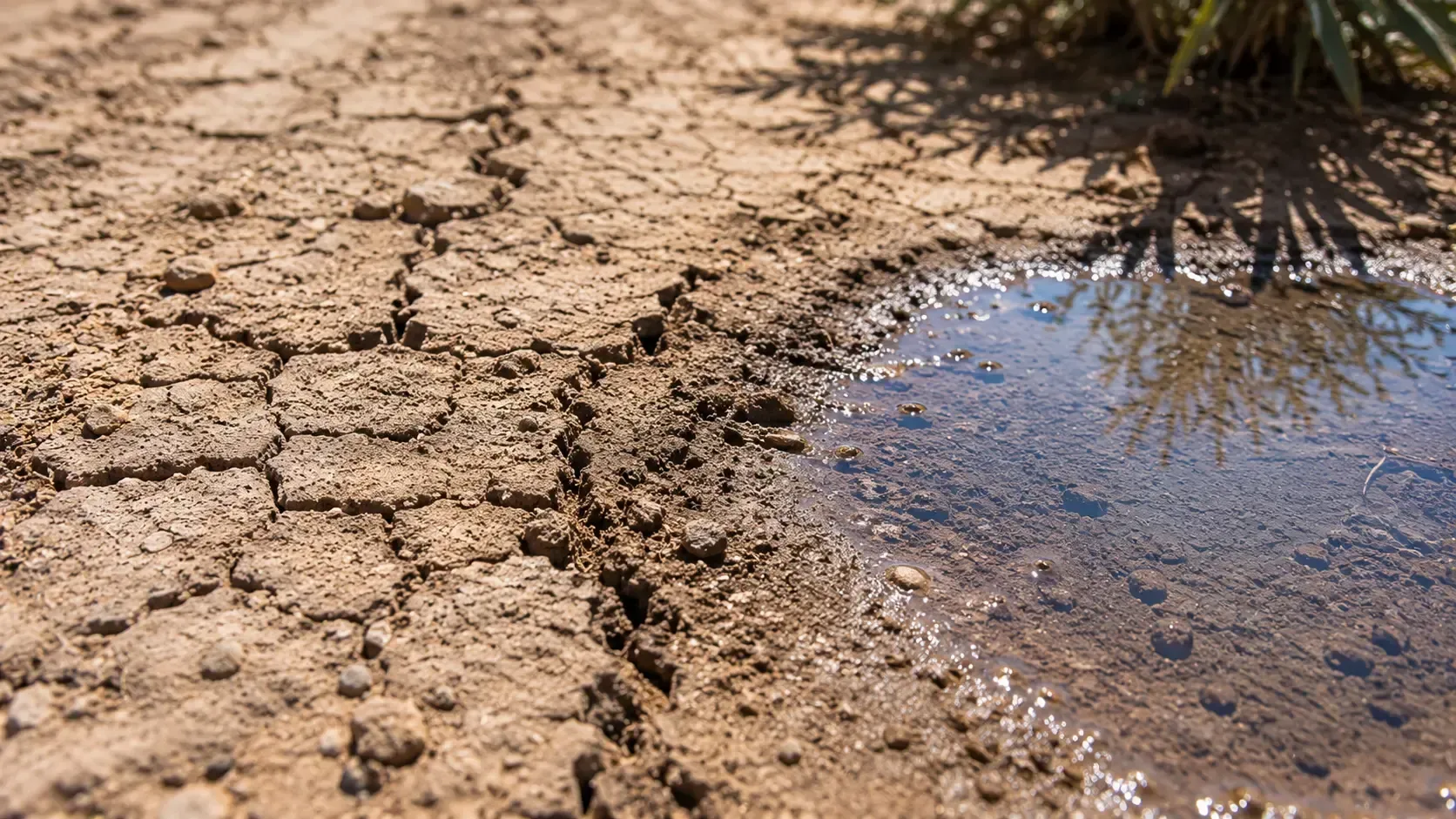
● Compact soils that resist deep absorption

● Reflective heat from hardscape and walls

● Dry winds that pull moisture from leaves and soil


This combination means that water applied incorrectly often never reaches the roots at all.


It evaporates, runs off, or pools in compacted soil zones before doing any good.


For homeowners already noticing the early stress signs covered in Heat Stress Signs in Arizona Lawns & Plants (Blog 26), irrigation strategy is usually the first thing that needs adjustment.

The Biggest Irrigation Mistake Homeowners Make in Summer

The single most common summer irrigation mistake in Arizona is increasing frequency without changing depth.


Most homeowners react to heat stress by:


● Watering every day

● Running short irrigation cycles

● Spreading water across the surface

● Topping up with hose watering between cycles


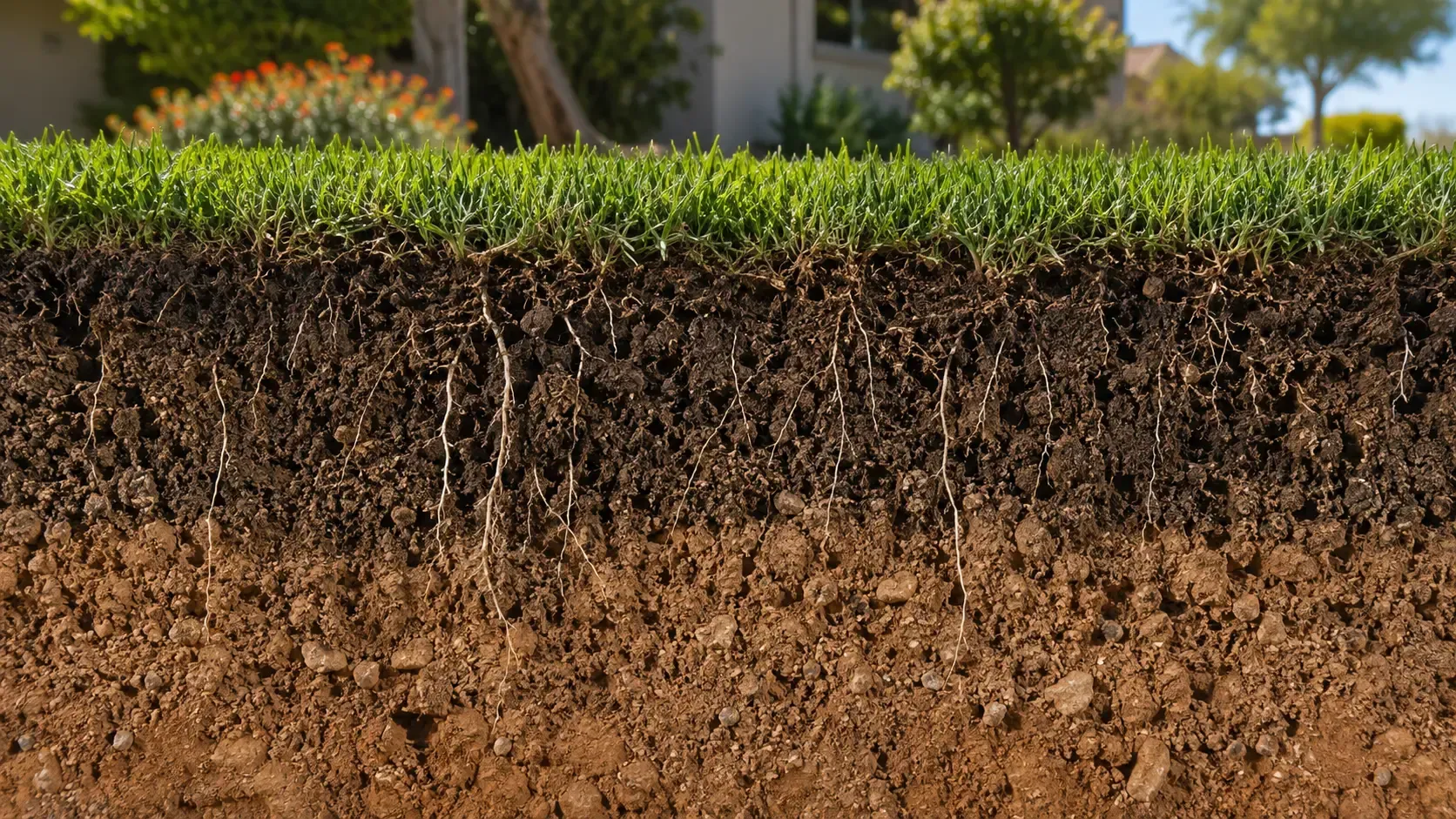
This produces shallow watering — which trains roots to stay near the surface, where heat damage is worst.


The result?


A lawn or plant that becomes more dependent on constant water, more vulnerable to heat, and more expensive to maintain.


Smart summer irrigation does the opposite.


It waters less often — but deeper — and forces roots to grow downward where temperatures are lower and moisture lasts longer.

Core Principle 1: Deep Watering Beats Frequent Watering

The first principle of smart summer irrigation is depth over frequency.


Healthy desert landscapes are built around root systems that reach down to cooler, more stable soil zones.


Deep watering means:


● Allowing water to penetrate 6–8 inches for lawns

● 12–18 inches for shrubs and ornamental plants

● 24–36 inches for established trees


Surface-level watering keeps roots shallow, which leaves the landscape exposed during every heat wave. The tree-specific schedule worth pairing with this principle is fully outlined in The Ultimate Tree Watering Schedule for Arizona's Harsh Seasons (Blog 7).

Core Principle 2: Timing Matters More Than Volume

When you water in Arizona summers determines how much actually reaches the roots.


The best window is early morning — typically between 4 AM and 7 AM.


This timing:


● Reduces evaporation losses

● Lets soil absorb water before peak heat

● Cools the root zone before the worst of the day

● Prevents fungal pressure that comes with evening watering


The worst times to water are:


● Midday — most water lost to evaporation

● Late evening — encourages fungal disease and shallow roots

● During wind — uneven distribution and waste


A perfectly designed irrigation system loses most of its efficiency if it runs at the wrong hour. For the foundational watering rhythm that adapts across all four Arizona seasons, Seasonal Watering Guide for Arizona Lawns (Blog 6) covers the timing baseline before summer adjustments are layered on.

Core Principle 3: Zone-Specific Watering for Lawns, Trees, and Plants

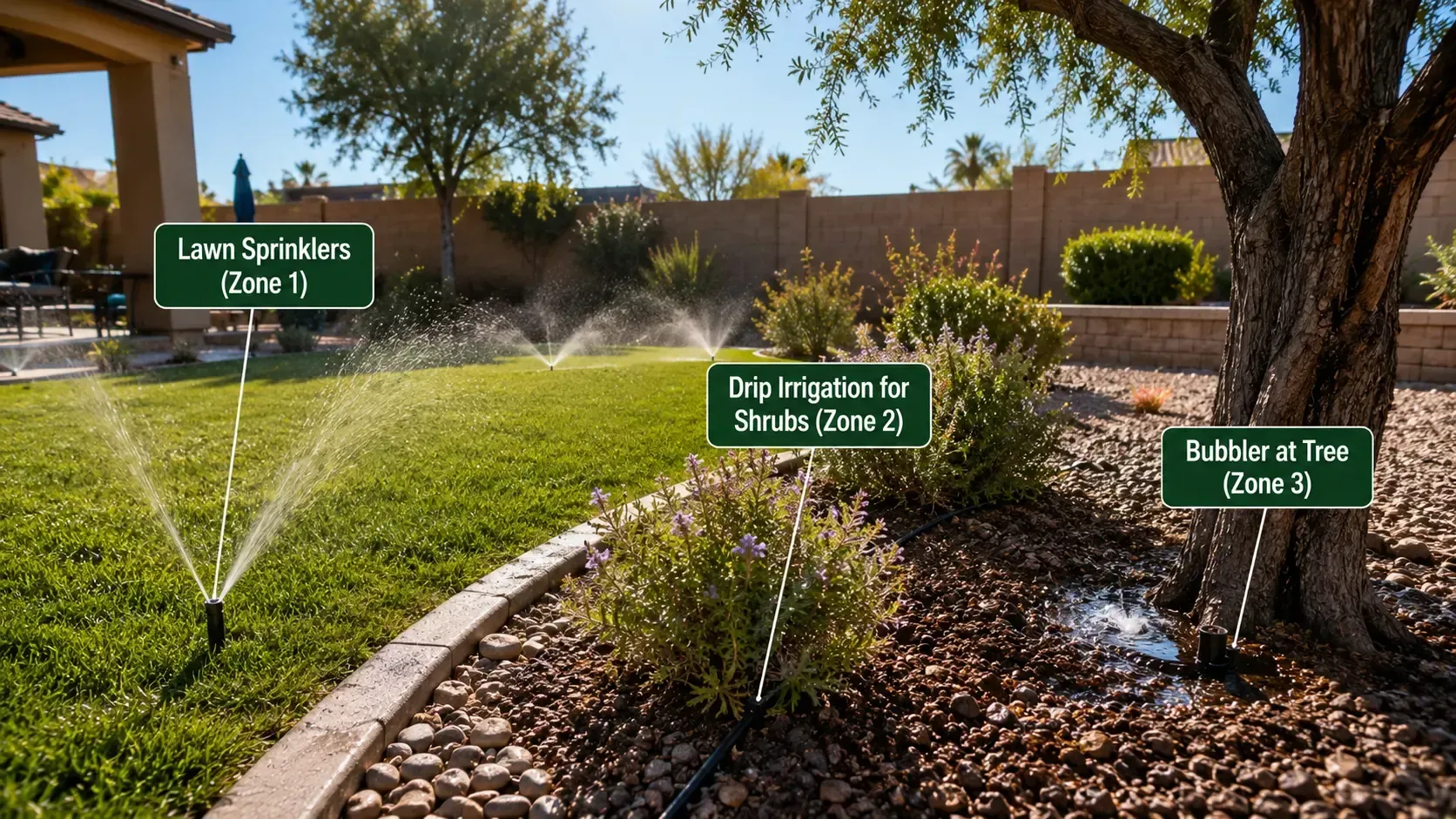
One of the biggest inefficiencies in residential irrigation is treating the entire landscape as single watering zone.


Different plants need different irrigation logic.


Lawns

● Frequent enough to maintain soil moisture

● Deep enough to reach 6–8 inches

● Adjusted upward in midsummer


Trees

● Less frequent than lawns

● Significantly deeper

● Watered at the drip line, not the trunk


Shrubs and ornamentals

● Moderate frequency

● Targeted to root ball depth

● Adjusted based on sun exposure


Desert-adapted plants

● Minimal frequency

● Drought tolerance preserved by intentional dry periods


Running the same schedule across all zones leads to overwatering some plants while starving others. The smarter watering frameworks behind this zoning logic are detailed in Beyond Drip Irrigation: Smart Watering Strategies for Arizona Gardens (Blog 5).

Core Principle 4: Soil-Aware Irrigation

Irrigation efficiency depends almost entirely on the soil underneath.


Arizona soils typically:


● Compact quickly

● Absorb water slowly

● Lose moisture rapidly

● Concentrate salts near root zones

● Vary significantly across one yard


This means a 20-minute irrigation cycle may behave completely differently in two zones of the same lawn.


Smart summer irrigation accounts for:


● Soil compaction levels

● Drainage performance

● Mulched vs. exposed areas

● Hardscape proximity

● Slope and runoff patterns


If your landscape has not had recent soil work, the irrigation system is likely fighting the soil rather than supporting it. The foundational guide for fixing this is Arizona Soil Health & Preparation (Blog 19).


Core Principle 5: Adjusting for Heat Waves and Monsoon Transitions

Summer in Arizona is not one season — it is several.


Smart irrigation strategies adjust through:


Dry pre-monsoon heat (May–June)

● Increase deep watering frequency

● Watch for early heat stress

● Reinforce shade and mulch coverage


Peak heat (June–July)

● Continue deep watering

● Avoid midday system runs

● Monitor pressure and emitter performance


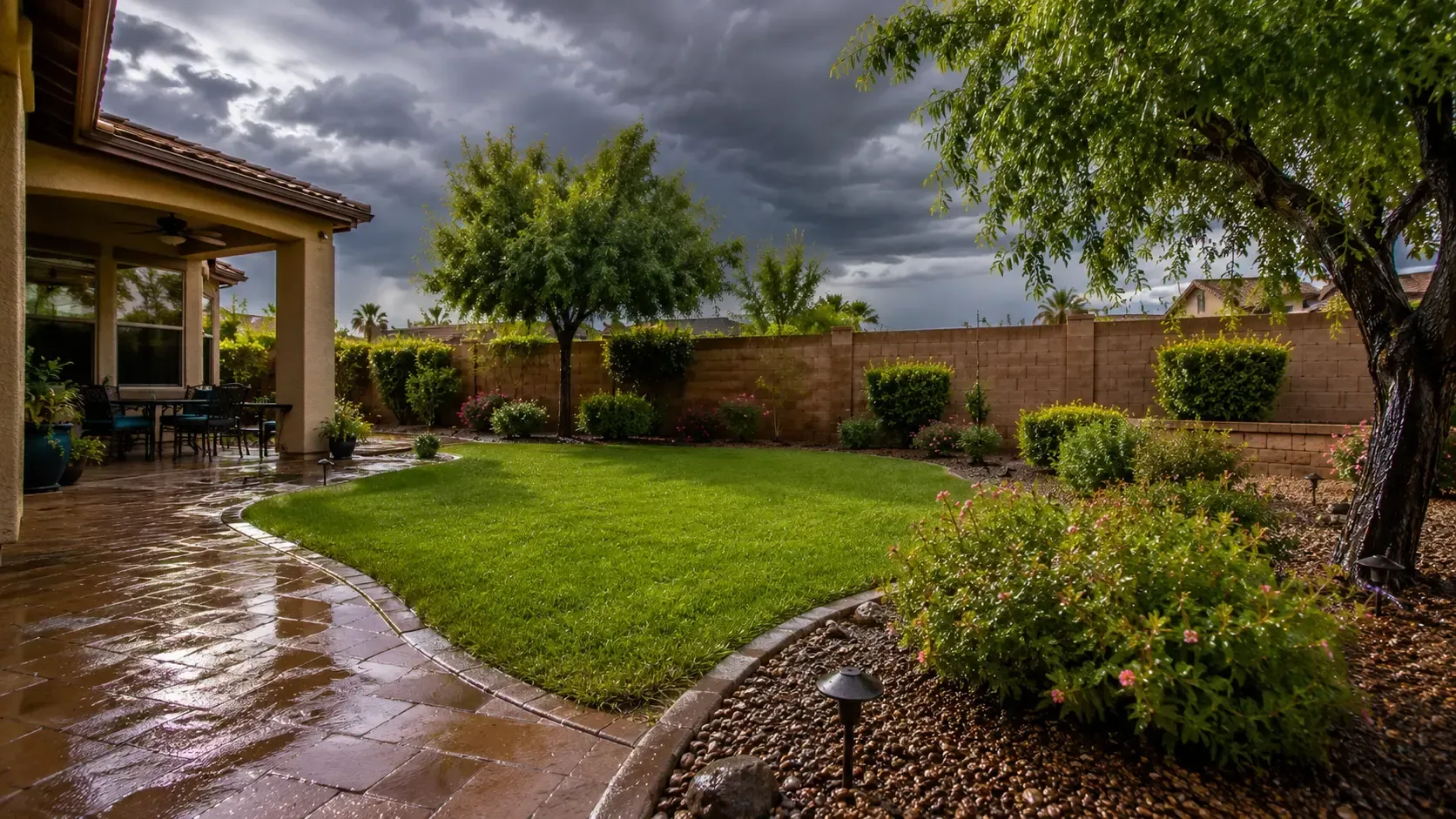
Monsoon transition (July–September)

● Reduce irrigation after storms

● Watch for fungal pressure from humidity

● Adjust schedules around rainfall, not the calendar


Late summer recovery (August–September)

● Reassess damaged zones

● Prepare for fall transition

● Begin tapering schedules


A static, year-round schedule almost always wastes water in Arizona — and a static summer schedule is one of the fastest ways to overspend.

Common Smart Irrigation Mistakes Arizona Homeowners Still Make

Even homeowners trying to be efficient often fall into these traps.


Watering daily out of fear


More frequent watering does not equal healthier landscapes.


Ignoring emitter failures


A single clogged or broken emitter can cause an entire zone to underperform.


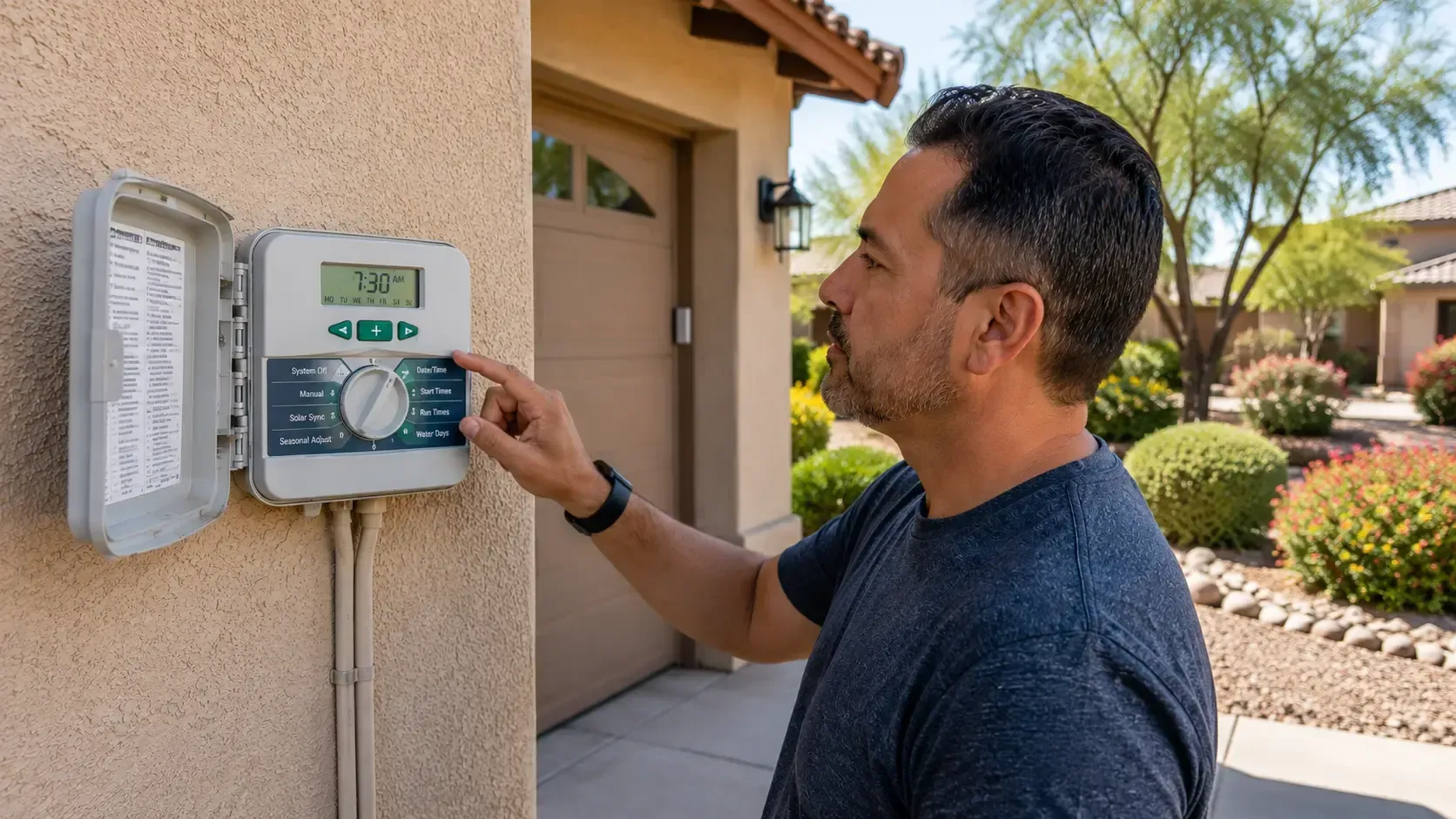
Setting and forgetting the timer


Summer needs at least monthly schedule adjustments — sometimes weekly during heat

waves.


Mixing tree and turf zones


Trees and lawns have completely different water needs and should not share schedules.


Watering hardscape and runoff zones


Wasted water is often hitting concrete, walls, or sloped runoff areas instead of soil.


Ignoring pressure issues


Low pressure means uneven distribution and dry pockets, even with a perfect schedule.

Signs Your Summer Irrigation Strategy Is Failing

Watch for these warning signs before the damage becomes expensive.


● Water bills climbing without landscape improvement

● Brown or stressed patches despite frequent watering

● Wet zones near the system mixed with dry zones nearby

● Standing water in compact soil areas

● Yellowing leaves on overwatered shrubs

● Trees dropping leaves while turf looks fine

● Runoff visible during or after watering cycles


These are not random issues.


They are signals that the irrigation system, the schedule, or the soil conditions are out of sync with summer demand.


If your landscape is already showing these patterns, the next step is identifying whether the issue is the schedule, the system, or the soil — before the bills and the damage stack up further.

When to Upgrade or Re-Engineer Your Summer Irrigation

Smart irrigation is not just about behavior — sometimes the system itself is the limit.


You should strongly consider an irrigation upgrade or professional audit when:


The system was installed more than 7–10 years ago


Older systems often lack zone control, pressure regulation, or smart scheduling capability.


Your landscape has changed significantly


New plants, trees, hardscape, or layout changes mean the old zoning no longer fits.


You are still using a basic mechanical timer


Modern smart controllers adjust based on weather data and seasonal demand automatically.


Multiple zones consistently underperform


That usually points to pressure, distribution, or design issues — not just schedule problems.


You have never had a professional irrigation audit


Most residential systems lose 15–30% of their water to inefficiencies that are invisible without testing.

Long-Term Benefits of Smart Summer Irrigation

Homeowners who treat irrigation as a strategy — not a habit — see clear long-term results:


● Lower summer water bills

● Stronger root systems heading into monsoon season

● Reduced plant and turf replacement costs

● Healthier shade trees and ornamentals

● Better landscape recovery after heat waves

● Less guesswork and fewer emergency interventions


Smart irrigation does not mean fancy equipment.


It means applying the right amount of water, at the right depth, at the right time, in the right zones — consistently.


When to Get Professional Help

Some irrigation issues are too complex or too widespread to fix through schedule changes alone.


Consider a professional irrigation evaluation when:


● Water bills are climbing without explanation

● Multiple zones underperform despite adjustments

● Visible runoff persists during irrigation cycles

● Pressure or coverage seems uneven across the property

● You are unsure whether the system, schedule, or soil is the issue


If your Buckeye landscape is heading into peak summer and your irrigation is not keeping up, schedule a professional irrigation assessment before the heat exposes every weakness in the system. Catching inefficiencies early saves water, protects your plants, and prevents the expensive damage that comes with reactive watering.

FAQ: Smart Summer Irrigation in Arizona

  • What trees grow best in Arizona heat?

    Most Arizona lawns benefit from deep watering 3–4 times per week during peak summer,

    depending on grass type, soil, and exposure. Frequency matters less than depth.

  • What is the best time of day to water in Arizona?

    Early morning — typically between 4 AM and 7 AM — is the most efficient window. It

    reduces evaporation, avoids fungal issues, and lets soil absorb water before peak heat.

  • Should I water more during a heat wave?

    Usually deeper, not necessarily more often. Increasing frequency without increasing depth

    often makes heat stress worse by keeping roots shallow.

  • Is drip irrigation better than sprinklers for Arizona summers?

    For trees, shrubs, and ornamentals, drip irrigation is typically more efficient. Lawns generally

    still require overhead irrigation, but both systems benefit from soil-aware scheduling.

  • How do I know if I'm overwatering during summer?

    Watch for soggy soil, yellowing leaves on healthy plants, runoff during cycles, fungal growth,

    and lawns that feel spongy underfoot. Overwatering is just as damaging as underwatering in

    Arizona.

  • Can a smart controller really reduce my water bill?

    Yes. Properly configured smart controllers can reduce residential irrigation use by 20–40% in

    Arizona summers by adjusting based on real weather and seasonal data.

A green background with a white outline of a heart.
Arizona water bills spike every summer — usually from hidden
landscape waste. Learn how to find leak
June 18, 2026
Arizona water bills spike every summer — usually from hidden landscape waste. Learn how to find leaks, fix waste, and lower your bill before peak heat hits.
May 26, 2026
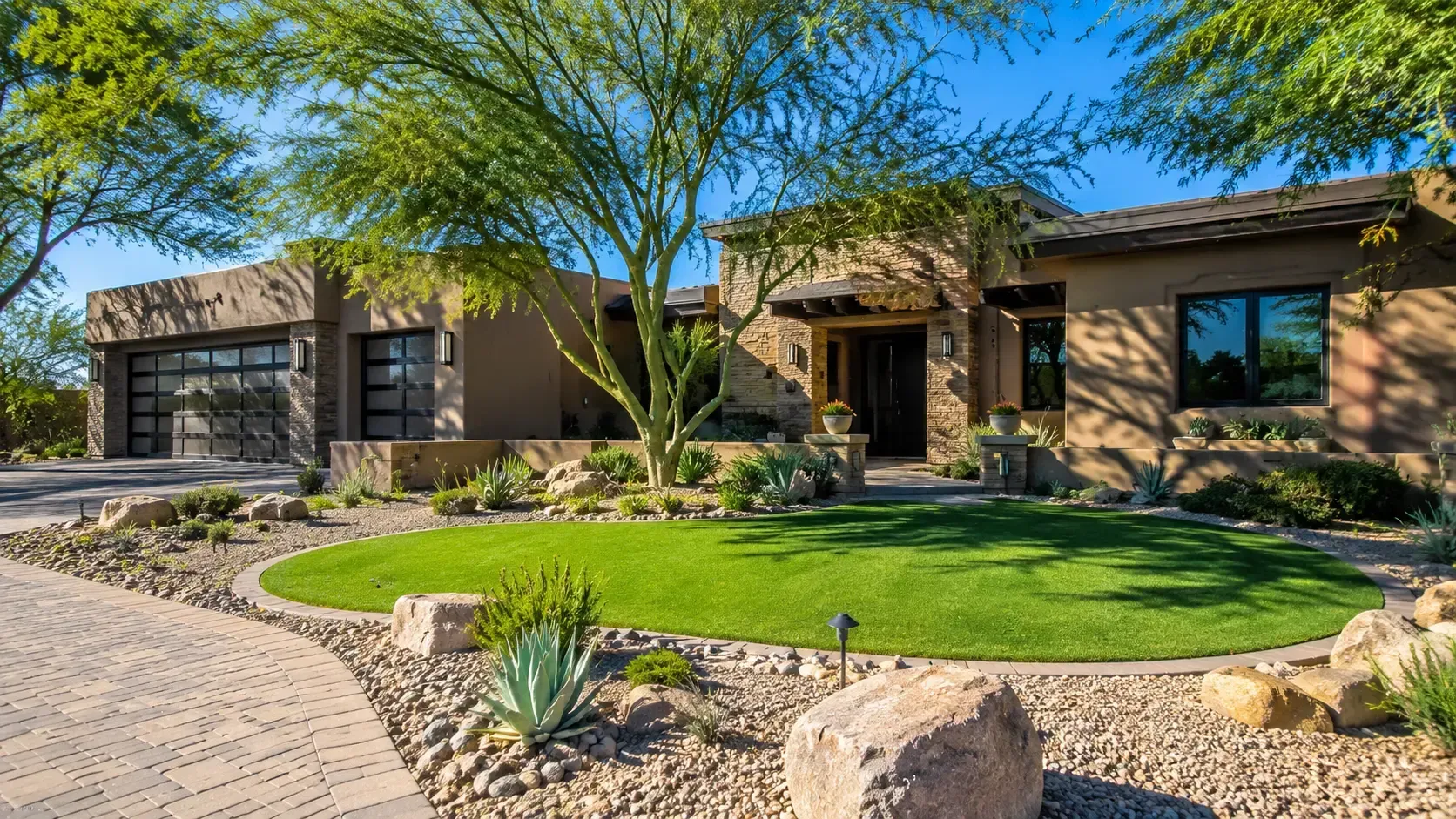
Choosing the wrong trees in Arizona can lead to heat stress, root damage, and high water use. Learn how to select and position shade trees properly for a healthier, cooler landscape.
Choosing the wrong trees in Arizona can lead to heat stress, root damage, and high water
use. Learn
May 14, 2026
Choosing the wrong trees in Arizona can lead to heat stress, root damage, and high water use. Learn how to select and position shade trees properly for a healthier, cooler landscape.
April 17, 2026
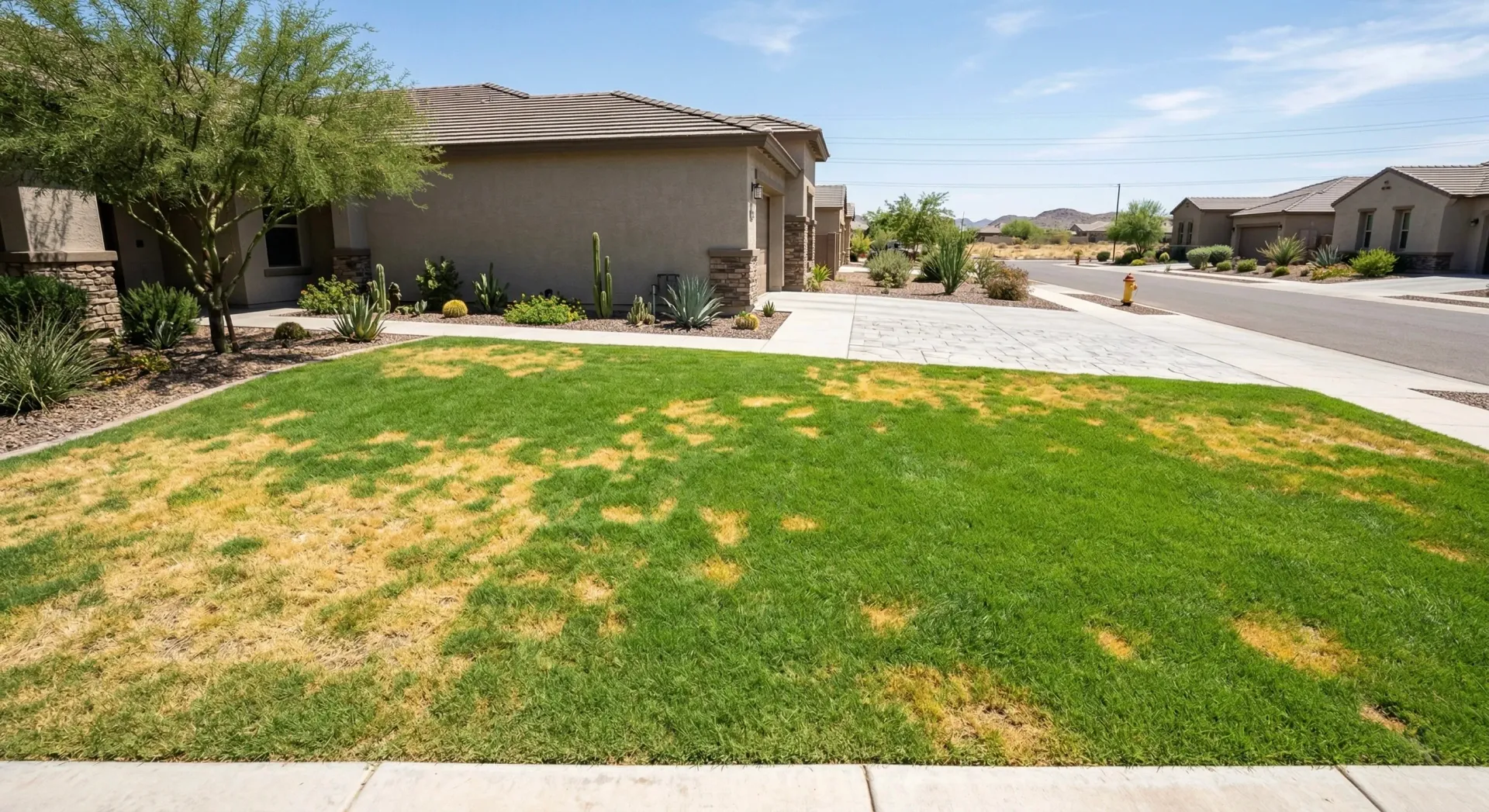
Yellow grass, burnt patches, weak growth? Learn the signs of over fertilizing lawn in Arizona and how to fix damage before it gets worse.
April 10, 2026
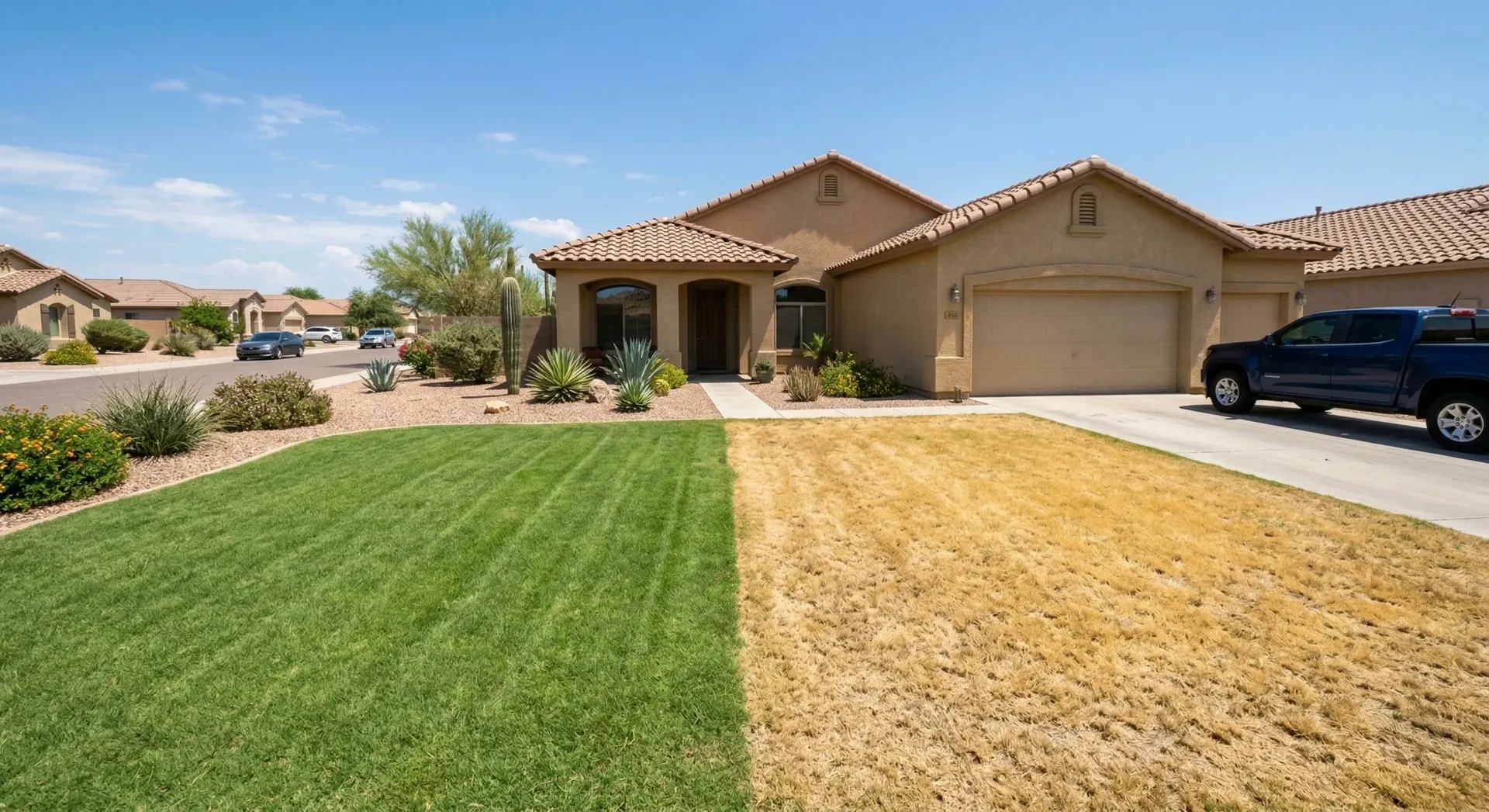
Learn when to fertilize lawn in Arizona, what fertilizer works best, and how to keep Buckeye grass and trees healthy year-round.
March 17, 2026
Why Early-Season Mistakes Are So Common in Arizona
March 3, 2026
Understanding Arizona’s Unique Seasonal Recovery Cycle
February 19, 2026
Why Spring Lawn Prep in Arizona Starts Earlier Than You Think
Show More