

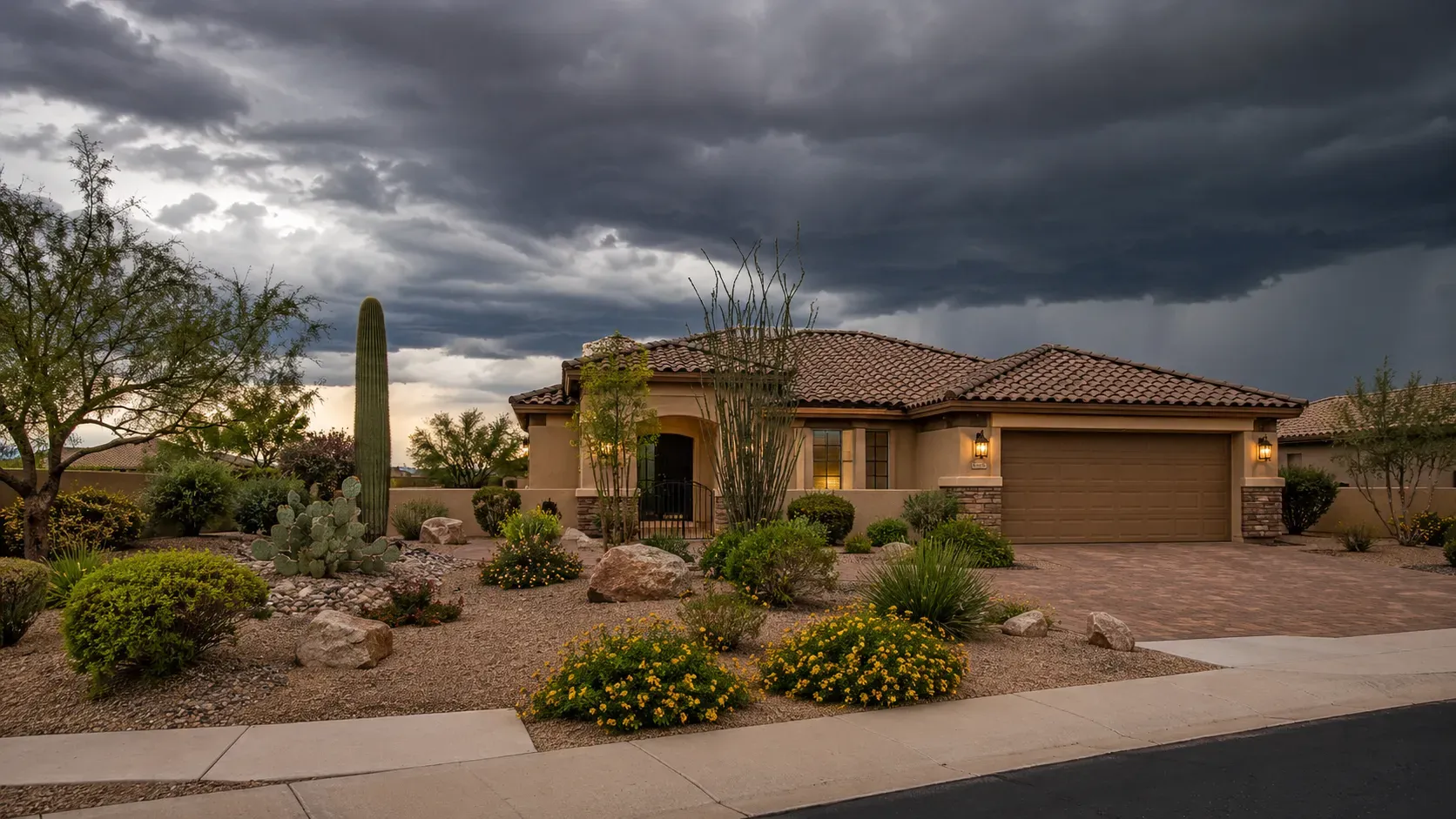

Monsoon-Ready Landscaping Systems in Arizona: How to Storm-Proof Your Yard Before the First Big Wind
Happy Clean Lawnscapes • August 4, 2026
A white background with a few lines on it

Monsoon-Ready Landscaping Systems in Arizona: How to Storm-Proof Your Yard Before the First Big Wind

Monsoon damage is not random.

Almost every uprooted tree, flooded yard, and washed-out rock bed in Buckeye traces back to something that was already wrong before the storm arrived.

A monsoon-ready landscape is built on four systems working together:

  • Drainage, water has a planned path away from your home
  • Tree stability, root systems and canopies that can take wind load
  • Irrigation control, the ability to shut down before saturated soil becomes a hazard
  • Surface stability, mulch, rock, and grade that stay where you put them

Storms expose weak design faster than anything else in Arizona.

A yard that looks fine for eleven months can fail completely in a single 40-minute storm, not because the storm was unusual, but because the water had nowhere to go and the tree had nothing holding it down.

The preparation window matters. Arizona's monsoon season officially runs June 15 through September 30, and the work that protects a landscape has to happen before the first outflow boundary rolls through the Valley.

What Arizona Monsoon Storms Actually Do to a Landscape

Monsoon storms are not simply rain events.

They combine several destructive forces in a compressed window:

  • Wind gusts commonly exceeding 60 mph, with some events reaching higher
  • Microbursts, intense, concentrated downdrafts typically under 2.5 miles across, capable of taking down trees and power lines within that footprint
  • Rainfall of 1 to 2 inches in under an hour onto soil that cannot absorb it
  • Haboobs, dust storms that coat foliage, clog soil pores, and stress plants
  • Rapid soil saturation that turns firm ground into an unstable root anchor

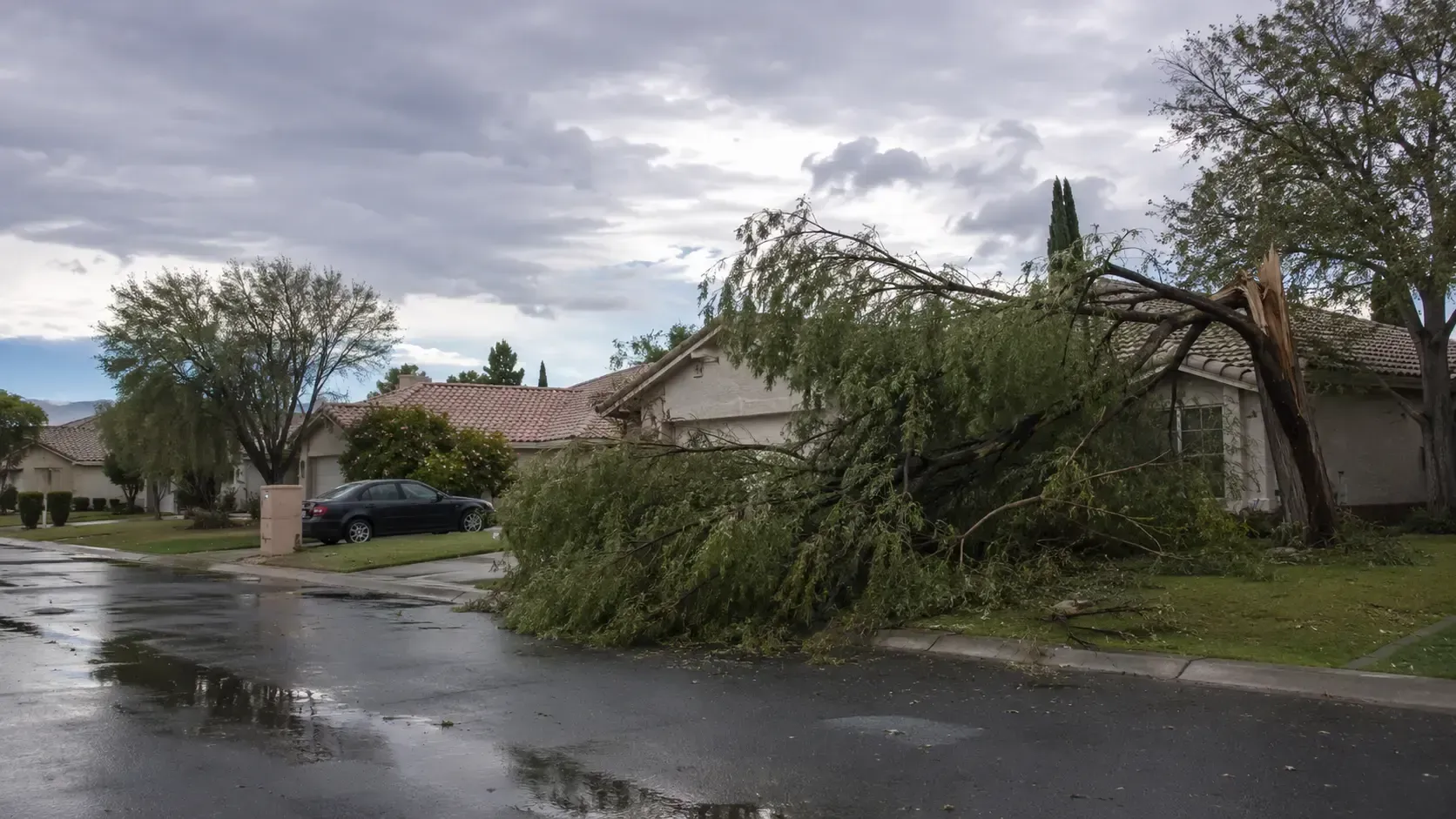
That last point is the one that fells the most trees.

A tree with a healthy root system can hold in dry soil during high wind. That same tree in soil saturated by an hour of heavy rain has dramatically less grip, which is why so many trees come down during the rain-plus-wind combination rather than wind alone.

The financial stakes are real. FEMA estimates that a single inch of floodwater can cause up to $25,000 in property damage.

System 1: Drainage, Where the Water Actually Goes

Drainage is the most overlooked system in Arizona landscaping and the one that causes the most expensive failures.

The reason is counterintuitive: Arizona's dryness is exactly what makes drainage critical.

Compacted desert soil does not absorb water well. When one to two inches falls in under an hour, most of it becomes surface runoff immediately, and it goes wherever gravity and your yard's grade send it.

Start with grade

The foundational standard is a slope away from the house of at least 0.5 inch per foot, extending 10 feet out from the foundation.

If your yard does not meet that, no drain system will fully compensate. Regrading has to come first.

Know your drainage warning signs

Walk your property and look for:

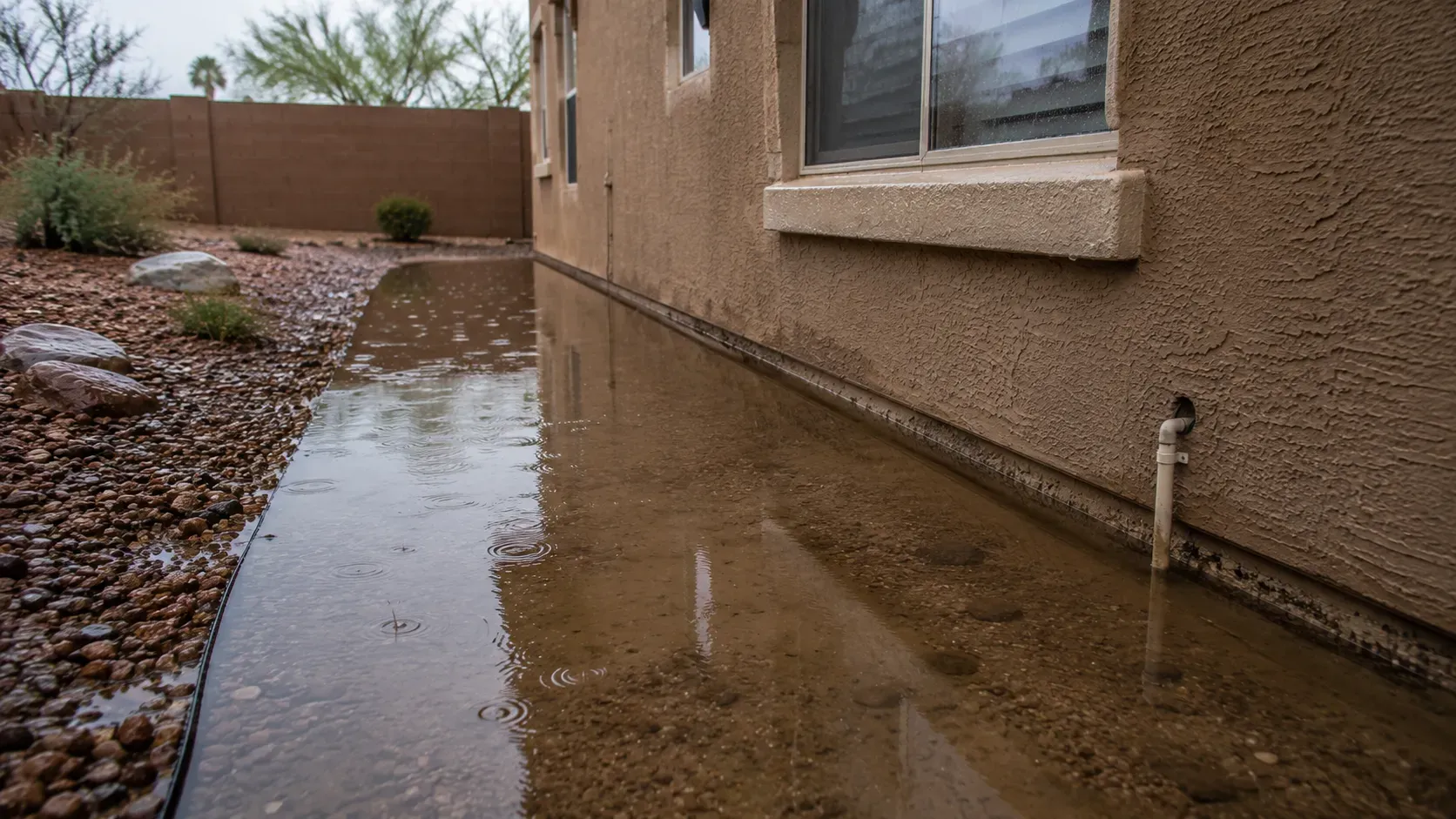
  • Standing water lingering more than 24 hours after rain
  • Soggy patches that stay wet while everything else dries
  • Exposed tree roots from soil washing away
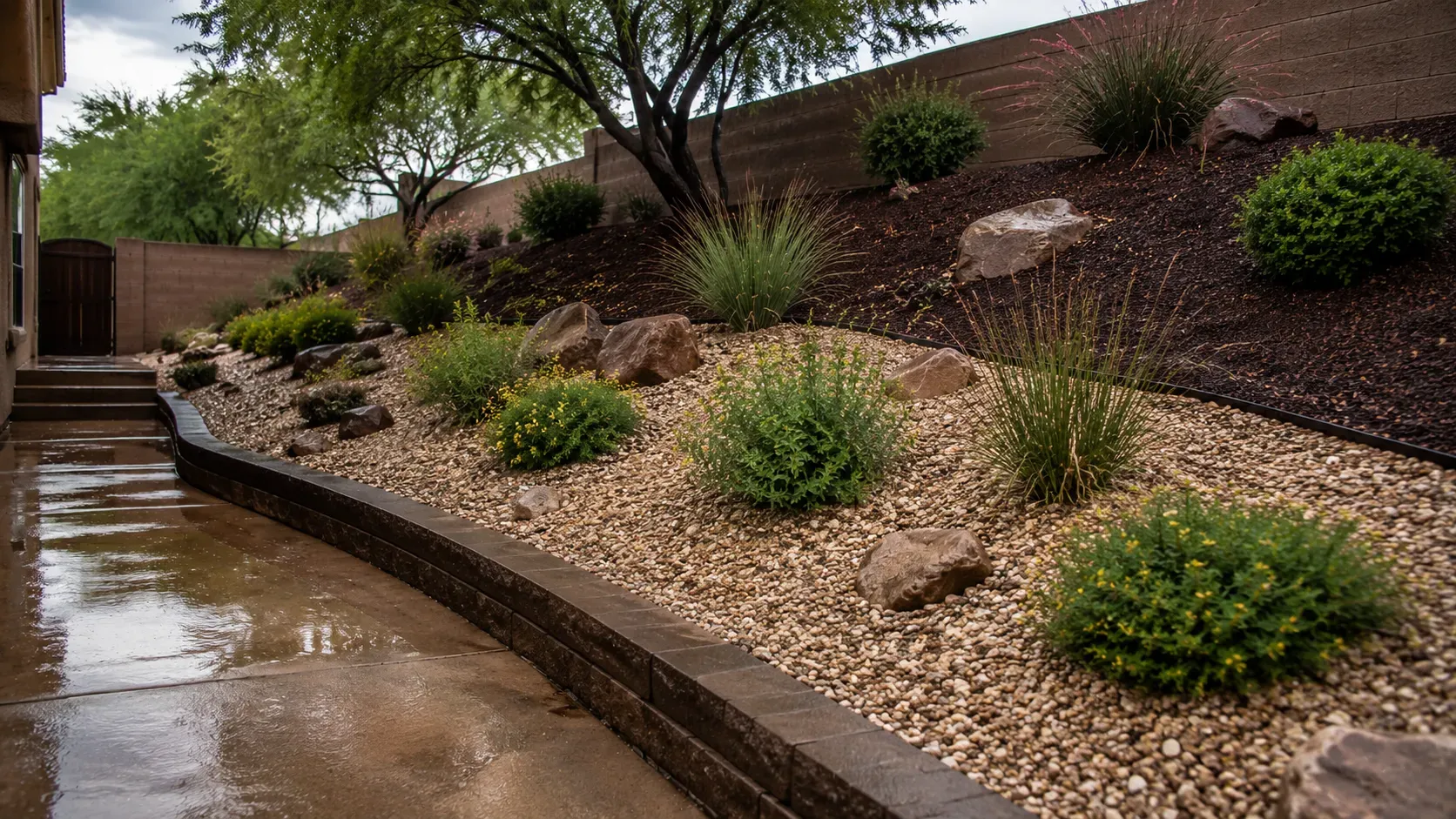
  • Erosion channels cut across rock beds or decomposed granite
  • Mildew or staining on walls near ground level
  • Rock and gravel that migrates downhill after every storm
  • Water pooling against the foundation

Understand your options

Swales, shallow graded channels that carry water across the property to a designated discharge area. Best for larger or sloped yards with room to work.

French drains, buried perforated pipe in gravel that collects and redirects subsurface water. Effective for persistent pooling, but they silt up over time and need periodic inspection.

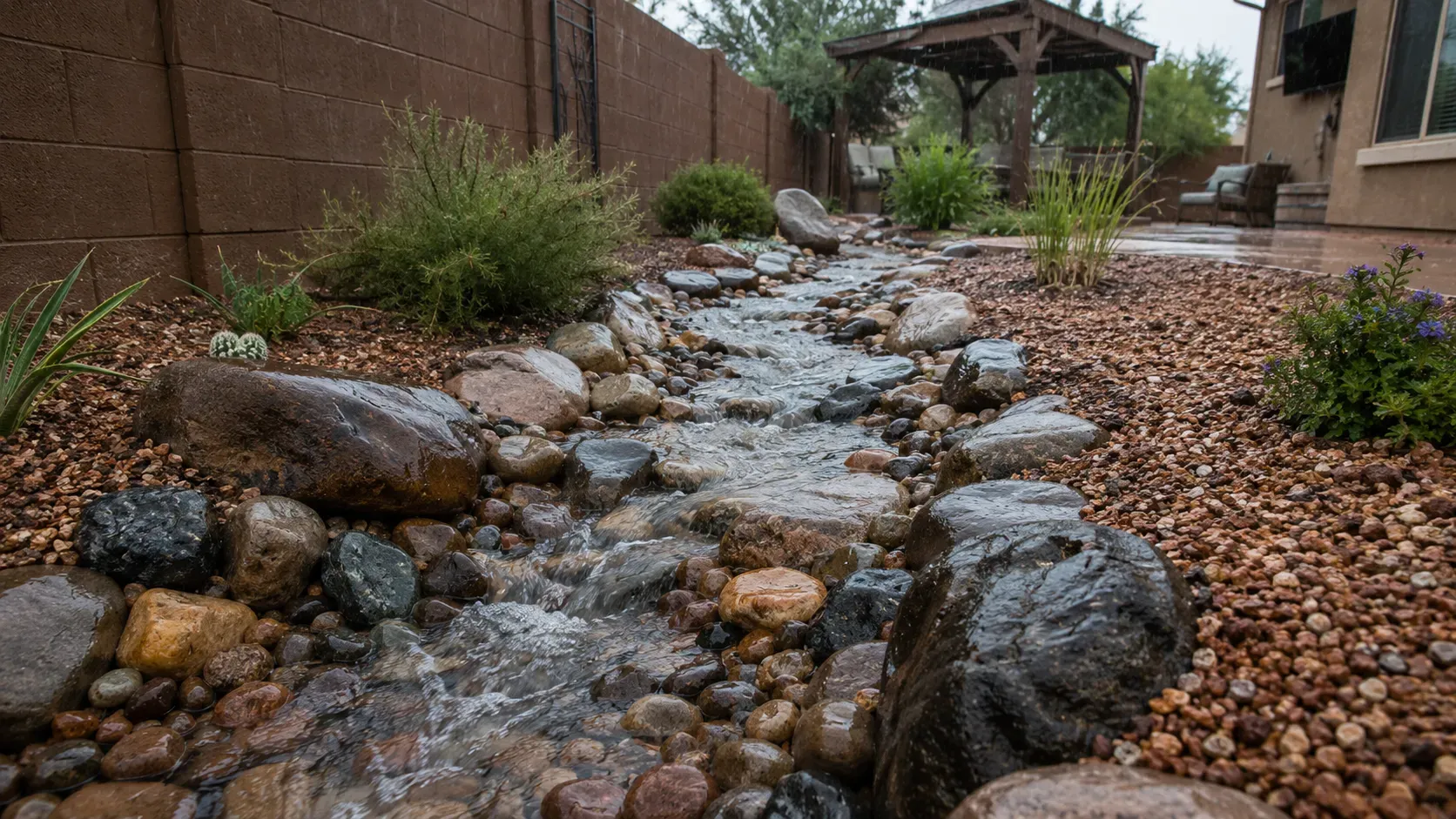
Dry creek beds, decorative rock channels that manage runoff and look intentional. Strong option for desert landscapes because they serve function and design simultaneously.

Catch basins, collection points at low spots, connected to discharge lines. Useful where water reliably concentrates in one place.

The hardscape trap

This is a mistake we see constantly across the West Valley.

Pavers, concrete, or artificial turf installed wall-to-wall without a planned escape path do not just fail to drain, they act as a dam, trapping water inside the yard.

A patio that runs from the house to the property wall with no gap or channel will hold water against your foundation during every storm.

The turf itself may drain fine. The installation around it often does not.

A local note worth knowing: the Town of Buckeye maintains its own Storm Water Drainage System Design Manual through Public Works, and many Valley subdivisions were built to master drainage plans. If your neighborhood consistently floods in the same spots, the issue may be larger than your individual lot, but your grade is still the part you control.

System 2: Tree Stability, Why Trees Fall and How to Prevent It

Trees are the single largest monsoon liability on a residential property.

Phoenix Parks crews respond to downed trees on cars, homes, and power lines every year, and the volume spikes during monsoon.

Here is what actually causes tree failure.

Shallow roots from shallow watering

This is the root cause behind most preventable failures.

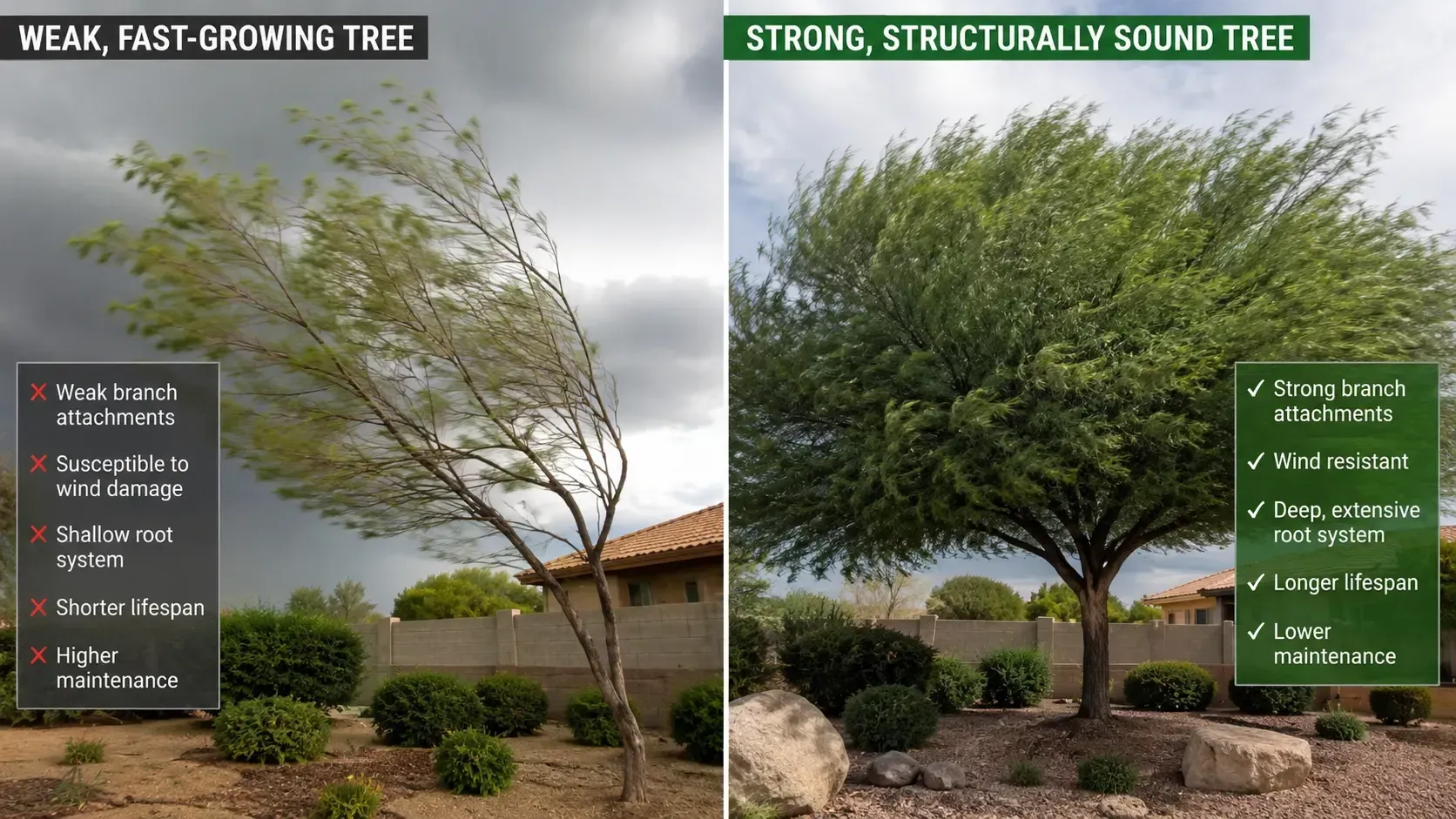
A tree watered lightly and frequently develops a shallow root plate. When soil saturates and wind loads the canopy, there is nothing deep enough to hold it.

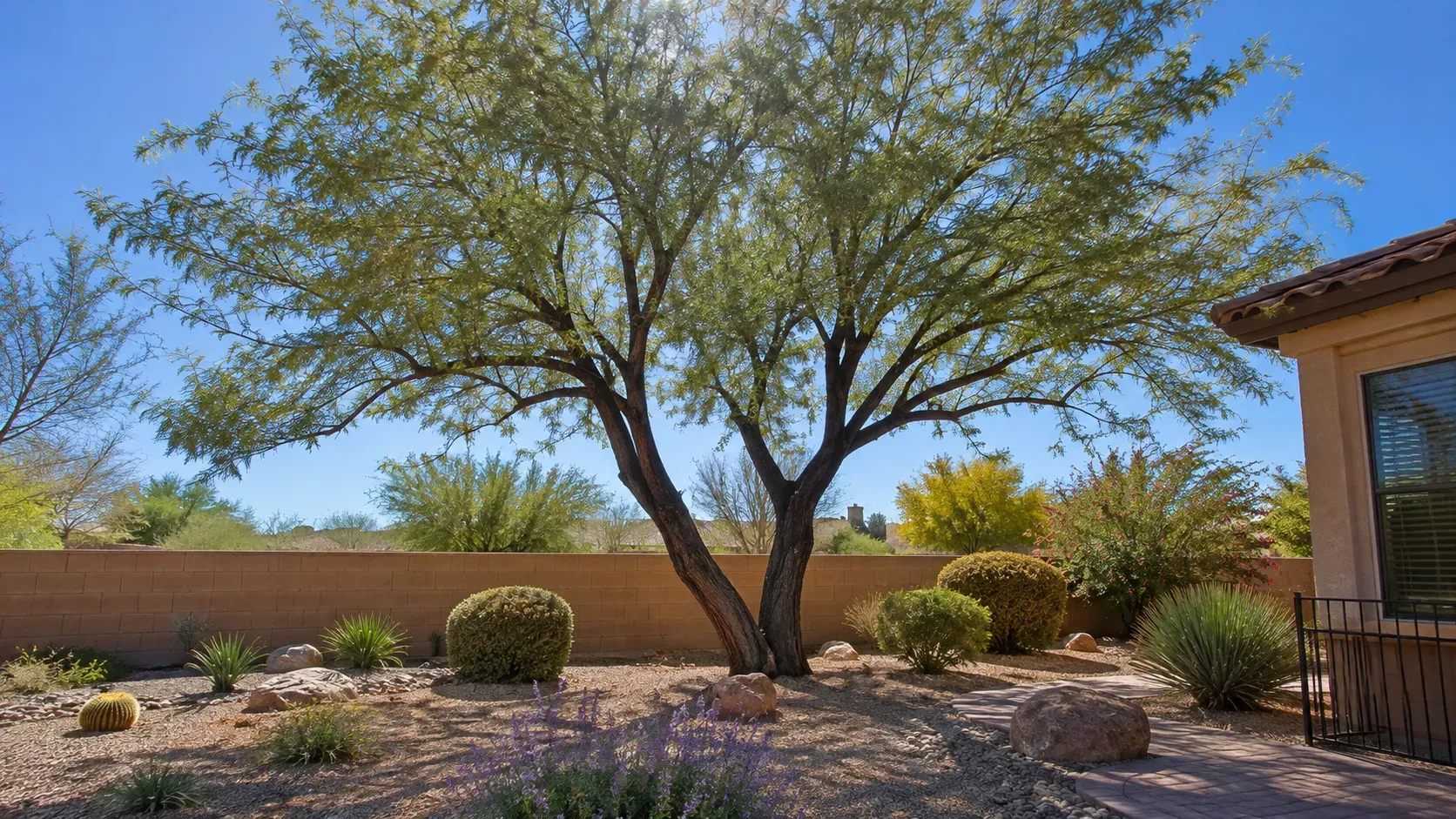
Trees watered deeply all season, reaching two to three feet down, anchor dramatically better.

Dense, unthinned canopies

A solid canopy acts like a sail. Wind cannot pass through it, so the full force transfers to the trunk and roots.

Selective thinning that lets some wind through reduces that load meaningfully.

The lion-tailing mistake

This is the most damaging misconception in Valley tree care, and it is worth understanding clearly.

Lion-tailing is stripping out a tree's interior branches and foliage, leaving growth only at the branch tips. It looks clean and open. Homeowners often request it specifically because they believe it storm-proofs the tree.

It does the opposite.

Lion-tailed branches become end-heavy, all the weight at the far end of a long, bare limb. That increases whip and strain during wind rather than reducing it. It also removes the dampening effect interior branches provide when a canopy moves in a storm.

On top of that, sudden canopy loss exposes bark that was previously shaded, causing sunscald on thin-barked desert species during peak summer.

Proper crown thinning removes a modest amount of growth evenly throughout the canopy. Lion-tailing guts it. The two are not the same thing, and the difference determines whether the tree survives August.

Topping

Cutting major limbs back to stubs is equally destructive. It strips a large share of the tree's leaf-bearing crown, exposes bark, and triggers weakly attached regrowth that fails in future storms.

What to actually do before monsoon

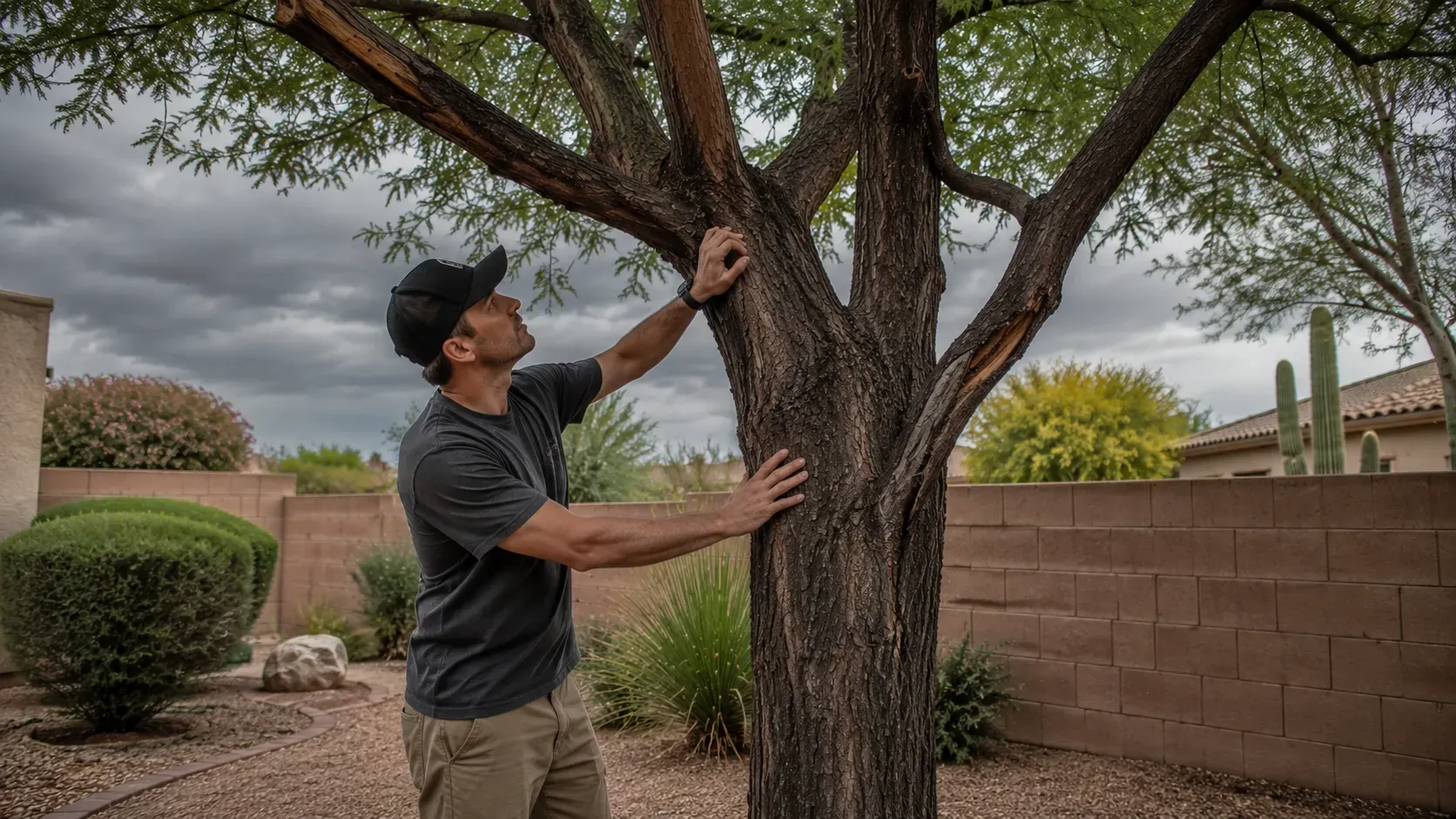
  • Inspect for cracks, decay, hollow cavities, or fungal growth
  • Look for limbs touching structures or overhanging the roof and driveway
  • Check whether the canopy is visibly heavier on one side
  • Have large trees assessed and properly thinned by a qualified professional
  • Stake young trees, and remove the nursery bamboo pole that came with them
  • Address any tree already showing stress before the season adds more

System 3: Irrigation Control Before and During Storms

Your irrigation system is both a tool and a hazard during monsoon.

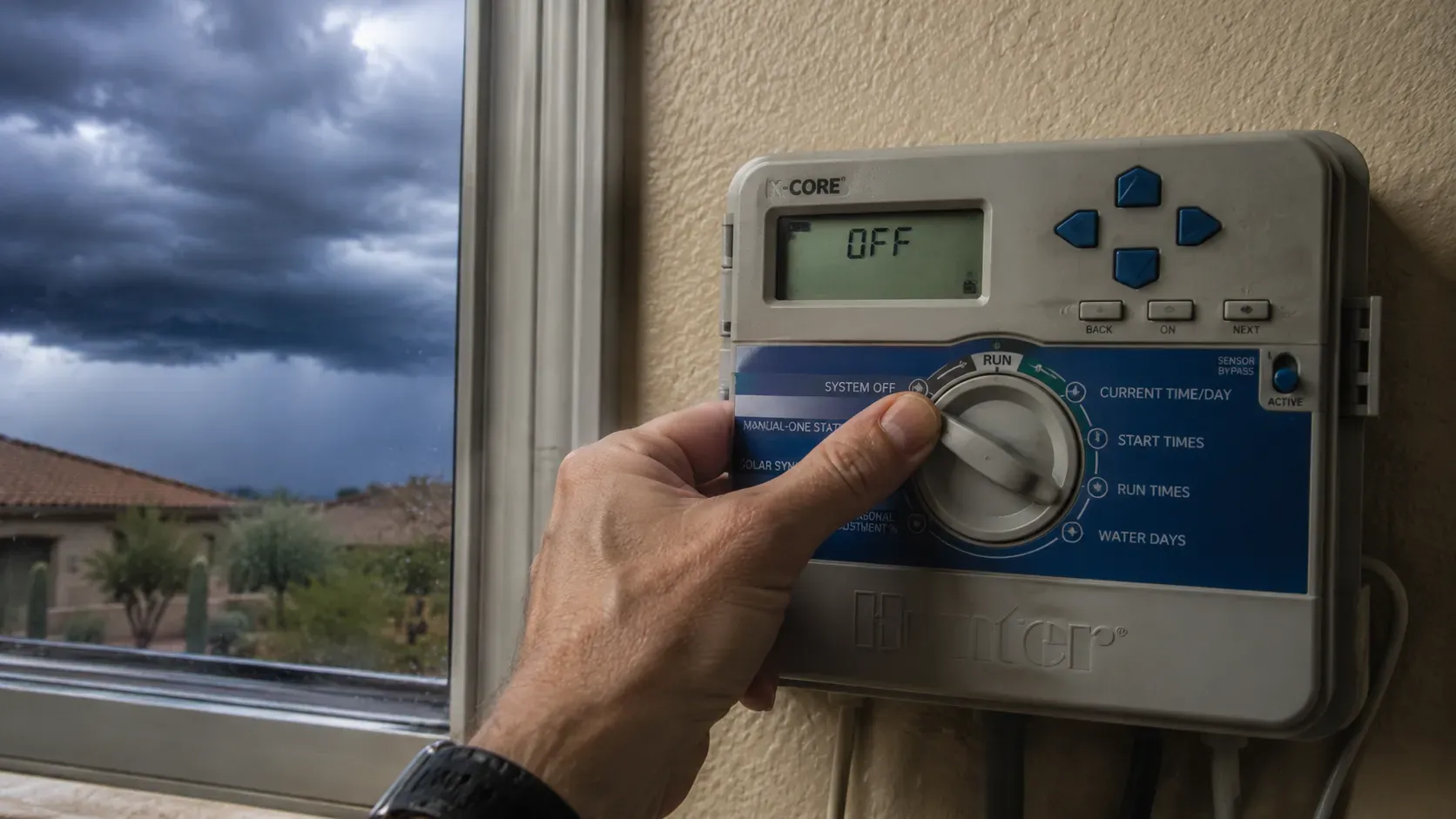
Shut irrigation off ahead of high wind

This single habit prevents a meaningful share of tree failures.

Soil already saturated by irrigation, then hit with an inch of rain, loses its grip entirely. Shutting the system down before a forecast storm keeps the root plate firmer.

Do not run the same schedule through monsoon

Rainfall changes the equation, but only if you actually adjust.

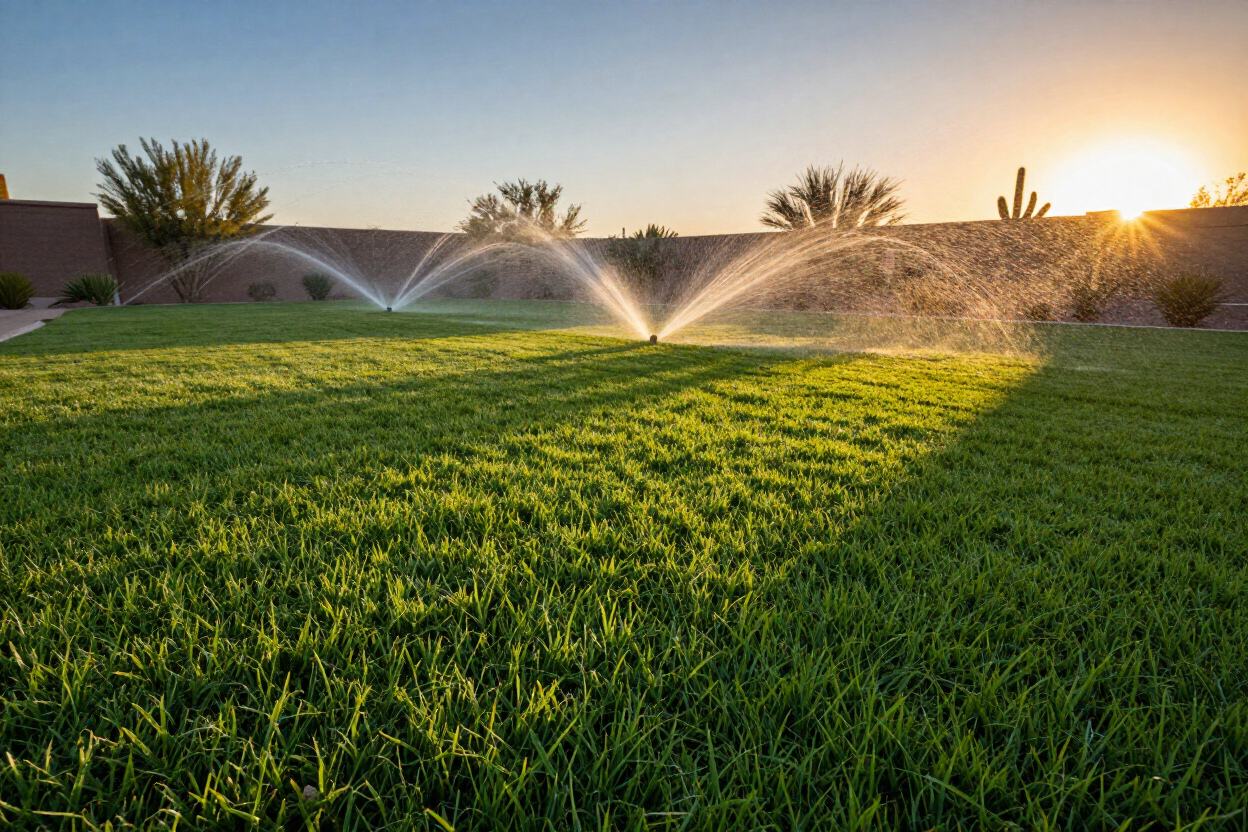
Homeowners who leave a July schedule running through a wet stretch overwater dramatically, wasting money and creating fungal conditions in soil that is already unusually damp.

A smart controller with a rain sensor handles this automatically. A basic timer requires you to do it manually.

Protect the system itself

  • Check that valve boxes are sealed and not sitting in a low spot
  • Clear debris from around heads and emitters before the season
  • Note zones that already pool, those will flood first
  • Inspect the controller and any exposed wiring for weather protection

Resume carefully

After a storm passes, wait before restarting irrigation. Soil that received an inch of rain does not need supplemental water for several days, and running the system too soon risks root rot.

System 4: Surface Stability, Keeping Your Landscape Where You Put It

Every monsoon season, Valley homeowners spend a weekend raking rock back into place that a single storm moved.

Some of that is preventable.

Mulch depth matters in both directions

Maintain roughly 2 to 3 inches of rock mulch or 2 to 4 inches of organic mulch.

Too thin and it washes away and stops protecting soil. Too thick and it holds excessive moisture against roots during heavy rain, promoting rot.

Larger wood chips and shredded bark stay in place better than lightweight materials.

Rock migration on slopes

Decorative granite creeps downhill with each storm. If you already see drift, adding edging or adjusting the slope before monsoon prevents a full re-spread later.

Clear the flow paths

Leaves, branches, and debris block the channels water is supposed to move through.

Clean out drainage paths, scuppers, and low points before the season. Water that cannot follow its intended route backs up into planting beds and against walls.

Yard debris becomes projectiles

Loose debris in 60 mph wind is both a landscape problem and a property damage risk. It also clogs pool filters, which is its own expensive repair.

Clear the yard before the season, not after the first storm.

Erosion-prone zones

Slopes, bare soil, and areas without ground cover erode fastest. Establishing plantings, adding appropriate mulch, or installing edging in these areas before monsoon protects the soil structure underneath.

The Pre-Monsoon Checklist

Work through this before June 15, or as early in the season as you can manage.

Drainage

  • Walk the property and identify every low spot and pooling area
  • Verify grade slopes away from the foundation
  • Clear French drains, catch basins, and scuppers of debris
  • Check that hardscape has a water escape path
  • Note any area where water pools against a wall or structure

Trees

  • Inspect every large tree for cracks, decay, and one-sided weight
  • Schedule proper thinning, and explicitly specify no lion-tailing and no topping
  • Stake young or recently planted trees
  • Remove nursery support poles
  • Clear limbs touching structures or overhanging driveways

Irrigation

  • Test every zone and repair failures
  • Install or verify a rain sensor
  • Program a monsoon schedule, or plan to adjust manually
  • Confirm you know how to shut the system off quickly

Surfaces

  • Refresh mulch to correct depth
  • Add edging where rock is already drifting
  • Clear all yard debris
  • Secure or store loose items, pots, and lightweight furniture

Plants

  • Address any stressed or declining plant before the season
  • Stressed plants are far more vulnerable to storm damage

Designing a Landscape That Handles Monsoon by Default

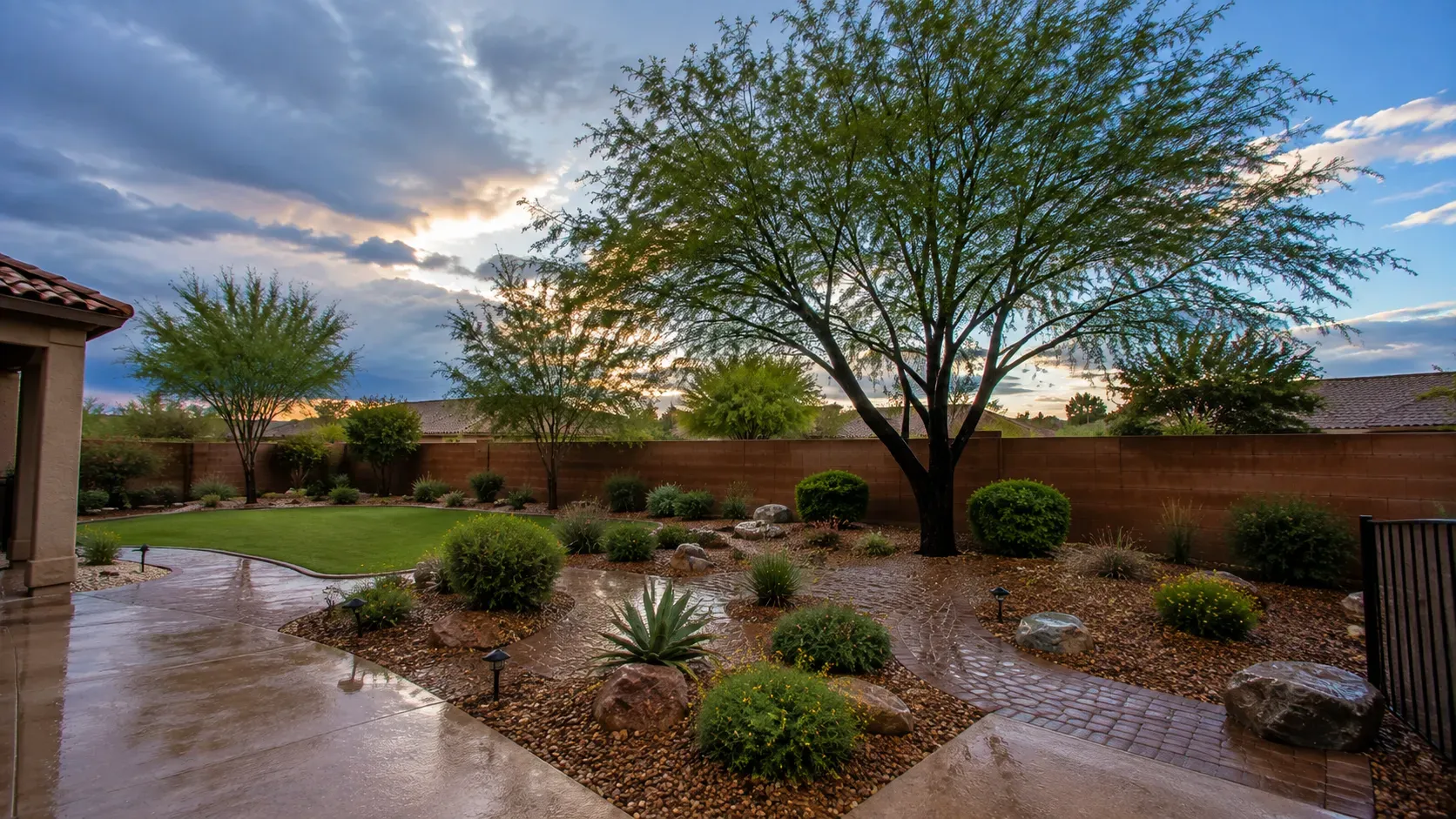
The most resilient properties in Buckeye are not the ones with the most maintenance.

They are the ones designed with water and wind in mind from the start.

Structural choices that pay off every season:

  • Grade planned before planting, water routing decided first, aesthetics second
  • Dry creek beds that serve as both drainage and design feature
  • Trees placed away from structures with room for mature canopy spread
  • Deep-watering irrigation that builds anchoring root systems all year
  • Permeable surfaces rather than wall-to-wall hardscape
  • Ground cover and appropriate mulch on erosion-prone slopes
  • Species selected for wind resilience, not just heat tolerance

Soil that absorbs water rather than shedding it reduces runoff volume meaningfully, which starts with healthy soil.

Every one of these is cheaper to build in than to retrofit after a storm exposes the gap.

When to Get Professional Help

Some monsoon preparation genuinely requires professional assessment.

Consider bringing someone in when:

  • You have large mature trees near the house, driveway, or power lines
  • A tree leans, has visible cracks, or shows decay
  • Your yard floods in the same location every season
  • Standing water persists more than 24 hours after rain
  • Water pools against the foundation
  • You are unsure whether your grade actually drains
  • Rock or soil erodes significantly with each storm
  • You need trees thinned and want to be certain lion-tailing is avoided

That last point matters more than most homeowners realize. Improper pruning done in the name of storm preparation causes more failures than no pruning at all, and it cannot be undone quickly. Corrective pruning takes years.

If your Buckeye property has trees near structures, drainage that has never been assessed, or areas that flood every monsoon, schedule a professional landscape assessment before the next storm. Preparation costs a fraction of storm damage repair, and the window closes fast once the season starts.

What a Monsoon-Ready Landscape Actually Gets You

Property owners who prepare properly see the difference in a single season:

  • Trees that stay standing through 60 mph gusts
  • No standing water against the foundation
  • Rock and mulch that stay where they were placed
  • Lower storm cleanup costs
  • No emergency tree removal calls
  • Reduced erosion and soil loss
  • A landscape that recovers in days instead of weeks
  • Lower risk of storm damage to structures and vehicles

Monsoon season in Arizona is not an unpredictable event.

It arrives on roughly the same schedule every year, does roughly the same things, and exposes roughly the same weaknesses.

The properties that come through intact are simply the ones that treated it as a scheduled event rather than a surprise.

FAQ: Monsoon-Ready Landscaping in Arizona

  • When does monsoon season start in Arizona?

    Arizona's monsoon season officially runs June 15 through September 30. Landscape preparation should be completed before mid-June, since the first significant storms can arrive early in the window.

  • How do I prepare my yard for monsoon season?

    Focus on four systems: verify drainage and grade so water moves away from the house, have large trees professionally inspected and properly thinned, prepare irrigation with a rain sensor and a shutoff plan, and secure mulch, rock, and loose debris before winds arrive.

  • Why do trees fall over during Arizona monsoons?

    The most common cause is a shallow root system from light, frequent watering. When heavy rain saturates soil, a shallow root plate loses its grip and wind pushes the tree over. Dense unthinned canopies and improper pruning make failure more likely.

  • Should I turn off my irrigation before a monsoon storm?

    Yes. Soil already saturated by irrigation loses much of its ability to anchor tree roots. Shutting the system down ahead of forecast high winds keeps the ground firmer and reduces the risk of tree failure.

  • Does thinning a tree really help it survive wind?

    Proper thinning does, because it lets wind pass through instead of loading the whole canopy. But lion-tailing, stripping interior branches so foliage remains only at the tips, makes trees more likely to fail, not less. It creates end-heavy limbs and removes the natural dampening interior branches provide.

  • How do I fix a yard that floods during monsoon?

    Start with grade. The ground should slope away from the foundation at roughly 0.5 inch per foot for 10 feet. If grade is adequate but water still pools, options include French drains, swales, dry creek beds, and catch basins depending on where water collects and how your property is laid out.

  • How much mulch should I use before monsoon season?

    Aim for about 2 to 3 inches of rock mulch or 2 to 4 inches of organic mulch. Too little washes away and stops protecting soil; too much traps moisture against roots during heavy rain and can promote rot.

A green background with a white outline of a heart.
Brown dirt patch in a green lawn, with cracked soil and dry grass in the center.
By Happy Clean Lawnscapes July 16, 2026
Brown, scorched patches in your Arizona lawn? Learn how to identify what caused the burn, what to do in the first 48 hours, and when the grass can still be saved.
Homeowner inspecting heat-stressed tree branches in an Arizona backyard
By Happy Clean Lawnscapes July 7, 2026
When Arizona hits an Extreme Heat Warning, one wrong move can kill your lawn or trees in days. Learn exactly how to water, mow, shade, and protect your landscape through a heat wave.

Arizona water bills spike every summer — usually from hidden
landscape waste. Learn how to find leak
June 18, 2026
Arizona water bills spike every summer — usually from hidden landscape waste. Learn how to find leaks, fix waste, and lower your bill before peak heat hits.
Smart Summer Irrigation Principles for Arizona Landscapes
June 11, 2026
Summer irrigation in Arizona is not about watering more — it's about watering smarter. Learn the principles that protect your lawn, plants, and trees while cutting waste during peak heat.
May 26, 2026
Choosing the wrong trees in Arizona can lead to heat stress, root damage, and high water use. Learn how to select and position shade trees properly for a healthier, cooler landscape.
Choosing the wrong trees in Arizona can lead to heat stress, root damage, and high water
use. Learn
May 14, 2026
Choosing the wrong trees in Arizona can lead to heat stress, root damage, and high water use. Learn how to select and position shade trees properly for a healthier, cooler landscape.
April 17, 2026
Yellow grass, burnt patches, weak growth? Learn the signs of over fertilizing lawn in Arizona and how to fix damage before it gets worse.
April 10, 2026
Learn when to fertilize lawn in Arizona, what fertilizer works best, and how to keep Buckeye grass and trees healthy year-round.
March 17, 2026
Why Early-Season Mistakes Are So Common in Arizona
March 3, 2026
Understanding Arizona’s Unique Seasonal Recovery Cycle
Show More