
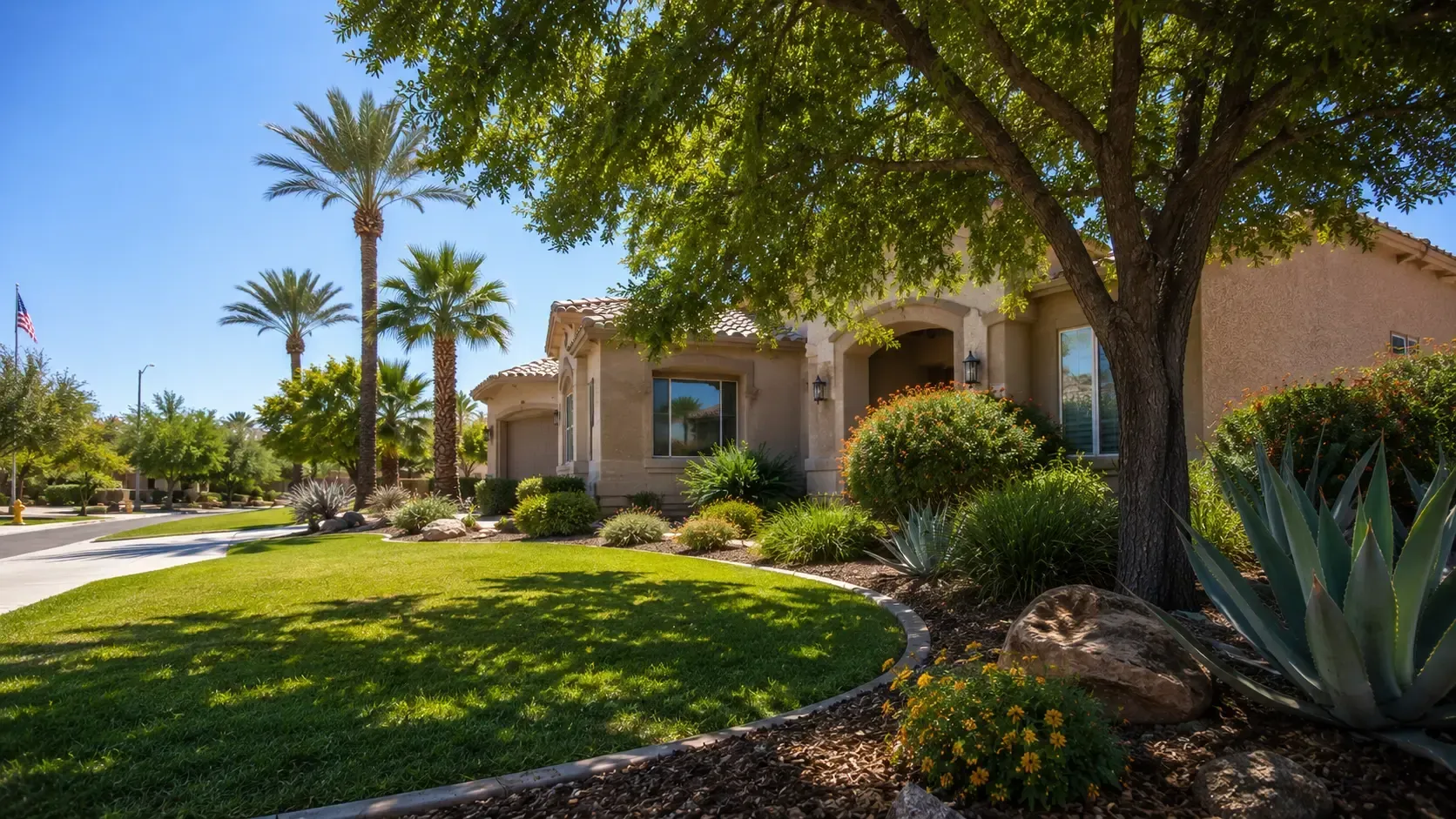

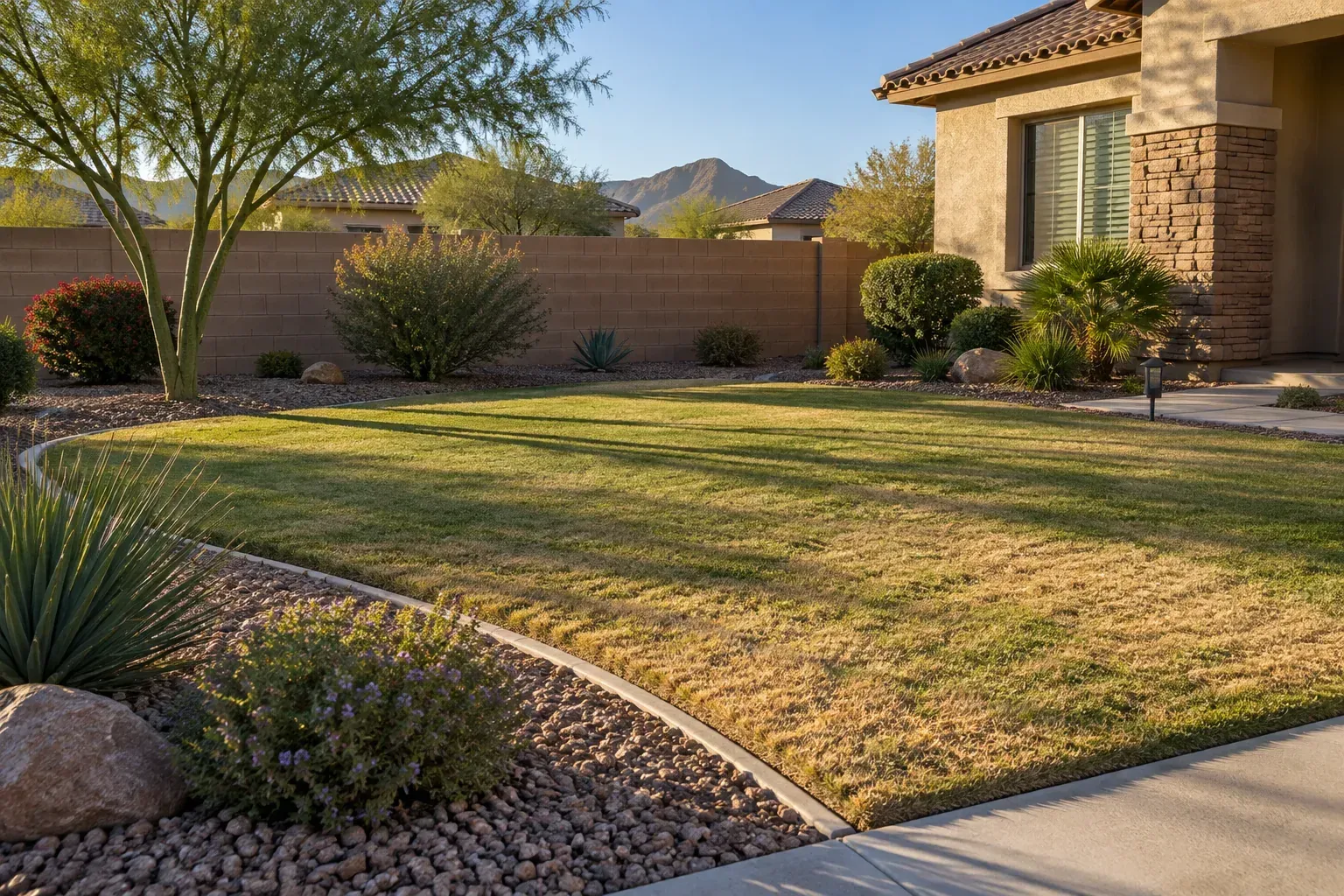
Heat-Wave Survival Guide for Arizona Lawns & Trees: What to Do When Temperatures Hit 115°F
When an Extreme Heat Warning hits the Valley, your landscape has roughly 72 hours before real damage begins.
Here is what actually keeps a lawn and trees alive through it:
- Water deeper and earlier — not more often at the surface
- Raise your mower height and stop cutting during the worst days
- Stop all fertilizing above 90°F
- Stop all pruning, digging, and planting until the heat breaks
- Pull rock and gravel back from tree bases to cut reflected heat
- Keep foot traffic off stressed turf
- Add temporary shade to anything young or already struggling
That is the short version.
The longer version matters because most heat-wave landscape damage in Buckeye and across the West Valley is not caused by the heat itself.
It is caused by homeowners reacting to the heat incorrectly.
A heat wave is survivable. Panic watering, midday mowing, and emergency fertilizing are what turn a stressed yard into a dead one.
What Counts as a Heat Wave in Arizona — and Why It Matters
Arizona homeowners hear "heat wave" so often that the term has lost meaning. For your landscape, the thresholds are specific and worth knowing.
The National Weather Service Phoenix office issues Extreme Heat Warnings for named zones including Buckeye/Avondale, the Northwest Valley, and Goodyear — meaning the alert is genuinely local, not a general Phoenix advisory.
Here is what those temperatures actually do:
- Above 100°F — evaporation accelerates sharply and shallow-rooted plants begin struggling
- Above 110°F — turf enters visible stress and soil surface temperatures can exceed 150°F
- Above 115°F — most trees begin experiencing genuine physiological stress
- Above 118°F — severe tree stress; damage can become permanent
- Above 120°F — even heat-adapted desert natives may need intervention
For context on how extreme this has become: Phoenix recorded 110°F or higher on 80 separate days in 2024, shattering the previous record of 55 days.
This is no longer an occasional event to wait out. It is a recurring seasonal condition your landscape has to be actively managed through.
Why Heat Waves Kill Landscapes That Survived Normal Summers
A landscape can handle a hot summer and still fail during a heat wave. The reason is that heat waves stack multiple stressors at once:
- Daytime highs the plant cannot cool itself out of
- Overnight lows staying in the 90s, so nothing recovers after dark
- Extreme evaporation pulling moisture from soil faster than roots absorb it
- Reflected heat from walls, driveways, and decorative rock
- Wind stripping moisture from leaf surfaces
That overnight point is the one homeowners miss most. Plants and turf do most of their recovery at night. When lows stay above 90°F for consecutive nights, there is no recovery window — the landscape simply accumulates damage day after day.
That is why a five-day heat wave does far more harm than five scattered hot days.
If your lawn was already showing warning signs before the heat wave arrived, those symptoms will escalate fast.
The full symptom checklist is in Heat Stress Signs in Arizona Lawns & Plants.
Emergency Lawn Survival Strategy During a Heat Wave
Lawns fail during heat waves for predictable reasons — and most of them are fixable in the first 48 hours.
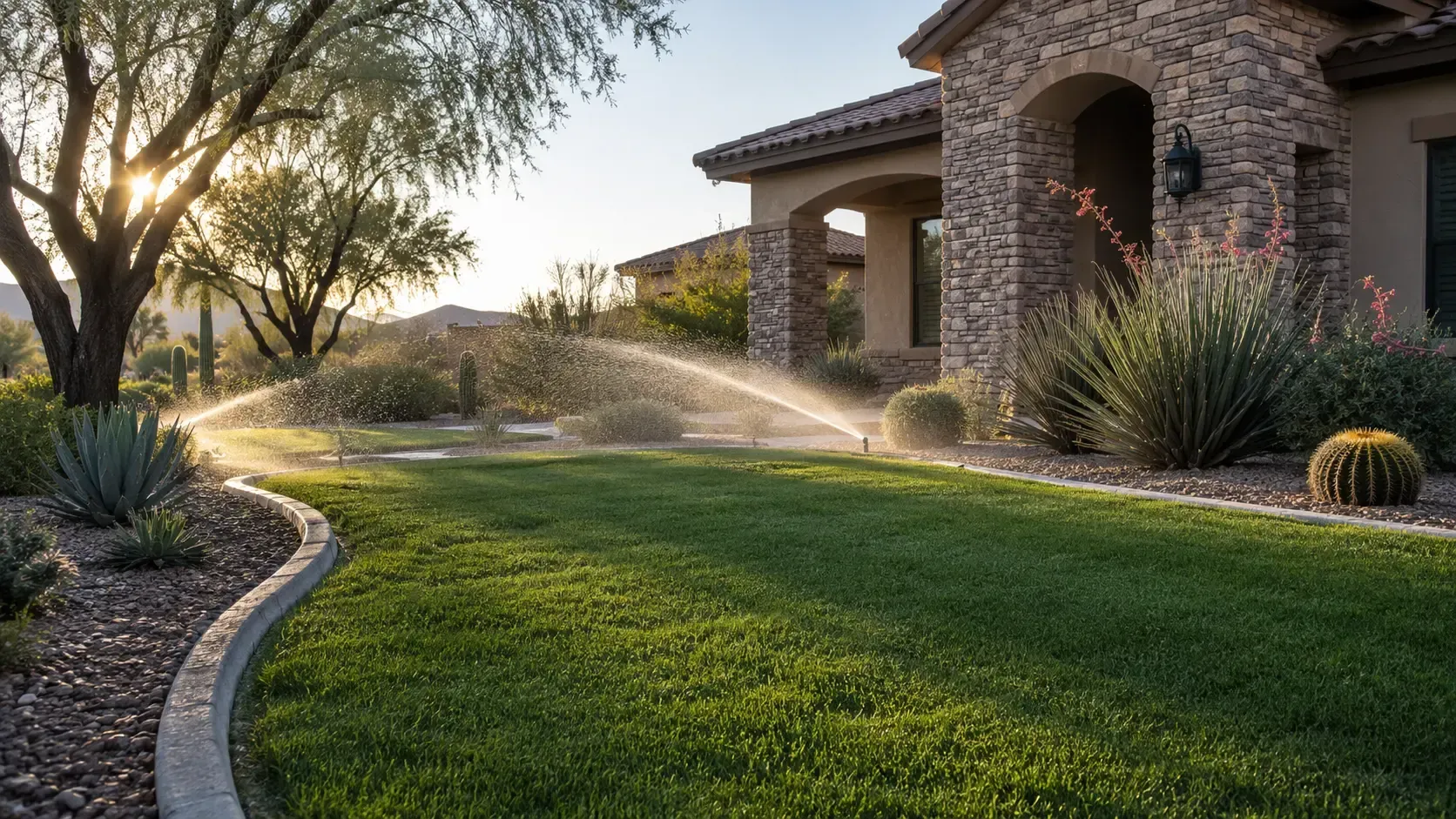
Water deeply, early, and consistently
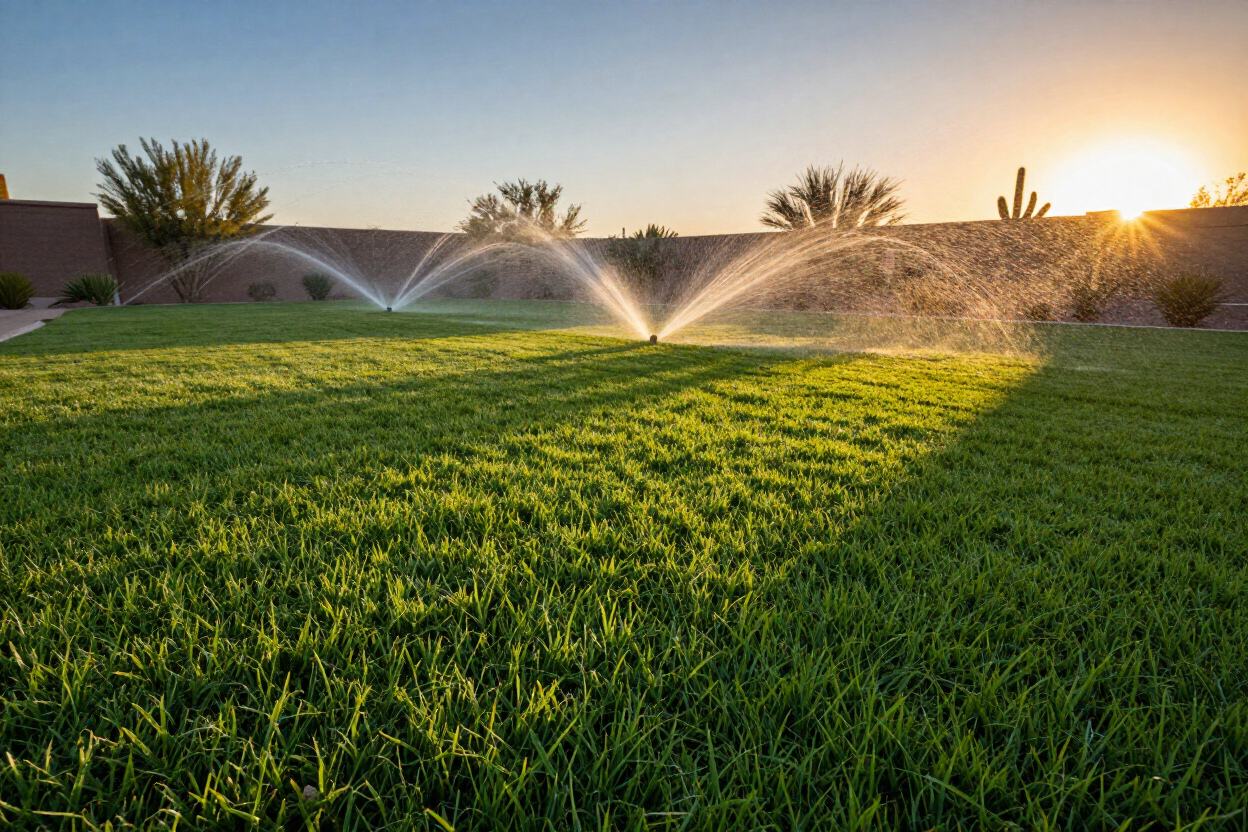
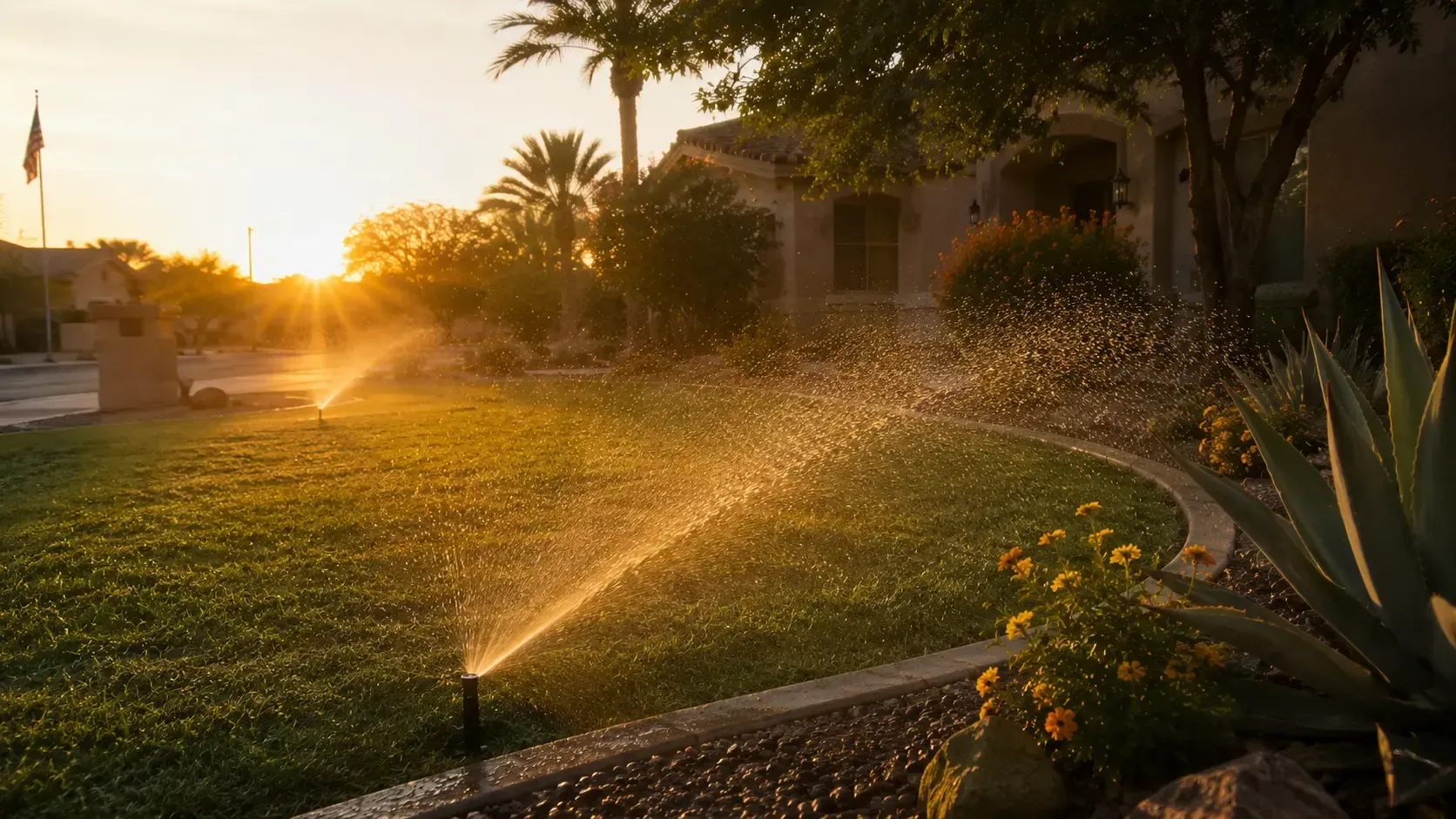
Aim for roughly 1 to 1.5 inches of water per week during extreme heat, delivered in fewer, deeper sessions rather than daily light watering. Water between 4 AM and 7 AM. Water applied at midday can lose a significant portion to evaporation before it ever reaches the root zone.
Raise your mower height immediately
Taller grass shades its own soil, lowers surface temperature, and reduces evaporation. Scalping a lawn during a heat wave is one of the fastest ways to kill it.
Skip mowing entirely on warning days
If an Extreme Heat Warning is active, mowing adds mechanical stress to turf that is already struggling. Wait.
Stop all fertilizer
Above 90°F, fertilizer pushes tender new growth that cannot harden off before the sun burns it. It also increases salt stress in already-dehydrated soil.
Keep traffic off the lawn
Footprints that stay visible are a sign the grass has lost turgor pressure. Walking on it in that state crushes blades that cannot spring back.
Use cycle-and-soak watering
Arizona's compacted soils shed water. Splitting one long cycle into two or three shorter bursts lets water absorb instead of running into the street.
Is My Grass Dead or Just Dormant? The Test That Settles It
This is the single most common question Arizona homeowners ask after a heat wave — and the answer usually saves them money.
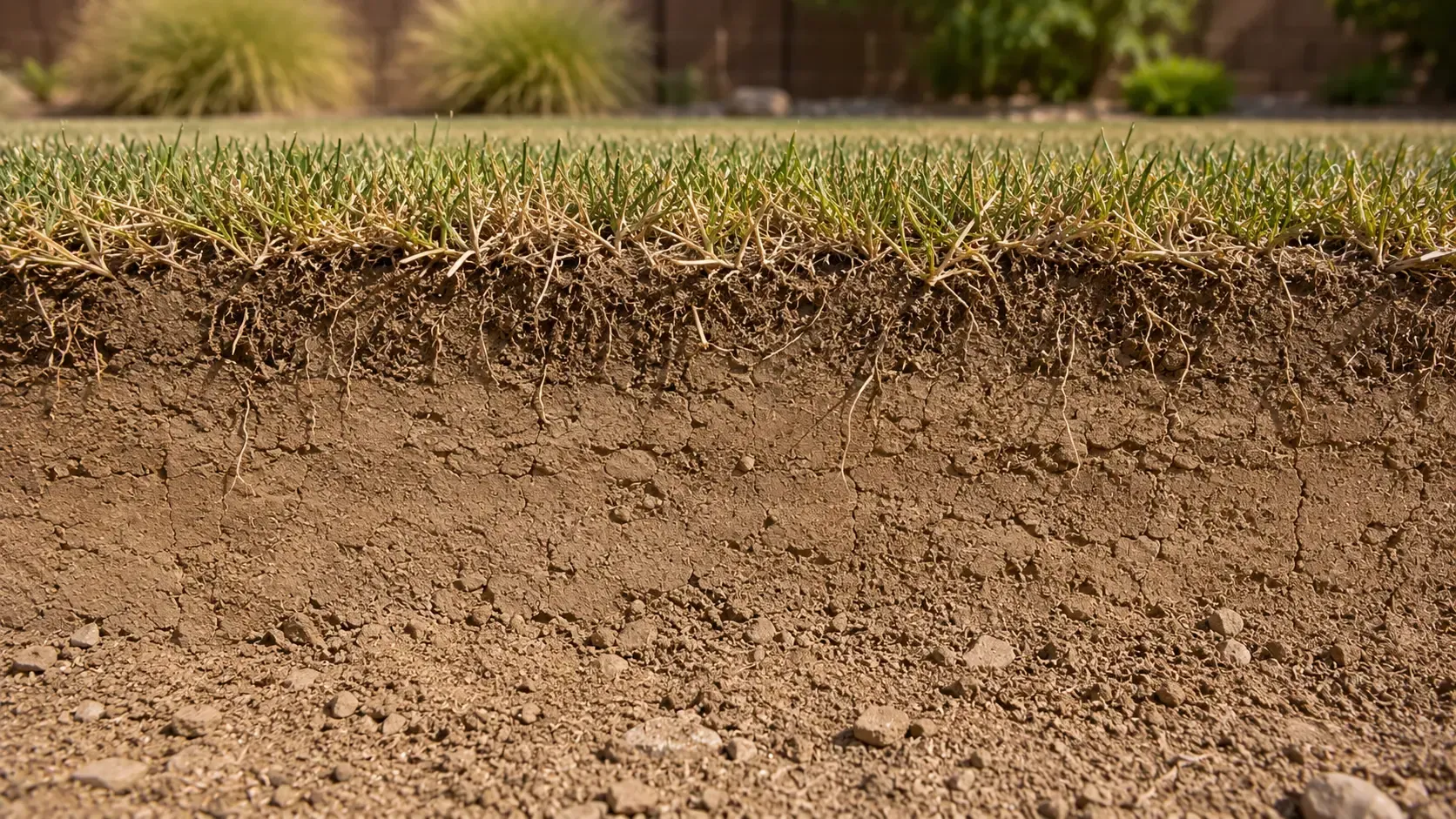
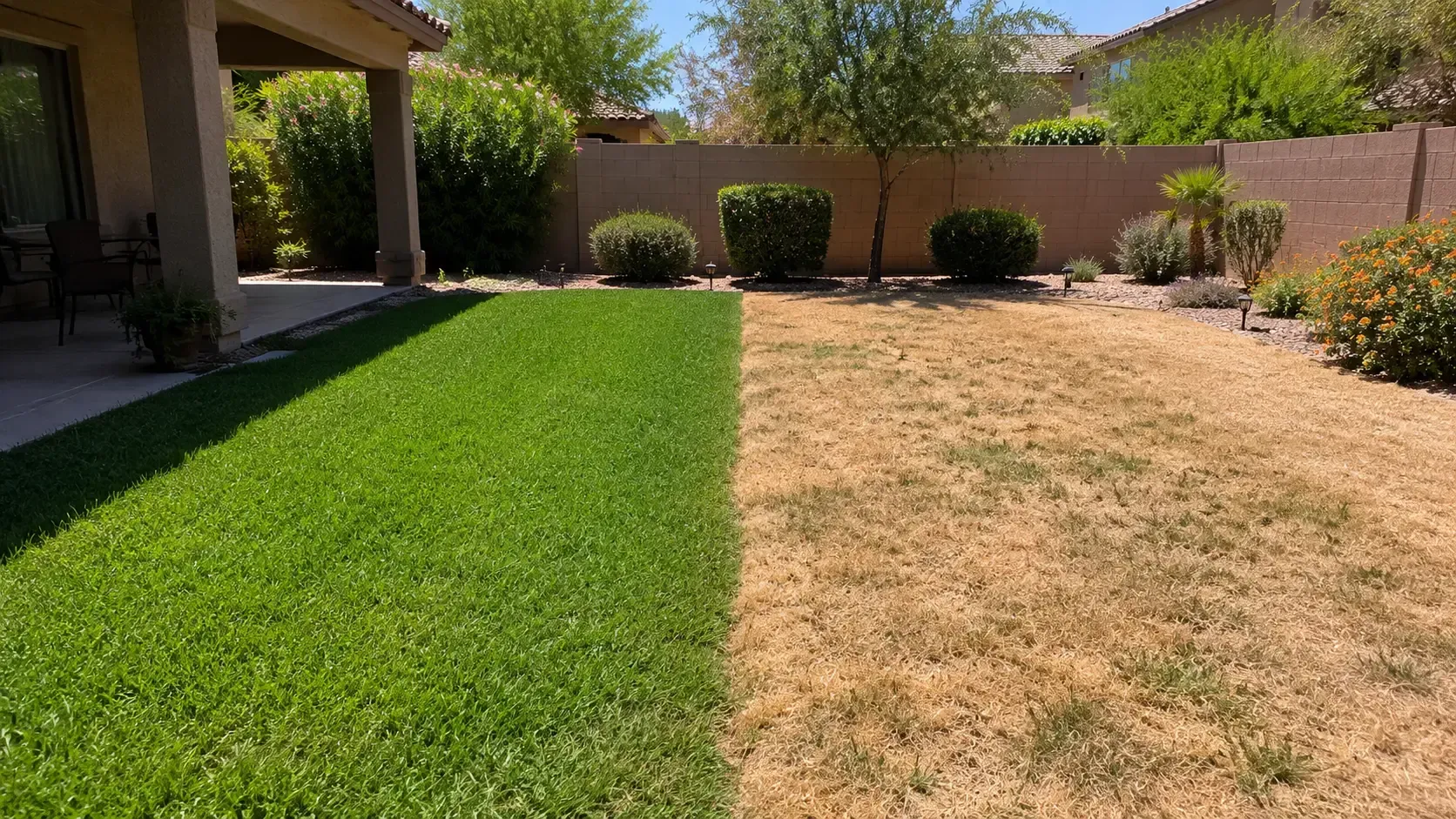
Brown grass is often dormant, not dead. Dormancy is a survival mechanism. The grass sacrifices its blades to protect the crown, then regrows once conditions improve.
Here is how to check:
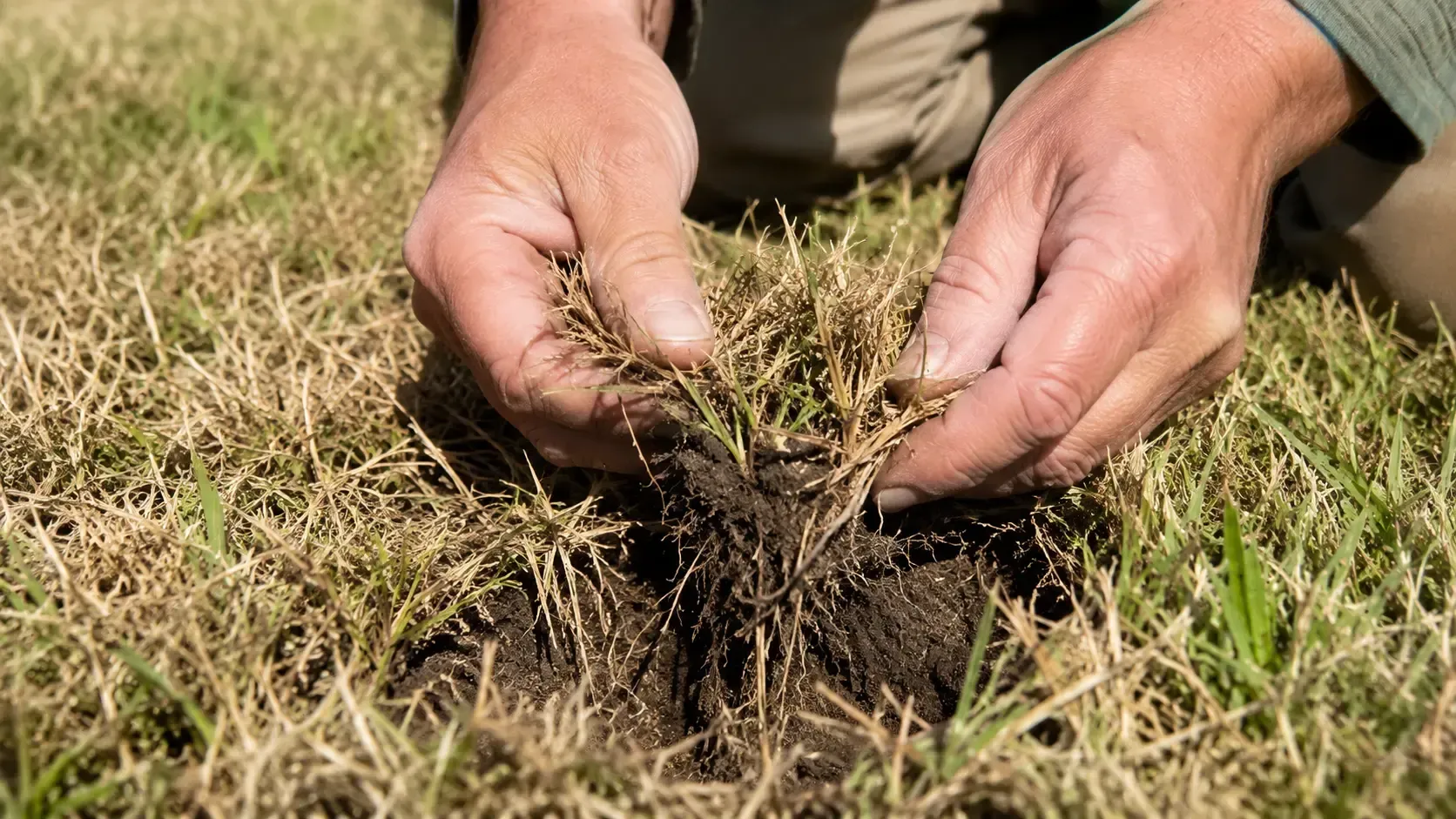
The tug test
Grab a handful of brown grass and pull gently. Resistance — the root system is intact. The lawn is dormant and alive. Pulls up easily, like loose carpet — that section is dead.
The crown check
Part the grass at soil level and scratch a stolon or runner with your fingernail. Green or white tissue inside means alive. Brittle, brown, and hollow throughout means dead.
The pattern check
Uniform browning across the whole lawn usually points to dormancy or heat stress. Sharp-edged patches in specific zones usually point to irrigation failure, pests, or disease.
How long does recovery take? A dormant lawn typically takes two to four weeks of consistent watering and cooler temperatures to show green growth again. Severely damaged areas needing resodding may take a full growing season to fill in.
Bermuda — the dominant warm-season grass across Buckeye and the West Valley — is one of the most heat-resilient home lawn grasses in the country. Brown Bermuda in July is far more often alive than dead.
How to Protect Trees During an Arizona Heat Wave
Trees are the most expensive thing in your landscape to lose and the slowest to replace. They are also where most homeowners make the costliest heat-wave mistakes.
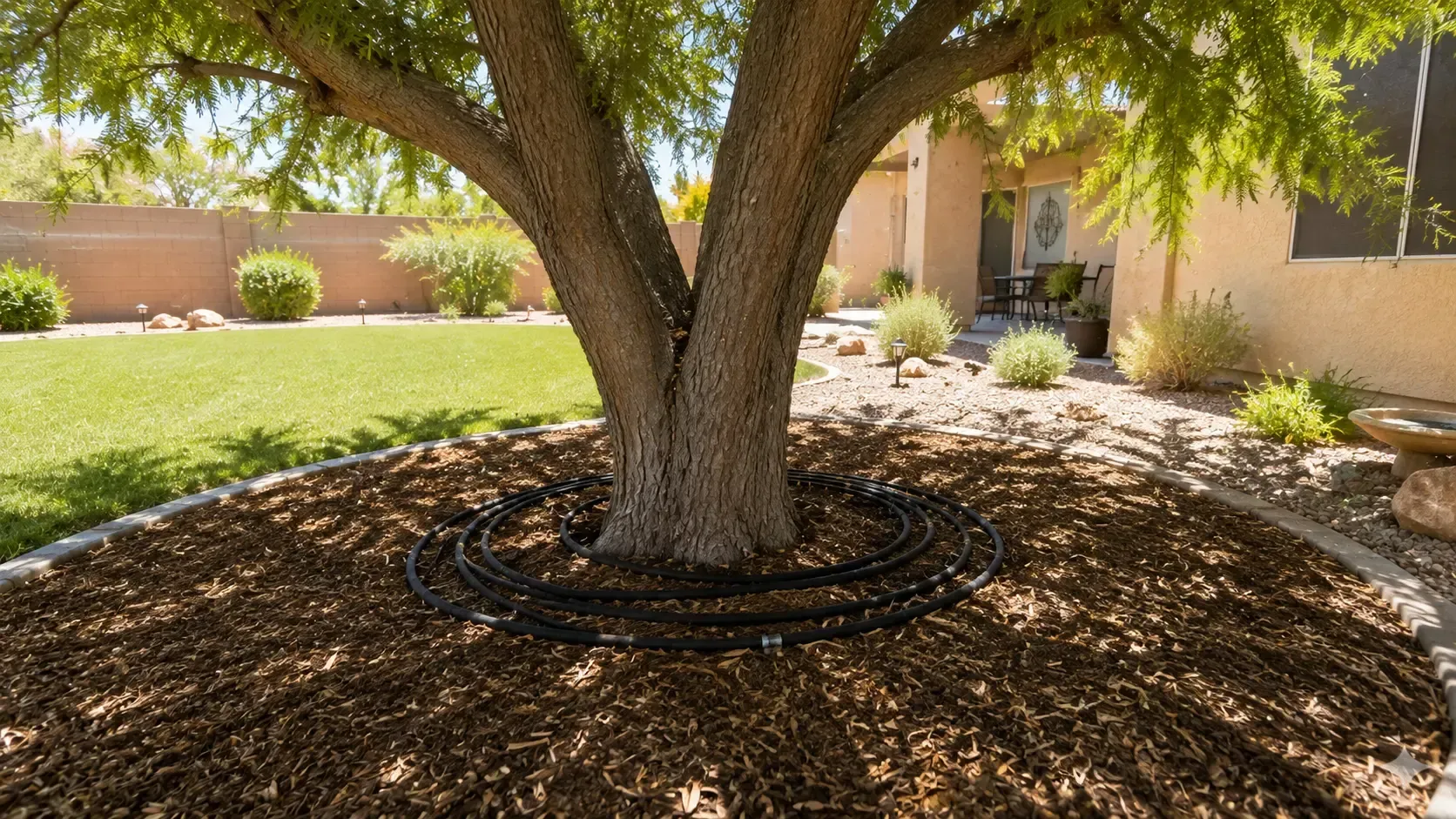
Water deeply at the drip line — never at the trunk
Tree roots that matter for water uptake sit out under the canopy edge, not against the trunk. During sustained temperatures above 115°F, shift to a deep watering cycle every 7 to 10 days rather than the typical 14-day interval.
Get water 2 to 3 feet deep
Surface watering does nothing for a mature tree. Use the probe test: push a long screwdriver or soil probe into the ground after watering. If it slides in easily to two or three feet, you have watered correctly. If it stops at six inches, you have not.
Water slowly
A slow trickle over several hours penetrates far better than a fast blast that runs off.
Do not prune during a heat wave
This surprises people, but even dead branches and dry leaves provide shade to the tissue underneath. Removing them exposes bark that has never seen direct sun and causes sunscald. Wait until the heat breaks.
Pull rock and gravel away from the base
Decorative granite and rock radiate stored heat directly into the root zone. Clearing it back from the trunk and drip line reduces the reflected heat load significantly.
Mulch — but keep it off the trunk
A 2 to 3 inch layer of organic mulch over the root zone slows evaporation and keeps soil measurably cooler. Leave a gap around the trunk itself to prevent rot.
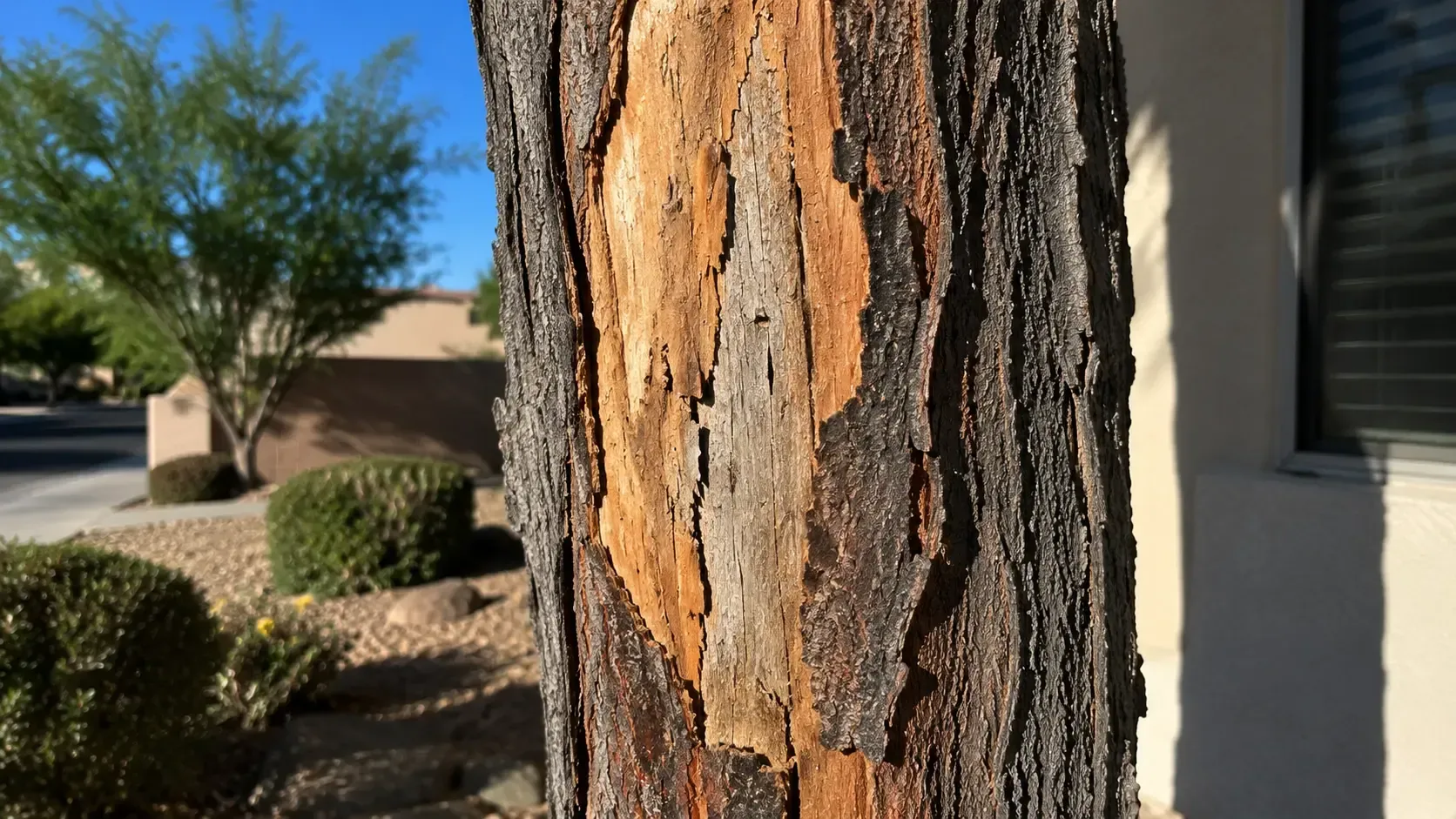
Protect the trunk from sunscald
Damage shows up on the south and west-facing sides first. Young trees and recently pruned trees are most vulnerable and benefit from temporary shading or trunk wrap.
Warning Signs a Tree Is in Serious Trouble
Some heat symptoms are normal. Others mean the tree is actively dying.
Manageable stress:
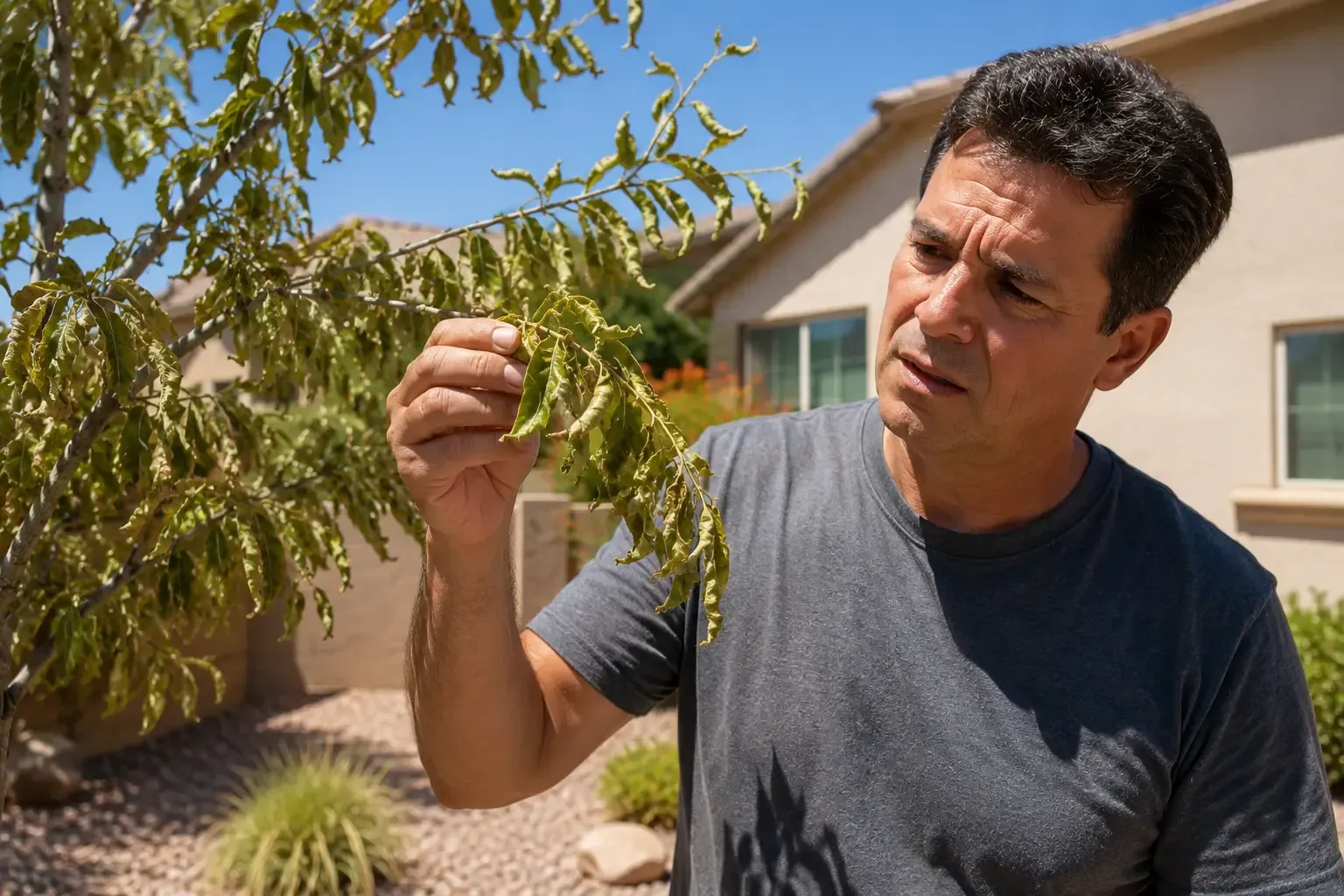
- Leaves curling or folding inward during peak afternoon
- Slight wilting that recovers by morning
- Slowed new growth
Urgent — act within 24 hours:
- Wilting that does not recover overnight
- Rapid drop of green, healthy-looking leaves
- Bark splitting or cracking on the trunk
- Branch tips turning brown or black from the outside inward
- Thinning canopy with visible sky through it
That last one — dieback progressing from branch tips inward — means the tree is abandoning parts of itself to survive. It is a late-stage signal and needs a professional assessment quickly.
A note on palms: Palms need a different watering pattern than shade trees — a shallow ring within two to three feet of the trunk, not the wide drip-line soak. Queen palms in particular have declined widely across the Valley during recent extreme summers and are far less forgiving than date or Mexican fan palms.
What NOT to Do During a Heat Wave
These are the mistakes that turn a survivable heat wave into replacement costs.
- Do not fertilize — Above 90°F it burns instead of feeds.
- Do not prune — Removing foliage removes shade and exposes vulnerable tissue.
- Do not plant anything new — Nothing planted during an Extreme Heat Warning will establish. It will die and waste your money.
- Do not disturb the soil — Digging, tilling, and even weeding release trapped soil moisture. Cut weeds at the surface if you must, but leave the soil alone.
- Do not water at midday out of panic — Most of it evaporates. The exception is a brief cooling syringe cycle on turf during genuine emergency heat — but this is a temperature-lowering tactic, not irrigation, and it should not replace early morning deep watering.
- Do not water at night — Evening watering leaves foliage and soil wet overnight, which invites fungal disease in an otherwise dry climate.
- Do not increase frequency without increasing depth — This is the most expensive mistake of all. It keeps roots shallow, drives your water bill up, and leaves the landscape weaker for the next heat wave.
Your 72-Hour Heat-Wave Action Plan
When an Extreme Heat Warning is issued for Buckeye or the West Valley, work through this sequence.
Before the heat arrives (24–48 hours out)
- Run a full irrigation check — walk every zone while it runs
- Repair broken emitters and misaligned heads
- Deep water all trees, especially young ones
- Raise mower height and cut before the heat, not during
- Refresh mulch on beds and tree root zones
- Pull rock back from tree bases
- Move potted plants into shade
During the heat wave
- Water early morning only, deeply
- Do not mow, prune, fertilize, or plant
- Keep traffic off turf
- Inspect trees daily for wilting that does not recover
- Add temporary shade cloth to anything young or already stressed
- Watch for runoff — adjust to cycle-and-soak if you see it
After the heat breaks
- Assess damage before doing anything
- Run the tug test on brown turf before assuming it is dead
- Resume normal watering gradually
- Wait until temperatures drop below 90°F to fertilize
- Prune damaged branches only after the heat has genuinely passed
- Address soil compaction revealed during the heat
If the landscape struggled badly, the underlying issue is often soil that cannot hold moisture.
When to Call a Professional
Some heat-wave damage moves faster than a homeowner can respond to.
Get a professional assessment when:
- A tree is wilting and does not recover overnight despite deep watering
- You see bark splitting, cracking, or peeling
- Branch dieback is progressing inward from the tips
- Large turf sections fail the tug test
- Multiple plant types decline simultaneously
- You cannot tell whether the cause is heat, irrigation, soil, or disease
- Damage keeps spreading after the heat wave has passed
Heat-stressed trees decline fast, and a tree that is merely stressed today can be unsalvageable in two weeks.
The cost of watering and assessing a struggling tree is a fraction of the cost of removing a dead one.
If your Buckeye lawn or trees are showing heat-wave damage, schedule a professional landscape assessment before the next Extreme Heat Warning stacks more stress on top. Fast, accurate diagnosis is the difference between a landscape that recovers and one you have to replace.
Building a Landscape That Survives the Next One
Heat waves in Arizona are no longer unusual events. The landscapes that come through them intact are the ones prepared before the warning is issued:
- Deep root systems built by deep watering all season
- Healthy, amended soil that holds moisture
- Adequate shade coverage over vulnerable turf zones
- Mulched beds and tree root zones
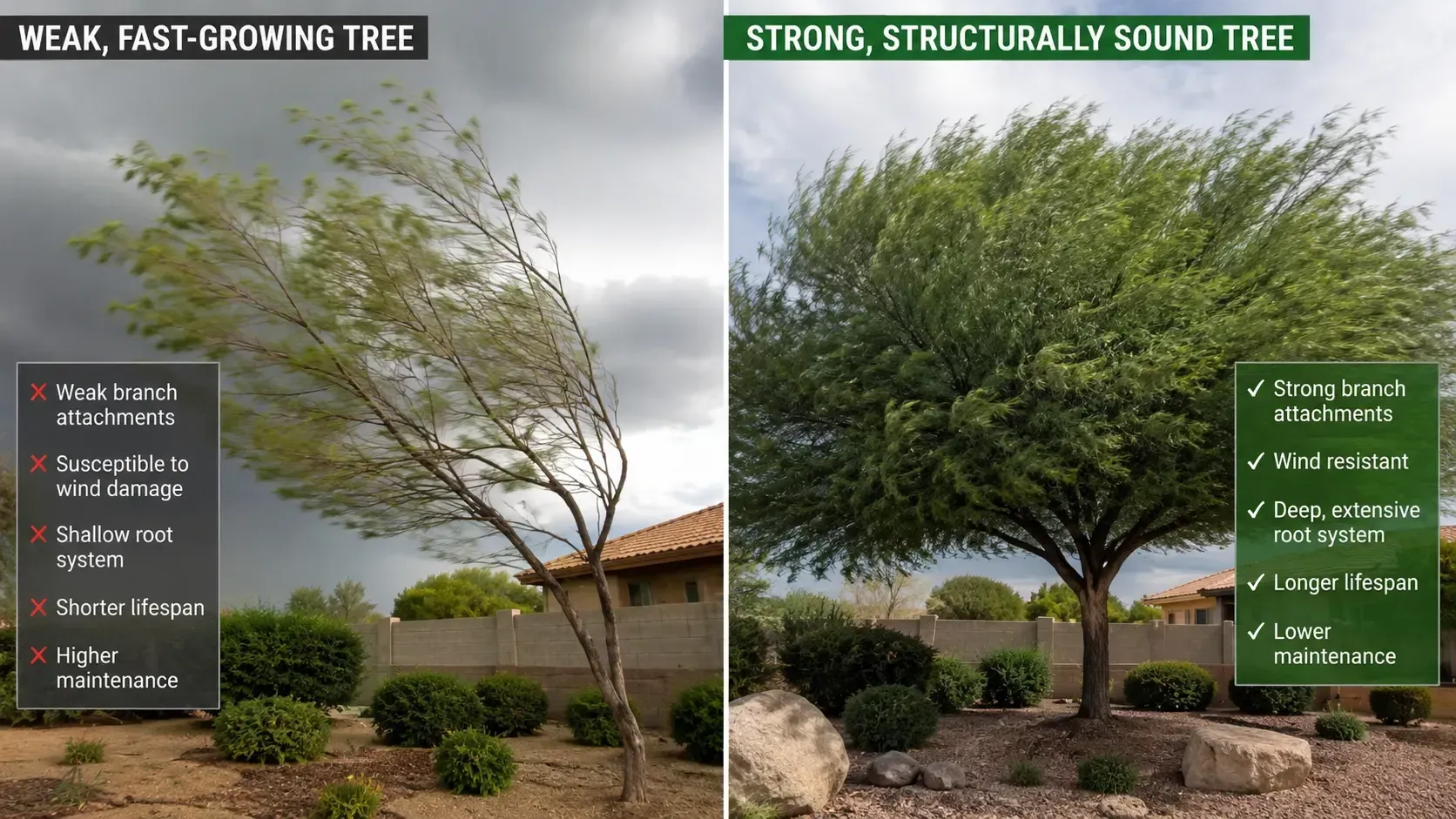
- Species chosen for genuine heat tolerance
- An irrigation system that has actually been tested
Every one of these is built in the mild months, not during the emergency.
The homeowners who lose plants every summer are usually reacting. The ones who do not are the ones who prepared in March.
FAQ: Arizona Heat-Wave Lawn & Tree Survival
How do I keep my lawn alive during an Arizona heat wave?
Water deeply between 4 AM and 7 AM, aiming for 1 to 1.5 inches per week delivered in fewer, deeper sessions. Raise your mower height, stop mowing during warning days, stop fertilizing, and keep foot traffic off the grass until the heat breaks.
Is my brown grass dead or just dormant?
Tug a handful of grass. If it resists, the roots are intact and the lawn is dormant. If it lifts easily like loose carpet, that section is dead. You can also scratch a stolon at soil level — green or white tissue inside means the grass is alive.
How often should I water trees during a heat wave in Phoenix?
During sustained temperatures above 115°F, deep water every 7 to 10 days instead of the usual 14-day cycle. Water at the drip line, not the trunk, and get moisture 2 to 3 feet deep. Use a screwdriver or soil probe to verify depth.
Should I prune heat-damaged branches right away?
No. Even dead branches and dry leaves shade the tissue underneath. Pruning during a heat wave exposes bark that has never had direct sun and causes sunscald. Wait until temperatures drop before removing damage.
Can I fertilize my lawn during extreme heat?
No. Above 90°F, fertilizer forces tender new growth that cannot harden off before the sun burns it, and it adds salt stress to already-dry soil. Wait until temperatures fall below 90°F consistently.
At what temperature do trees start dying in Arizona?
Most trees begin experiencing genuine stress above 115°F, with severe stress above 118°F. Above 120°F, even heat-adapted desert natives may need intervention. Young trees and recently transplanted trees are at risk well before those thresholds.
How long does it take a lawn to recover after a heat wave?
A dormant lawn typically shows green growth again within two to four weeks once consistent watering resumes and temperatures ease. Areas that are genuinely dead and need resodding can take a full growing season to fill in completely.


Why Is My Water Bill So High in Arizona? How to Stop Landscape Water Waste Before Summer Costs Spike

Tree Selection & Shade Planning in Arizona: How to Choose the Right Trees Before Summer Heat Arrives