
If your new ryegrass came up thin, in stripes, or not at all, the seed is rarely the problem.
Here is what actually causes most failed overseeding in Buckeye and the West Valley:
- Seeding into heat. With nights above 65°F, the Bermuda wins and Pythium can wipe out seedlings in 24 to 48 hours.
- Seed on thatch or clippings, not soil. It swells, dries and dies.
- The surface drying out once in the first 7 to 10 days.
- Too much water : puddles, runoff and evening cycles that wash seed into stripes and feed disease.
- Sprinkler gaps that become bare arcs.
- Mowing too early , wet, or with a dull blade.
- Feeding the wrong grass : nitrogen on the Bermuda in late September, or fertilizer before emergence.
Most failures are fixable if you catch them before the window closes in early November.
More seed and more water usually make it worse.
Read the Lawn First: What Your Failure Pattern Is Telling You
Different mistakes leave different marks. Match what you see to the likely cause before you spend money on more seed.
- Nothing at all after 14 days: seed dried out, seed never reached soil, or it was sown into heat and died as it germinated
- Green arcs near heads, bare stripes between them: irrigation coverage, not seed
- Bare lines along slopes, curbs and the low edge of the lawn: water ran off and carried seed with it
- Came up, then collapsed in dark, greasy, matted patches: likely Pythium (damping off)
- Came up thin and stalled while the Bermuda stayed green: seeded too early, or the Bermuda was fed too late
- Seedlings pulled out in clumps after the first mow: mowed too soon, too low, wet, or with a dull blade
- Yellow or brown streaks a few days after feeding: fertilizer burn on young roots
Ryegrass normally emerges in 7 to 10 days (University of Arizona Extension). Do not judge the job before day 10. Do judge it by day 14.
Mistake 1: Seeding Into Heat
This is the big one in 2026.
The first days of October were not overseeding weather. Phoenix forecasts showed a high near 102°F on 9 October with an overnight low near 79°F, before highs dropped into the mid 70s the following week. Anyone who seeded on the calendar instead of the thermometer seeded into summer.
University of Arizona Extension is clear on the conditions to seed by: daytime highs of 80 to 85°F and nighttime lows of about 55°F. Seeding earlier, while it is still warm, favors the Bermuda and keeps the winter grass from establishing.
Why heat kills overseeding two ways
- The Bermuda wins. Bermuda only slows once nights drop below about 65°F. Before that it is still growing, shading and out-competing every seedling
- Pythium moves in. New Mexico State University's plant clinic notes that warm-weather Pythium blight is favored by daytime highs in the 80s or 90s with nights above 68°F, can destroy large areas within 24 to 48 hours, and is especially severe in ryegrass overseeded into hybrid Bermuda
How to recognize Pythium
- Dark, water-soaked, greasy-looking patches, up to about 6 to 12 inches across, that can merge
- Seedlings that collapse and mat down, often following drainage or mowing patterns
- White to grayish cottony growth on the grass early in the morning while the dew is still on
If that matches your lawn, more water is the wrong fix. Cut the cycles back to the minimum that keeps the surface damp, stop any evening watering, keep off the wet turf, and reseed the dead patches once nights are reliably cooler.
Mistake 2: Seed That Never Touched Soil
Seed-to-soil contact decides germination. Seed resting on a mat of thatch or a layer of clippings sits in the air, dries out between cycles, and never roots.
The quick test: part the turf with your fingers in a few spots. If you cannot see soil between the stems, neither could the seed.
Signs this is your problem
- Patchy germination that is worst where the Bermuda was thickest
- Seed still visible on top of the turf after 10 days
- Better results along the edges where the mower or foot traffic thinned the grass
The full seedbed sequence, including how low to cut and why you should never scalp to bare dirt, is in How to Overseed Your Arizona Lawn in October: Step-by-Step Seeding and the Winter Grass Watering Schedule . If you skipped those steps, this is usually why the seed failed.
Mistake 3: Getting Germination Watering Wrong in Either Direction
Germinating seed has no roots. It lives in the top quarter inch of soil, and on a sunny afternoon in Buckeye that layer can dry in under an hour.
Too little
- One dry afternoon can end it. A seed that has swelled and then dries out is dead. It will not try again
- University of Arizona Extension says to water 3 to 4 times a day for the first 7 to 10 days and not to let germinating seed dry out
Too much
- Puddles and runoff move seed downhill into gutters and low corners, leaving bare stripes and clumps of overcrowded seedlings
- Long cycles do not help seed. They saturate the soil and set up the conditions Pythium needs
- Evening and night cycles leave the surface wet for hours in the dark. Plant pathologists list night watering and light, frequent watering among the habits that favor Pythium, which is why the germination cycles belong in daylight and should stop once seedlings are up
The target is damp, never puddled. If water is running across the surface, the cycle is too long.
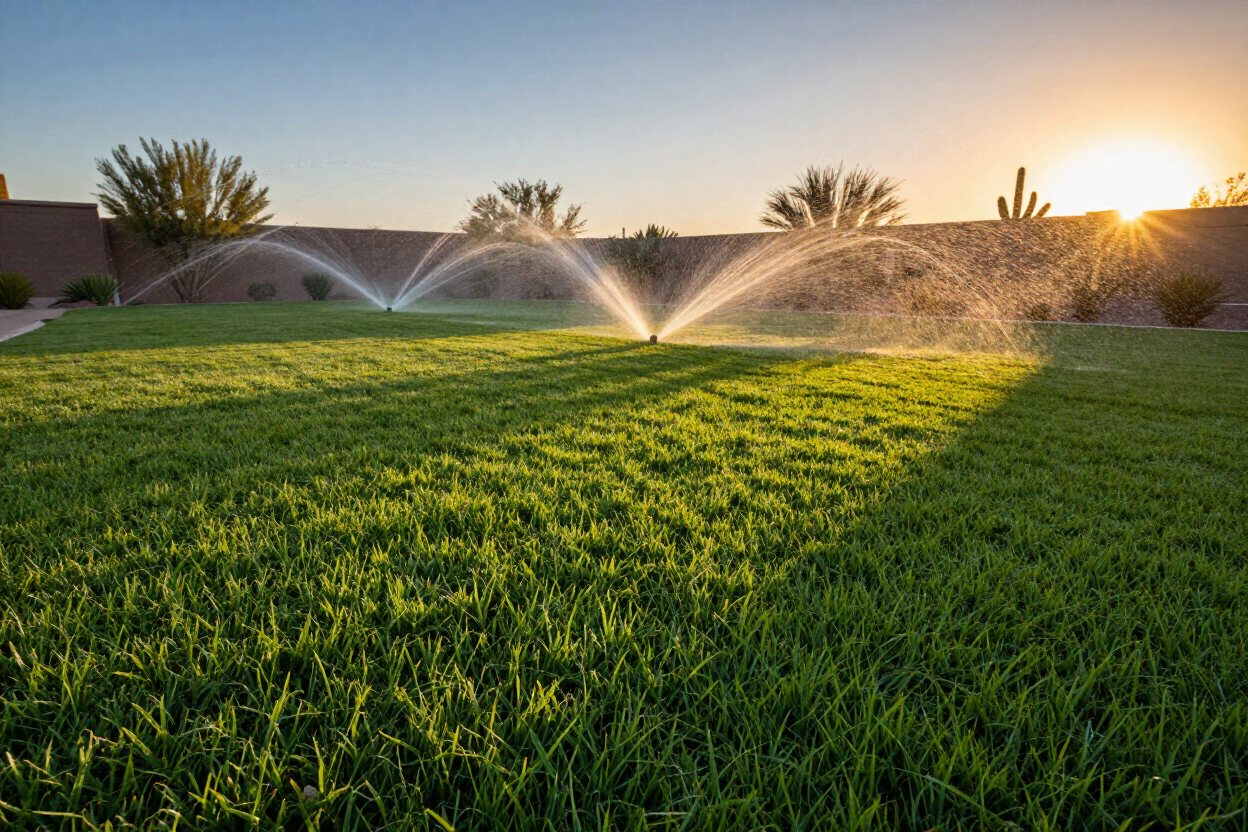
Mistake 4: Blaming the Seed for a Sprinkler Problem
Overseeding is the most honest irrigation audit you will ever get.
A zone that delivers 20% less water than its neighbor is invisible on established Bermuda. During a 10 day germination window it becomes a bare arc you look at until April.
The pattern gives it away
- Green rings around each head, bare in the middle of the spacing: heads too far apart or pressure too low
- One straight bare strip: a head blocked by a plant, tilted, or not popping up fully
- A whole section thin: a zone with a shorter run time, a clogged filter, or a broken head
- Wet and dry corners: mixed nozzle types on one zone
Run each zone in daylight and watch it. Fix the heads first, then hand-water and reseed the gaps. The method for a proper check is in Smart Irrigation Principles for Arizona Summers , and coverage is one of the root causes covered in Why Lawns Fail After Summer in Arizona .
Mistake 5: Mowing the New Grass Too Soon
Young ryegrass is anchored in the top inch of soil. A mower that pulls instead of cuts lifts it out in clumps.
- Wait until the ryegrass reaches 2 3/4 to 3 inches before the first cut (University of Arizona Extension)
- Sharpen the blade first. A dull blade tears seedlings out of soft soil
- Mow only when the surface is dry. Wet soil ruts and the wheels uproot what the blade missed
- Never take more than a third of the leaf in one pass
If the first mow left bare clumps, rake out the loose seedlings, reseed those spots and let them catch up before the next cut.
Mistake 6: Feeding the Wrong Grass at the Wrong Time
Fertilizer causes as many overseeding failures as water.
- Nitrogen on the Bermuda in late September keeps it growing when you need it to slow down. University of Arizona Extension says to stop nitrogen 30 days before overseeding
- Fertilizer before the seedlings are up feeds weeds and puts salt where tender roots are trying to establish
- Too much, too soon after emergence burns young roots. University of Arizona Extension also links over-fertilizing to more disease and more frost damage on winter grass
The first feeding belongs about two weeks after emergence, not on seeding day. If you see yellow or brown streaks within a few days of feeding, water deeply once to move the salts down and do not feed again for a month. The full symptom list is in Signs of Over Fertilizing Lawn in Arizona .
Mistake 7: Birds, Wind and Foot Traffic
These rarely ruin a whole lawn, but they explain the random bare patches.
- Birds take the exposed seed. Seed that is raked into contact with soil is harder to find than seed lying on top
- Wind pushes light ryegrass seed into drifts along walls and fences. Seed on calm mornings
- Dogs, kids and shortcuts across the lawn in the first two weeks crush seedlings and compact the damp surface
If birds are the issue, a light topdressing over reseeded patches helps more than extra seed does.
The Myths That Cause the Most Wasted Seed and Water
Myth 1: "You have to overseed or the lawn will die"
You do not.
Bermuda that goes tan in winter is dormant, not dead. It is designed to rest through the cool months and green up again in spring.
- Skipping overseeding saves over 8,000 gallons of water per 1,000 square feet each season (City of Tempe)
- Dormant Bermuda needs about 1/2 inch of water a month in winter (AMWUA), roughly once a month from November to February (City of Tempe)
- There is no scalping, no seed bill, no winter mowing, and no spring transition to manage
University of Arizona Extension's IPM team also points to turf colorants as an alternative that keeps a dormant lawn green. If a brown winter lawn bothers you, that is a cheaper decision than a failed overseed. The overseed-or-skip decision itself is laid out in Late-Summer Lawn Recovery in Arizona , and the winter routine for a dormant lawn is in Winter Lawn Care in Arizona: Expert Tips to Keep Grass Healthy Through Cold Months .
Myth 2: "More seed means a thicker lawn"
It does not. Above the recommended 12 to 15 lbs per 1,000 square feet (University of Arizona Extension), seedlings crowd each other, compete for the same water and thin out anyway. A crowded, constantly wet canopy is also exactly where damping off starts. Contact beats quantity.
Myth 3: "Overseeding doesn't affect the Bermuda"
This one is partly true and partly not.
Overseeding does not kill healthy Bermuda. But the ryegrass does compete with it in spring, and University of Arizona Extension notes that perennial ryegrass persists longer into spring and competes with the greening Bermuda. Bermuda only restarts once nights stay above 60°F for seven nights in a row, usually April to May.
The real damage comes from the extras:
- Scalping to bare soil, which cuts the crowns
- Years of nitrogen pushed into the Bermuda late in the season
- Withholding water in spring to force out the ryegrass, which also stresses the Bermuda
A lawn overseeded correctly every year can stay healthy. A lawn overseeded badly every year gets thinner each summer, and that pattern often shows up as the summer thinning described in Why Lawns Fail After Summer in Arizona .
Myth 4: "If nothing is up after a week, it failed"
Ryegrass normally takes 7 to 10 days to emerge, and shaded and low spots come up first. Reseeding at day 6 just doubles the rate in the places that were about to come up. Wait until day 14 before you call an area dead.
Myth 5: "Annual ryegrass is the same thing, just cheaper"
It is cheaper. It is not the same. University of Arizona Extension describes annual ryegrass as lighter green, coarser and fast growing, needing more frequent mowing, while perennial ryegrass is darker, finer, more frost tolerant and more disease resistant. Cheap seed that needs mowing twice as often is not a saving.
Is There Still Time to Fix It This Year?
Usually, yes, if you act before the window closes.
University of Arizona Extension names October as the ideal overseeding month for the low desert and warns that later seedings risk frost damage to young seedlings. In the Phoenix area the practical window runs to about early November. Inside it, a failed area can be reseeded and will still establish before cold nights slow it down.
If you are still inside the window
- Fix the cause first : the sprinkler head, the thatch, the run time, the evening cycle
- Reseed only the failed areas at the normal rate, rake the seed into contact with soil, and restart the short daytime cycles for those zones
- Hand-water small patches rather than running the whole lawn at germination frequency again
If you are past early November
- Stop the germination watering. Seed sown into cold soil comes up slowly and gets damaged by frost
- Let the thin areas go dormant with the Bermuda and water once a month
- Plan the fix for spring , when the Bermuda wakes up and fills in on its own
Watering three or four times a day into December for seed that will not come up is the most expensive way to fail.
When to Call a Professional
Overseeding gives you one chance a year, and every week after mid-October narrows it.
Bring in a professional when:
- Less than half the lawn came up by day 14
- You see greasy, collapsing patches that spread from one day to the next
- The bare areas follow the sprinkler pattern and you are not sure how to fix the heads or zones
- The lawn has failed to overseed two years in a row
- The Bermuda underneath has been thinning every summer and you are not sure it can carry a winter lawn
- You manage an HOA or commercial property where winter appearance is part of the contract
- You are deciding whether to reseed, skip overseeding entirely, or move off cool-season grass for good
If your Buckeye lawn was overseeded this fall and is coming up thin, striped or not at all, schedule a professional overseeding assessment before the window closes in early November. Reseeding the right spots now costs a bag of seed and ten days of water, while waiting usually costs the whole winter.
If the answer turns out to be less lawn rather than more seed, 6 Best Grass Alternatives for No-Mow Lawns in Arizona covers the options that remove the overseeding question entirely.
What Getting It Right Pays Back
Homeowners who diagnose the failure instead of throwing more seed at it get:
- A winter lawn that fills in within weeks instead of staying patchy until spring
- Lower water bills, because the frequent germination watering lasts 10 days and not all season
- Less disease, because the lawn is not sitting wet every night
- A healthier Bermuda in April, because it was never scalped, overfed or starved of water
- Sprinkler problems found and fixed in October instead of showing up as dry spots in July
- A clear decision for next year: overseed properly, or skip it and let the Bermuda rest
A failed overseed is information. The pattern on the ground tells you exactly what went wrong.
Read it, fix the cause, and reseed only where it matters.
If the bill is what you are weighing, Why Is My Water Bill So High in Arizona? shows where landscape water goes and what a winter lawn really adds.
FAQ: Overseeding Mistakes and Myths in Arizona
Why didn't my ryegrass seed germinate?
The most common causes in Arizona are seeding while nights were still above about 65°F, seed resting on thatch or clippings instead of soil, and the surface drying out during the first 7 to 10 days. University of Arizona Extension recommends watering 3 to 4 times a day until seedlings emerge and never letting germinating seed dry out. Check by parting the turf: if seed is still sitting on top of the grass after 10 days, it never reached soil.
How long does ryegrass take to come up after overseeding?
Ryegrass normally emerges in 7 to 10 days when the surface stays damp and temperatures are in range. Shaded and low areas usually come up first. Wait until about day 14 before deciding an area has failed and reseeding it.
Why is my overseeded lawn patchy or striped?
Stripes and arcs that follow the sprinkler layout almost always mean irrigation coverage gaps, not bad seed. Bare lines along slopes and the low edge of the lawn usually mean runoff washed the seed away. Fix the sprinkler heads or shorten the cycles first, then reseed the bare areas.
What are the dark, greasy patches in my new winter grass?
Dark, water-soaked, greasy patches with collapsing seedlings, sometimes with white cottony growth in the early morning, point to Pythium blight or damping off. New Mexico State University's plant clinic notes it is favored by days in the 80s or 90s with nights above 68°F and is especially severe in ryegrass overseeded into hybrid Bermuda. Reduce watering to the minimum, stop night watering, keep off the wet turf and reseed once nights are cooler.
Is it too late to reseed my lawn in Arizona?
University of Arizona Extension names October as the ideal month to overseed in the low desert, and in the Phoenix area the practical window runs to about early November. Inside that window you can reseed failed areas and still get them established. After early November, cold soil and frost make new seed slow and unreliable, so it is usually better to let thin areas go dormant and fix them in spring.
Do I have to overseed my Bermuda lawn in winter?
No. Dormant Bermuda is alive and only needs about 1/2 inch of water a month in winter, roughly once a month from November to February. Skipping overseeding saves over 8,000 gallons of water per 1,000 square feet each season, according to the City of Tempe, and avoids the spring competition between ryegrass and Bermuda.
Does overseeding hurt Bermuda grass?
Overseeding done correctly does not kill healthy Bermuda, but the ryegrass does compete with it in spring, and perennial ryegrass hangs on longer. The real damage comes from scalping to bare soil, late-season nitrogen on the Bermuda, and withholding water in spring to force out the ryegrass. A lawn that thins more every summer after years of overseeding is a sign the routine needs to change.
Should I water more if my overseed is not coming up?
Not more water, better water. Short daytime cycles that keep the top of the soil damp are what germinating seed needs. Longer cycles, puddles and evening watering wash seed away and create the wet conditions that favor Pythium.

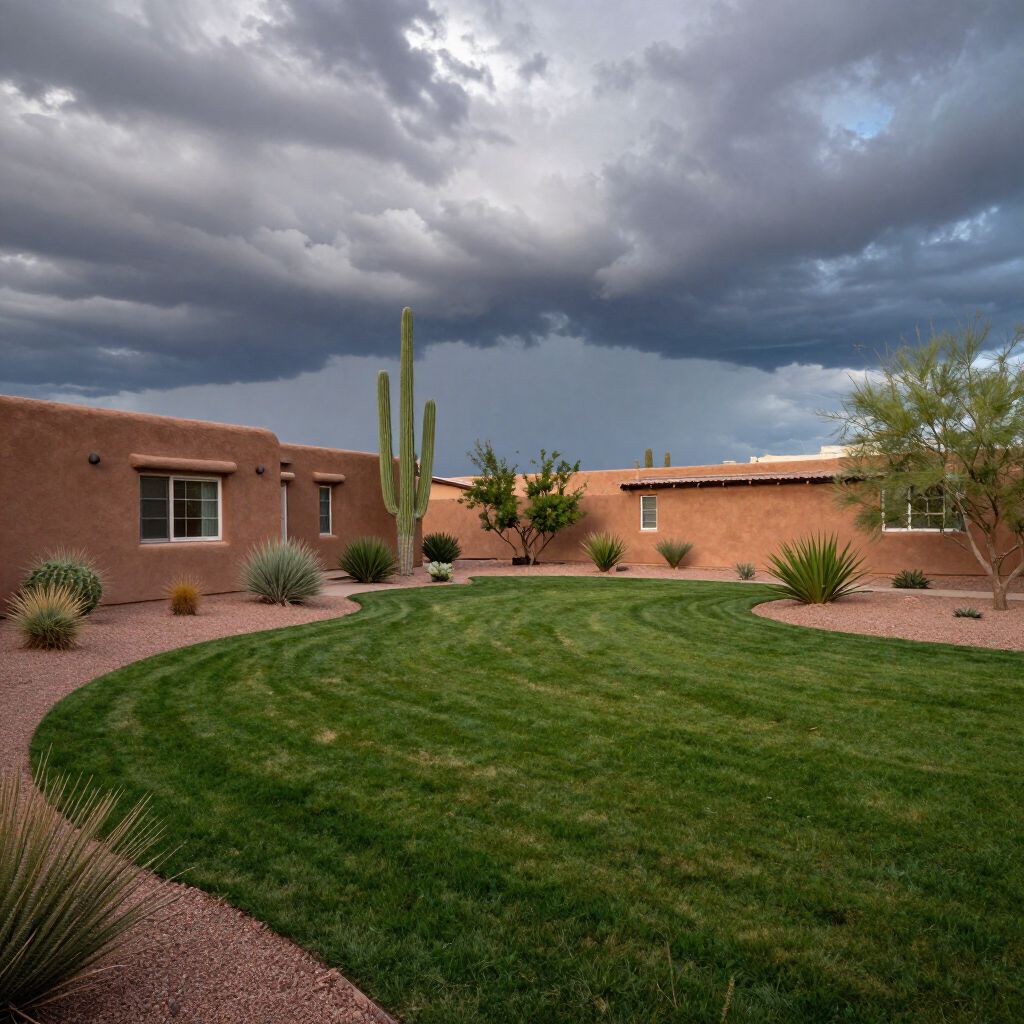
Monsoon-Ready Landscaping Systems in Arizona: How to Storm-Proof Your Yard Before the First Big Wind



Why Is My Water Bill So High in Arizona? How to Stop Landscape Water Waste Before Summer Costs Spike