

How often should I water winter grass in October in Arizona?
During germination, water 3 to 4 times per day in short cycles of roughly 5 to 10 minutes per zone, every day, until the seedlings emerge at 7 to 10 days. Then cut back to twice a day, then once a day with longer run times, and by weeks 3 to 5 move to every 3 to 5 days watering to a depth of 6 to 8 inches. Through winter, every 5 to 7 days is enough.
When is the best time to overseed a lawn in Phoenix?
University of Arizona Extension puts the Phoenix-area window at October 10 to November 10, and the conditions to seed by are daytime highs of 80 to 85°F with nighttime lows of about 55°F. Seeding earlier means the Bermuda is still vigorous and outcompetes the seedlings. Seeding later exposes young grass to cold that stalls germination.
How much ryegrass seed do I need per 1,000 square feet?
University of Arizona Extension gives 12 to 15 lbs of ryegrass seed per 1,000 square feet. Measure the lawn before buying, because a 2,000 square foot lawn needs 24 to 30 lbs. Going above the rate does not produce a thicker lawn, since crowded seedlings compete for the same water and thin out.
Should I scalp my Bermuda lawn before overseeding?
Not to bare soil. University of Arizona Extension advises against scalping Bermuda to ground level, because it cuts the crowns and damages the rhizomes the grass needs for spring transition. Instead, raise the mowing height 30 to 40% two weeks out, then bring it back to normal and lower it another 25 to 30% one to three days before seeding, removing all clippings.
How long does ryegrass take to germinate in Arizona?
Seedlings emerge in 7 to 10 days when the surface stays consistently moist and temperatures are in range. A green haze usually shows around day 7, unevenly at first, with shaded and low areas coming up before sunny high spots. If the surface dries out completely even once, germination drops sharply.
When should I first mow my new winter lawn?
Wait until the ryegrass reaches 2 3/4 to 3 inches, then cut with a rotary mower set at 2 1/4 to 2 3/4 inches or a reel mower at 1 to 1 1/2 inches. Sharpen the blade first, because a dull blade pulls young seedlings out of soft soil. Let the surface dry before mowing so the wheels do not rut the lawn.
When should I fertilize after overseeding?
Two weeks after the seedlings emerge, apply ammonium phosphate (16-20-0) at 5 lbs per 1,000 square feet, then feed monthly through winter at about 1/2 lb of nitrogen per 1,000 square feet. Do not fertilize before emergence, because fertilizer on bare soil feeds weeds and adds salt where new roots are establishing.
Do I need to stop fertilizing my Bermuda before I overseed?
Yes. University of Arizona Extension advises stopping nitrogen fertilization 30 days before overseeding. Nitrogen keeps the Bermuda growing vigorously at the point when you need it to slow down, so it competes with the ryegrass seedlings for light and water and gives you a thinner winter lawn.
How to Overseed Your Arizona Lawn in October: Step-by-Step Seeding and the Winter Grass Watering Schedule
October is the one month of the year when you can put a green winter lawn over dormant Bermuda in Buckeye, and the whole job comes down to a sequence.
Here is the sequence that works:
- Stop nitrogen on the Bermuda 30 days before you seed. Feeding it now makes it compete with the seedlings.
- Two weeks out, raise your mowing height 30 to 40% and cut irrigation by 30%. This slows the Bermuda down on purpose.
- One to three days out, bring the height back down and then take it 25 to 30% lower than normal. Bag every clipping. Do not scalp to bare dirt.
- Seed perennial ryegrass at 12 to 15 lbs per 1,000 square feet , in two passes at right angles, then drag or rake lightly so the seed touches soil.
- Water 3 to 4 times a day for the first 7 to 10 days , in short cycles, until the seedlings come up.
- Feed 2 weeks after emergence with ammonium phosphate (16-20-0) at 5 lbs per 1,000 square feet.
- First mow when the ryegrass hits 2 3/4 to 3 inches , then shift to deep watering every 5 to 7 days for winter.
Most failed overseeding jobs in the West Valley fail in the first two steps, not at seeding.
A lawn that is still being watered and fed in early October will not let ryegrass establish, no matter how much seed goes down.
And the most common piece of local advice, scalp it to the dirt, damages the Bermuda you are counting on next spring.
When the October Overseeding Window Actually Opens
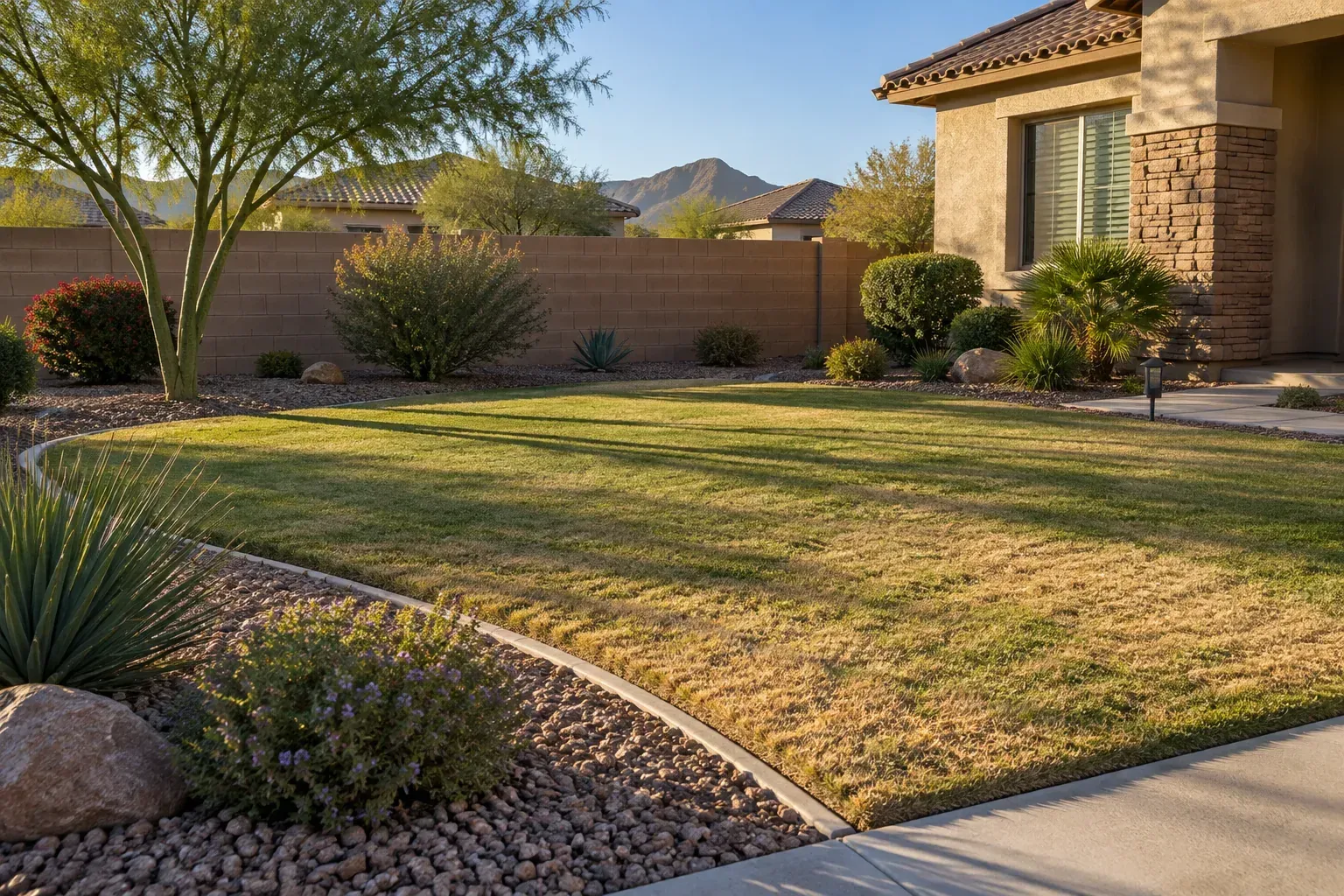
The window is set by temperature, not by the calendar page.
University of Arizona Extension gives two numbers to seed by:
- Daytime highs of 80 to 85°F
- Nighttime lows of about 55°F
Those conditions are warm enough for ryegrass to germinate fast and cool enough that the Bermuda has stopped fighting for the space.
For the Phoenix area, including Buckeye, Goodyear and Avondale, University of Arizona Extension puts the practical window at October 10 to November 10. Higher elevation Tucson runs earlier, roughly September 25 to October 5.
If you are reading this in the first week of October, you are early, and that is good
Early is the right place to be, because the two weeks before seeding are preparation weeks.
The first signal that the window is opening is Bermuda slowing down. It stalls once nighttime temperatures drop below 65°F, which usually happens in the first half of October in the low desert.
What going too early or too late costs you
- Too early: the Bermuda is still vigorous, outcompetes the seedlings, and you get thin, slow, patchy winter grass
- Too late: cold stalls germination, the seedlings go into winter undersized, and frost damages what did come up
If you have not yet decided whether to overseed at all, that trade-off is laid out in Late-Summer Lawn Recovery in Arizona (Blog 33), along with the September prep that leads into this guide.
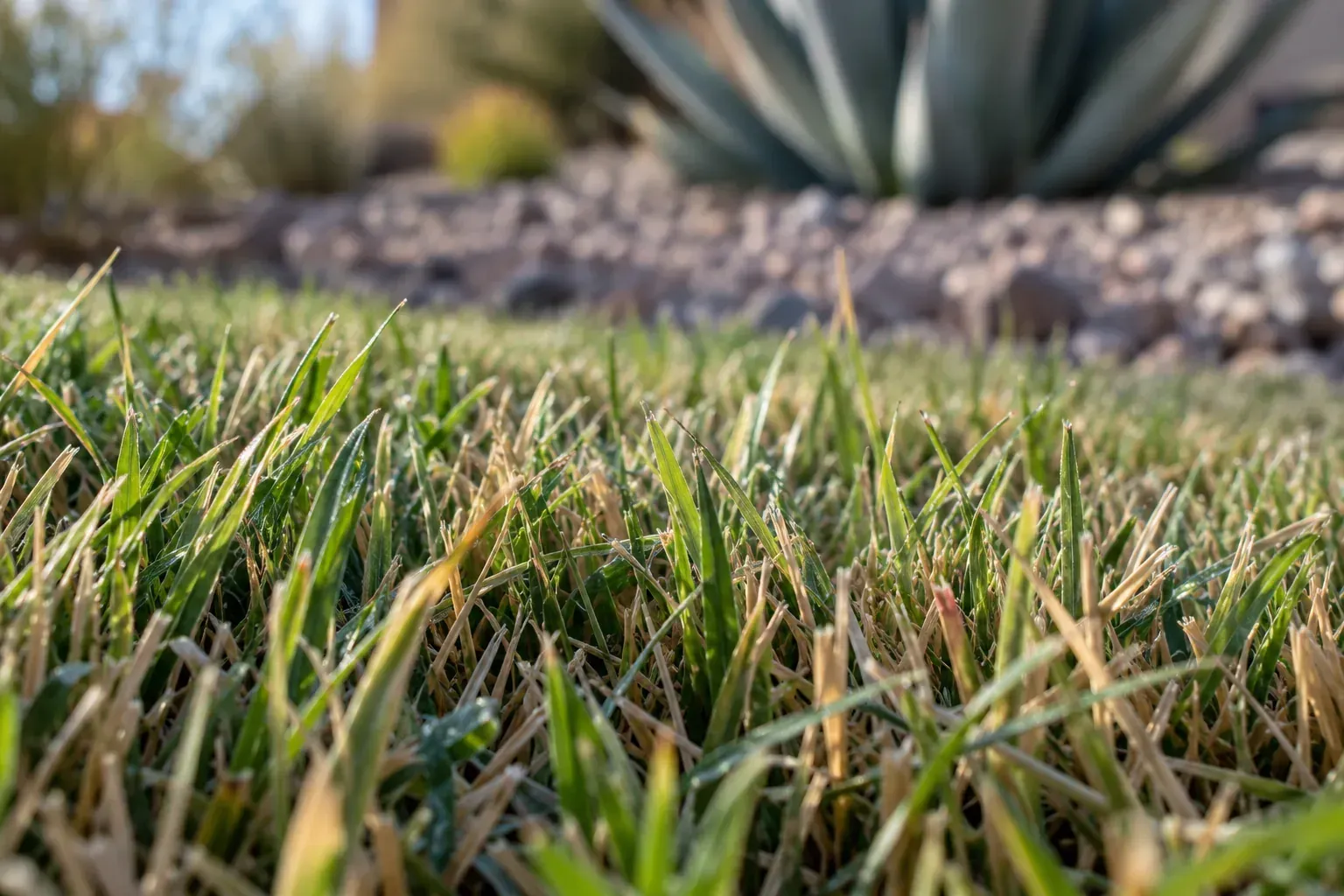
The Two Weeks Before You Seed
This is the part homeowners skip, and it decides the outcome.
The goal is simple: make the Bermuda slow and thin enough that ryegrass seed can reach soil and hold moisture.
30 days before seeding: stop the nitrogen
University of Arizona Extension is explicit about stopping nitrogen fertilization 30 days before overseeding.
Nitrogen in late September pushes Bermuda growth at exactly the wrong time. It also works against food storage, so the lawn comes back weaker in spring.
The full feeding calendar is in Fertilizing Your Arizona Lawn: When and How to Feed Your Grass (Blog 8), and the Buckeye-specific product and timing guidance is in When to Fertilize Lawn in Arizona (Blog 23).
14 days before seeding: raise the mower, cut the water
- Raise the mowing height 30 to 40% above your normal setting
- Reduce irrigation by 30%
Raising the height first sounds backwards when the plan is to cut the lawn down. It is deliberate. Taller growth now means the stems you remove in the final cut come off cleanly, and you take down leaf tissue instead of crowns.
1 to 3 days before seeding: the final cut
- Drop the mower back to your normal height, then lower it another 25 to 30%
- Bag and remove every clipping. Clippings left on the surface hold seed off the soil
- Light vertical mowing or light dethatching only if the turf is dense enough that seed cannot reach soil
- Stop watering entirely
Dry turf cuts down cleanly. Wet turf tears and smears.
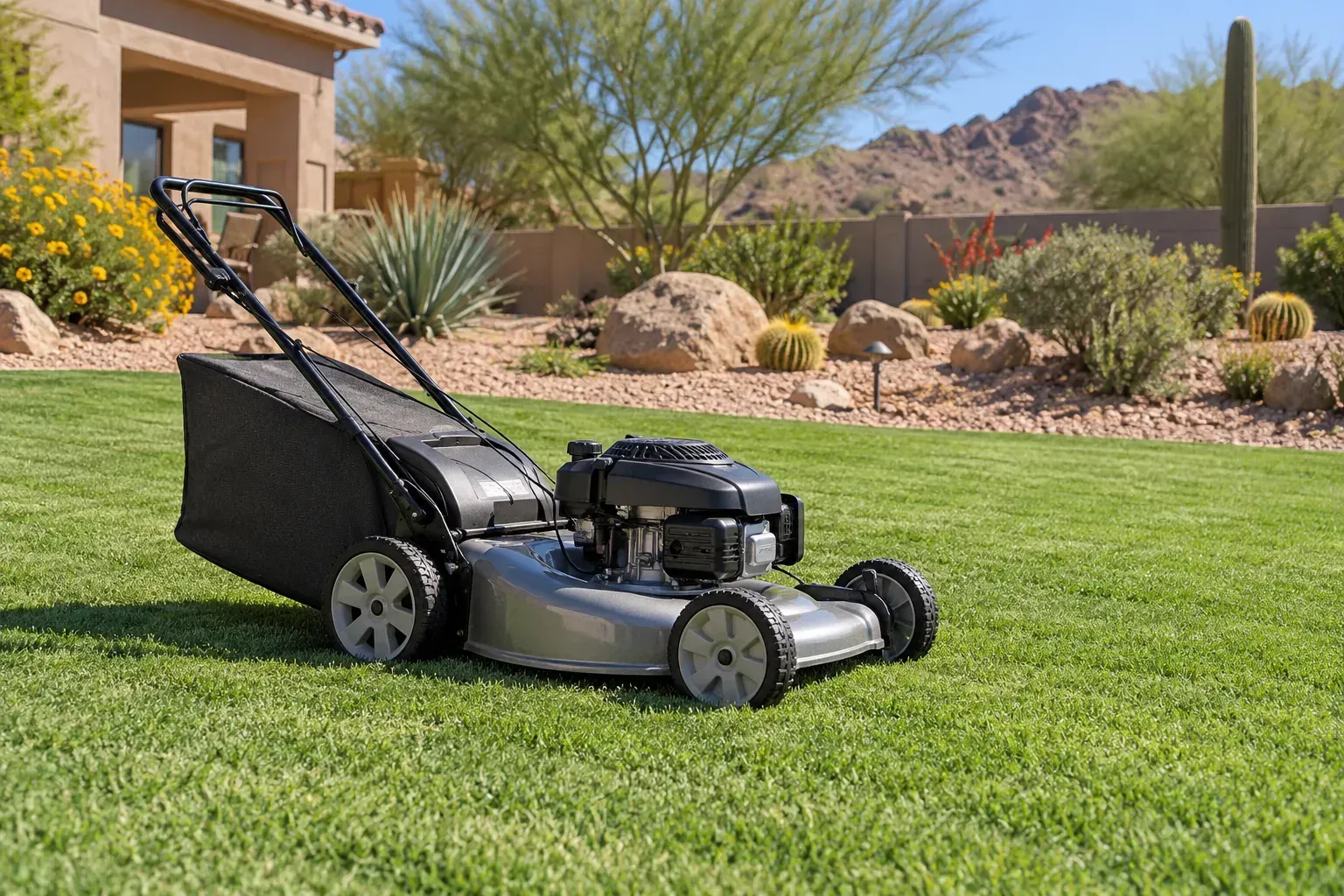
Why "Scalp It to the Dirt" Is the Most Expensive Advice in the Valley
Every October, somebody in a Buckeye neighborhood takes a mower down to its lowest setting and strips the lawn to bare soil.
University of Arizona Extension says plainly: do not scalp the Bermuda to ground level.
What a true scalp actually does
- It cuts the crowns. The crown is the growing point at soil level. Remove it and that plant does not come back
- It damages the rhizomes. Those underground stems are what push Bermuda back out in April and May. Aggressive dethatching and aerifying at this time of year tears them up
- It trades one winter for one summer. You may get a green winter lawn and a thin, slow Bermuda lawn next June
- It does not improve germination. Seed needs soil contact, and a staged height reduction with clippings removed already gives it that
What to do instead
Use the staged reduction above. Raise the height, then lower it in two steps, remove the clippings, and if you can see soil between the stems when you part the turf with your fingers, the seed can get there.
That is the test. Not how short the lawn looks from the sidewalk.
The related myth: more seed makes a thicker lawn
It does not. Above the recommended rate, seedlings crowd each other, compete for the same water, and thin out anyway.
Seed-to-soil contact decides germination. Seed that lands on thatch or on loose clippings dries out in a single afternoon and never germinates, however much of it you spread.
Seeding Day: Rate, Spreading and Soil Contact
The rate
University of Arizona Extension gives 12 to 15 lbs of ryegrass seed per 1,000 square feet. Perennial ryegrass is the standard choice for Arizona lawns. It handles alkaline soil, takes traffic, and transitions out cleanly in late spring.
Measure your lawn before you buy. A 2,000 square foot front lawn needs 24 to 30 lbs, and guessing is how people end up spreading half the lawn at double rate and the other half at nothing.
Spreading it evenly
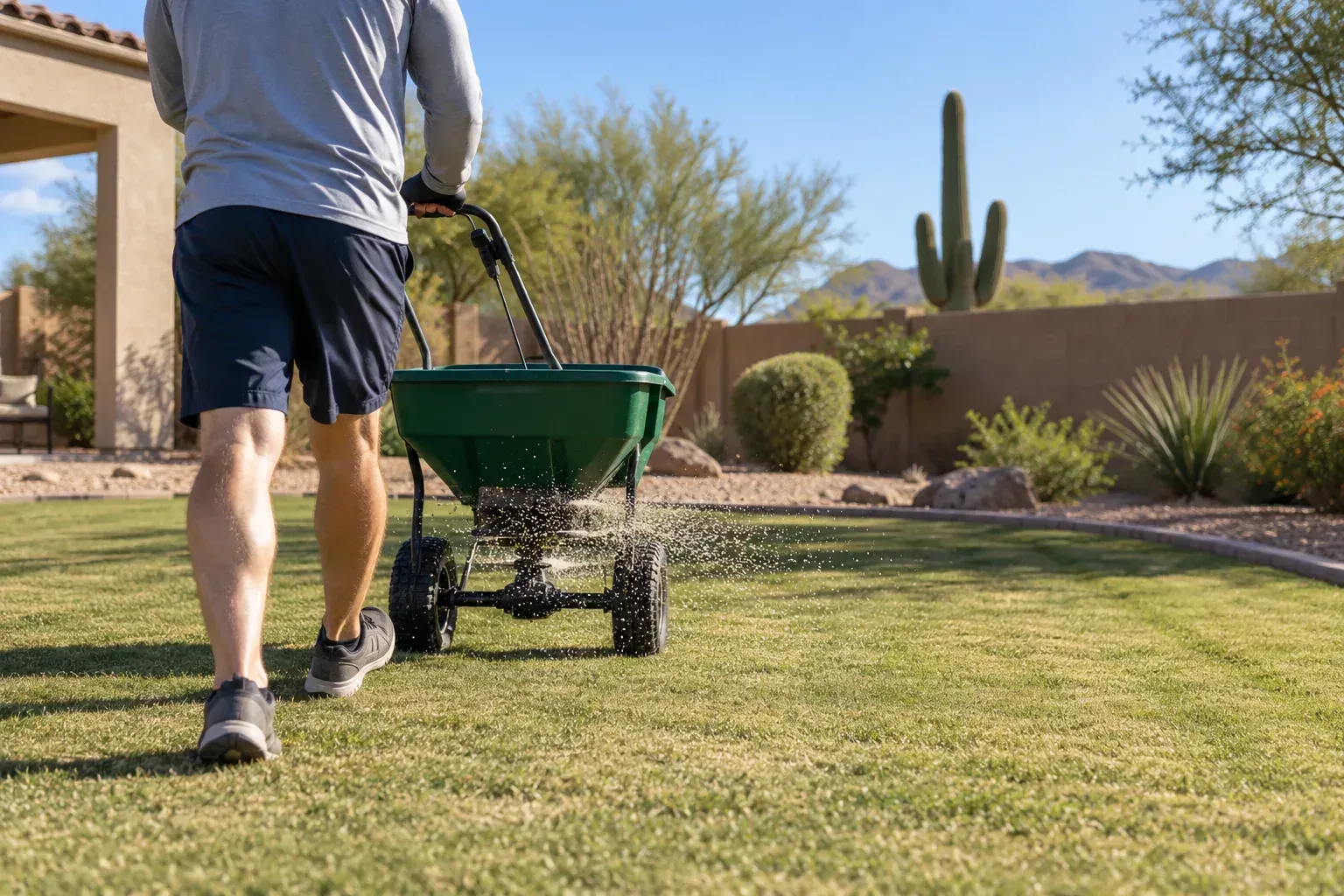
- Split the total into two halves. Spread the first half walking north to south, the second half walking east to west
- Use a broadcast spreader on a low setting rather than a wide one. Two slow passes beat one fast pass
- Overlap your wheel tracks slightly so you do not leave stripes
- Do not seed in wind. Ryegrass seed is light and the gaps show up three weeks later
Getting the seed into contact with soil
- Drag a stiff broom, a leaf rake turned upside down, or a drag mat lightly across the lawn after spreading
- Topdress thin or bare areas with a quarter inch of screened compost or topdressing sand, no deeper
- Do not bury the seed. Ryegrass seeded deeper than about a quarter inch germinates poorly
- Walk the perimeter and the sprinkler shadows and hand-seed what the spreader missed
The October Winter Grass Watering Schedule, Week by Week
This is the part that determines whether you get a lawn or a bill.
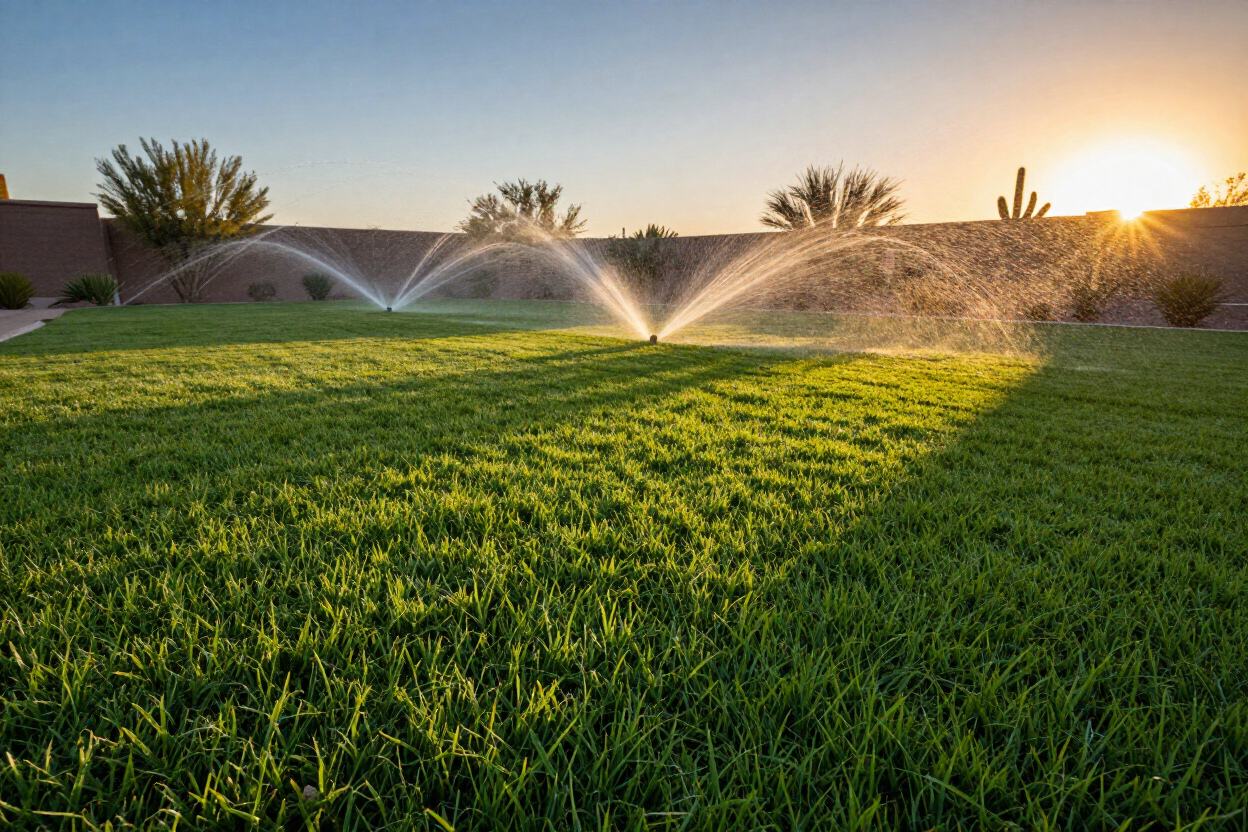
Overseeding is the one time of year when frequent, shallow watering is correct. Seed has no roots. It can only use water in the top quarter inch of soil, and that layer dries out in under an hour on a sunny October afternoon in Buckeye.
Days 1 to 10: germination
- Water 3 to 4 times per day, every day, until the seedlings emerge. University of Arizona Extension puts emergence at 7 to 10 days
- Keep each cycle short, long enough to wet the surface and no longer. On most residential systems that is roughly 5 to 10 minutes per zone
- Spread the cycles across the day, for example early morning, late morning, early afternoon and late afternoon
- The target is damp, never puddled. Water that runs off carries seed into the gutter and leaves bare stripes
- Do not let the surface dry out once. A seed that swells and then dries is dead, and it will not germinate later
This is the exception to the 4 AM to 7 AM rule. Daytime cycles are necessary during germination, because the point is surface moisture, not deep soaking. Go back to pre-dawn watering once the grass is up.
Days 10 to 21: back off gradually
- Drop to twice a day once most of the lawn shows green seedlings
- Then once a day, with a longer run time each cycle
- You are training roots downward. Every reduction in frequency paired with a longer run pulls the roots deeper
Weeks 3 to 5: establishment, late October into November
- Move to every 2 to 3 days, then settle into the fall interval of every 3 to 5 days
- Water to a depth of 6 to 8 inches, the same depth target as any Arizona lawn
- Check the depth with a screwdriver or a soil probe an hour after a cycle. If it stops at 3 inches, your run time is too short
- Return to the 4 AM to 7 AM window
November through May: the winter lawn
- Every 5 to 7 days is the winter interval for Arizona lawns
- Roughly 1/2 to 1 1/2 inches of water per week is what University of Arizona Extension gives for an overseeded winter lawn between November and May
- Skip a cycle after real rain. Winter rain penetrates and lasts, unlike summer storms
- Do not water on a frost night. Water the morning after instead
A winter lawn uses far less water than the same lawn in July. The expensive part is the 10 days of germination, and it is short.
If the water bill is what you are weighing, Why Is My Water Bill So High in Arizona? breaks down where landscape water actually goes, and the year-round rhythm this schedule fits into is in Seasonal Watering Guide: How to Keep Your Arizona Lawn Green Year-Round.
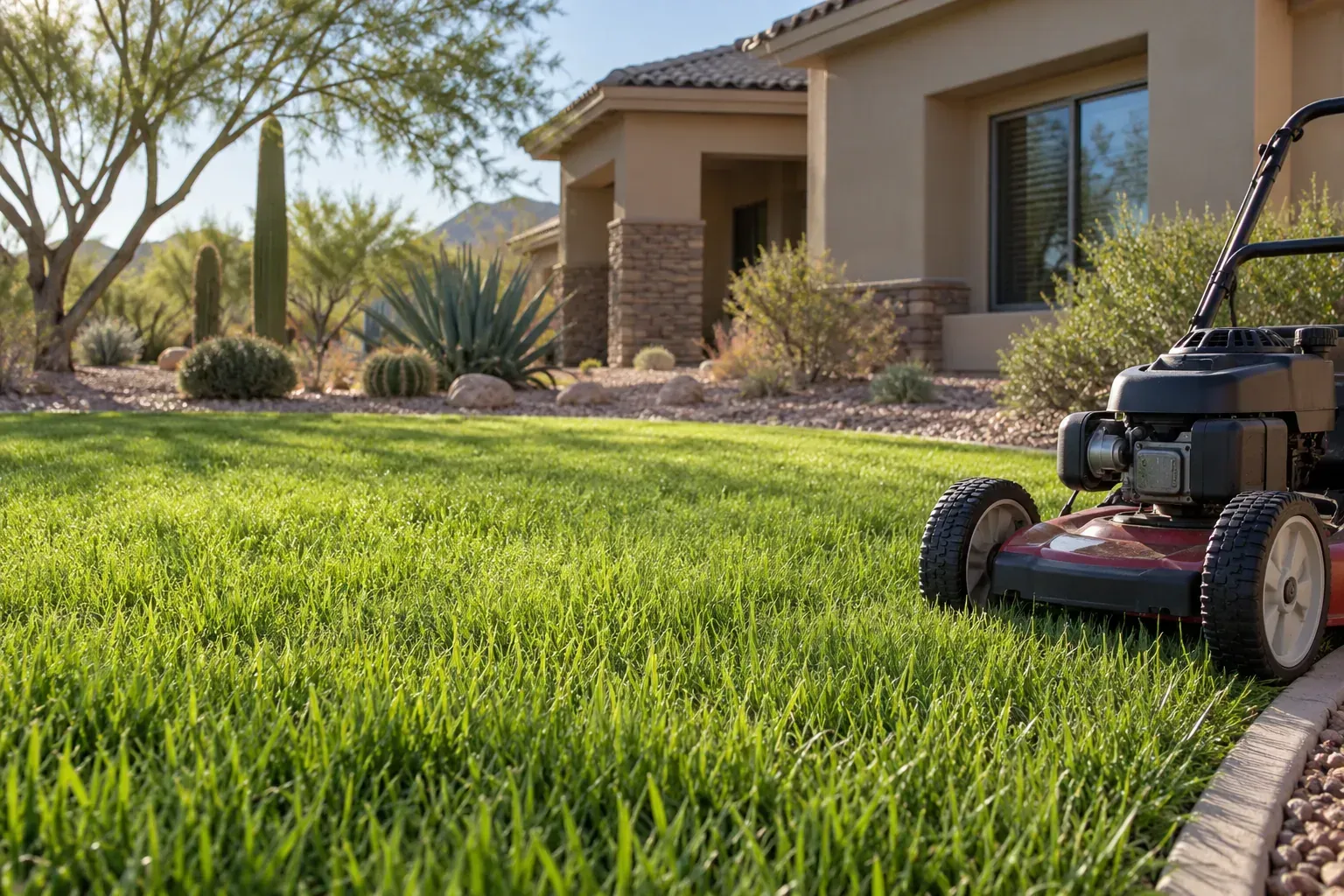
First Mow and First Feeding
The first mow
- Wait until the ryegrass reaches 2 3/4 to 3 inches. That is University of Arizona Extension guidance, and it is taller than most people wait
- Set a rotary mower at 2 1/4 to 2 3/4 inches, or a reel mower at 1 to 1 1/2 inches
- Sharpen the blade first. A dull blade pulls young seedlings out of soft soil instead of cutting them
- Let the surface dry before you mow so the wheels do not rut the lawn
- Never take more than a third of the blade in one pass
Mowing too early is one of the most common ways to thin a new winter lawn. The seedlings are anchored in the top inch of soil for the first two weeks.
The first feeding
- Two weeks after the seedlings emerge, apply ammonium phosphate (16-20-0) at 5 lbs per 1,000 square feet
- Phosphate matters more than nitrogen at this stage, because you are building roots, not top growth
- Then feed monthly through winter at about 1/2 lb of nitrogen per 1,000 square feet
- Water the fertilizer in on the same day
Do not feed before the seedlings are up. Fertilizer on bare soil feeds weeds and adds salt where tender roots are trying to establish. The symptoms of getting this wrong are in Signs of Over Fertilizing Lawn in Arizona.
Week by Week: What to Expect
Realistic expectations stop people from panicking and over-correcting.
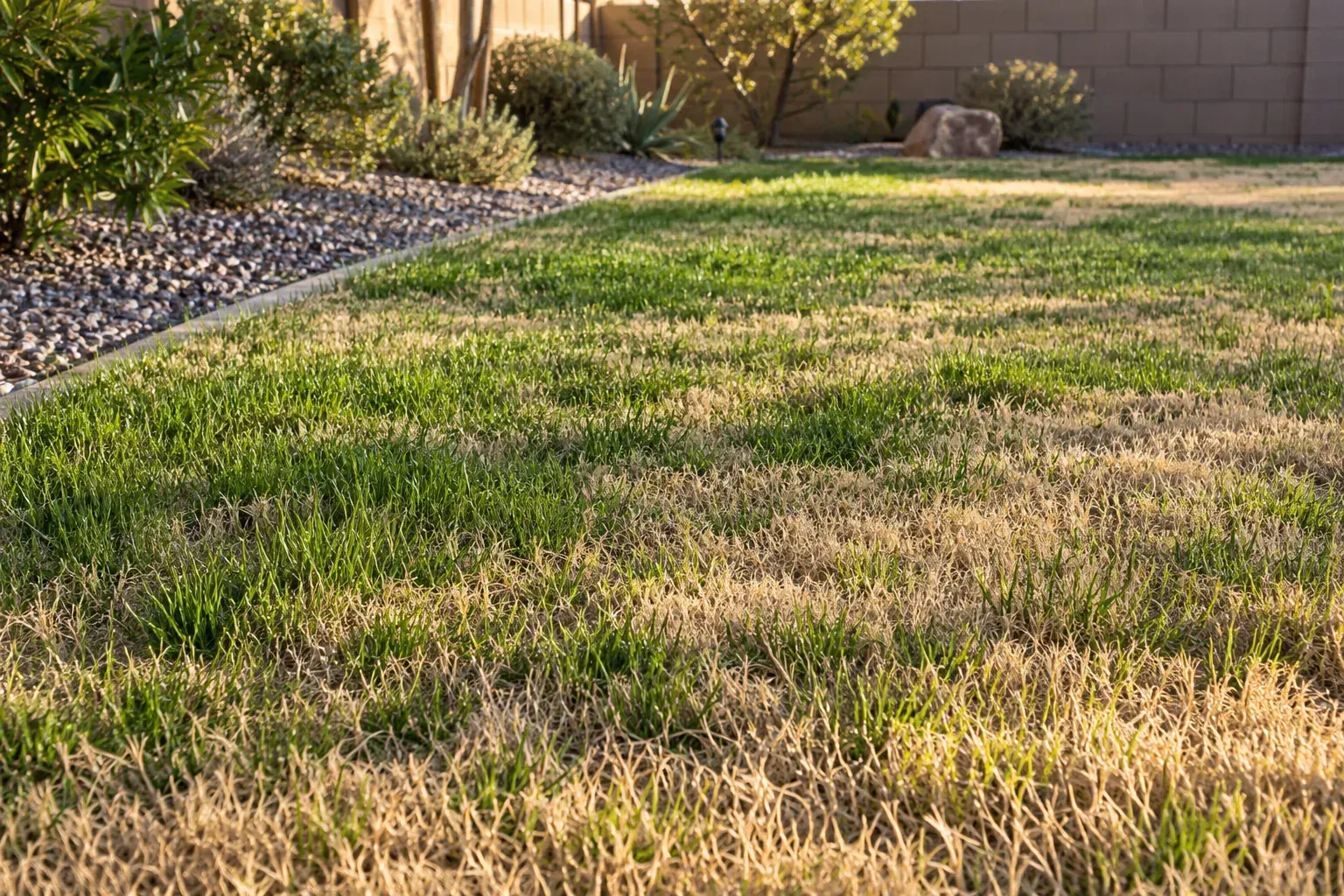
Days 1 to 6
Nothing visible. The lawn looks like cut-down Bermuda with seed on it. This is normal and it is the hardest week to hold the schedule.
Days 7 to 10
A green haze appears, usually unevenly. Low spots and shaded areas come up first because they stay moist longer.
Days 10 to 21
Seedlings thicken and start to look like grass. Bare patches become obvious now. You can hand-seed and hand-water small gaps through about day 14 and still get them to catch up.
Weeks 3 to 5
First mow, first feeding, and the Bermuda underneath starts going tan. The lawn looks two-toned for a couple of weeks. That is the transition, not a problem.
Weeks 6 to 8
Full green cover if the schedule held. The winter lawn is established and the watering interval stretches out.
Planning for Spring Before You Even Seed
The overseeding job is not finished until the Bermuda comes back, and that is a spring decision you can set up now.
- Bermuda restarts when nighttime temperatures stay above 60°F for seven consecutive nights, usually April into May
- Lower the mowing height by about 35% at that point to stress the ryegrass and let light reach the Bermuda
- Feed about 1/4 lb of nitrogen per 1,000 square feet weekly to push the Bermuda through
- Verticut once the Bermuda reaches about 80% coverage, not before
- May and June heat finishes the ryegrass off on its own
The winter maintenance in between is covered in Winter Lawn Care in Arizona: Expert Tips to Keep Grass Healthy Through Cold Months (Blog 14).
And if the whole annual cycle of scalping, seeding and transitioning is starting to feel like more work than the lawn is worth, 6 Best Grass Alternatives for No-Mow Lawns in Arizona covers the options that remove the question, while Best Grass for Arizona Lawns (Blog 2) compares turf choices by sun, water and traffic.
When to Call a Professional
Overseeding has a narrow window and one chance per year. That is what makes it worth getting right the first time.
Bring in a professional when:
- You do not have a mower that goes low enough for the final cut, or no way to bag clippings
- The lawn is large enough that hand-watering gaps during germination is not realistic
- Your irrigation has coverage gaps, and germination will expose every one of them
- You tried overseeding last year and it came up thin or patchy
- You manage an HOA or a commercial property where winter appearance is contractual
- You are not sure whether the Bermuda underneath is healthy enough to carry a winter lawn
- The window is closing and you need the scalp, seed and irrigation programming done in one visit
A sprinkler zone that under-waters by 20% is invisible on an established lawn. During a 10 day germination window it produces a bare stripe you look at until April. The irrigation method behind that is in Smart Irrigation Principles for Arizona Summers.
If your Buckeye lawn is heading into its overseeding window and you are not sure whether to seed it, cut it down, or leave the Bermuda dormant, schedule a professional overseeding assessment before the first week of November. Seed that goes down after the window closes germinates poorly, and a thin winter lawn cannot be fixed until the Bermuda wakes up in spring.
Why Doing It in the Right Order Pays Off
Homeowners who run the full sequence instead of just throwing seed consistently get:
- Even green cover in 6 to 8 weeks instead of patchy stripes all winter
- A lower water bill, because the expensive frequent watering lasts 10 days and not all season
- Bermuda that returns strong in April, because the crowns and rhizomes were never cut
- Fewer winter weeds, because dense ryegrass crowds them out
- No wasted seed, because germination rates are high when seed touches soil
- A lawn that is usable through the cool months, which is the whole reason to overseed
Overseeding is not a hard job. It is a job with an order.
Get the two weeks before seeding right and the 10 days after it right, and the rest of the winter mostly takes care of itself.
Get them wrong and no amount of seed, water or fertilizer fixes it until spring.

FAQ: Overseeding and the October Winter Grass Watering Schedule
How often should I water winter grass in October in Arizona?
During germination, water 3 to 4 times per day in short cycles of roughly 5 to 10 minutes per zone, every day, until the seedlings emerge at 7 to 10 days. Then cut back to twice a day, then once a day with longer run times, and by weeks 3 to 5 move to every 3 to 5 days watering to a depth of 6 to 8 inches. Through winter, every 5 to 7 days is enough.
When is the best time to overseed a lawn in Phoenix?
University of Arizona Extension puts the Phoenix-area window at October 10 to November 10, and the conditions to seed by are daytime highs of 80 to 85°F with nighttime lows of about 55°F. Seeding earlier means the Bermuda is still vigorous and outcompetes the seedlings. Seeding later exposes young grass to cold that stalls germination.
How much ryegrass seed do I need per 1,000 square feet?
University of Arizona Extension gives 12 to 15 lbs of ryegrass seed per 1,000 square feet. Measure the lawn before buying, because a 2,000 square foot lawn needs 24 to 30 lbs. Going above the rate does not produce a thicker lawn, since crowded seedlings compete for the same water and thin out.
Should I scalp my Bermuda lawn before overseeding?
Not to bare soil. University of Arizona Extension advises against scalping Bermuda to ground level, because it cuts the crowns and damages the rhizomes the grass needs for spring transition. Instead, raise the mowing height 30 to 40% two weeks out, then bring it back to normal and lower it another 25 to 30% one to three days before seeding, removing all clippings.
How long does ryegrass take to germinate in Arizona?
Seedlings emerge in 7 to 10 days when the surface stays consistently moist and temperatures are in range. A green haze usually shows around day 7, unevenly at first, with shaded and low areas coming up before sunny high spots. If the surface dries out completely even once, germination drops sharply.
When should I first mow my new winter lawn?
Wait until the ryegrass reaches 2 3/4 to 3 inches, then cut with a rotary mower set at 2 1/4 to 2 3/4 inches or a reel mower at 1 to 1 1/2 inches. Sharpen the blade first, because a dull blade pulls young seedlings out of soft soil. Let the surface dry before mowing so the wheels do not rut the lawn.
When should I fertilize after overseeding?
Two weeks after the seedlings emerge, apply ammonium phosphate (16-20-0) at 5 lbs per 1,000 square feet, then feed monthly through winter at about 1/2 lb of nitrogen per 1,000 square feet. Do not fertilize before emergence, because fertilizer on bare soil feeds weeds and adds salt where new roots are establishing.
Do I need to stop fertilizing my Bermuda before I overseed?
Yes. University of Arizona Extension advises stopping nitrogen fertilization 30 days before overseeding. Nitrogen keeps the Bermuda growing vigorously at the point when you need it to slow down, so it competes with the ryegrass seedlings for light and water and gives you a thinner winter lawn.


Monsoon-Ready Landscaping Systems in Arizona: How to Storm-Proof Your Yard Before the First Big Wind



Why Is My Water Bill So High in Arizona? How to Stop Landscape Water Waste Before Summer Costs Spike