

Late-Summer Lawn Recovery in Arizona: The September Watering Schedule and How to Prep for October Overseeding
Happy Clean Lawnscapes • September 1, 2026
A white background with a few lines on it

What is the winter grass watering schedule for Phoenix in October?

If you are overseeding, taper watering through mid-to-late September, then stop entirely about one week before scalping in early October. After seeding, switch to light watering three to four times daily for five to ten minutes until the ryegrass germinates in roughly five to seven days, then gradually reduce frequency and increase depth.

When should I overseed my lawn in Arizona?

The first two weeks of October are the optimal window in the Phoenix and Buckeye area, once nighttime temperatures consistently stay below 65°F. Overseeding earlier means Bermuda outcompetes the seedlings; overseeding in late October or November exposes young grass to cold that stalls germination.

Should I fertilize my Arizona lawn in September?

Generally no. University of Arizona Extension guidance advises against heavily fertilizing Bermuda after August 31, because nitrogen at that point pushes growth instead of the food storage the grass needs for winter. Late feeding produces a weaker spring return and makes Bermuda compete harder against new ryegrass.

When should I stop watering my Bermuda before overseeding?

Begin tapering in mid-September, cutting your schedule roughly in half. Reduce further through late September, and stop watering entirely about one week before you scalp. Bermuda needs three to four weeks of reduced water to slow down enough for successful overseeding.

Is my brown lawn dead or just going dormant?

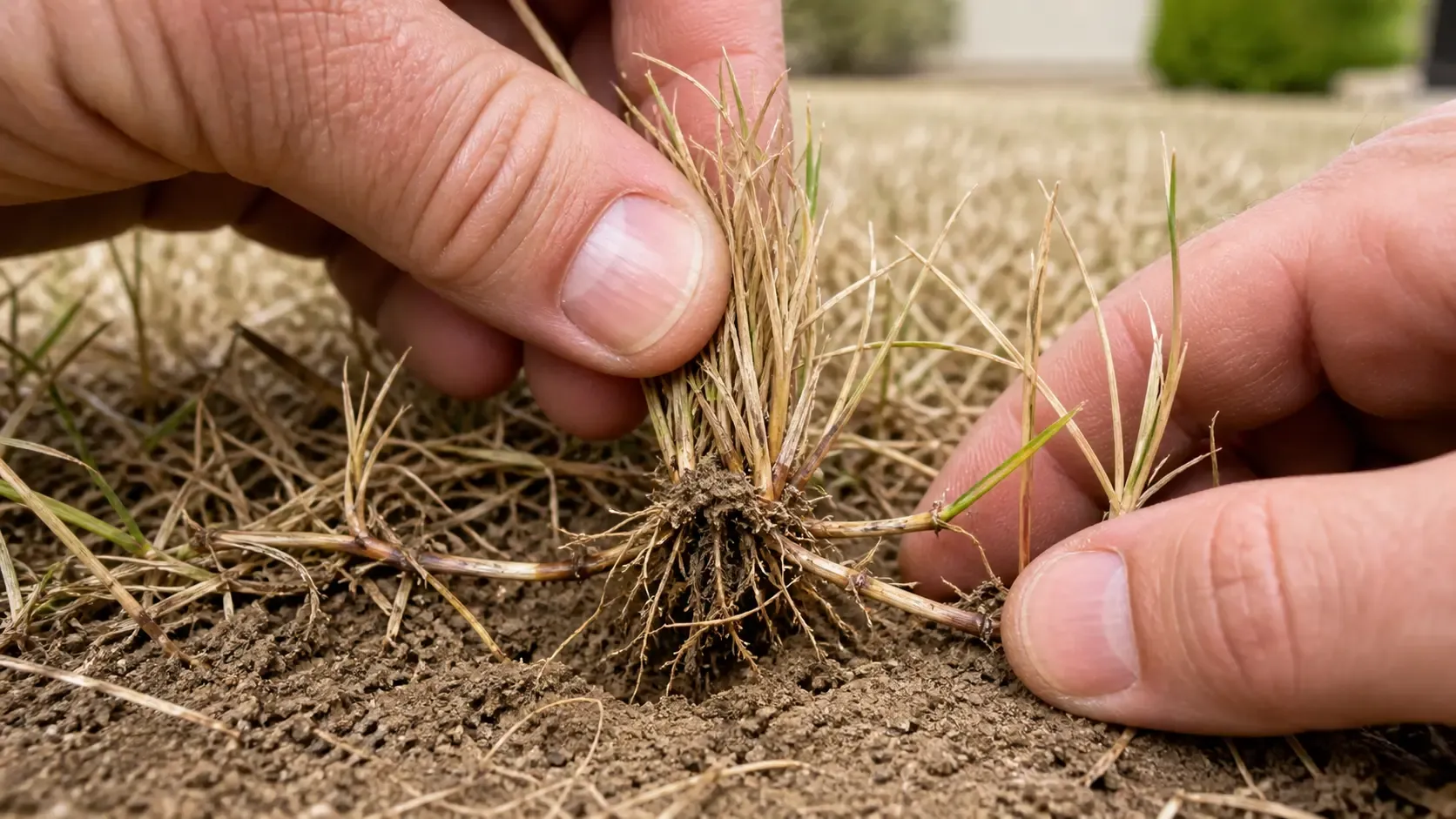
Tug a handful of grass. If it resists, the roots are alive and the grass is stressed or entering dormancy. If it lifts easily like loose carpet, that section is dead. You can also scratch a runner at soil level, green or white tissue inside means it is alive.

Do I have to overseed my lawn in Arizona?

No. Bermuda goes dormant and turns tan through winter, but it is alive and returns in spring. Overseeding is purely for winter color and usability. Skipping it saves a significant amount of water and work, and many Arizona homeowners choose to let their lawns go dormant.

Can I still repair bare spots in September?

Yes, and September is your last good window. Soil is still warm enough that plugs establish in roughly two to three weeks and Bermuda runners still spread. Once the grass goes dormant, repair stalls until spring green-up.

What happens if I miss the October overseeding window?

Your Bermuda will go dormant and stay tan until spring. That is not harmful to the lawn. Seeding too late in the season generally produces poor germination and weak grass, so waiting until next fall is usually the better choice than forcing a late seeding.

If you are overseeding, taper watering through mid-to-late September, then stop entirely about one week before scalping in early October. After seeding, switch to light watering three to four times daily for five to ten minutes until the ryegrass germinates in roughly five to seven days, then gradually reduce frequency and increase depth.

The first two weeks of October are the optimal window in the Phoenix and Buckeye area, once nighttime temperatures consistently stay below 65 degrees F. Overseeding earlier means Bermuda outcompetes the seedlings; overseeding in late October or November exposes young grass to cold that stalls germination. See our tree services for related fall yard prep.

Generally no. University of Arizona Extension guidance advises against heavily fertilizing Bermuda after August 31, because nitrogen at that point pushes growth instead of the food storage the grass needs for winter. Late feeding produces a weaker spring return and makes Bermuda compete harder against new ryegrass.

Begin tapering in mid-September, cutting your schedule roughly in half. Reduce further through late September, and stop watering entirely about one week before you scalp. Bermuda needs three to four weeks of reduced water to slow down enough for successful overseeding. For a full setup, see our drip irrigation system page.

Tug a handful of grass. If it resists, the roots are alive and the grass is stressed or entering dormancy. If it lifts easily like loose carpet, that section is dead. You can also scratch a runner at soil level, green or white tissue inside means it is alive.

No. Bermuda goes dormant and turns tan through winter, but it is alive and returns in spring. Overseeding is purely for winter color and usability. Skipping it saves a significant amount of water and work, and many Arizona homeowners choose to let their lawns go dormant.

Yes, and September is your last good window. Soil is still warm enough that plugs establish in roughly two to three weeks and Bermuda runners still spread. Once the grass goes dormant, repair stalls until spring green-up. If damage is extensive, our landscape maintenance team can help.

Your Bermuda will go dormant and stay tan until spring. That is not harmful to the lawn. Seeding too late in the season generally produces poor germination and weak grass, so waiting until next fall is usually the better choice than forcing a late seeding. Check our blog for more seasonal lawn care tips.
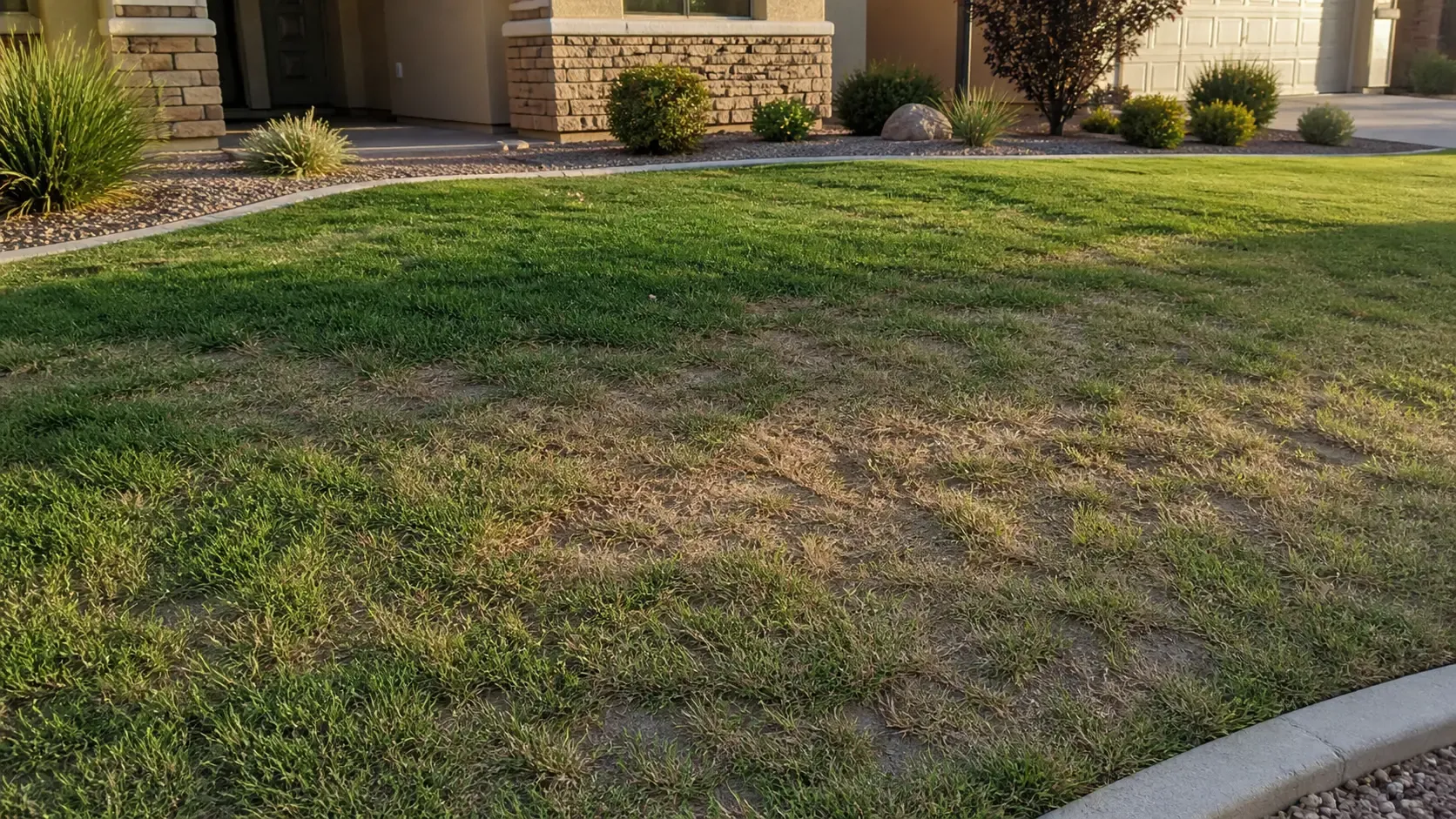
September is the most important month of the year for an Arizona lawn, and almost nobody treats it that way.

Here is why it matters so much:

  • Bermuda has one last growth window before it slows down and goes dormant
  • Damage you don't repair now stays visible until March , because dormant grass cannot heal
  • Fertilizer decisions made this month determine whether your lawn survives winter and returns strong
  • Your September watering schedule decides whether October overseeding succeeds or fails
  • Nighttime temperatures drop below 65°F in October , which is the overseeding window and it is short

The mistake most Buckeye homeowners make is treating September like an extension of summer.

It is not. It is the transition month, and the decisions made in the next four weeks lock in how your lawn looks from November through next spring.

If your grass took damage during the heat waves and monsoon storms this summer, you have roughly three to four weeks to fix it before the window closes.

Why September Is a Deadline, Not a Suggestion

Warm-season grass in Arizona follows a predictable calendar, and September sits right at the hinge point.

Here is what is happening in your lawn right now:

  • Day length is shortening , which signals Bermuda to slow growth
  • Nighttime temperatures are beginning to fall , and Bermuda growth stalls once nights drop below 65°F
  • The grass is shifting from growth to food storage , building reserves for dormancy
  • Root systems are recovering from months of heat stress
  • Any damage still present is about to become permanent for the season

That last point is the one homeowners underestimate.

Dormant grass does not repair itself. A bare patch in October is a bare patch in February. The repair either happens now while the grass is still actively growing, or it waits until spring green-up.

University of Arizona Extension guidance is specific on the fertilizer side: Bermuda should not be heavily fertilized after August 31, because nitrogen at that point pushes growth instead of food storage, and a lawn that stores less food comes back weaker in spring.

So the calendar is genuinely tight. You have September.

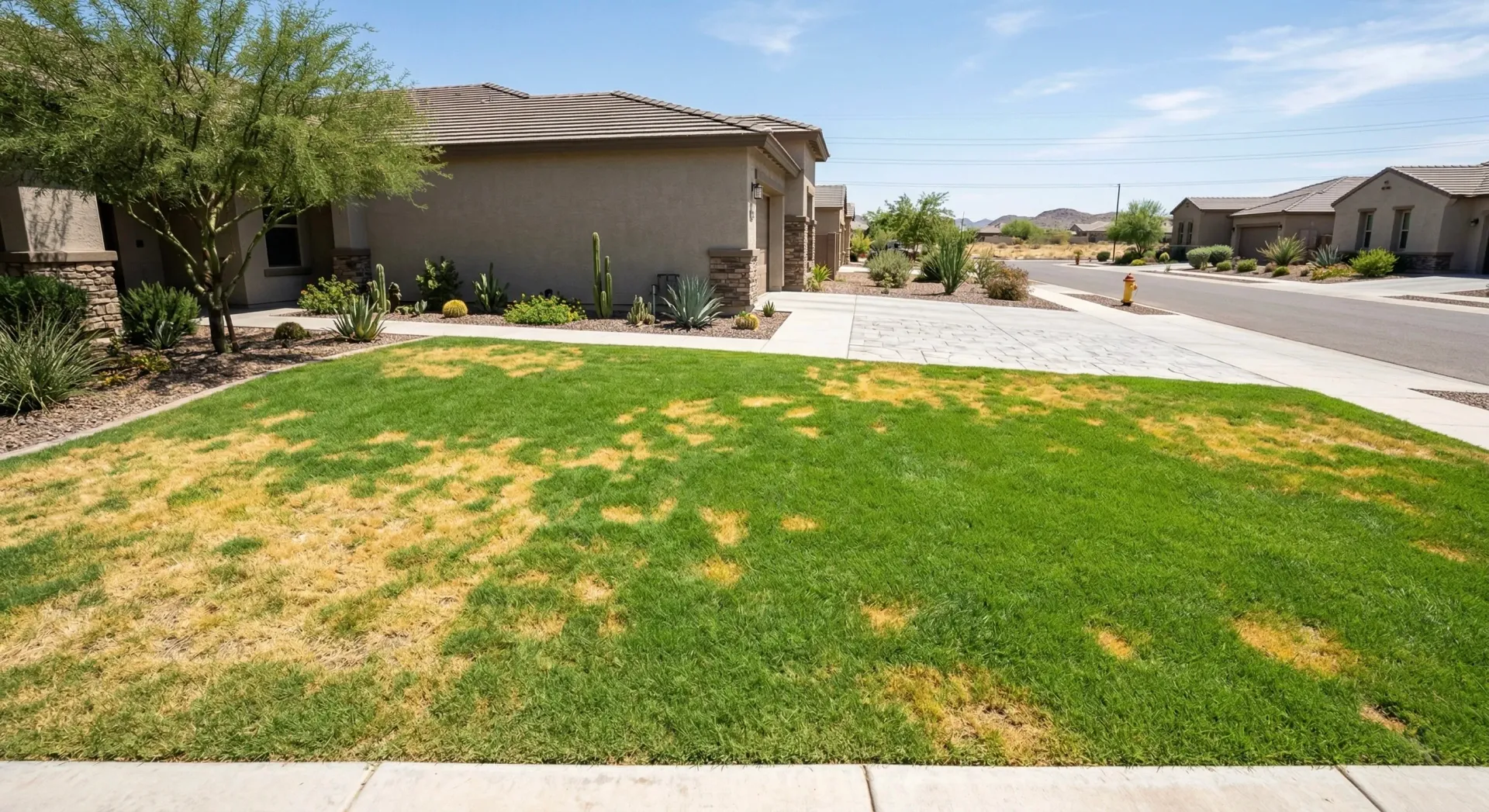
Front yard lawn with dry, patchy grass beside a house and sidewalk

Step 1: Assess What Actually Survived the Summer

Before you water, feed, or repair anything, find out what you are working with.

Arizona summers leave four different kinds of damage, and they need different responses.

Heat-stressed but alive

Uniform browning or thinning across sun-exposed areas, with roots still holding.

Test it:grip a handful of brown grass and pull. If it resists, the roots are intact and the grass is dormant or stressed, not dead. Scratch a runner at soil level, green or white tissue inside means it is alive.

Genuinely dead patches

Grass that lifts easily like loose carpet. These need repair, not patience.

Irrigation-failure zones

Sharply bounded patches matching sprinkler arcs or zone coverage. The turf failed because water never reached it.

Storm and traffic damage

Compaction from monsoon cleanup, ruts, debris scarring, or areas flooded during heavy rain.

Walk the whole lawn and mark each type separately.Most yards have at least two, and treating them all the same is why September repair attempts often fail.

If large sections came back dead, the diagnostic and repair sequence is covered in our guide to emergency fixes for burned lawns in Arizona. If the damage traces back to heat exposure specifically, the symptom checklist is covered in our guide to heat stress signs in Arizona lawns and plants.

Hands planting a small dry seedling in soil in a garden bed

Step 2: The September Watering Schedule

This is the part that determines everything downstream, and it is where most Arizona homeowners get it wrong in both directions.

The September schedule is not one schedule. It changes depending on what you are doing in October.

If you plan to overseed in October

Your Bermuda needs to dry down and slow before it can be scalped and seeded. That takes three to four weeks, which means the taper starts in mid-September.

Weeks 1-2 of September (roughly Sept 1-14)
Continue deep, early-morning watering. Bermuda is still actively growing and this is your last repair window. Water deeply, reaching 6 to 8 inches, three to four times per week between 4 AM and 7 AM.

Week 3 of September (roughly Sept 15-21)
Begin the taper. Cut your watering roughly in half. This starts pushing Bermuda toward dormancy and reduces its ability to compete with new ryegrass seedlings.

Week 4 of September (roughly Sept 22-30)
Reduce further. The lawn should be visibly slowing and drying, not lush.

Final week before scalping (roughly Oct 1-7)
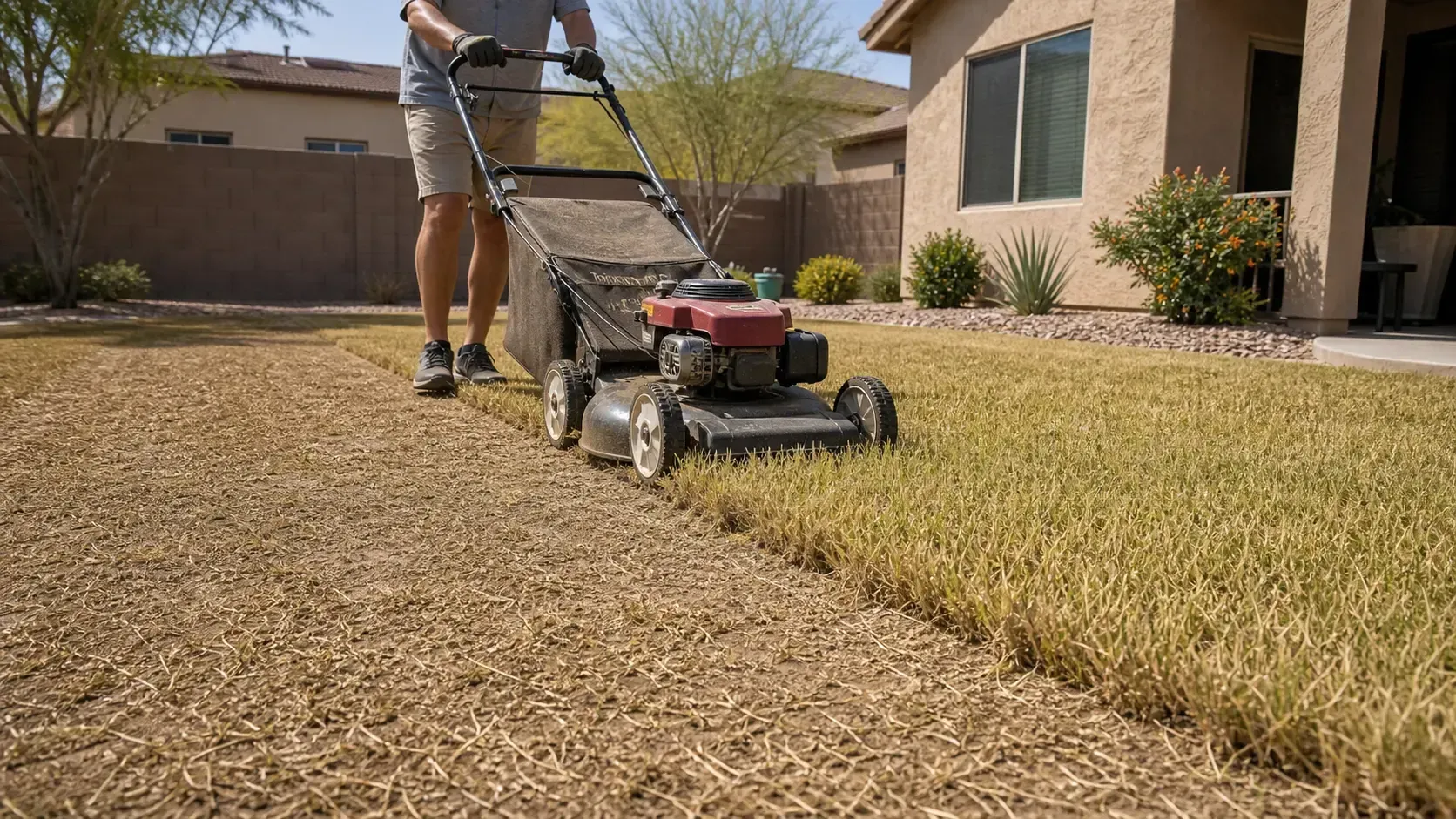
Stop watering entirely about one week before you scalp. The lawn needs to be dry enough to cut down cleanly.

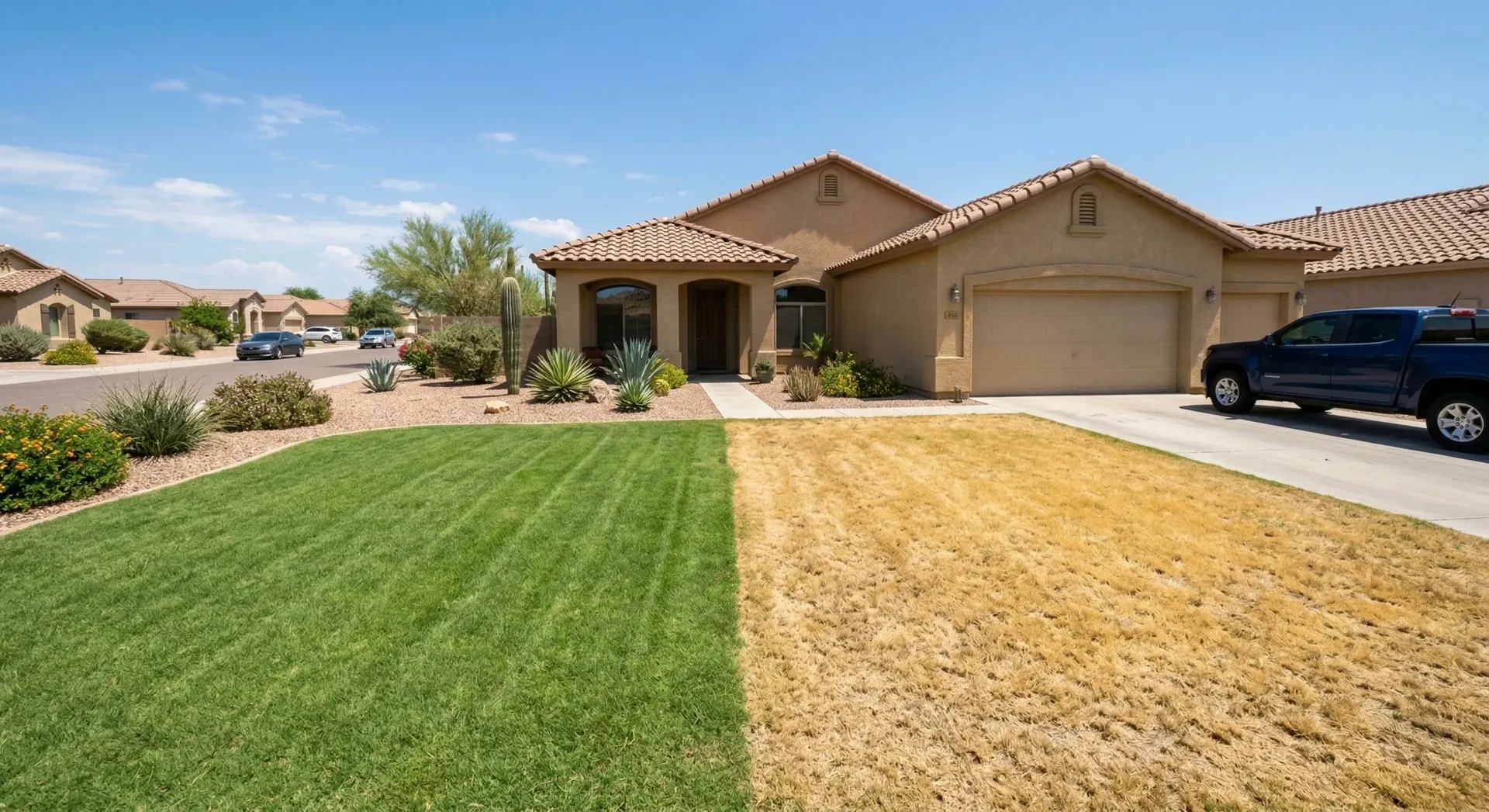
Why this feels wrong but isn't:after protecting your lawn through 115°F days all summer, deliberately drying it out seems backwards. But a lush, well-watered Bermuda lawn in early October will outcompete ryegrass seedlings and give you a thin, patchy winter lawn.

If you are NOT overseeding

Keep watering normally through September, then taper gradually as temperatures drop. Your Bermuda will go dormant and turn tan naturally, and you will water far less all winter.

There is nothing wrong with this choice. It saves a significant amount of water and money. More on that decision below.

For the full year-round rhythm that this September schedule fits into, our seasonal watering guide covers the baseline for every season.

Sprinkler watering a lawn early in the morning

Step 3: The Fertilizer Decision, and the August 31 Cutoff

This is the most commonly mishandled part of late-summer lawn care in Arizona.

The rule

Do not heavily fertilize Bermuda after August 31.

Nitrogen applied in September pushes the grass to grow when it should be storing energy. That produces a lawn that looks slightly greener in the short term and comes back noticeably weaker next spring.

It also makes Bermuda more competitive against ryegrass than it needs to be, which directly undermines October overseeding.

What this means practically

  • If you fertilized in August: you are done. No more nitrogen until spring.
  • If you skipped August entirely and the lawn is genuinely struggling: a light application very early in September is defensible, but heavy feeding is not.
  • If you are overseeding: hold nitrogen until after the ryegrass has germinated, then feed the new seedlings.
  • If a patch is burned or damaged: do not fertilize it. Damaged turf cannot process nutrients and fertilizer adds salt stress.

The full feeding calendar for Arizona lawns is covered in our guide to fertilizing your Arizona lawn, and the Buckeye-specific product guidance is covered in our guide to when to fertilize lawn in Arizona.

Man holding a phone and white pillow in a sunny backyard with green lawn and desert landscaping

Step 4: Repair Work That Still Works in September

September is your last practical repair window, and warm soil is on your side.

Small thin patches

Bermuda spreads laterally through runners. Rake out dead material to expose soil, keep the area watered, and surrounding grass will often fill in on its own while it is still growing.

Medium bare spots

Plugs establish in roughly two to three weeks in warm soil, which September still provides. Clear dead material to bare soil, loosen the top inch, set plugs, and keep them consistently moist.

Large dead areas

You have a genuine decision here.

Sod nowif you want the area functional through winter and you are willing to water it properly during establishment, figure four to six weeks to full establishment.

Or wait and overseed it in October, which covers the area with ryegrass through winter and lets you address the Bermuda properly next spring.

For most homeowners with damage discovered in September, overseeding the bare areas is the cheaper and lower-risk path.

Compaction

Monsoon cleanup traffic and summer foot traffic leave compacted zones that will not absorb water. September is a reasonable time to address compaction, and it improves seed-to-soil contact if you are overseeding.

Do not aggressively dethatch or aerify at this point, excessive work can scalp the crown of the grass and set back recovery. Light work only.

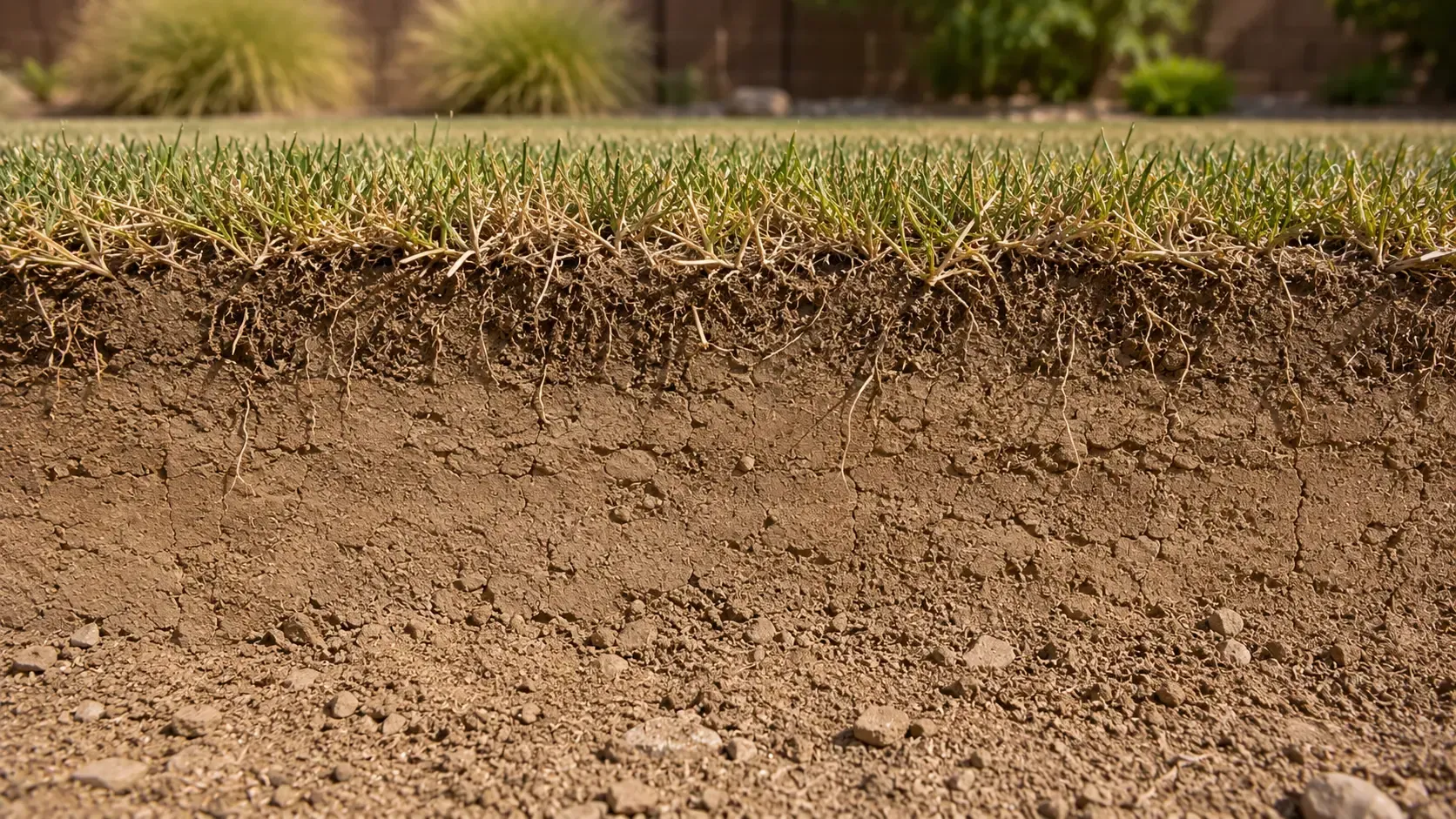
If the underlying issue is soil that will not hold moisture, the foundational fix is covered in our guide to Arizona soil health and preparation.

Step 5: The Overseeding Decision, Should You Even Do It?

This is a real decision with real trade-offs, and most content skips straight past it.

What overseeding gets you

Bermuda goes dormant and turns tan from roughly November through March. Overseeding with ryegrass gives you a green lawn all winter, protects the soil, and suppresses winter weeds.

What it costs you

Overseeding requires frequent, light watering during germination, often three to four times daily for the first week or two. That is a meaningful water expense during a period when a dormant lawn would need almost nothing.

It also adds a scalping job, a seeding job, and a spring transition to manage.

Who should overseed

  • You use the lawn through winter
  • Appearance matters, HOA, business frontage, or curb appeal
  • You have kids or pets who need usable turf year-round

Who should skip it

  • The lawn is mostly decorative
  • You are trying to cut water costs
  • You would rather not manage the spring transition back to Bermuda

There is no wrong answer. A dormant Bermuda lawn is healthy, it is sleeping, not dying.

If the water cost is the deciding factor, the full breakdown of where landscape water money goes is covered in our guide on why water bills run high in Arizona.

And if this annual cycle is starting to feel like more work than the lawn is worth, it is worth knowing the alternatives before committing to another year of it, our guide to the best grass alternatives for no-mow lawns in Arizona covers the options that eliminate the overseeding question entirely.

Green ryegrass overseeded lawn in Arizona during winter

Step 6: Preparing for the October Window

If you have decided to overseed, September prep determines October results.

Know the window

The optimal overseeding window in the Phoenix area is the first two weeks of October, when nighttime temperatures consistently stay below 65°F.

Too early:Bermuda is still vigorous and outcompetes the seedlings, producing thin, slow growth.

Too late:late October into November exposes young seedlings to cold that stalls germination and damages growth.

The window is genuinely about two weeks wide. This is why September preparation matters.

September prep checklist

  • Taper watering on the schedule above
  • Stop nitrogen, no feeding Bermuda into competition
  • Stop mowing about one week before you plan to scalp
  • Buy seed early, perennial ryegrass is the standard choice for Arizona; it handles alkaline soil, recovers from traffic, and transitions out cleanly in spring
  • Service the irrigation system now, germination requires frequent short cycles, and a broken head discovered mid-germination costs you the seeding
  • Plan for the scalp, the lawn gets cut down to roughly half an inch with all clippings removed

The factor that decides success

Seed-to-soil contact. Seed that lands on thatch or uncut grass dries out before it germinates. Seed that reaches actual soil germinates at dramatically higher rates.

That is the entire reason for scalping, and it is why a half-hearted mow does not substitute for it.

The full execution walkthrough is coming in our overseeding guide, but everything above needs to happen in September for that guide to be useful to you in October.

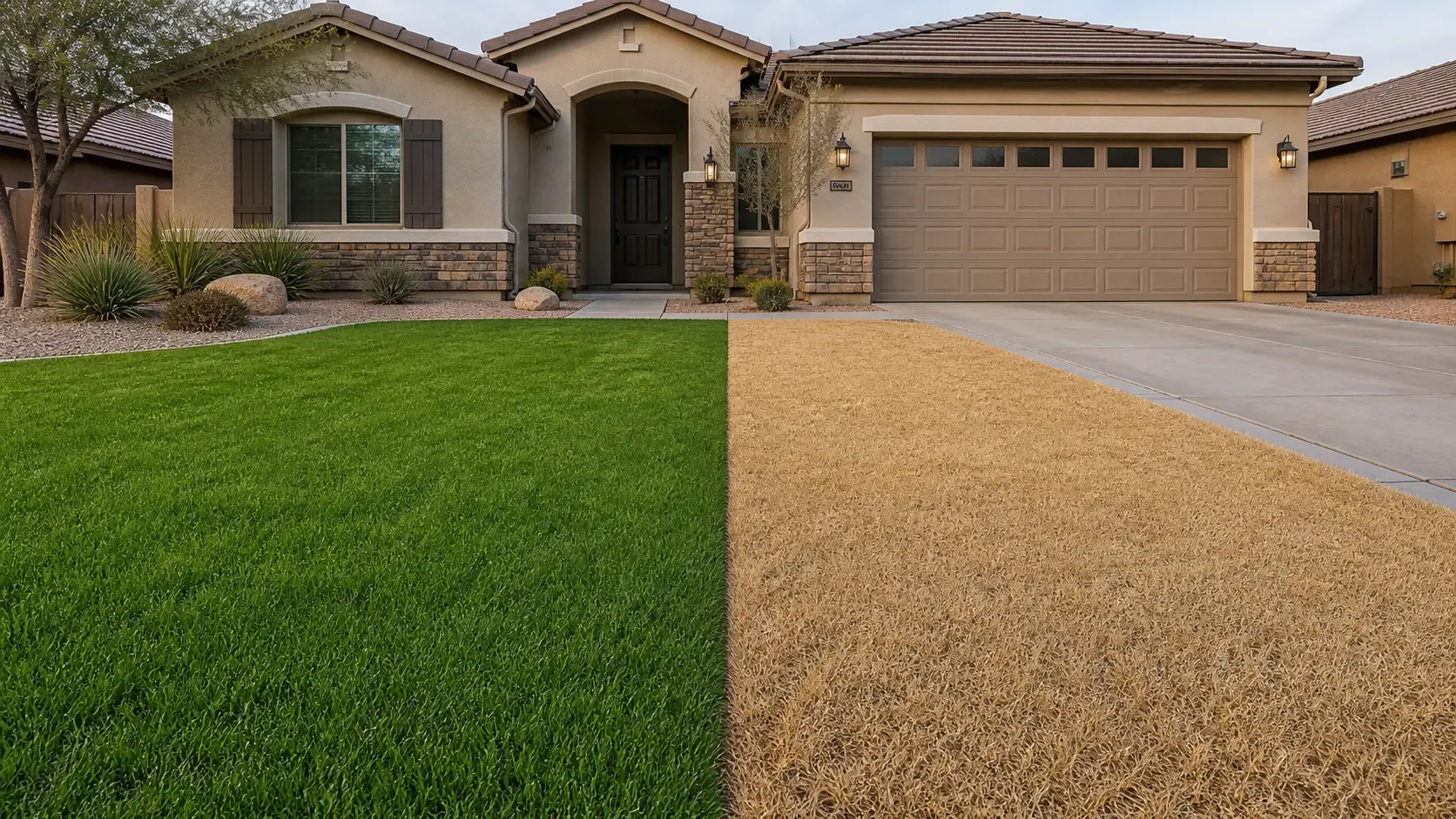
Split view of a suburban house lawn, with lush green grass on the left and dry yellow grass on the right.

Common Late-Summer Mistakes Arizona Homeowners Make

These are the errors that turn a recoverable lawn into a spring problem.

Fertilizing heavily in September

Pushes growth instead of food storage and weakens spring return.

Keeping the summer watering schedule through October

Bermuda stays vigorous, ryegrass struggles, and you get a thin winter lawn plus a high water bill.

Waiting until October to assess damage

By then Bermuda is slowing and repair options narrow sharply.

Scalping too early

Cutting down a lawn that is still actively growing in warm weather stresses it and invites weeds.

Overseeding without fixing irrigation first

Germination needs consistent moisture. A failed zone during that window wastes the entire seeding.

Assuming brown means dead

Much of what looks dead in September is heat-stressed or entering dormancy. Test before you replace.

Ignoring damage because "it'll come back in spring"

Some of it will. Bare soil, compaction, and irrigation failures will not, they get worse over winter.

If you want the mirror image of this topic, our guide to spring lawn and tree recovery in Arizona covers the March version of this same assessment, and the lawns that do best in spring are the ones prepared correctly in September.

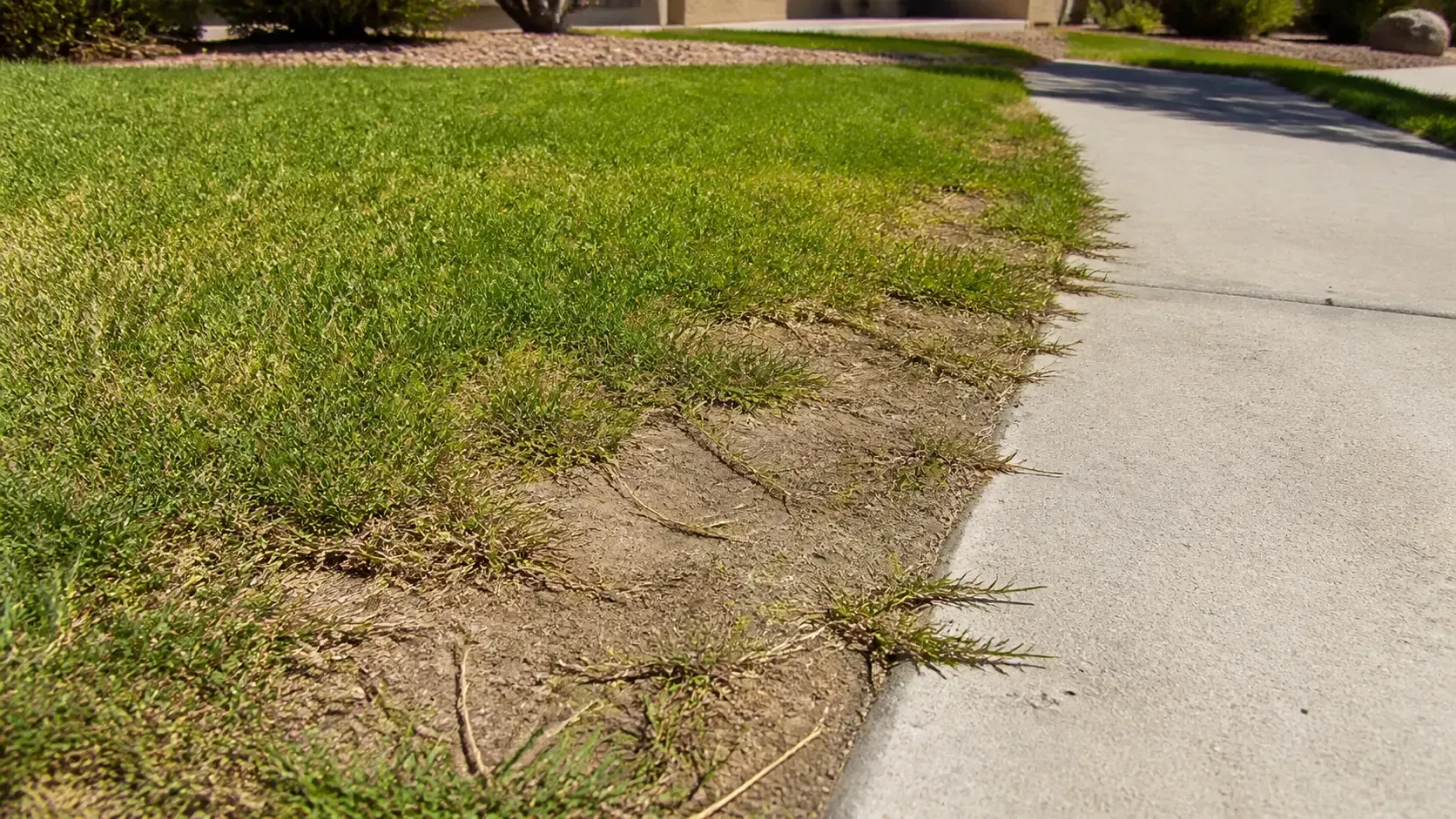
Patchy grass beside a concrete sidewalk and driveway in a suburban yard

What Comes After September

Setting expectations for the rest of the season.

October

Overseeding window opens in the first two weeks. Scalp, seed, and water frequently and lightly. Ryegrass germinates in roughly five to seven days under the right conditions.

November

Ryegrass establishes and takes over the green. Bermuda goes fully dormant, often turning tan after the first sustained cold nights. Watering shifts to a much lower winter frequency.

December through February

Winter lawn maintenance, significantly less water, occasional mowing of the ryegrass, and watching for frost.

March and beyond

Spring transition. Ryegrass fades as temperatures climb, Bermuda reactivates, and the cycle restarts.

The winter maintenance side of this is covered in our guide to winter lawn care in Arizona.

When to Bring in a Professional

Late-summer lawn work has a narrow window and a low margin for error, which is exactly why it is worth getting right the first time.

Consider professional help when:

  • Large areas failed and you are unsure whether to sod, plug, or overseed
  • You want to overseed but do not have the equipment to scalp properly
  • Your irrigation system needs service before germination season
  • Damage keeps recurring in the same zones year after year
  • You are managing a commercial property or HOA where appearance is contractual
  • You are not sure whether your lawn is dormant, stressed, or dead
  • The September window is closing and you need it done correctly the first time

The overseeding window in Arizona is roughly two weeks wide. A missed window means either a tan lawn all winter or a thin, disappointing one, and neither is fixable until spring.

If your Buckeye lawn took damage this summer and you need it assessed before the September window closes, schedule a professional lawn assessment. We will tell you what recovered, what needs repair, and whether overseeding makes sense for your property, while there is still time to act on it.

Why September Work Pays Off All Year

Homeowners who treat September as a deadline rather than a slow month consistently get:

  • A denser, more even lawn heading into winter
  • Successful October overseeding instead of thin, patchy results
  • Stronger Bermuda return the following spring
  • Fewer winter weeds, because dense turf crowds them out
  • Lower repair costs, because damage was fixed while grass was still growing
  • A lawn that starts spring ahead instead of behind

The condition of your lawn next March is being decided right now.

That is not a marketing line, it is how warm-season grass works. Food stored in September fuels the spring green-up, and damage left unrepaired in September stays frozen in place until the grass wakes up.

Four weeks of attention now saves a full season of catching up.

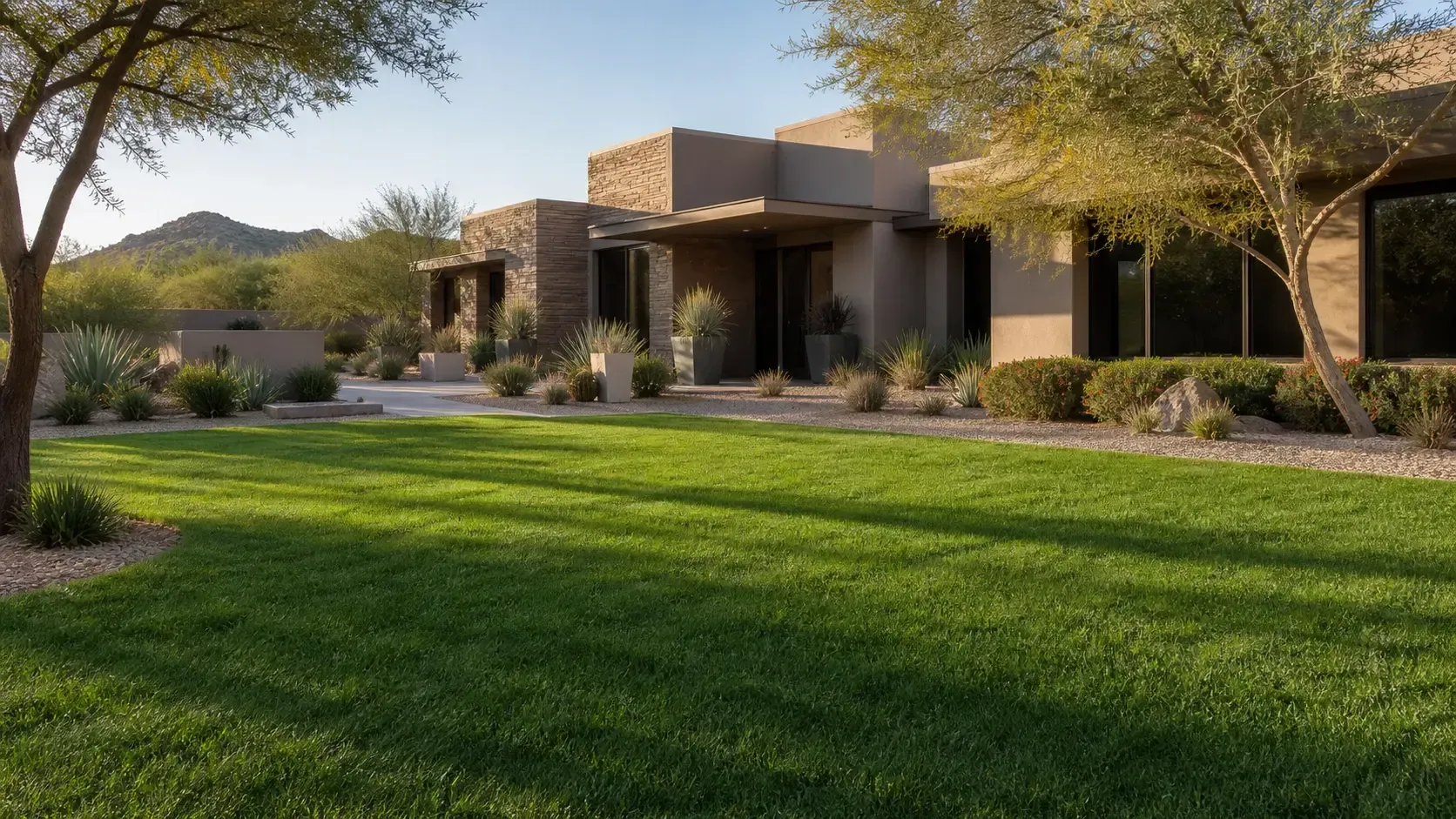
Single-story modern house with stone accents and a green lawn in a desert landscape

FAQ: Late-Summer Lawn Recovery in Arizona

  • What is the winter grass watering schedule for Phoenix in October?

    If you are overseeding, taper watering through mid-to-late September, then stop entirely about one week before scalping in early October. After seeding, switch to light watering three to four times daily for five to ten minutes until the ryegrass germinates in roughly five to seven days, then gradually reduce frequency and increase depth.

  • When should I overseed my lawn in Arizona?

    The first two weeks of October are the optimal window in the Phoenix and Buckeye area, once nighttime temperatures consistently stay below 65 degrees F. Overseeding earlier means Bermuda outcompetes the seedlings; overseeding in late October or November exposes young grass to cold that stalls germination. See our tree services for related fall yard prep.

  • Should I fertilize my Arizona lawn in September?

    Generally no. University of Arizona Extension guidance advises against heavily fertilizing Bermuda after August 31, because nitrogen at that point pushes growth instead of the food storage the grass needs for winter. Late feeding produces a weaker spring return and makes Bermuda compete harder against new ryegrass.

  • When should I stop watering my Bermuda before overseeding?

    Begin tapering in mid-September, cutting your schedule roughly in half. Reduce further through late September, and stop watering entirely about one week before you scalp. Bermuda needs three to four weeks of reduced water to slow down enough for successful overseeding. For a full setup, see our drip irrigation system page.

  • Is my brown lawn dead or just going dormant?

    Tug a handful of grass. If it resists, the roots are alive and the grass is stressed or entering dormancy. If it lifts easily like loose carpet, that section is dead. You can also scratch a runner at soil level, green or white tissue inside means it is alive.

  • Do I have to overseed my lawn in Arizona?

    No. Bermuda goes dormant and turns tan through winter, but it is alive and returns in spring. Overseeding is purely for winter color and usability. Skipping it saves a significant amount of water and work, and many Arizona homeowners choose to let their lawns go dormant.

  • Can I still repair bare spots in September?

    Yes, and September is your last good window. Soil is still warm enough that plugs establish in roughly two to three weeks and Bermuda runners still spread. Once the grass goes dormant, repair stalls until spring green-up. If damage is extensive, our landscape maintenance team can help.

  • What happens if I miss the October overseeding window?

    Your Bermuda will go dormant and stay tan until spring. That is not harmful to the lawn. Seeding too late in the season generally produces poor germination and weak grass, so waiting until next fall is usually the better choice than forcing a late seeding. Check our blog for more seasonal lawn care tips.
A green background with a white outline of a heart.
By Happy Clean Lawnscapes August 20, 2026
After a monsoon storm, the biggest dangers are the ones you cannot see. Learn how to assess tree damage safely, what to never touch, and how to avoid post-storm contractor scams.
By Happy Clean Lawnscapes August 4, 2026
Arizona monsoon storms bring 60+ mph gusts and inches of rain in under an hour. Learn how to prepare drainage, trees, irrigation, and hardscape before the first storm hits.
Brown dirt patch in a green lawn, with cracked soil and dry grass in the center.
By Happy Clean Lawnscapes July 16, 2026
Brown, scorched patches in your Arizona lawn? Learn how to identify what caused the burn, what to do in the first 48 hours, and when the grass can still be saved.
Homeowner inspecting heat-stressed tree branches in an Arizona backyard
By Happy Clean Lawnscapes July 7, 2026
When Arizona hits an Extreme Heat Warning, one wrong move can kill your lawn or trees in days. Learn exactly how to water, mow, shade, and protect your landscape through a heat wave.
Arizona water bills spike every summer — usually from hidden
landscape waste. Learn how to find leak
June 18, 2026
Arizona water bills spike every summer — usually from hidden landscape waste. Learn how to find leaks, fix waste, and lower your bill before peak heat hits.
Smart Summer Irrigation Principles for Arizona Landscapes
June 11, 2026
Summer irrigation in Arizona is not about watering more — it's about watering smarter. Learn the principles that protect your lawn, plants, and trees while cutting waste during peak heat.
By Happy Clean Lawnscapes May 21, 2026
Heat stress in Arizona lawns and plants often appears before homeowners realize. Learn how to spot early warning signs and protect your landscape before summer damage spreads.
May 5, 2026
Choosing the wrong trees in Arizona can lead to heat stress, root damage, and high water use. Learn how to select and position shade trees properly for a healthier, cooler landscape.
April 17, 2026
Yellow grass, burnt patches, weak growth? Learn the signs of over fertilizing lawn in Arizona and how to fix damage before it gets worse.
April 10, 2026
Learn when to fertilize lawn in Arizona, what fertilizer works best, and how to keep Buckeye grass and trees healthy year-round.
Show More