

Can burnt grass grow back?
Often, yes. If the roots and crowns are still alive, burnt grass regrows once the cause is corrected and consistent watering resumes. Use the tug test, grass that resists pulling is alive. Grass that lifts easily is dead and needs replacement.
How do I fix a burnt lawn fast in Arizona?
Identify the cause first. If it is fertilizer, chemical, or pet urine, flush the area with deep watering to move salts below the root zone. If it is heat or irrigation failure, correct watering depth or repair the system. Stop mowing, fertilizing, and foot traffic on the damaged area entirely.
Why does my lawn burn in the same spot every year?
Recurring burn in one location almost always points to a structural cause, reflected heat from a nearby wall or driveway, an irrigation zone that does not reach, or compacted soil. Repeated repair will not help until that underlying condition is fixed.
Should I water a burnt lawn more often?
Deeper, not more often. Frequent shallow watering keeps roots at the surface where heat damage is worst and drives your water bill up without fixing the burn. Water deeply in the early morning instead.
Can I put down new sod in the middle of an Arizona summer?
You can, but it is difficult. Sod installed during peak heat needs near-constant moisture to root and frequently fails. Late spring or early fall gives far better results. If the burn happened in July, stabilize now and repair properly when conditions improve.
How long does it take a burnt lawn to recover?
Dormant turf usually greens up in two to four weeks with consistent watering. Mild salt or fertilizer burn improves in one to three weeks once flushed. Areas needing sod take four to six weeks to fully establish, and plugs spread over the remainder of the growing season.
Is fertilizer burn different from heat burn?
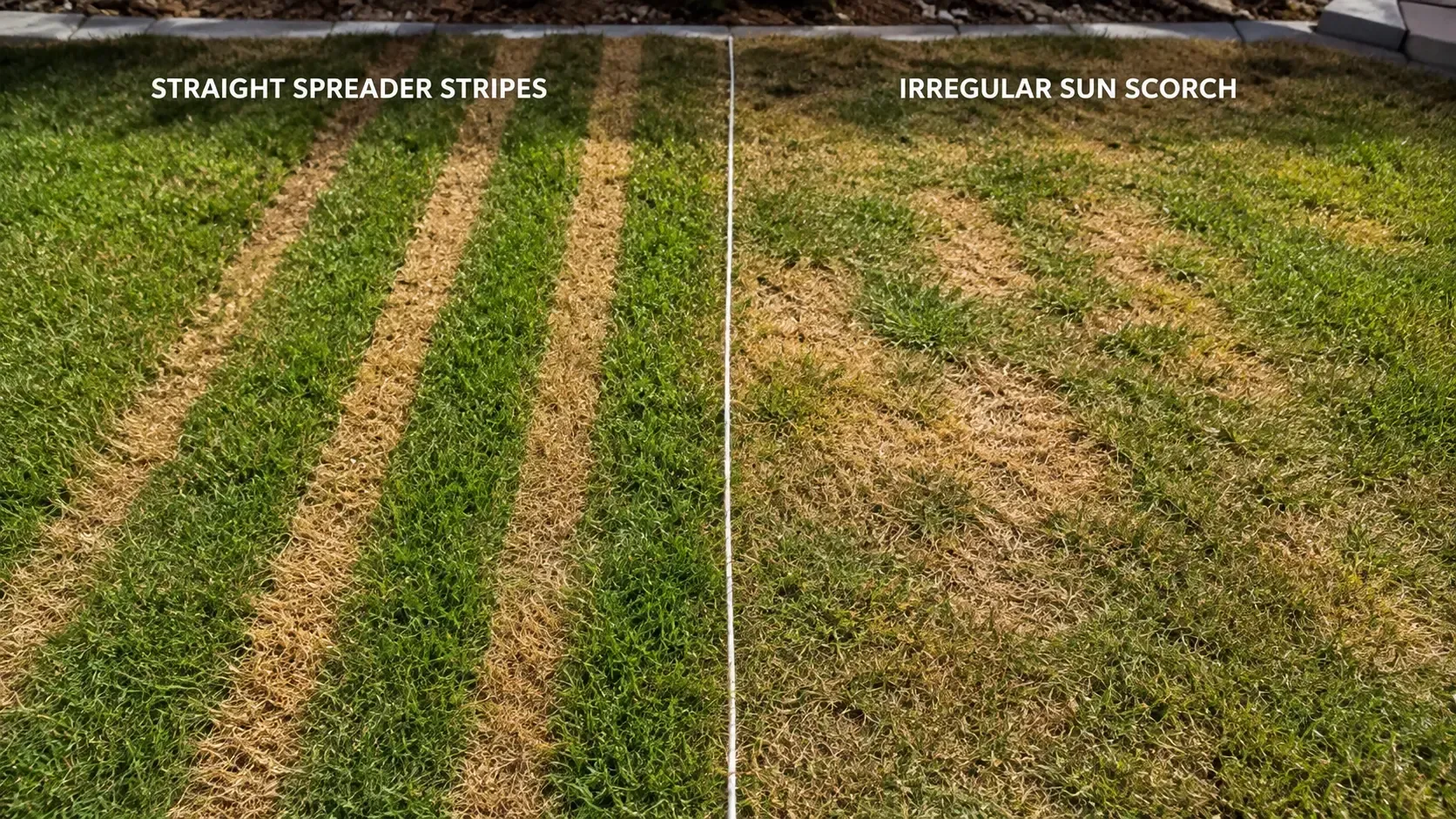
Yes, and the fixes are opposite. Fertilizer burn appears suddenly after an application, often in stripes or spreader patterns, and requires flushing. Heat burn builds gradually across sun-exposed areas and requires deeper watering and shade, not flushing.
Emergency Fixes for Burned Lawns in Arizona: How to Diagnose and Repair Scorched Grass Fast
If your Arizona lawn has burned patches, here is the order of operations that actually saves it:
- Identify the cause first, heat, fertilizer, chemical, pet urine, or irrigation failure all look similar and need opposite fixes
- Run the tug test, brown grass with intact roots is dormant, not dead
- Flush the area deeply if the burn is chemical, fertilizer, or urine-related
- Stop all fertilizing, mowing, and foot traffic on the damaged zone
- Wait before replacing anything, most burn looks worse than it is
- Repair only what genuinely fails the test, using plugs, sod, or seed depending on size
The most expensive mistake Arizona homeowners make with a burned lawn is acting before diagnosing.
Applying fertilizer to a fertilizer-burned lawn makes it worse.
Watering constantly to fix a chemically burned lawn wastes water and does not address the salt.
Ripping out dormant Bermuda that would have recovered on its own costs hundreds of dollars for nothing.
Burn is fixable. Guessing is what turns it permanent.
Why Burned Lawns Are So Common in Buckeye and the West Valley
Arizona lawns burn for reasons that simply do not exist in most of the country.
Several forces compound at once:
- Surface temperatures on soil regularly exceeding 150°F
- Block and stucco walls radiating stored heat back into turf, some measured above 180°F on a summer afternoon
- Alkaline, salt-heavy soil that concentrates fertilizer and mineral stress
- Hard water and irrigation salts accumulating in the root zone
- Long irrigation seasons where a single system failure causes rapid loss
- Narrow turf strips along driveways and sidewalks that dry faster than sprinklers can compensate
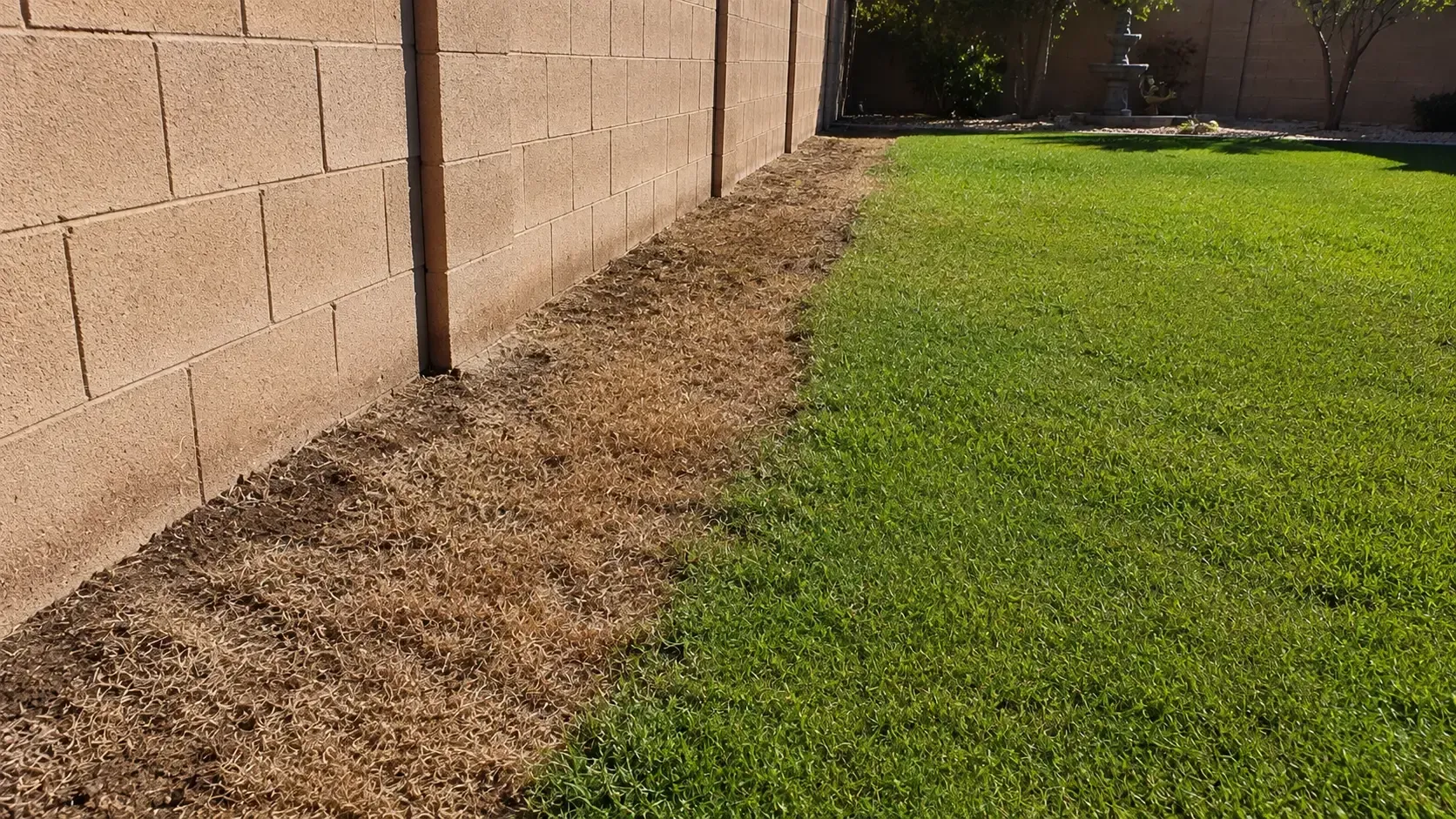
That reflected heat point is the one homeowners most often overlook.
A lawn strip along a west-facing block wall is not experiencing the same conditions as the open middle of the yard. It is absorbing direct sun plus radiated heat from the wall, and it burns first, every single time.
Damage typically shows up worst within two to four feet of pavement or walls.
If you already noticed early warning signs before the burn appeared, the progression is covered in Heat Stress Signs in Arizona Lawns & Plants (Blog 26).
Step 1: Identify What Actually Burned Your Lawn
Every effective repair starts here.
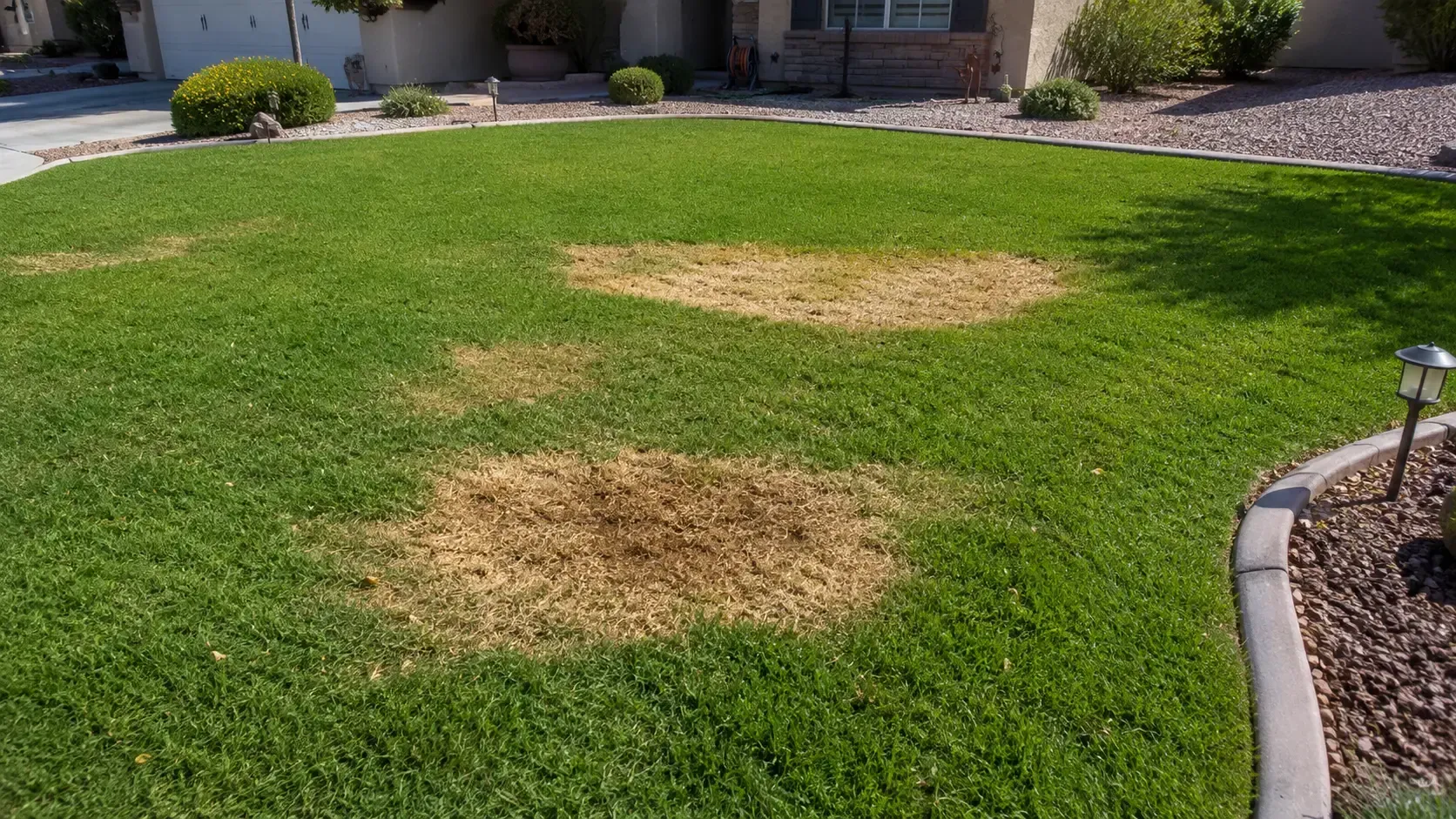
Five causes produce brown patches, and the correct fix is different for each.
Heat and sun scorch
Looks like: Uniform browning across exposed areas; worst near walls, driveways, and south or west-facing zones; blades dry and crispy; damage builds over days
Common trigger: Extreme Heat Warning stretches, reflected heat, insufficient irrigation depth
Fertilizer burn
Looks like: Yellow-to-brown damage in stripes, lines, or spreader patterns; white crust or residue on soil; appears within days of an application
Common trigger: Over-application, uneven spreading, or fertilizing during high heat
Chemical or herbicide burn
Looks like: Sharply defined edges; irregular splashes or drift patterns; often affects nearby plants too; may appear yellow before browning
Common trigger: Weed killer misapplication, spray drift, spilled fuel or oil
Pet urine burn
Looks like: Small round or oval spots, often with a darker green ring around a brown center; scattered randomly; concentrated where the dog goes
Common trigger: Concentrated nitrogen and salts in urine
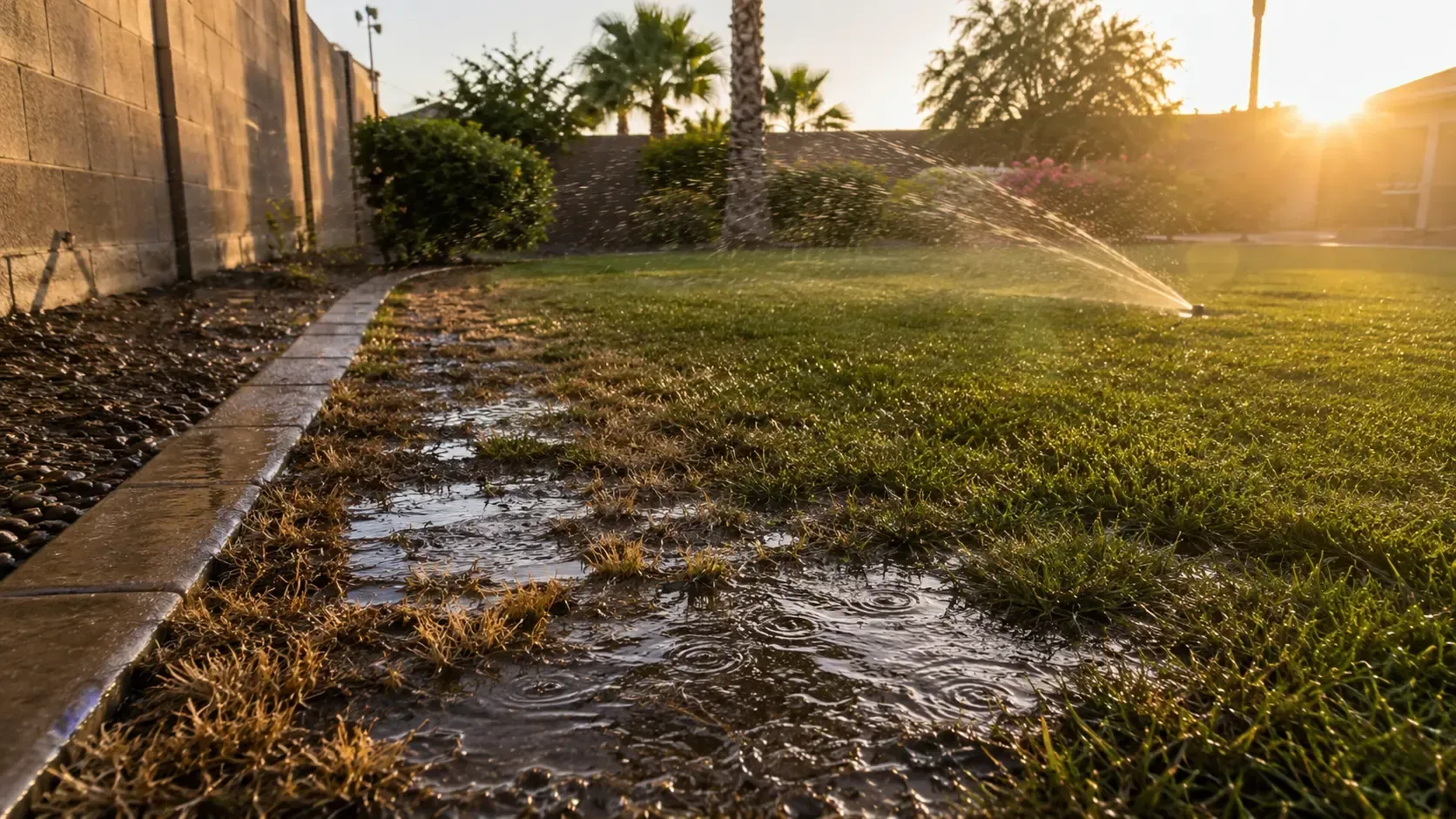
Irrigation failure burn
Looks like: Patches matching sprinkler patterns, zones, or spray arcs; sharply bounded by where coverage stops; adjacent turf may look fine
Common trigger: Broken head, clogged emitter, pressure drop, or a zone that stopped running
The fastest diagnostic question: Did the damage appear suddenly after a specific event, or build gradually over a hot stretch?
Sudden = fertilizer, chemical, or irrigation failure.
Gradual = heat, drought stress, or accumulated salt.
Step 2: Find Out If the Grass Is Actually Dead
Before spending a dollar on repair, confirm what you are actually dealing with.
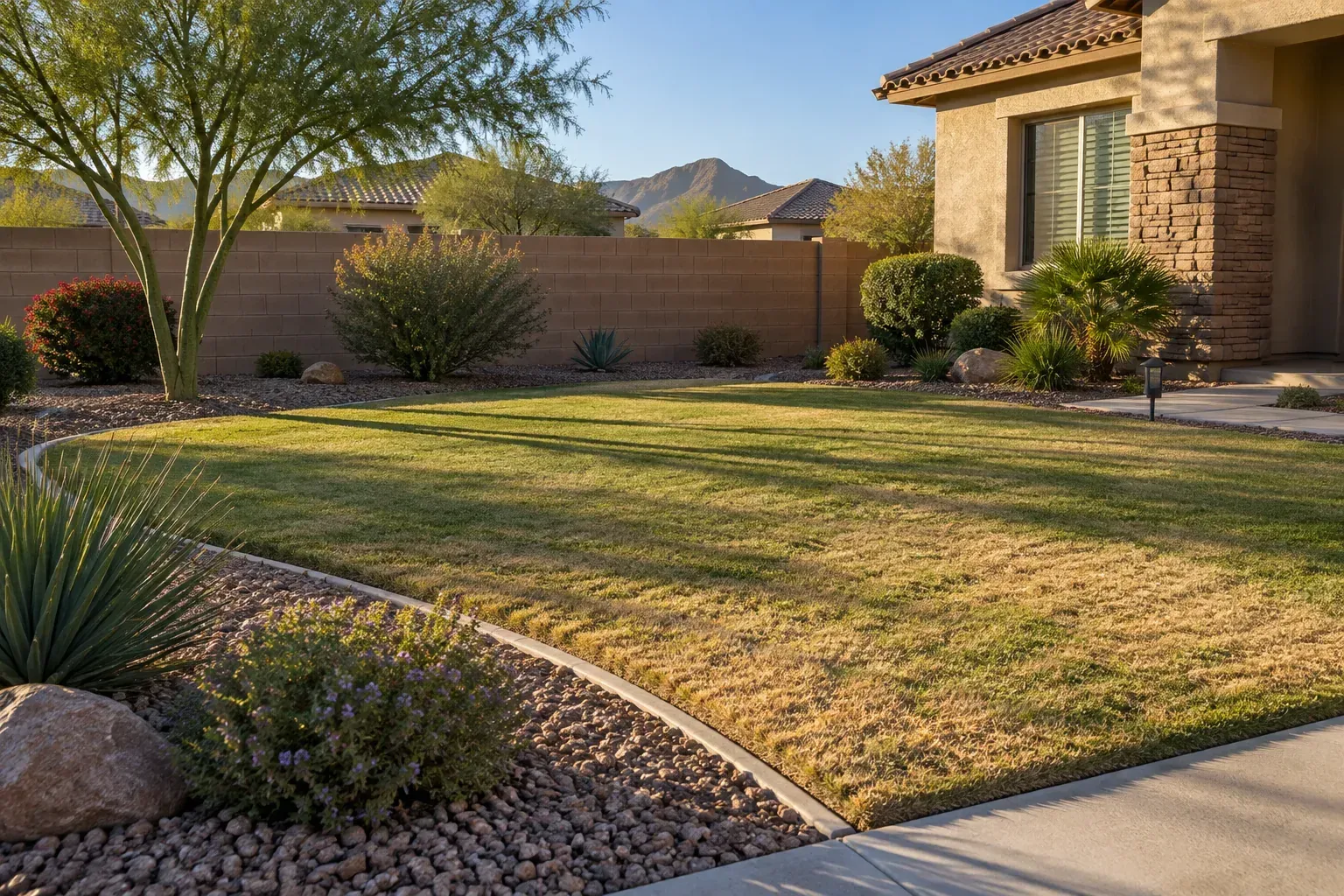
Brown does not mean dead. In Arizona's Bermuda-dominant lawns, brown very often means dormant.
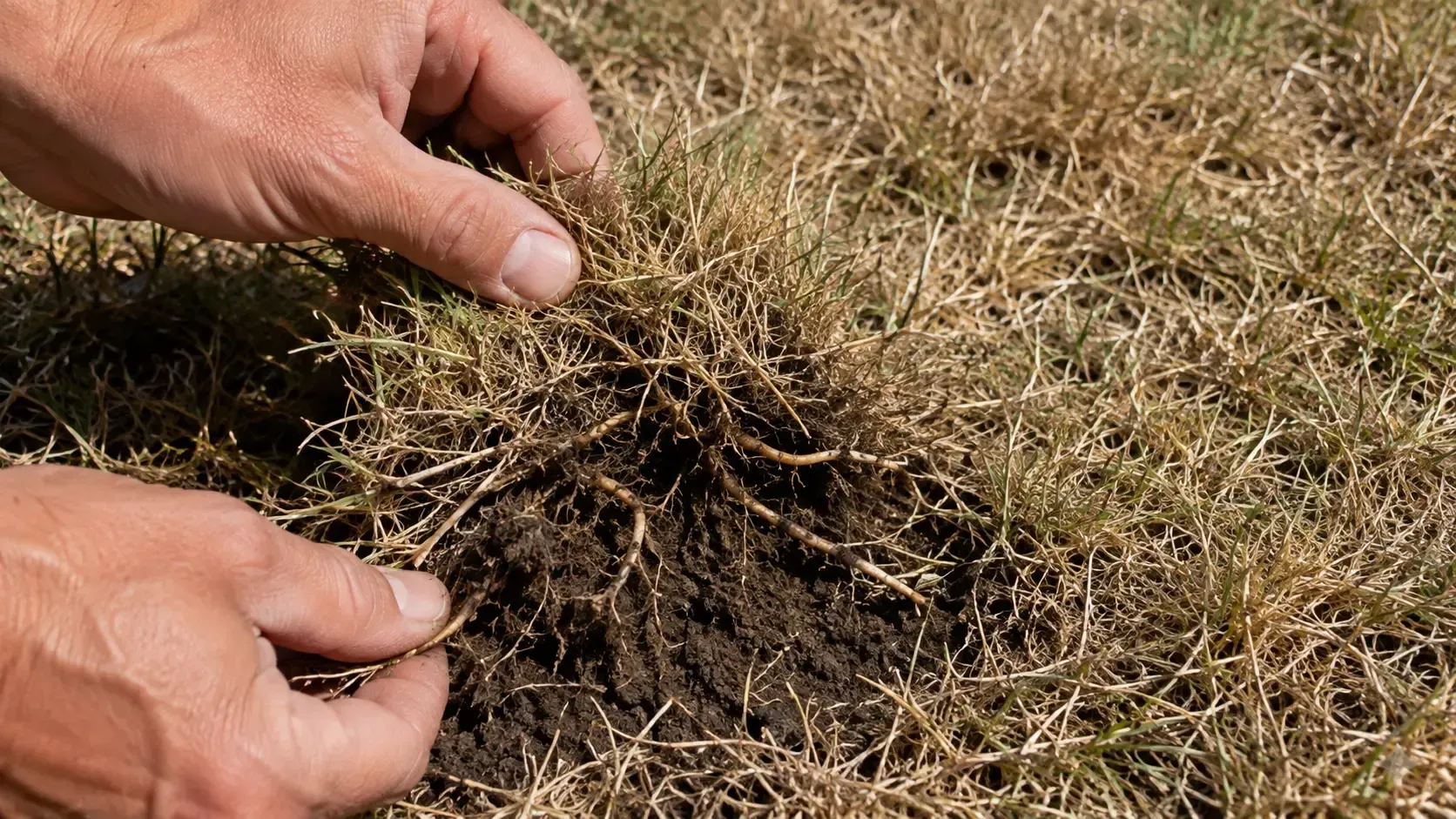
The tug test
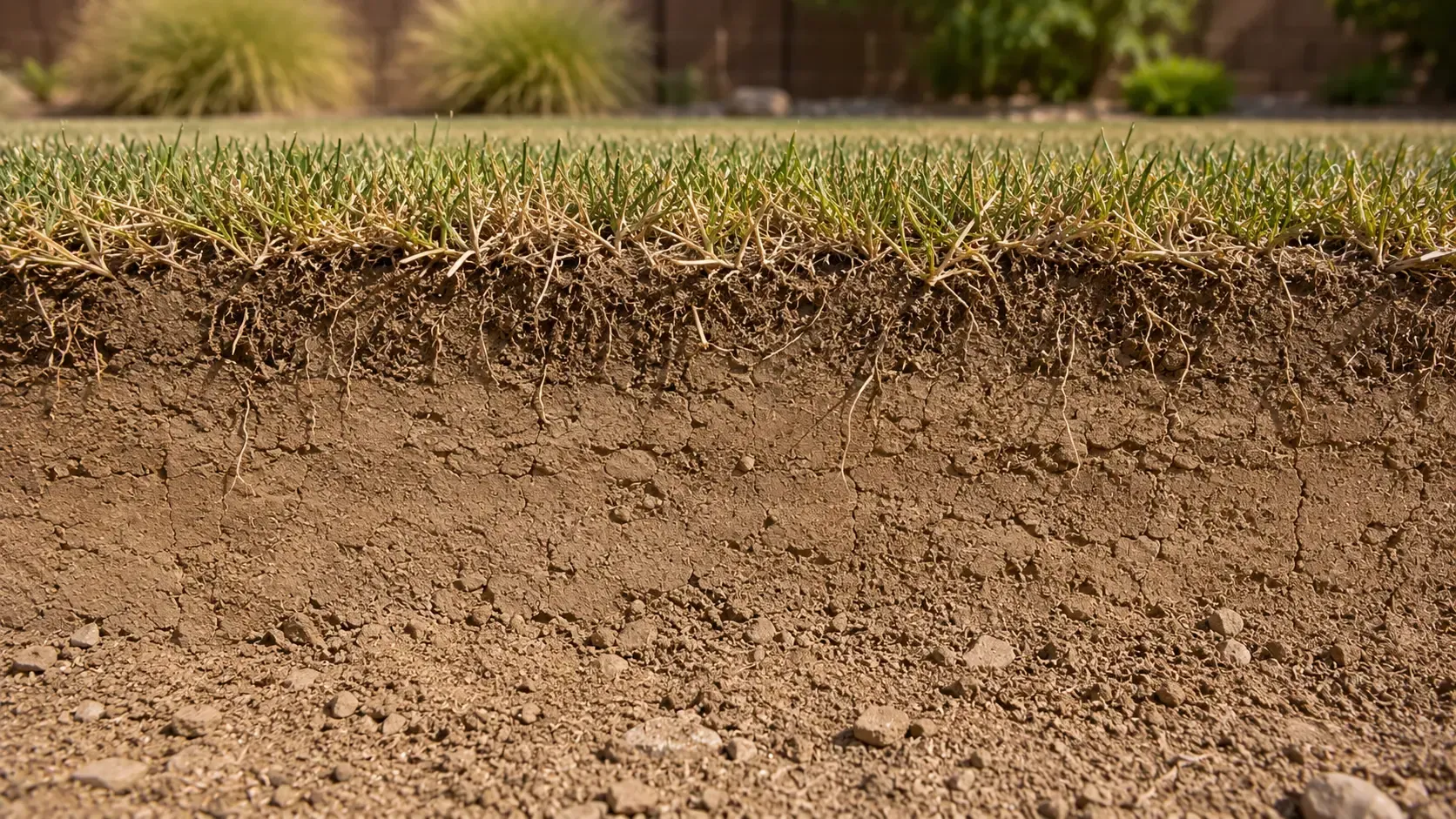
Grip a handful of brown grass and pull firmly.
- Resists, roots are intact, the grass is alive and dormant
- Lifts easily, like loose carpet, that section is dead
The crown scratch
Part the turf at soil level and scratch a runner or stolon with a fingernail.
- Green or white tissue inside, alive
- Brittle and brown all the way through, dead
The perimeter check
Test the edges of the patch and the center separately.
Many burned areas are dead in the center but recoverable at the edges, which changes your repair from a full resod to a much smaller patch.
The two-week rule
If you are unsure, water correctly and wait two weeks before doing anything drastic.
Bermuda that is merely dormant typically shows green growth within two to four weeks once consistent watering resumes and temperatures ease.
Grass you rip out on day three might have recovered on day eighteen.
Step 3: Emergency Response in the First 48 Hours
What you do immediately depends entirely on the cause.
If it is fertilizer, chemical, or urine burn, flush it
Water the affected area deeply to dilute and move salts down through the root zone and away from the crowns.
This means genuinely deep, slow watering over several days, not a light daily sprinkle, and not flooding the lawn continuously.
The goal is to move the salt below root level, not to drown the turf.
If it is heat or sun scorch, do not flush, correct depth
More frequent surface watering will not fix heat burn and will inflate your water bill.
Shift to deeper, early-morning cycles and add shade or mulch to the surrounding area where possible.
If it is irrigation failure, fix the system first
Repairing turf before repairing the cause guarantees you will do it twice.
Walk every zone while it runs. Check for broken heads, clogged emitters, misaligned spray, and pressure drops.
Universal first-48-hours rules, regardless of cause:
- Stop all fertilizing, nothing goes on a burned lawn until it stabilizes
- Stop mowing the damaged area, stressed turf cannot recover from a cut
- Keep foot traffic off it entirely, including pets and equipment
- Do not apply weed killer, herbicide on stressed grass causes further damage
- Do not dig, till, or disturb the soil during extreme heat
- Do not plant or reseed yet, assess first
Step 4: Repair Options That Actually Work in Arizona
Once you have confirmed a section is genuinely dead, match the repair method to the size of the damage.
Small spots (under about 1 square foot)
Bermuda spreads laterally through stolons and rhizomes.
For small patches surrounded by healthy turf, the most cost-effective fix is often to do nothing but water and wait, the surrounding grass will fill in on its own during active growth.
Clear the dead material with a rake so the runners have soil contact.
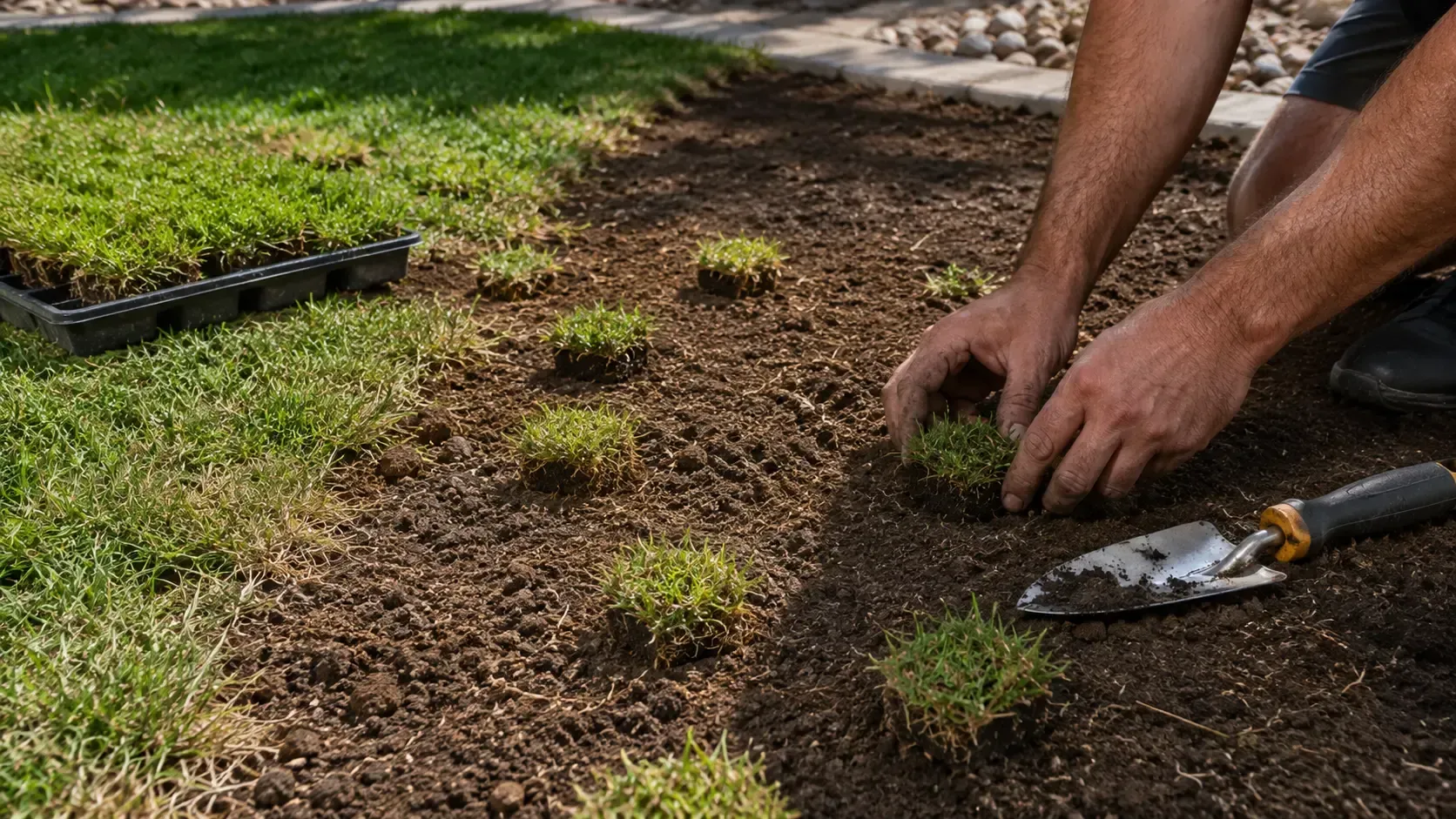
Medium patches (1 to 10 square feet)
Plugs are the practical middle ground.
Bermuda plugs typically establish roots in about two to three weeks and begin spreading from there.
Clear the dead grass down to bare soil, loosen the top inch, set plugs, and keep them consistently moist during establishment.
Large areas (over about 10 square feet)
Sod is the fastest route to full coverage.
In Arizona, sod usually begins shallow rooting within roughly 10 to 14 days, with full establishment taking four to six weeks depending on soil prep, watering, and weather.
Remove the dead layer completely, leaving it in place prevents new roots from reaching soil underneath.
Seeding
Bermuda seed takes roughly a month to establish and needs warm soil to germinate.
It is the cheapest option but the slowest, and it is unreliable during peak summer heat when moisture cannot be maintained consistently.
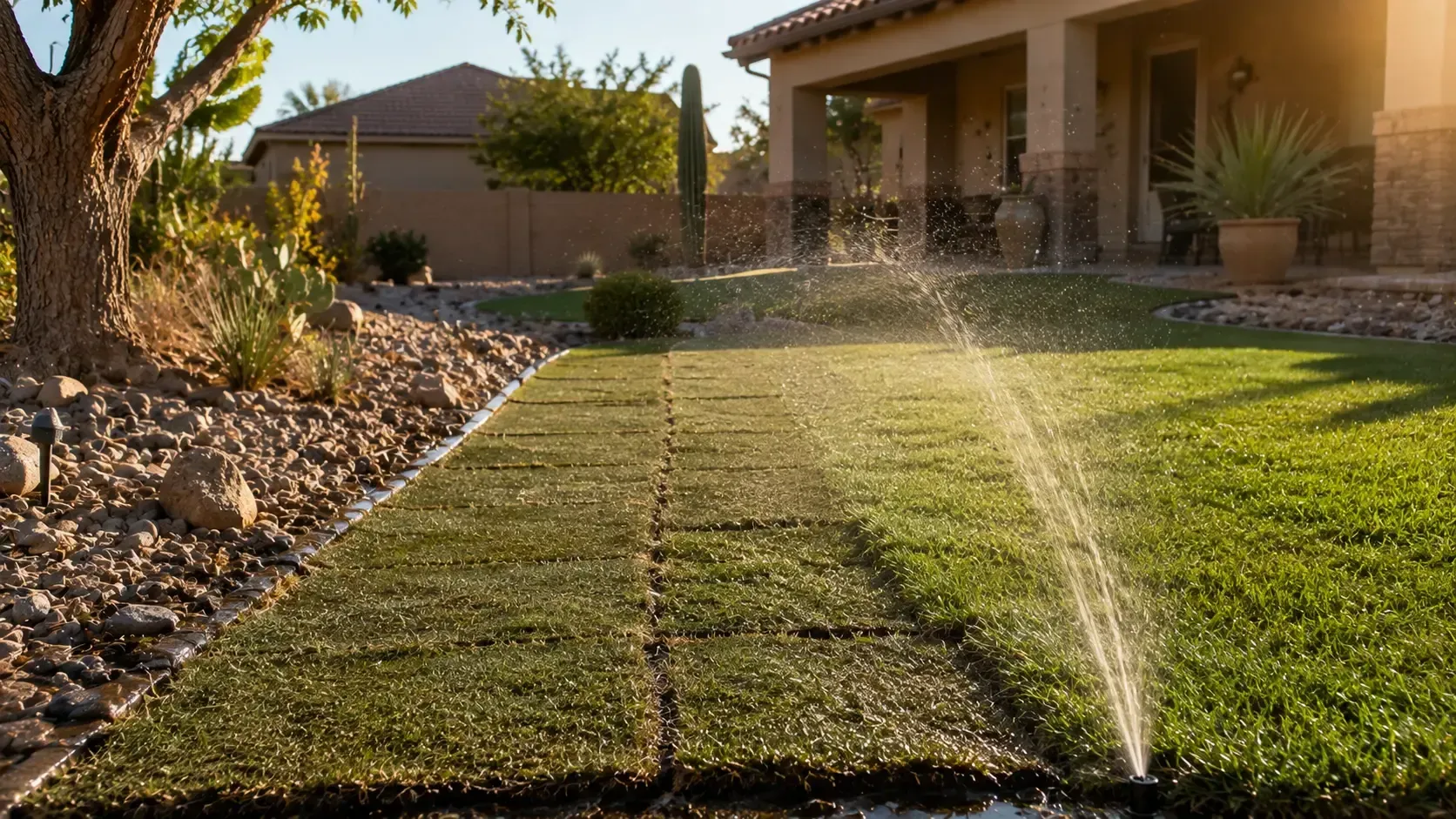
Timing matters enormously. Late spring through early summer is the strongest window for Bermuda repair in Arizona, because the grass is actively growing and can recover quickly. Repairs attempted during peak July and August heat require far more water and monitoring, and often fail.
If the burn happened in midsummer, the honest answer is often to stabilize now and repair properly in early fall or the following spring.
Repair Mistakes That Make Burned Lawns Worse
These are the errors that turn a repairable lawn into a replacement project.
Fertilizing to "help it recover"
A burned lawn cannot process nutrients. Fertilizer adds salt stress to soil that is already overloaded.
Replacing turf before fixing the cause
New sod laid over a broken irrigation zone burns exactly the same way.
Watering constantly out of panic
Continuous shallow watering creates root rot, fungal pressure, and a water bill spike without solving the burn. The cost breakdown is in Water Waste & High Bill Prevention (Blog 28).
Mowing damaged areas
Cutting stressed turf removes what little leaf surface it has left to recover with.
Repairing during peak heat
Plugs and sod installed in July need near-constant moisture and frequently fail. Timing beats effort.
Ignoring the soil underneath
If the burn was caused by salt accumulation or compaction, new grass will fail the same way. The foundation work is covered in Arizona Soil Health & Preparation (Blog 19).
Reusing the same watering schedule
The schedule that allowed the burn will allow it again. The correction framework is in Smart Irrigation Principles for Arizona Summers (Blog 27).
Preventing the Next Burn
Most burned lawns in Buckeye burn again the following summer, because the underlying condition was never addressed.
Prevention comes down to a handful of structural fixes:
- Correct irrigation depth, deep, early-morning watering that reaches 6 to 8 inches
- Raise mowing height in summer, taller blades shade their own soil
- Never fertilize above 90°F, this single rule prevents a large share of burn cases
- Address reflected heat zones, shade, mulch, or rethink turf placement near west-facing walls
- Test and walk your irrigation monthly, most failures are invisible until damage appears
- Reconsider narrow turf strips, grass under six feet wide along pavement is structurally difficult to keep alive
- Improve soil so it holds moisture instead of shedding it
That reflected-heat point deserves emphasis. If the same strip along your wall or driveway burns every year, repeated repair is not the answer, that location is telling you it is the wrong place for turf.
When to Call a Professional
Some burn situations are worth diagnosing professionally before spending money on repair.
Get an assessment when:
- You cannot determine what caused the burn
- Damage keeps spreading after you have corrected watering
- Large sections fail the tug test
- Burn recurs in the same location year after year
- Multiple zones are affected simultaneously
- You suspect chemical contamination or a soil salt problem
- You are about to spend significant money on sod and want the cause confirmed first
The cost of a professional diagnosis is almost always lower than the cost of replacing turf twice.
If your Buckeye lawn has burned patches and you are not sure what caused them, schedule a professional lawn assessment before you repair or replace anything. Fixing the cause first is the difference between a lawn that recovers and one that burns again next summer.
What Recovery Realistically Looks Like
Setting accurate expectations prevents the second round of panic decisions.
Dormant, heat-stressed turf
Typically shows green growth again within two to four weeks once consistent watering resumes and temperatures ease.
Mild fertilizer or salt burn, flushed early
Often improves within one to three weeks.
Severe burn with root damage
May take several weeks, and some sections will not return without replacement.
Fully dead areas requiring resod or plugs
Sod roots in roughly 10 to 14 days and establishes over four to six weeks. Plugs establish in two to three weeks and then spread gradually over the season.
Areas seeded during peak summer
Frequently fail. Plan for early fall or the following spring instead.
Recovery in Arizona is rarely instant, and anyone promising a same-week fix is selling something.
The lawns that come back fastest are the ones where the cause was correctly identified in the first week.
FAQ: Burned Lawn Repair in Arizona
Can burnt grass grow back?
Often, yes. If the roots and crowns are still alive, burnt grass regrows once the cause is corrected and consistent watering resumes. Use the tug test, grass that resists pulling is alive. Grass that lifts easily is dead and needs replacement.
How do I fix a burnt lawn fast in Arizona?
Identify the cause first. If it is fertilizer, chemical, or pet urine, flush the area with deep watering to move salts below the root zone. If it is heat or irrigation failure, correct watering depth or repair the system. Stop mowing, fertilizing, and foot traffic on the damaged area entirely.
Why does my lawn burn in the same spot every year?
Recurring burn in one location almost always points to a structural cause, reflected heat from a nearby wall or driveway, an irrigation zone that does not reach, or compacted soil. Repeated repair will not help until that underlying condition is fixed.
Should I water a burnt lawn more often?
Deeper, not more often. Frequent shallow watering keeps roots at the surface where heat damage is worst and drives your water bill up without fixing the burn. Water deeply in the early morning instead.
Can I put down new sod in the middle of an Arizona summer?
You can, but it is difficult. Sod installed during peak heat needs near-constant moisture to root and frequently fails. Late spring or early fall gives far better results. If the burn happened in July, stabilize now and repair properly when conditions improve.
How long does it take a burnt lawn to recover?
Dormant turf usually greens up in two to four weeks with consistent watering. Mild salt or fertilizer burn improves in one to three weeks once flushed. Areas needing sod take four to six weeks to fully establish, and plugs spread over the remainder of the growing season.
Is fertilizer burn different from heat burn?
Yes, and the fixes are opposite. Fertilizer burn appears suddenly after an application, often in stripes or spreader patterns, and requires flushing. Heat burn builds gradually across sun-exposed areas and requires deeper watering and shade, not flushing.


Why Is My Water Bill So High in Arizona? How to Stop Landscape Water Waste Before Summer Costs Spike

Tree Selection & Shade Planning in Arizona: How to Choose the Right Trees Before Summer Heat Arrives