




The Ultimate Tree Watering Schedule for Arizona’s Harsh Seasons
Happy Clean Lawnscapes • November 9, 2026
A white background with a few lines on it

Arizona’s climate is known for scorching summers, dry winters, and unpredictable temperature shifts. Without proper watering techniques, plants and lawns can suffer from heat stress, dehydration, and soil depletion. Many homeowners struggle to find the right balance—either watering too much and causing runoff or watering too little and watching their plants wilt. However, with the right seasonal watering approach, you can keep your lawn and garden thriving all year long.

If you're struggling with plant stress during extreme temperatures, don't worry—proper hydration and smart watering techniques can make all the difference.

The Impact of Arizona’s Extreme Temperatures on Lawns and Plants

Arizona’s desert climate presents unique challenges when it comes to plant care. Summers bring excessive heat, while winter nights can drop temperatures to near freezing. Both extremes can be tough on plants, especially those not adapted to desert conditions.

Watering improperly in these conditions can do more harm than good. Overwatering in summer can lead to shallow root growth and fungal diseases, while excessive watering in winter can cause root rot and nutrient leaching. Understanding when and how much to water in each season is essential to maintaining a healthy lawn and garden.

Summer Watering: Protecting Plants from Extreme Heat

When summer temperatures soar past 100°F, plants lose water rapidly due to increased evaporation and transpiration. To prevent dehydration and heat stress, watering deeply and efficiently is crucial.

Best Watering Practices for Summer

  • Water early in the morning to allow moisture to soak into the soil before the heat of the day evaporates it. Watering in the evening is an alternative, but it can increase the risk of fungal diseases.
  • Use  deep watering techniques  to encourage strong root growth. Drip irrigation and soaker hoses are ideal for directing water to the root zone without excessive evaporation.
  • Increase watering frequency for small plants and new transplants, as their root systems are still developing. However, established plants and trees should be watered less frequently but deeply to encourage deeper root growth.

If your plants are still struggling despite frequent watering, your soil may not be retaining moisture effectively. Learn how to improve your soil’s structure to help it hold water longer while still draining properly.

Illustration for seasonal tree watering in Arizona

Preventing Heat Stress with Shade and Mulch

Watering alone isn’t enough to protect plants from extreme Arizona heat—you also need to reduce evaporation and sun exposure. Mulching is one of the best ways to retain soil moisture, insulate roots, and reduce heat stress. A 2–3 inch layer of mulch around plants can slow evaporation and keep the soil cooler.

For additional protection, use temporary shade solutions like shade cloths or plant covers. This is especially helpful for young plants, container gardens, and vegetable beds. Long-term solutions include strategically planting trees or installing pergolas to provide natural shade over time.

Fall Watering: Transitioning to Cooler Weather

As summer fades and temperatures drop, plants require less frequent watering. Fall is a critical time to adjust irrigation schedules and prepare plants for winter dormancy.

How to Water in Fall

  • Gradually reduce watering frequency as temperatures cool, but continue  deep watering  to help plants develop strong roots before winter.
  • Overseed warm-season lawns with ryegrass for a green lawn through winter. Ryegrass requires consistent moisture until established but needs less water than summer grasses.
  • Prepare soil for winter by incorporating organic matter and mulch, ensuring plants retain nutrients and moisture in the coming months.

Fall is also the best time to improve soil health before winter dormancy begins. If your soil is compacted or nutrient-depleted,desert soil preparation can help rejuvenate it for the next growing season.

Winter Watering: Avoiding Overwatering and Root Rot

Winter in Arizona may not bring snow, but cold temperatures and dry air still impact plant health. Since most plants grow slowly or go dormant, they require significantly less water. However, too little water can still lead to dried-out soil and plant stress.

How to Water in Winter

  • Water less frequently, but continue  deep watering  every few weeks to maintain moisture in the root zone.
  • Watch for dry spells—even though temperatures are cooler, Arizona’s air is still dry, which can cause soil to lose moisture more quickly than expected.
  • Water mid-morning to prevent freezing—watering early in the morning can result in ice formation, while watering too late in the day doesn't allow enough time for moisture to be absorbed before the cold night sets in.

During winter, plants focus on root health rather than active growth, making deep watering techniques essential for long-term plant resilience.

Spring Watering: Preparing for the Heat Ahead

Spring in Arizona is one of the best times for plant growth, making it essential to adjust watering schedules and irrigation systems before summer heat returns.

Spring Watering Tips

  • Slowly increase watering frequency as temperatures rise, helping plants transition into the hotter months.
  • Check soil moisture regularly to prevent overwatering as plants emerge from dormancy.
  • Apply fresh mulch to help soil retain moisture and prevent early-season heat stress.

Spring is also the perfect time to install or upgrade irrigation systems to maximize efficiency before summer arrives. If you’re unsure whether your current setup is effective, explore smart watering strategies to ensure plants receive the right amount of moisture at the right time.

Keeping Your Arizona Lawn and Garden Thriving Year-Round

Adapting your watering habits to the changing seasons is essential for keeping your lawn and plants healthy while conserving water. By following seasonal watering techniques, using deep watering methods, and protecting soil with mulch, you can ensure your garden stays vibrant year-round—even in Arizona’s extreme climate.

If you're struggling with plant stress during extreme temperatures, don't worry—proper hydration and smart watering techniques can make all the difference.

Related Blogs You Might Like:

A green background with a white outline of a heart.
Professionally landscaped commercial property entrance in Buckeye, Arizona with desert trees, shrubs and decomposed granite
By Happy Clean Lawnscapes • November 3, 2026
Commercial landscapes in Arizona fail on timing and vague contracts. Plan installs, irrigation audits, plant palettes and scope on the low-desert calendar.
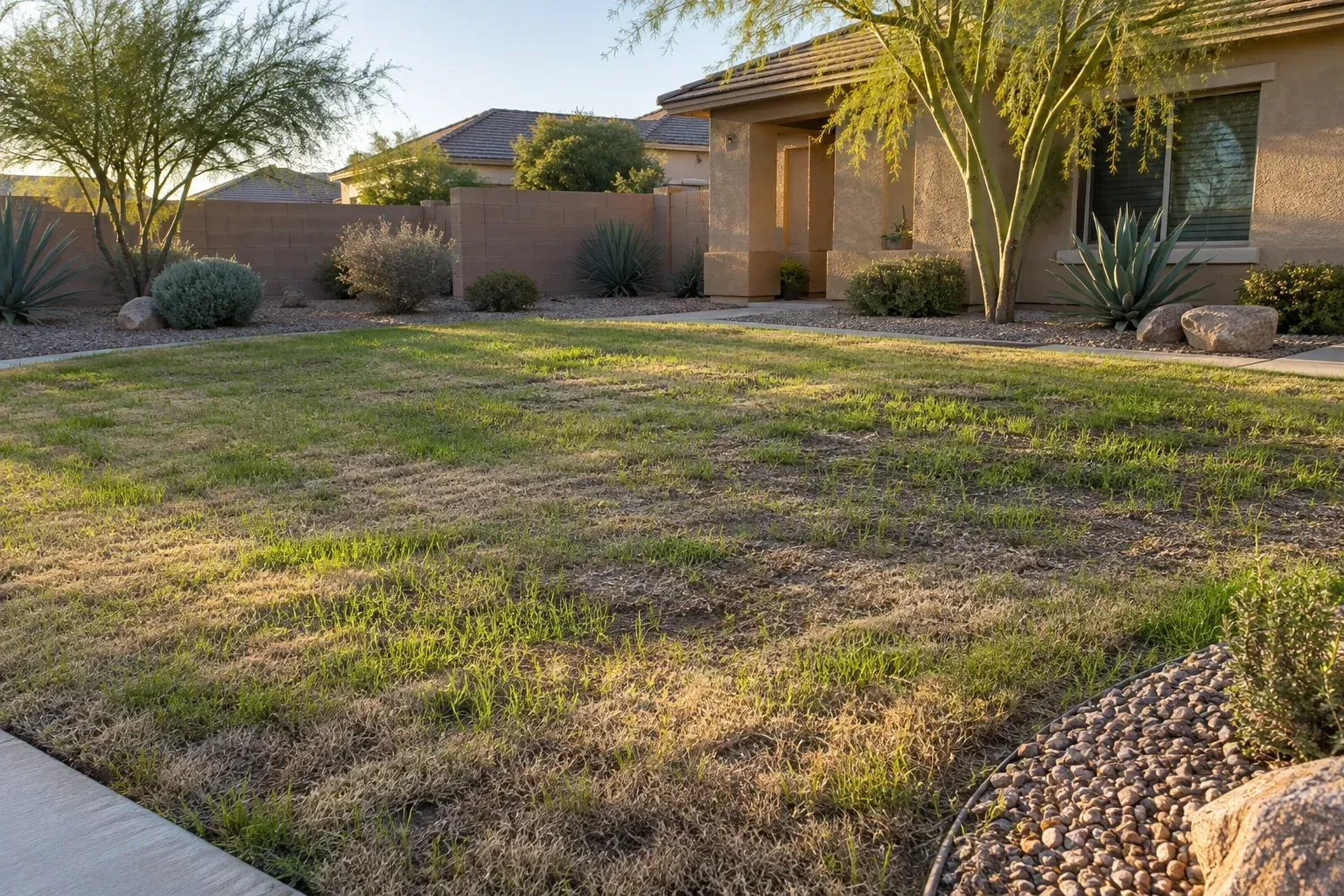
Thin, patchy overseeded front lawn at a Buckeye Arizona home with young ryegrass coming up unevenly over tan Bermuda grass
By Happy Clean Lawnscapes • October 15, 2026
Ryegrass thin, striped or not coming up? The 7 overseeding mistakes and 5 myths behind failed Arizona winter lawns, and how to fix them before November.
By Happy Clean Lawnscapes • October 2, 2026
Scalped too low or seeded too early? Here is the University of Arizona overseeding sequence plus the October winter grass watering schedule for Buckeye lawns.
Sunset over a lush backyard lawn with trees, mountains, and a warm golden sky
By Happy Clean Lawnscapes • September 18, 2026
Lawn thin or patchy by September? Find the real cause, from salt buildup and sprinkler gaps to grubs, and the fixes that stop it happening next summer.
By Happy Clean Lawnscapes • September 1, 2026
September is the last window to repair summer lawn damage in Arizona. Get the week-by-week watering schedule and learn how to prep Bermuda before October overseeding.
By Happy Clean Lawnscapes • August 20, 2026
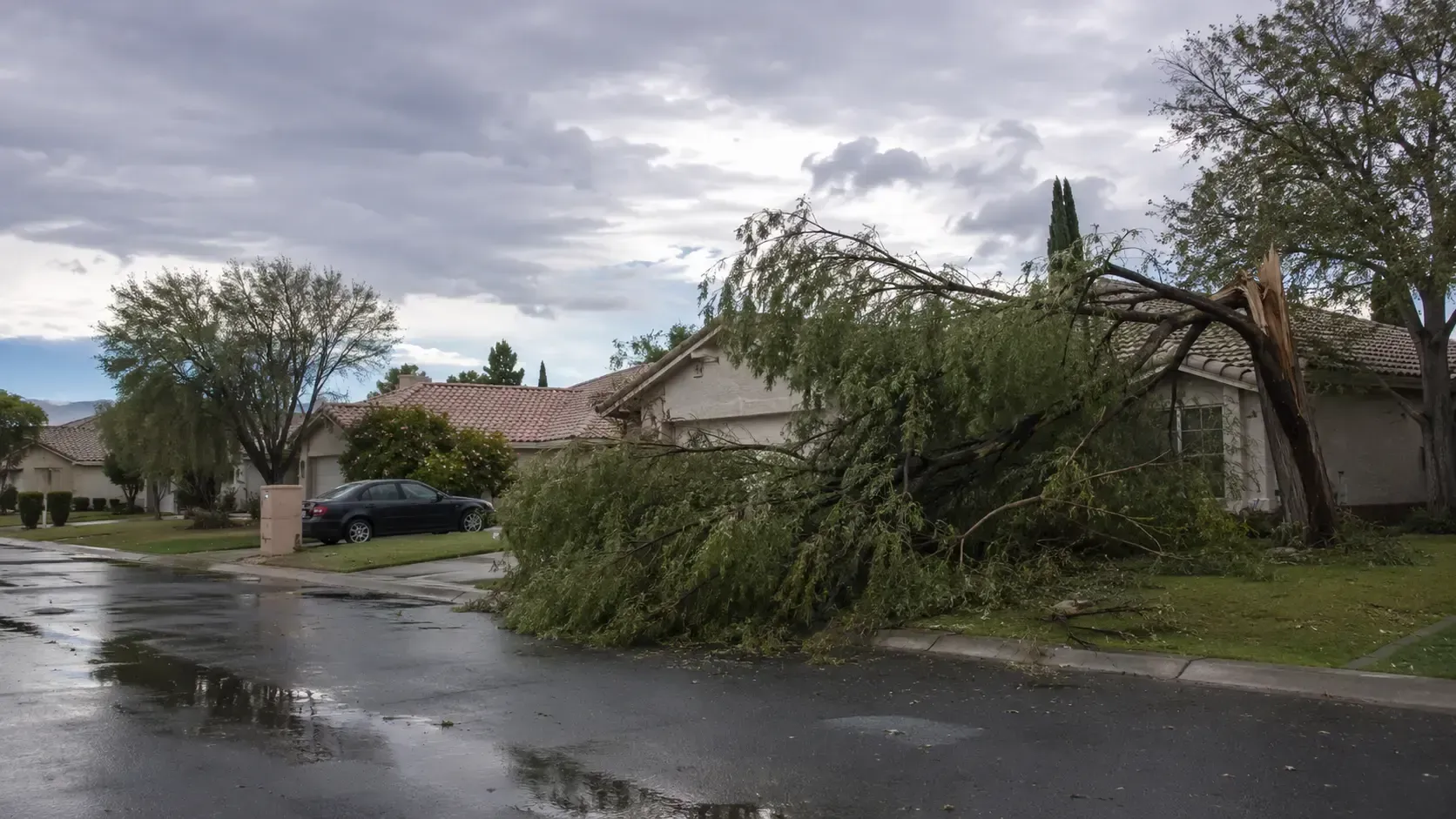
After a monsoon storm, the biggest dangers are the ones you cannot see. Learn how to assess tree damage safely, what to never touch, and how to avoid post-storm contractor scams.
By Happy Clean Lawnscapes • August 4, 2026
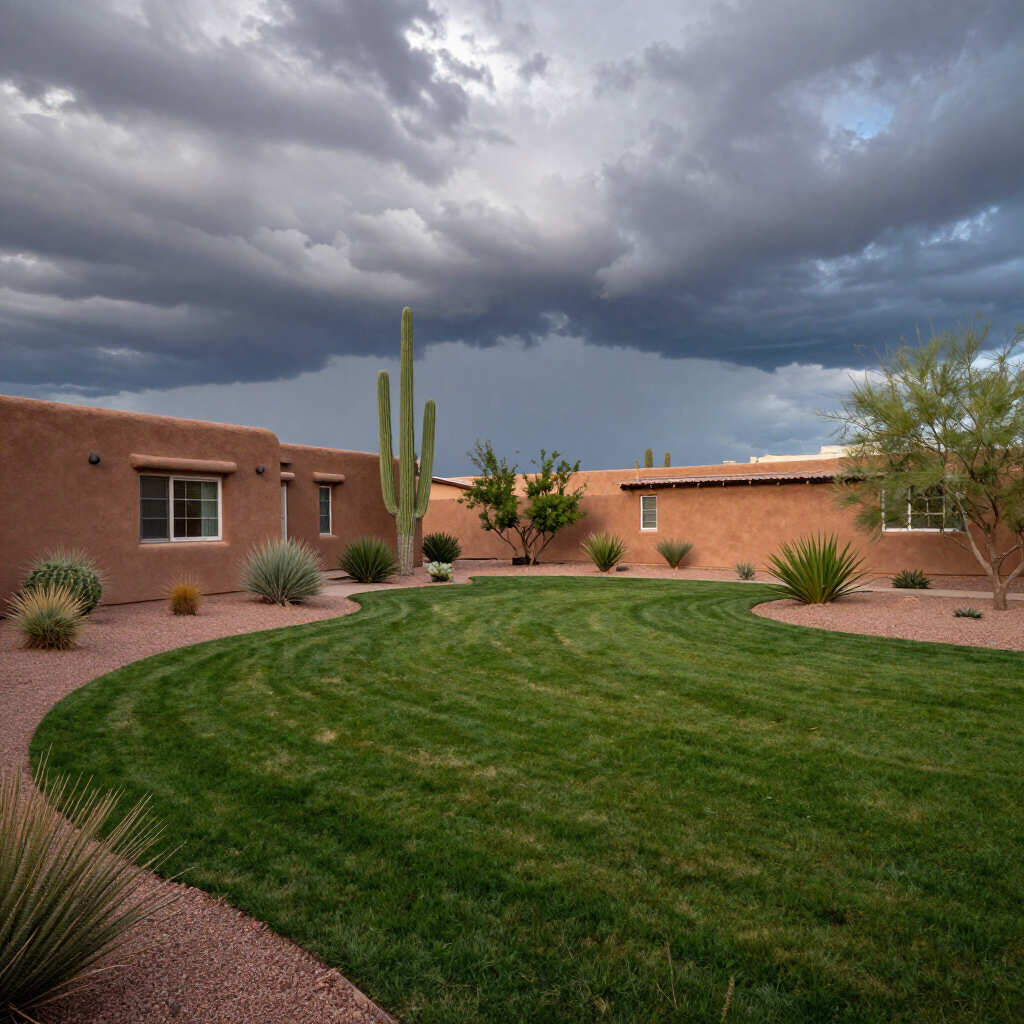
Arizona monsoon storms bring 60+ mph gusts and inches of rain in under an hour. Learn how to prepare drainage, trees, irrigation, and hardscape before the first storm hits.
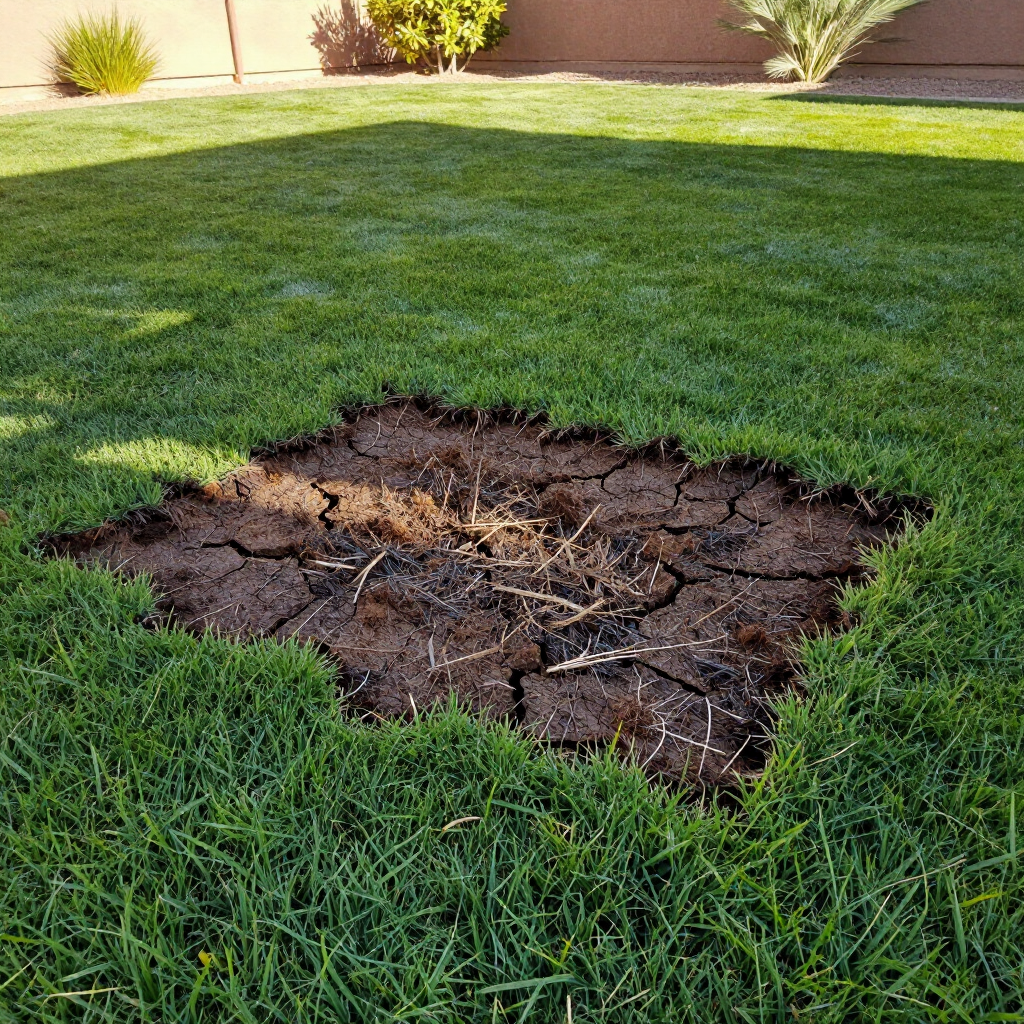
Brown dirt patch in a green lawn, with cracked soil and dry grass in the center.
By Happy Clean Lawnscapes • July 16, 2026
Brown, scorched patches in your Arizona lawn? Learn how to identify what caused the burn, what to do in the first 48 hours, and when the grass can still be saved.

Homeowner inspecting heat-stressed tree branches in an Arizona backyard
By Happy Clean Lawnscapes • July 7, 2026
When Arizona hits an Extreme Heat Warning, one wrong move can kill your lawn or trees in days. Learn exactly how to water, mow, shade, and protect your landscape through a heat wave.

Arizona water bills spike every summer — usually from hidden
landscape waste. Learn how to find leak
By Happy Clean Lawnscapes • June 18, 2026
Arizona water bills spike every summer — usually from hidden landscape waste. Learn how to find leaks, fix waste, and lower your bill before peak heat hits.
Show More