


How to Cut Landscape Costs for Arizona HOAs and Commercial Properties Without the Property Looking Worse
Happy Clean Lawnscapes • November 19, 2026
A white background with a few lines on it

How to Cut Landscape Costs for Arizona HOAs and Commercial Properties Without the Property Looking Worse


Most HOA and commercial landscape budgets in the low desert do not overspend on what the board can see. They leak through water, emergency repairs and grass nobody uses.


Here is what actually cuts cost without hurting curb appeal:


  • Find the water leaks first. Large landscapes can put up to 30 percent of a site's water into irrigation, and the EPA estimates as much as half of it is wasted.
  • Move repairs from reactive to scheduled. A monthly irrigation check costs less than a summer of broken heads and dead plants.
  • Take out turf where nobody walks, sits or plays. Narrow strips, slopes and parking islands cost the most per square foot to keep green.
  • Stop overseeding decorative grass. A winter lawn uses about 8,000 gallons per 1,000 square feet, against about 500 for dormant grass.
  • Set service levels by zone, so the entrance gets the most care and the back retention basin gets the least.
  • Use the rebates. Buckeye pays up to $1.75 per square foot to remove grass. Phoenix pays $2 per square foot for HOAs and commercial sites.


The usual move is to cut maintenance visits, because the contract is the biggest line anyone looks at.


That is often the most expensive cut a property can make. Fewer visits means leaks run longer, plants die and the repair invoices arrive later and larger.

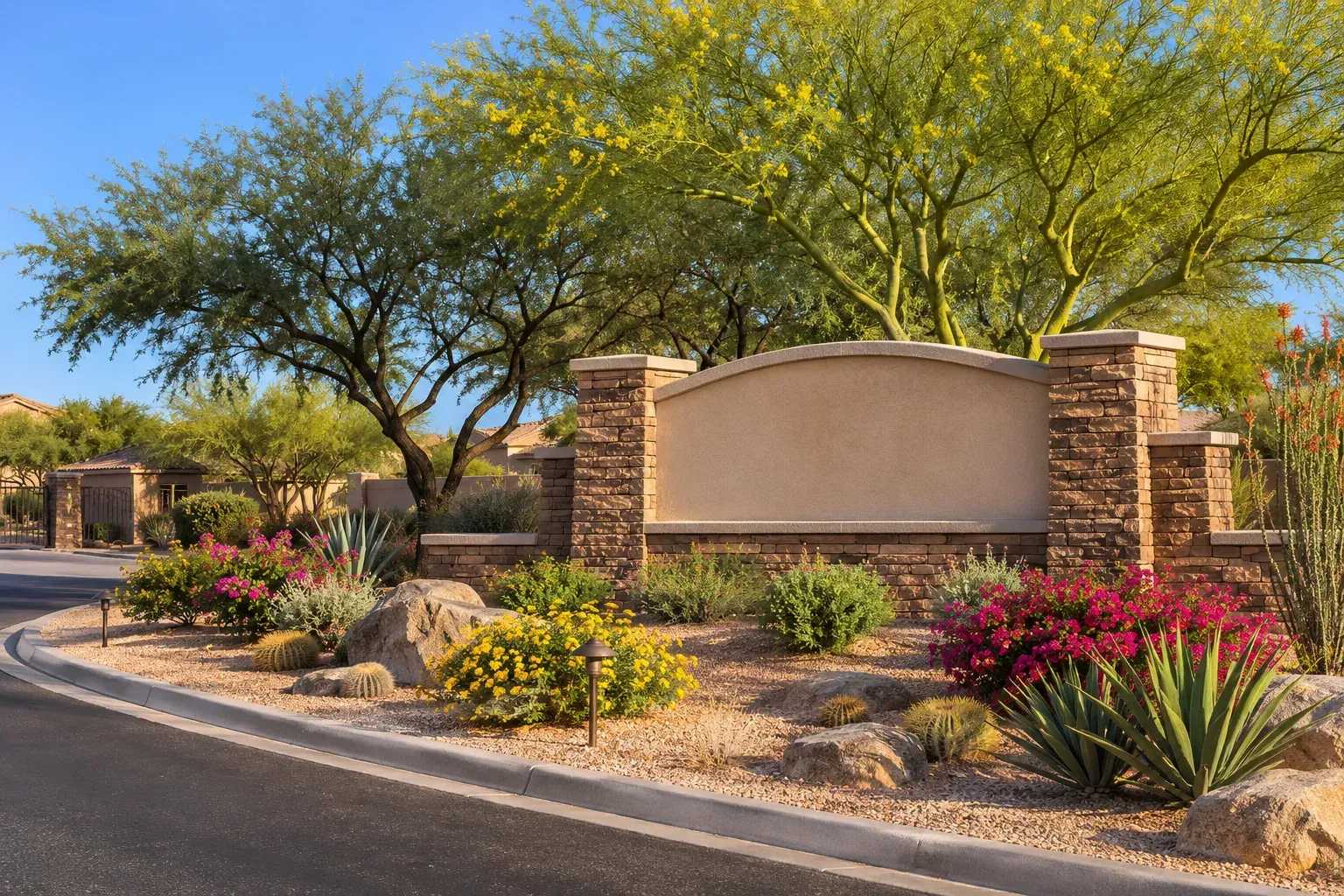
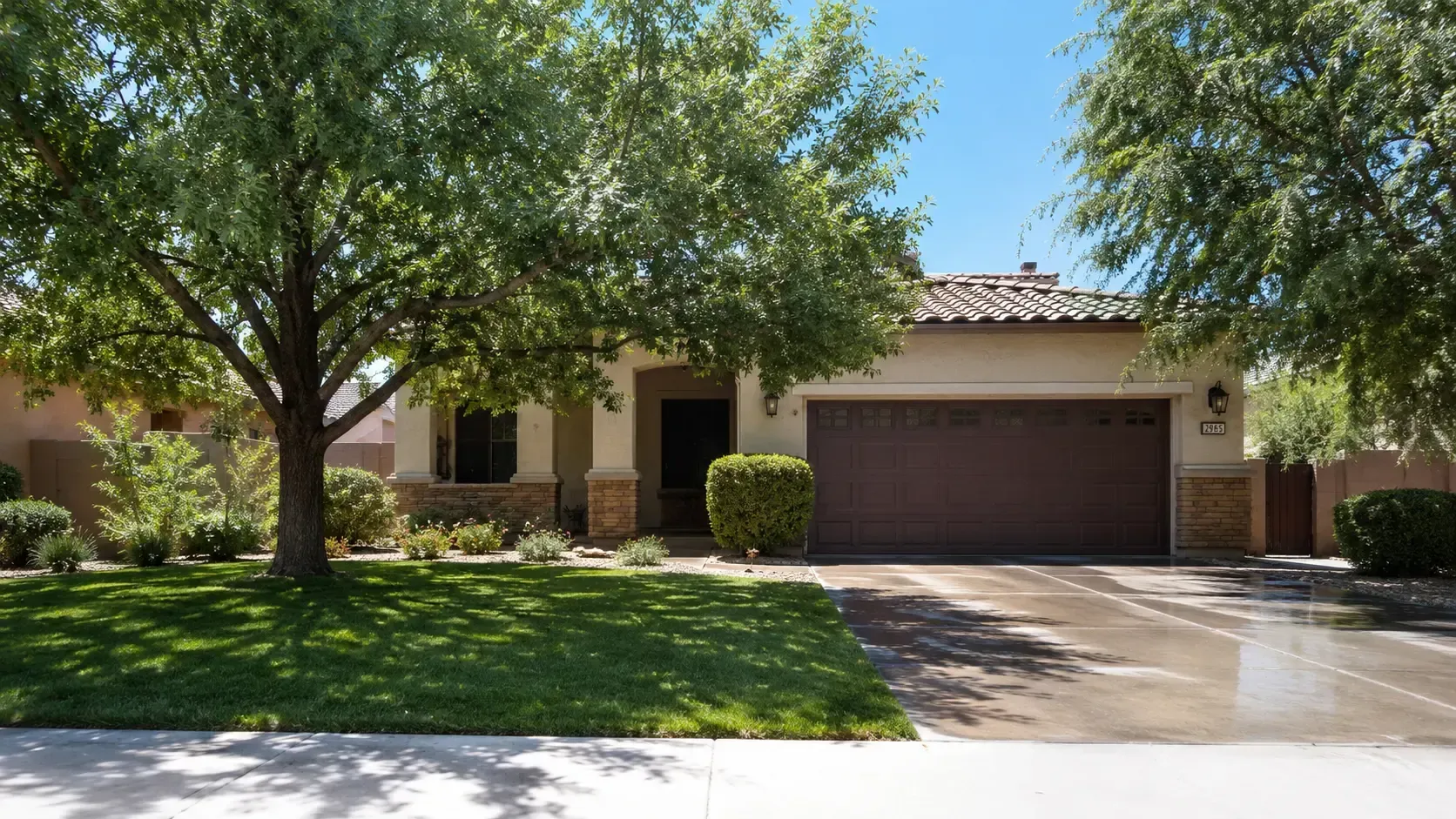
Well-kept HOA entrance in Buckeye, Arizona with desert trees, shrubs and rock mulch instead of grass

Where Landscape Budgets Actually Leak


A landscape budget has visible costs and hidden costs.


The visible cost is the maintenance contract. It is fixed, it is on the agenda every year, and it is the first thing a board tries to cut.


The hidden costs are spread across other lines, so nobody adds them up:


  • Water: billed by the utility, often to a different budget line than landscaping
  • Reactive irrigation repairs: billed as extras, one ticket at a time
  • Plant replacement: dead shrubs and trees replaced every fall, often the same species in the same spot
  • Storm cleanup and tree failures: emergency rates, usually after monsoon storms
  • Turf upkeep: mowing, edging, fertilizer, overseeding and the extra water that grass needs


Before cutting anything, put all five on one page for the last 12 months. On most properties, the hidden lines add up to more than anyone expected.


What each level of service usually costs is covered in How Much Does Commercial Landscaping Cost in Arizona?. This article is about where the money goes after the contract is signed.

Property manager reviewing landscape water and repair invoices at a desk with a desert community view

Leak 1: Water You Are Paying For and Not Using


Water is usually the largest controllable landscape cost on a managed property, and the one with the least oversight.


The U.S. EPA's WaterSense program says facilities with large landscapes can use as much as 30 percent of their water on landscaping, and as much as 50 percent of that water is wasted through overwatering and inefficient irrigation.


It is also getting more expensive. In 2026 the City of Buckeye approved a multi-year water and sewer rate increase, and HOAs are billed as commercial water customers at higher rates than homes.


Where the water goes


  • Leaks: the EPA says an irrigation leak about the thickness of a dime can waste about 6,300 gallons a month. Underground leaks on large sites often run for months
  • Schedules set once and never changed: a summer schedule left running into November waters plants that have slowed down
  • Spray heads on shrub beds: the EPA says drip irrigation on plant beds can cut water use by 20 to 50 percent compared with sprinklers
  • Old spray nozzles on turf: efficient heads can reduce irrigation water use by about 30 percent, according to WaterSense
  • Clock timers: smart controllers cut irrigation by about 15 percent on average, but only on a system that works
  • Mixed zones: trees, shrubs and grass on one valve means at least one of them is overwatered


The fastest check: read the meter


Turn all irrigation off and read the landscape meter. Read it again two hours later.


If it moved, there is a leak. On a large property, this one check often pays for itself the same week.


The month-by-month causes of high landscape water bills are covered in Why Is My Water Bill So High in Arizona?, and the scheduling side is in Smart Irrigation Principles for Arizona Summers.

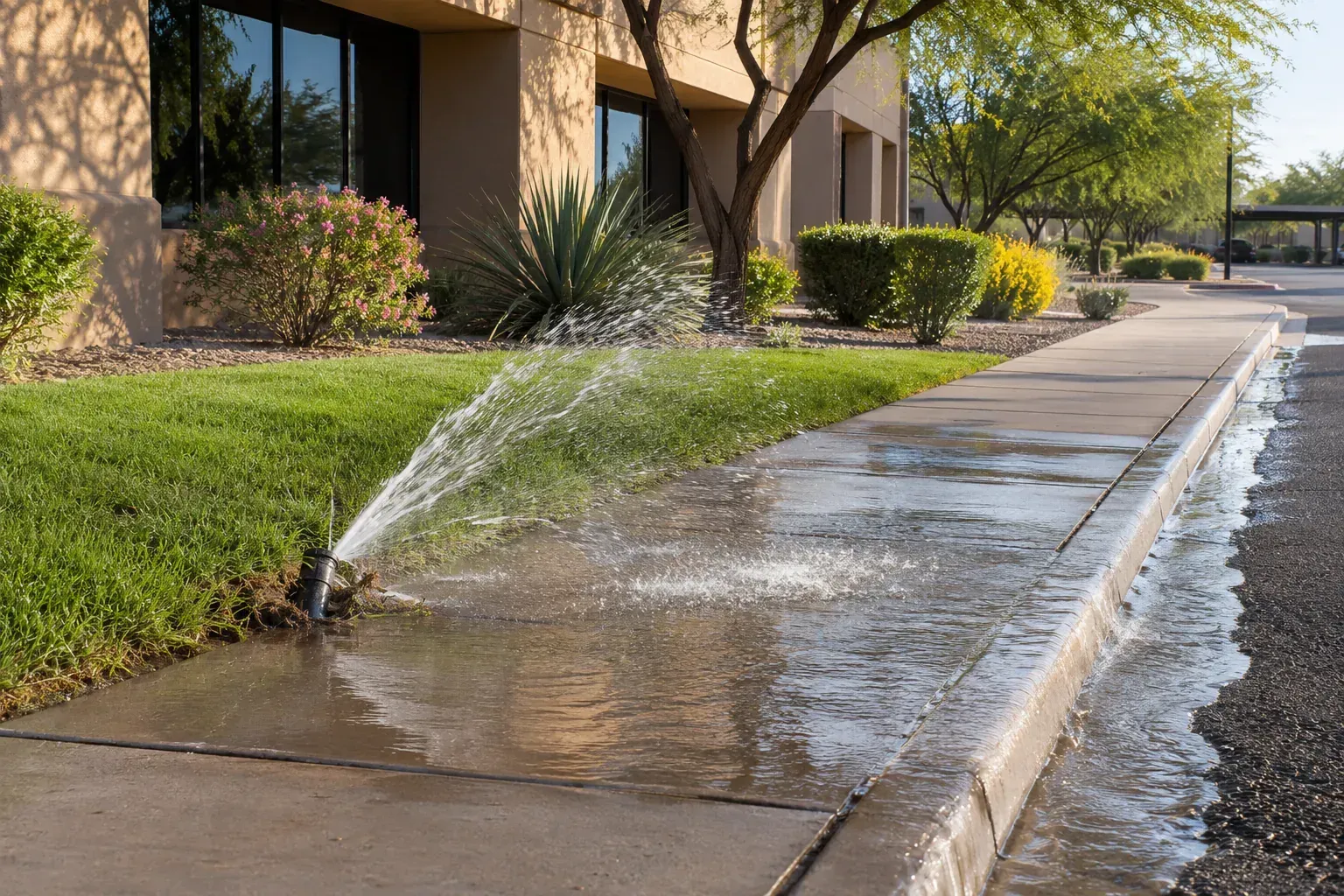
Broken irrigation spray head flooding a sidewalk at an Arizona commercial property

Leak 2: Reactive Repairs That Should Have Been Scheduled


Reactive work costs more for three reasons: it is billed as an extra, it is often done at emergency rates, and the damage has had time to spread.


The most common reactive costs on managed properties


  • Broken heads and lines found by residents or tenants, not by the crew, after weeks of runoff
  • Dead plants replaced every fall because a drip line was cut or an emitter clogged in June
  • Trees that fail in monsoon storms after years of skipped structural pruning
  • Erosion and drainage repairs where runoff from overwatering or storms was never redirected
  • Hardscape damage from roots of trees planted too close to walls and walkways


How to move the money to scheduled work


  • Monthly irrigation check written into the contract, with a short report by zone
  • A repair approval limit, so the crew can fix a broken head the same day instead of waiting for a quote
  • Structural tree pruning on a rotation, so every tree is looked at every few years before it becomes a storm problem
  • A replacement log, so a plant that dies twice in the same spot gets a different plant, or a fixed emitter, not a third copy


Storm failures are the most expensive reactive cost of all. What happens after a tree comes down is covered in Storm Damage & Safety Risks in Arizona Landscapes.

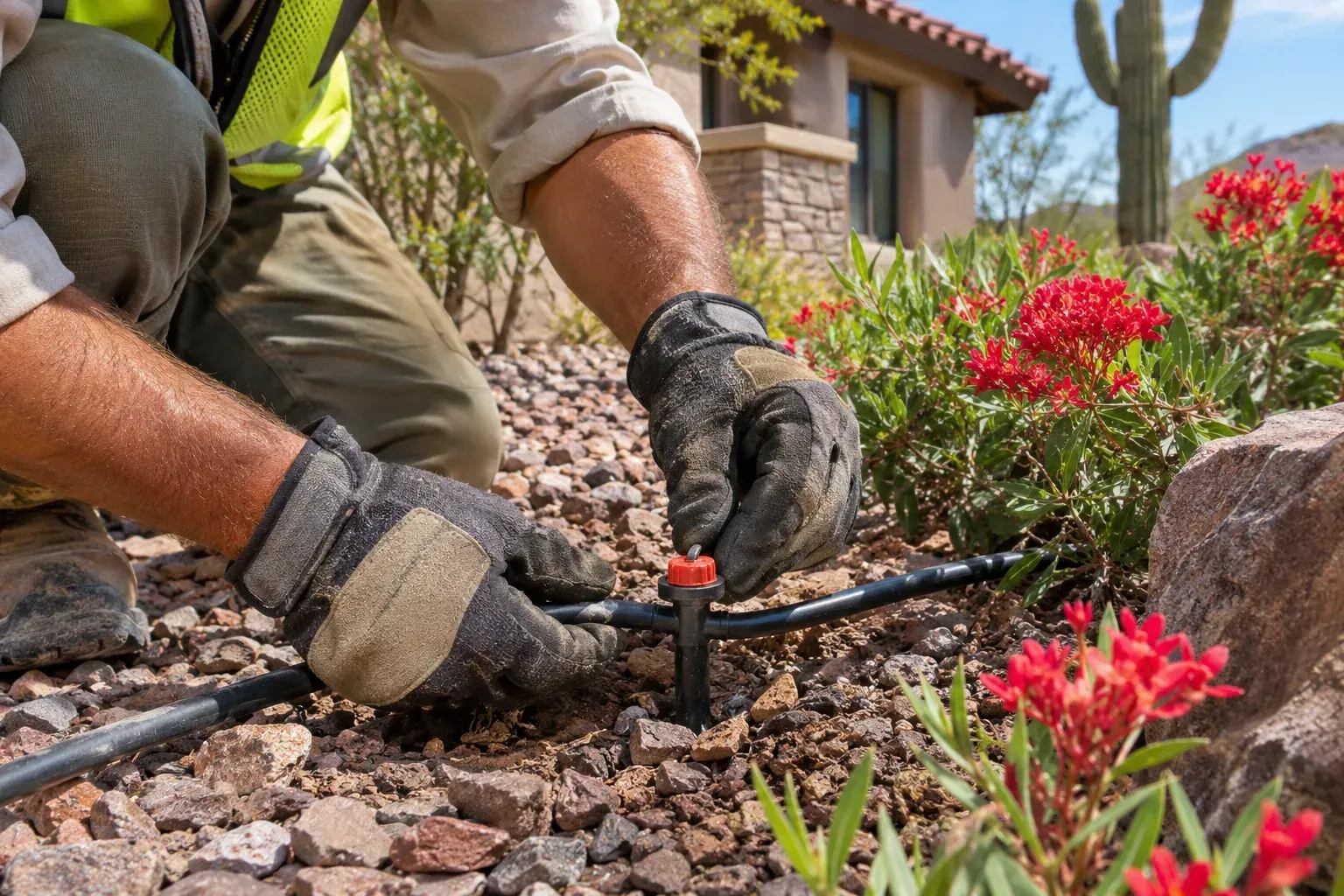
Landscape technician repairing a drip irrigation line in a desert shrub bed in Arizona

Leak 3: Turf in the Wrong Places


Grass is the most expensive surface on most HOA and commercial properties, per square foot, every month of the year.


The University of Arizona's AZMET lawn guide says an average 15 by 15 foot Bermudagrass lawn uses over 5,000 gallons of water a year. That is more than 20 gallons per square foot, before mowing, edging, fertilizer and repairs.


Turf that usually costs more than it is worth


  • Strips under 6 feet wide along sidewalks and parking lots, which are hard to water evenly and burn from reflected heat
  • Slopes and berms, where water runs off before it soaks in
  • Parking lot islands and medians, where nobody walks and pavement heat stresses the grass
  • Decorative front lawns on retail and office sites that no one uses
  • Shaded turf under mature trees, since Bermudagrass needs full sun and thins out in shade


Turf worth keeping


  • Play areas, pet areas and event lawns that residents actually use
  • Sports fields and picnic areas in HOA parks
  • Small, high-visibility patches where a green lawn is part of the brand


The rebates


  • City of Buckeye: a turf removal rebate of 50 percent of the removal cost, capped at $1.75 per square foot, for at least 200 square feet of natural grass. The project must be done in the city's fiscal year (July to June), and the city requires an appointment before work starts and a year of water use monitoring
  • City of Phoenix: $2 per square foot for HOAs, multifamily, commercial and industrial sites removing at least 1,000 square feet, with a landscape plan by a registered landscape architect and a permanent drip system


Rebate terms change. Confirm with the city before any grass is removed, because removal done before approval does not qualify.


Alternatives that hold up in the low desert are covered in 6 Best Grass Alternatives for No-Mow Lawns in Arizona, and the trade-offs of synthetic grass on business properties are in The Arizona Business Owner's Guide to Artificial Turf.

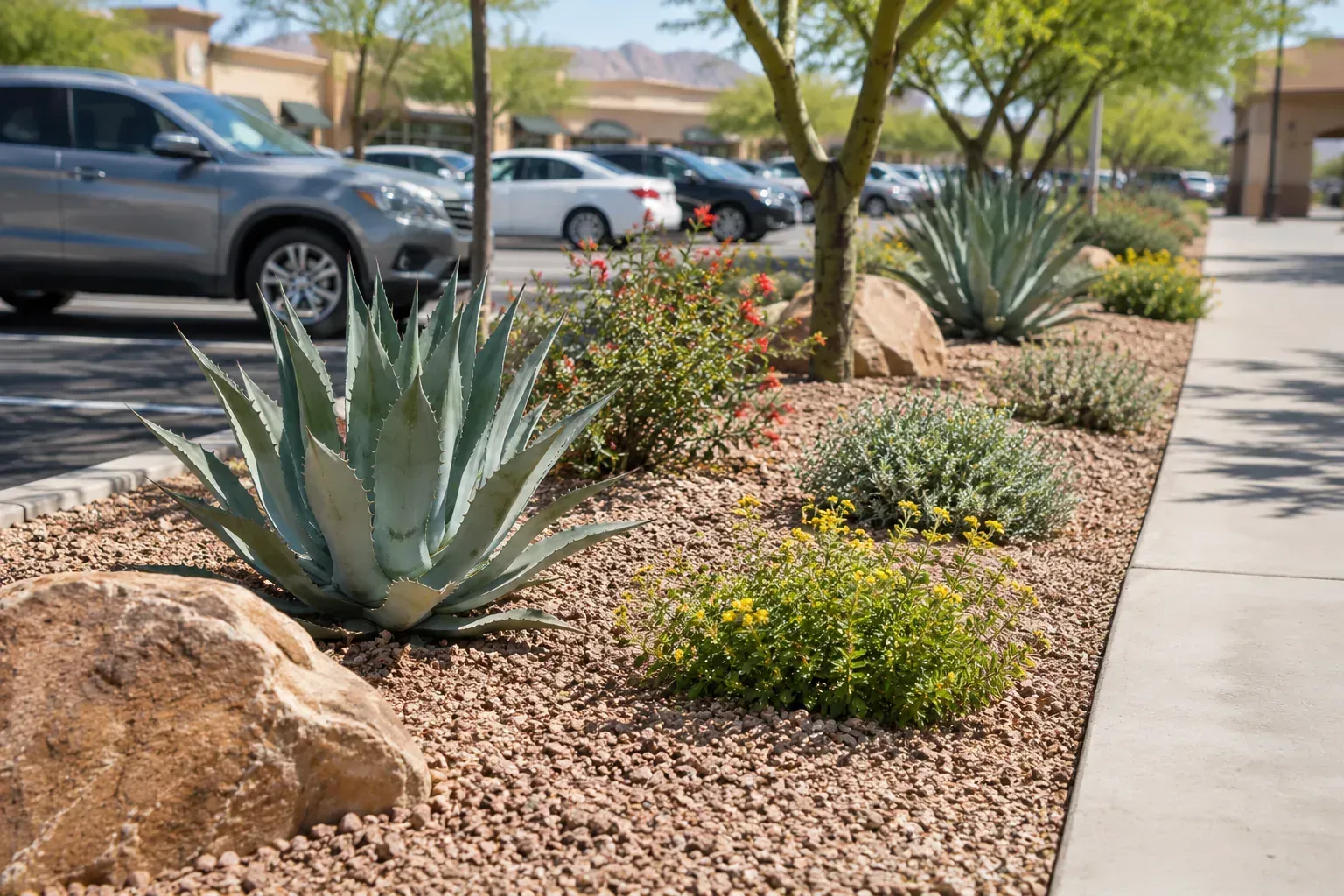
Narrow turf strip beside a parking lot converted to desert landscaping at an Arizona shopping center

The Overseeding Decision: The Easiest Winter Saving


For many HOAs, winter overseeding is the single largest seasonal landscape cost that nobody questions.


The Arizona Municipal Water Users Association estimates an overseeded winter lawn uses about 8,000 gallons of water per 1,000 square feet over the season. A dormant Bermudagrass lawn uses about 500.


That is before the seed, the scalping, the extra mowing and the spring transition.


AMWUA reports that one Scottsdale HOA that skipped overseeding in 2021 saved 1.5 million gallons of water and thousands of dollars in seed.


A practical middle ground


  • Overseed only the turf people use in winter, such as a clubhouse lawn or event space
  • Let decorative and low-traffic turf go dormant
  • Tell residents in advance that tan winter grass is dormant, not dead, and will green up in spring


Dormant Bermudagrass is not a maintenance failure. It is what the grass is built to do.

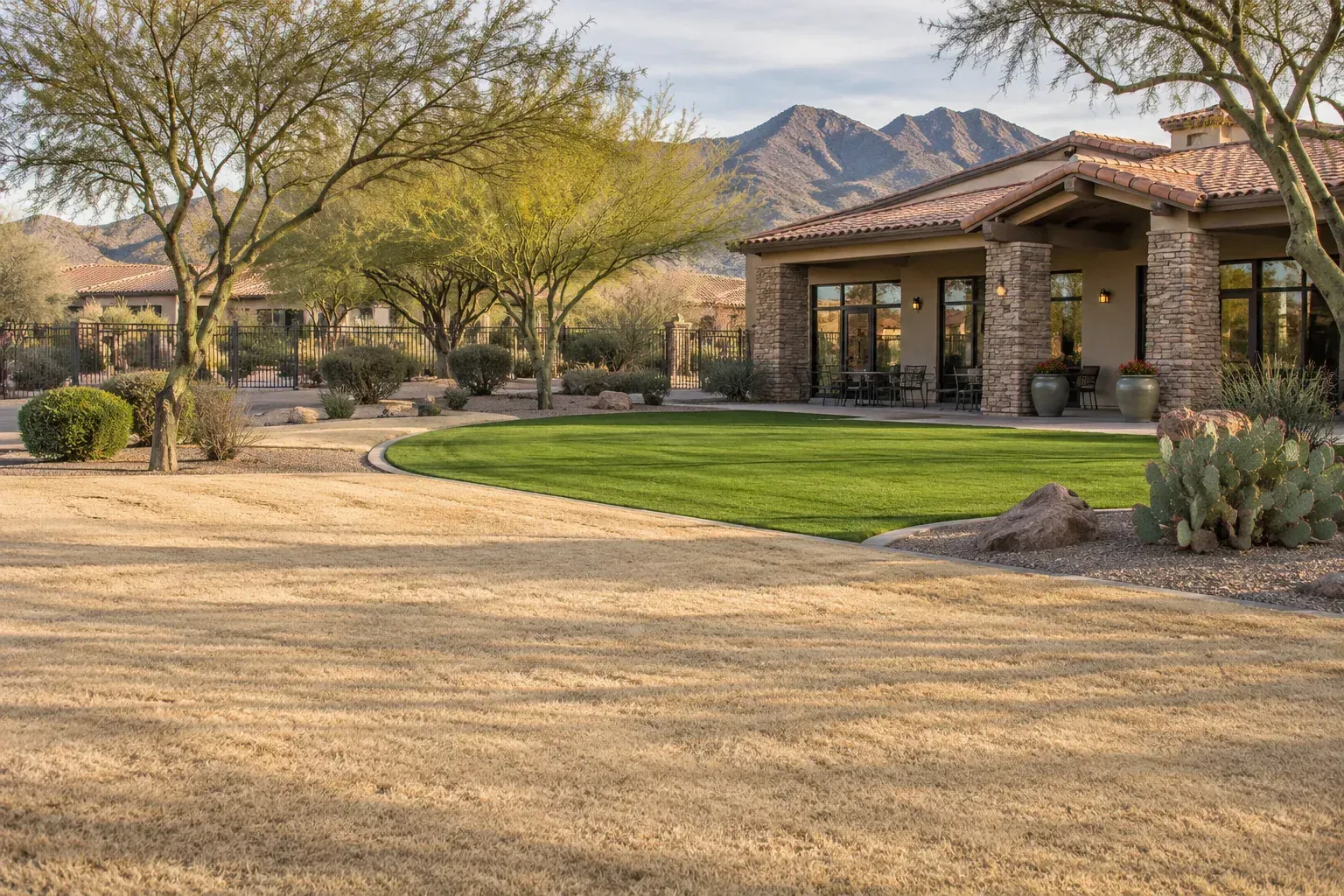
Dormant tan Bermudagrass in an Arizona HOA common area during winter beside a green overseeded clubhouse lawn

Cuts That Save Money Without the Property Looking Worse


The goal is to spend less where nobody looks and keep spending where everybody does.


Set service levels by zone


  • Zone A, entrances, signage and amenities: full service, best plants, most frequent visits
  • Zone B, common areas and building frontage: standard service
  • Zone C, back lots, retention basins and perimeter areas: weed control, debris pickup and irrigation checks, on a lower frequency


Residents and customers judge a property by its entrance. Spending the same on the retention basin as on the front sign is where many budgets go.


Other cuts that do not show


  • Prune desert shrubs to their natural shape instead of shearing them into boxes. It means fewer visits, less regrowth and fewer dead centers
  • Top up rock mulch to about 2 to 3 inches in bare areas, which cuts weeds and evaporation
  • Replace dead plants in fall, not spring, so the replacement survives its first summer
  • Convert shrub beds from spray to drip when heads fail, rather than repairing spray in a planting bed
  • Change the irrigation schedule every season, not once a year


Cuts that backfire


  • Cutting irrigation checks: leaks run longer and the water bill rises faster than the contract falls
  • Skipping tree pruning for a year or two: the saving often comes back as a storm cleanup invoice
  • Cutting summer water on established trees: a mature shade tree is far more expensive to replace than to water
  • Choosing the lowest bid with a vague scope: the savings usually reappear as extras


How to time installs, audits and contract scope across the year is covered in Commercial Landscape Planning in Arizona.

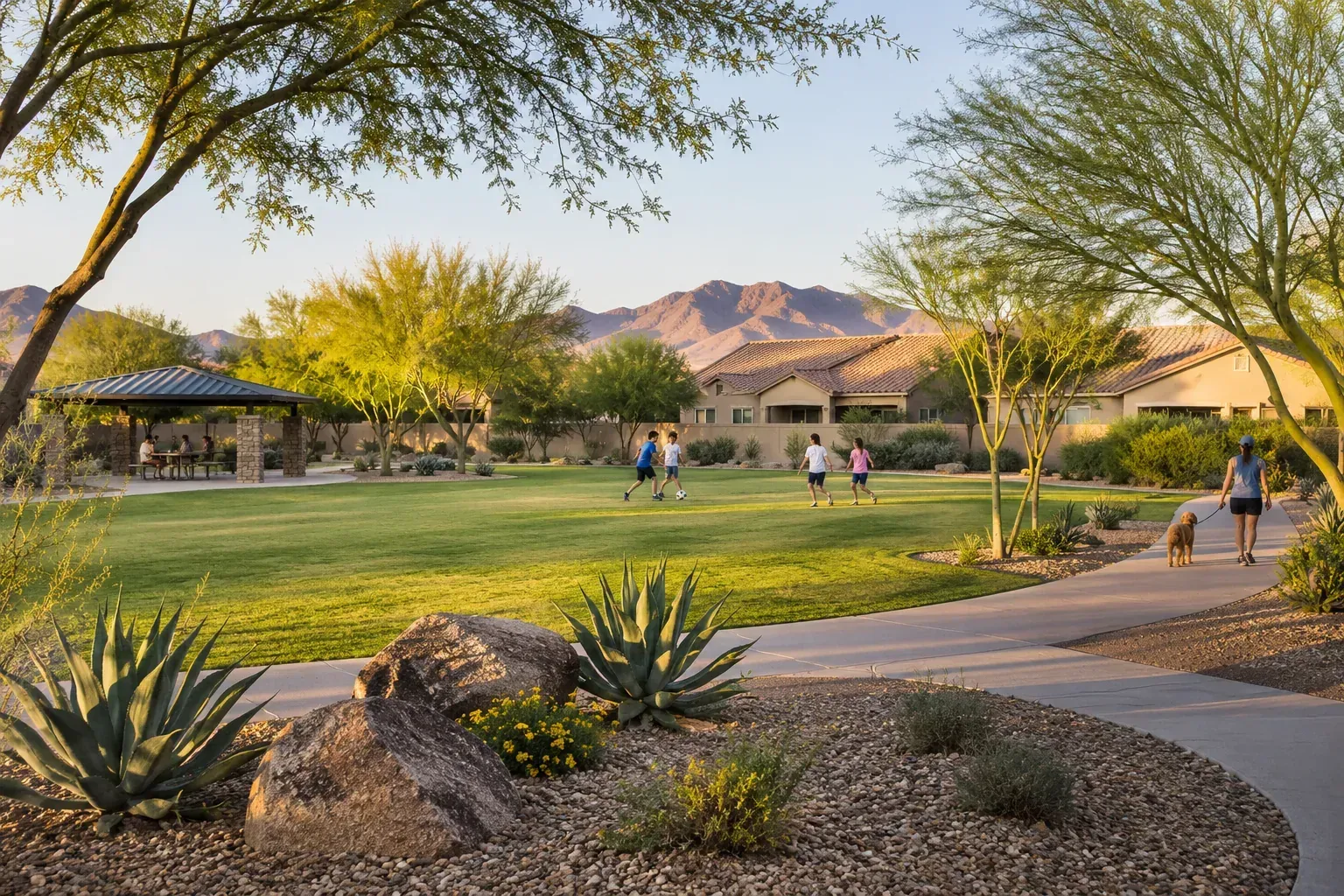
Arizona HOA common area with functional turf for play and desert landscaping in low-traffic areas

When to Call a Professional


Bring in a commercial landscape professional when:


  • The landscape water bill has gone up year over year with no new planting
  • The meter moves with all irrigation turned off
  • Repair extras are arriving every month with no pattern or report behind them
  • The same plants are being replaced in the same spots every year
  • The property has turf strips, slopes or islands that never look good
  • The board wants to cut the landscape budget and needs to know what is safe to cut
  • A turf removal rebate is on the table and the application needs a plan and an irrigation redesign


If your Buckeye HOA or commercial property's landscape costs keep rising without the property looking any better, schedule a professional landscape cost and irrigation assessment before your 2027 budget is approved. Finding the water and repair leaks now lets the savings go into next year's budget instead of next summer's repair bills.


What a Controlled Landscape Budget Pays Back


Properties that manage the hidden costs get:


  • Lower water bills as rates go up
  • Fewer surprise repair invoices
  • Fewer dead plants and fewer replacement orders
  • Less turf to mow, edge, feed and overseed
  • Healthier trees and less storm cleanup
  • Rebate money that helps pay for the change
  • A budget the board can explain line by line


The cheapest landscape is not the one with the smallest contract.


It is the one where the water, the repairs and the grass are all doing a job.


For the routine side of keeping a managed property right all year, see How to Maintain a Professional Landscape Year-Round.

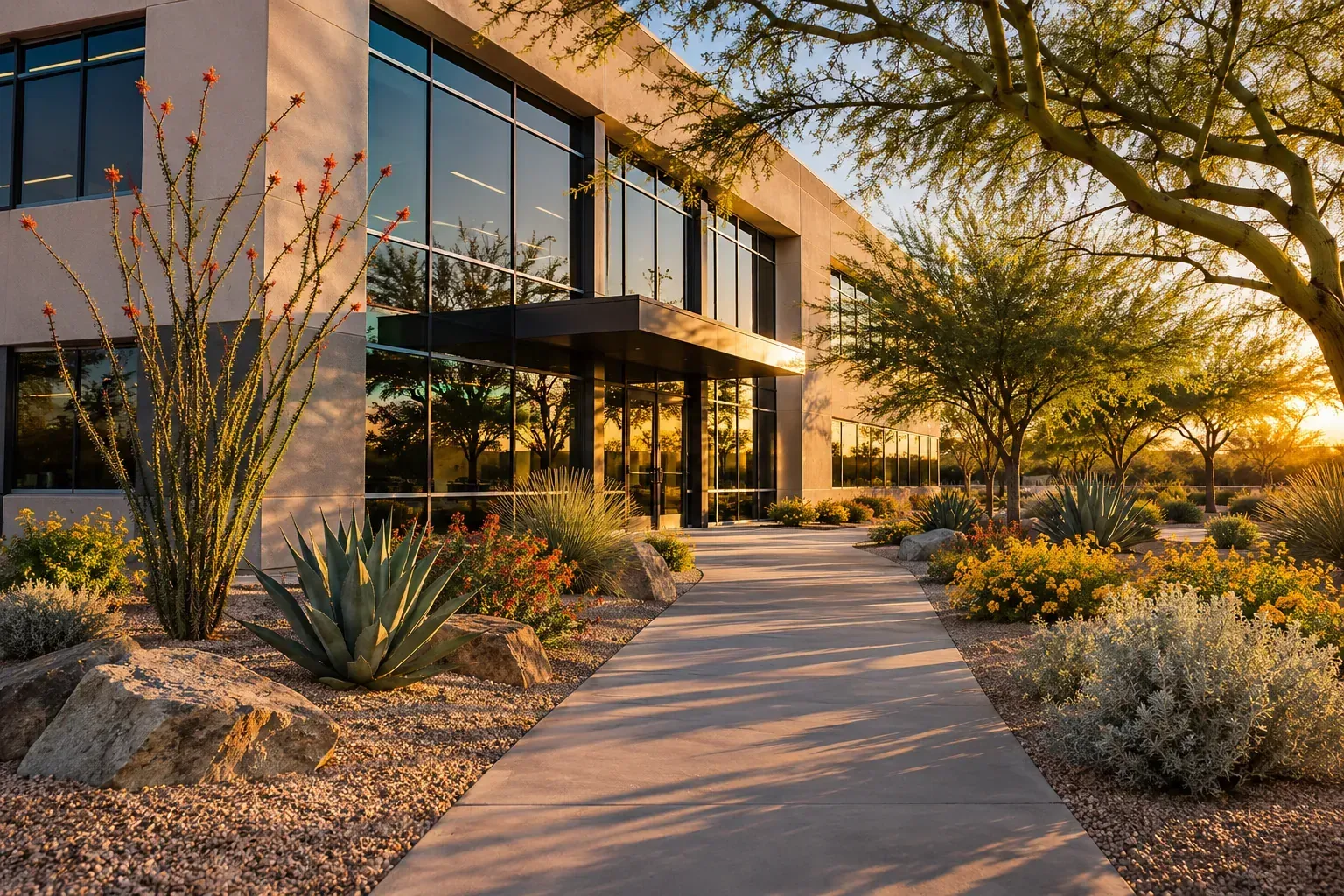
Low-water commercial landscape at an Arizona office park at golden hour

FAQ: Cutting Landscape Costs for HOAs and Commercial Properties in Arizona

  • How can an HOA reduce landscape costs in Arizona?

    Start with water and reactive repairs, not the maintenance contract. Check for leaks, adjust irrigation schedules every season, convert shrub beds to drip, and remove turf that nobody uses. Then set service levels by zone so entrances and amenities keep full care while back areas get less.

  • What is the biggest hidden landscape cost for commercial properties?

    On most sites it is water. The U.S. EPA estimates large landscapes can use up to 30 percent of a site's water, and that as much as half of landscape irrigation water is wasted through overwatering and inefficient systems.

  • Is it worth removing grass on an HOA or commercial property?

    Usually, where the grass is not used. Narrow strips, slopes, parking islands and decorative lawns cost the most to keep green. Keep turf where people play, sit or walk pets, and replace the rest with desert planting, rock or artificial turf where traffic justifies it.

  • Does Buckeye offer a grass removal rebate?

    Yes. The City of Buckeye offers a turf removal rebate of 50 percent of the removal cost, up to $1.75 per square foot, for at least 200 square feet of natural grass. It requires an appointment with the city before work starts and a year of water use monitoring. Check the current terms with the city before you begin.

  • Should an HOA stop overseeding in winter?

    Many can stop on most of their turf. AMWUA estimates an overseeded lawn uses about 8,000 gallons per 1,000 square feet over the winter, compared with about 500 for dormant Bermudagrass. Overseed only the lawns residents use in winter and let the rest go dormant.

  • Is cutting maintenance visits a good way to save money?

    Usually not on its own. Fewer visits means leaks, clogged drip lines and dead plants go unnoticed for longer, and the cost comes back as repairs and replacements. Lowering the frequency in low-visibility zones is a safer way to cut the contract.

  • How much water can a smart irrigation controller save?

    The EPA puts the average saving at about 15 percent compared with a standard clock timer. The saving depends on a working system: leaks, broken heads and mixed zones need to be fixed first, or the controller just waters the wrong places on a better schedule.

A green background with a white outline of a heart.
Arizona tree watering schedule by season
By Happy Clean Lawnscapes • November 9, 2026
When and how much to water trees and plants in Arizona each season: deep summer watering, fall and winter cutbacks, spring prep, and mulch and shade tips.
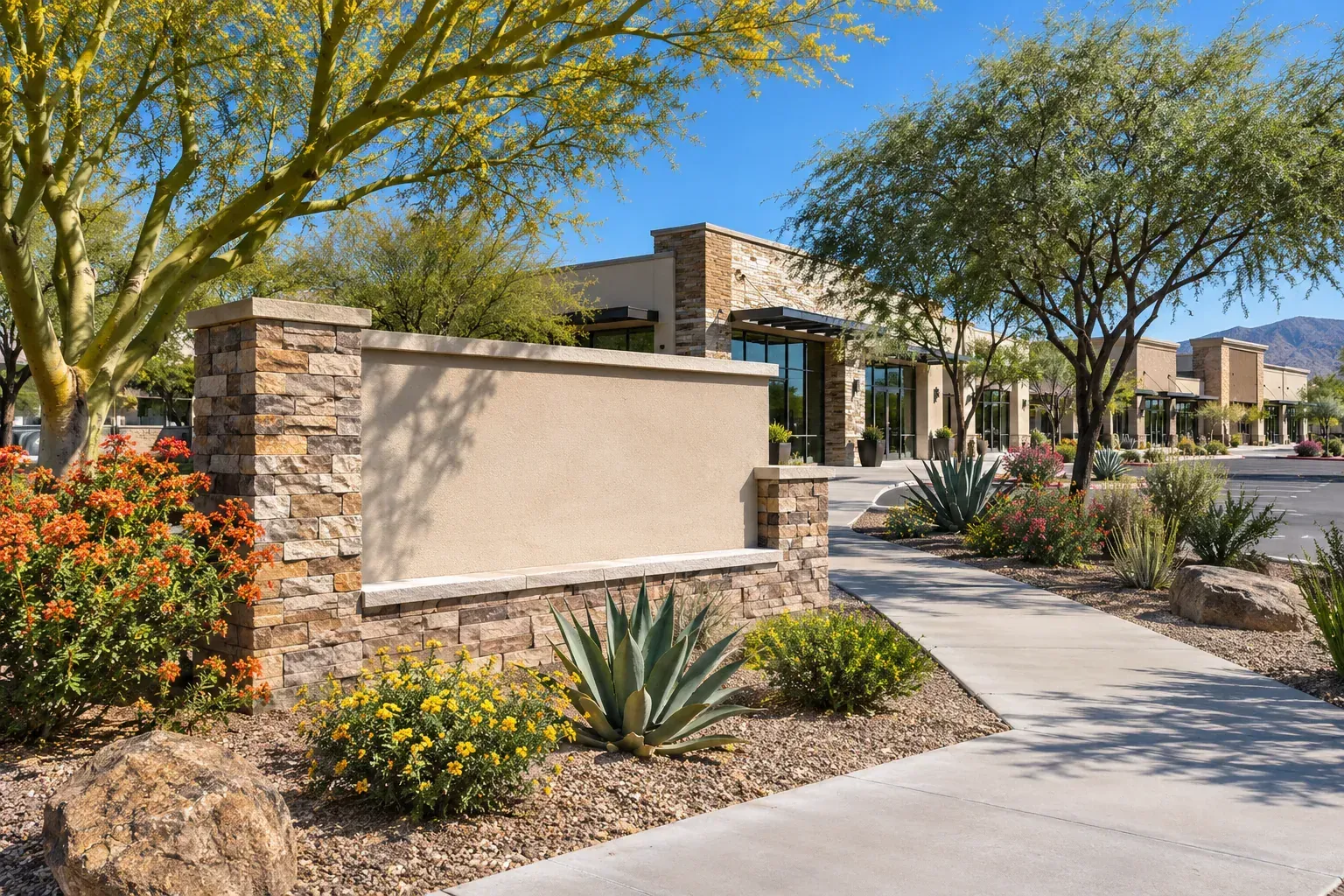
Professionally landscaped commercial property entrance in Buckeye, Arizona with desert trees, shrubs and decomposed granite
By Happy Clean Lawnscapes • November 3, 2026
Commercial landscapes in Arizona fail on timing and vague contracts. Plan installs, irrigation audits, plant palettes and scope on the low-desert calendar.
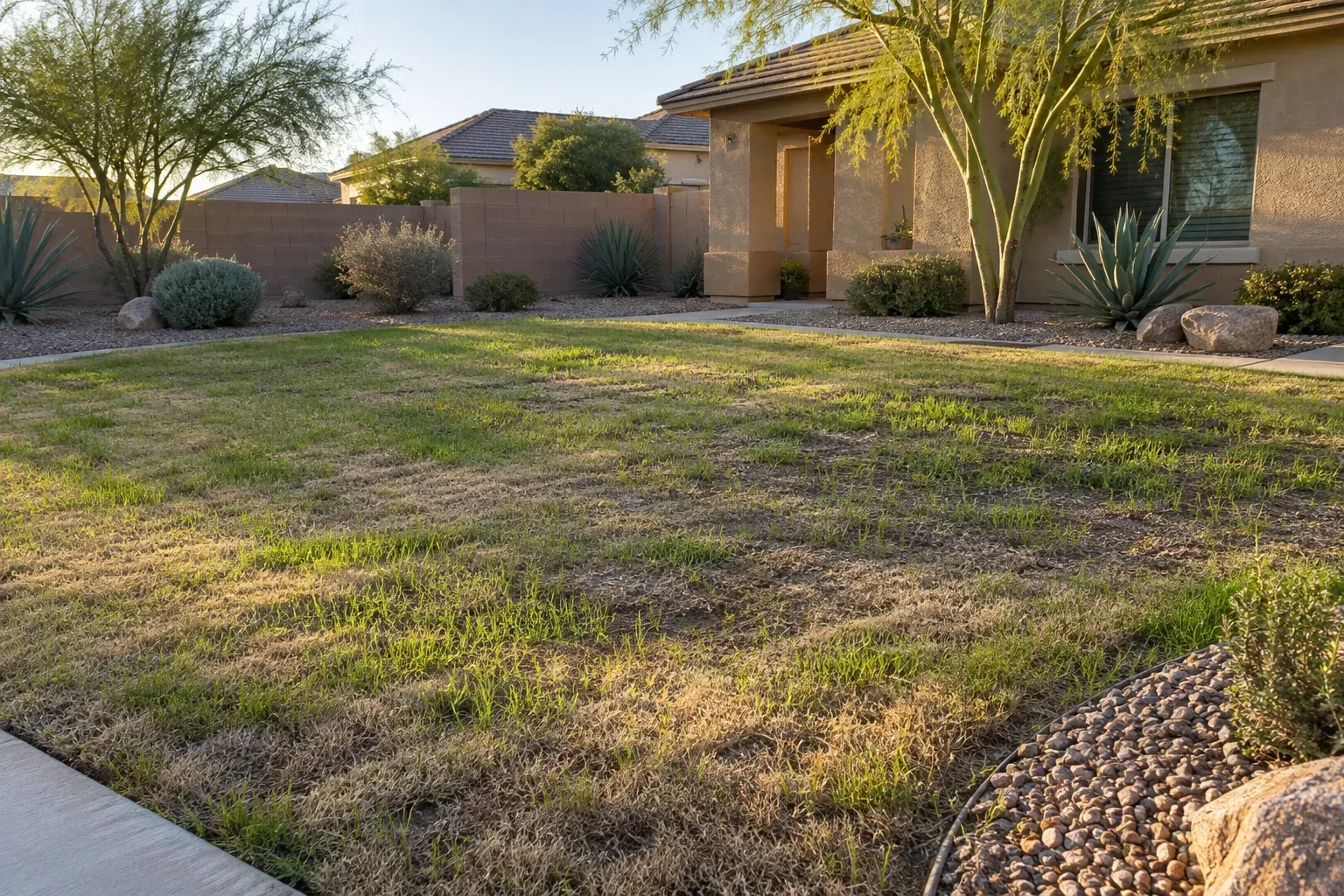
Thin, patchy overseeded front lawn at a Buckeye Arizona home with young ryegrass coming up unevenly over tan Bermuda grass
By Happy Clean Lawnscapes • October 15, 2026
Ryegrass thin, striped or not coming up? The 7 overseeding mistakes and 5 myths behind failed Arizona winter lawns, and how to fix them before November.
By Happy Clean Lawnscapes • October 2, 2026
Scalped too low or seeded too early? Here is the University of Arizona overseeding sequence plus the October winter grass watering schedule for Buckeye lawns.
Sunset over a lush backyard lawn with trees, mountains, and a warm golden sky
By Happy Clean Lawnscapes • September 18, 2026
Lawn thin or patchy by September? Find the real cause, from salt buildup and sprinkler gaps to grubs, and the fixes that stop it happening next summer.
By Happy Clean Lawnscapes • September 1, 2026
September is the last window to repair summer lawn damage in Arizona. Get the week-by-week watering schedule and learn how to prep Bermuda before October overseeding.
By Happy Clean Lawnscapes • August 20, 2026
After a monsoon storm, the biggest dangers are the ones you cannot see. Learn how to assess tree damage safely, what to never touch, and how to avoid post-storm contractor scams.
By Happy Clean Lawnscapes • August 4, 2026
Arizona monsoon storms bring 60+ mph gusts and inches of rain in under an hour. Learn how to prepare drainage, trees, irrigation, and hardscape before the first storm hits.
Brown dirt patch in a green lawn, with cracked soil and dry grass in the center.
By Happy Clean Lawnscapes • July 16, 2026
Brown, scorched patches in your Arizona lawn? Learn how to identify what caused the burn, what to do in the first 48 hours, and when the grass can still be saved.
Homeowner inspecting heat-stressed tree branches in an Arizona backyard
By Happy Clean Lawnscapes • July 7, 2026
When Arizona hits an Extreme Heat Warning, one wrong move can kill your lawn or trees in days. Learn exactly how to water, mow, shade, and protect your landscape through a heat wave.
Show More